
Is dried papaya good for you, and how is freeze-dried different from candied?
Last reviewed: November 2026
It depends on what is in the bag. Dried papaya made from fruit alone keeps papaya’s fibre, potassium, vitamin C and orange carotenoids, concentrated into a few crisp or chewy bites. Much of the dried papaya on supermarket shelves, though, is candied: soaked in sugar syrup, sometimes coloured, and closer to a sweet than to fruit. The quickest way to tell them apart is the ingredient line. If it reads “papaya” and nothing else, you are eating fruit; if sugar or syrup comes next, you are eating fruit plus added sugar.
How do fresh, candied and freeze-dried papaya compare?
| Per 100 g | Fresh papaya | Freeze-dried papaya (typical) | Candied dried papaya |
|---|---|---|---|
| Ingredients | Papaya | Papaya | Papaya, sugar; often sulphur dioxide, and on some US labels FD&C Yellow 5 and 6 |
| Water | about 88 g | ≤5 g | Varies by recipe |
| Energy | 43 kcal | 350 kcal | Varies; read the label |
| Dietary fibre | 1.7 g | 14 g | Lower per 100 g, diluted by the added sugar |
| Sugars | 7.8 g, all natural | 63 g, all natural (0 g added) | About 70–75 g total on US retail labels, one declaring 39 g added |
| Potassium | 182 mg | 1,460 mg | Lower per 100 g |
| Vitamin C | 60.9 mg | typical 300–450 mg | Varies with heat and processing |
| Texture | Soft, juicy | Crisp, light, melts in the mouth | Chewy, sticky |
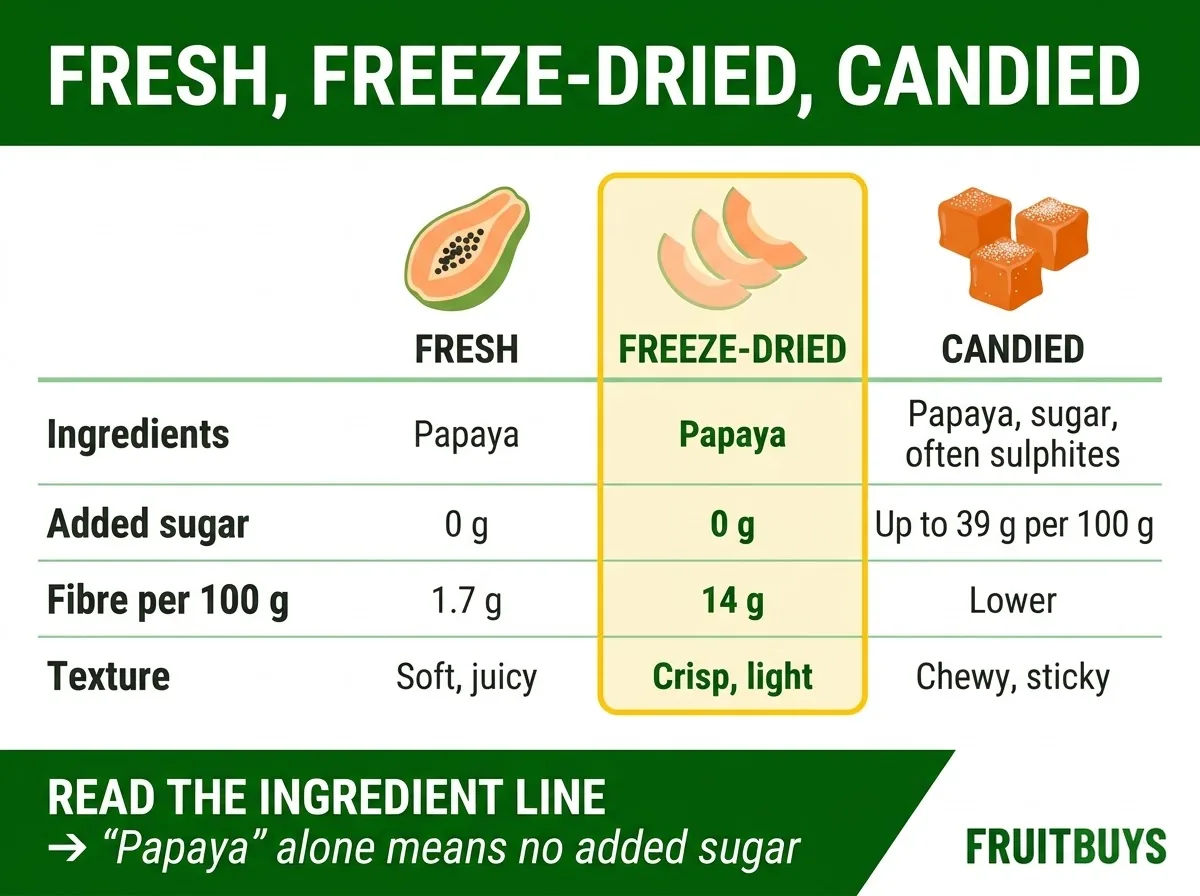
Fresh values are from USDA FoodData Central (papayas, raw). Freeze-dried values are typical values for 100% freeze-dried papaya; natural variation by origin, season and ripeness applies. Candied values come from sweetened dried papaya labels we checked at US and German retailers in November 2026: the two US labels list 20–21 g of sugar per 28 g serving, one of them 11 g of it added, and the German pack declares 51 g of sugar per 100 g with sulphur dioxide.
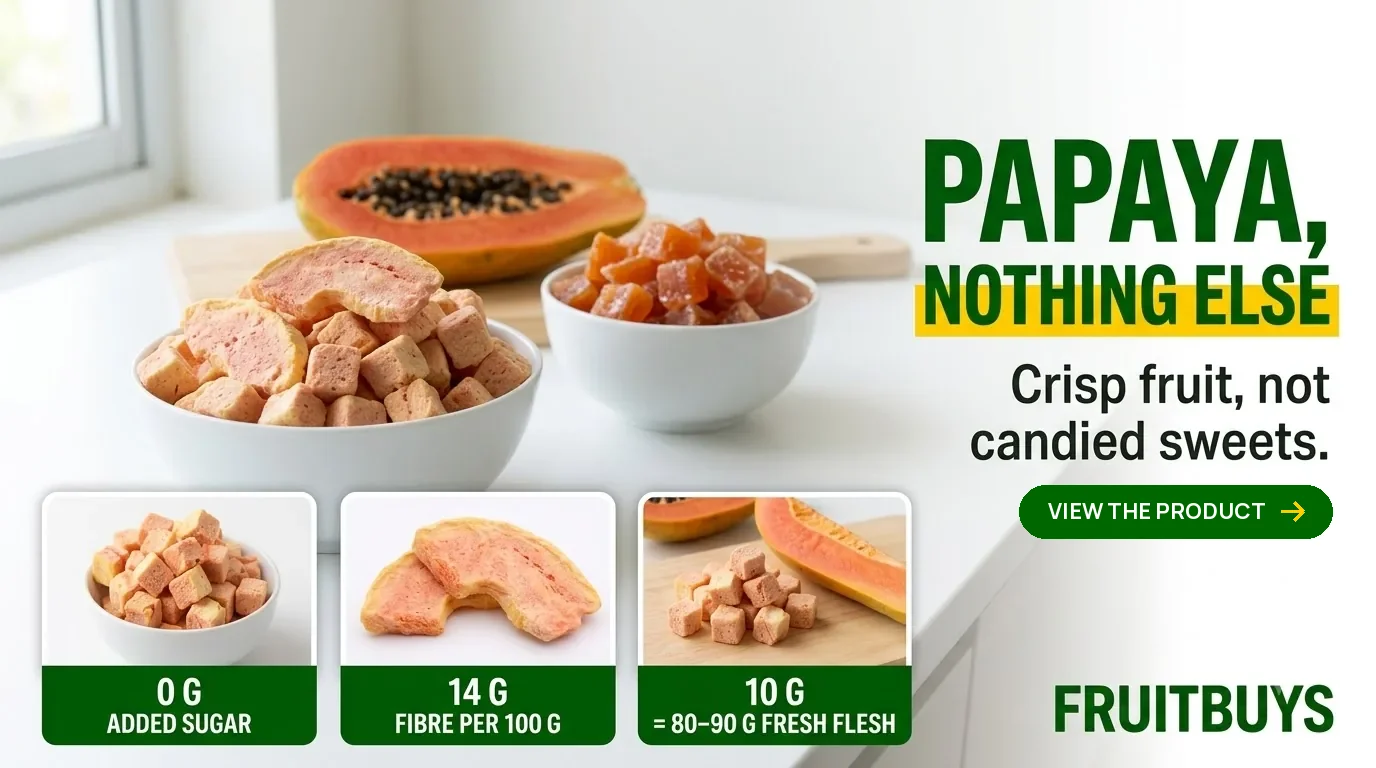
Per 100 g, freeze-dried papaya looks far higher in everything, sugar included, because the water is gone. Per piece of fruit it carries the same papaya: about 10 g of freeze-dried papaya equals 80–90 g of fresh flesh. Values per serving and the label claims they support are in freeze-dried papaya nutrition facts.
Why is so much dried papaya on the shelf candied?
Because sugar is the easiest way to make dried papaya soft and keep it that way. Papaya dried in hot air on its own tends to turn leathery and darker; infusing the pieces with syrup before drying keeps them soft, bright and shelf-stable, and it costs little. On the labels we checked, sugar made up about 70–75% of a US sweetened papaya by weight, with up to 39 g per 100 g added on top of the fruit’s own, plus sulphur dioxide to hold the colour and, on some packs, two synthetic yellow dyes. It tastes good, and it is a sweet, not a fruit snack.
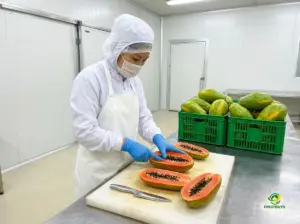
Freeze-drying takes a different route. The fresh pieces are frozen and the ice is removed under vacuum without heating the fruit, so the papaya keeps its shape and colour and ends crisp and light with nothing added. It needs no sugar to stay stable, because at under 5% moisture there is too little free water for spoilage organisms to grow.
How to read the pack:
– Ingredient line “papaya” only: fruit, no added sugar.
– “Papaya, sugar” or “papaya, cane sugar, citric acid”: candied.
– “Sulphur dioxide”, “contains sulphites” or FD&C colours: the fruit has been treated to hold its colour or look brighter.
– “No added sugar” on the front: check the back still lists papaya alone.
Is dried papaya good for you? What the numbers say
Dried papaya made from fruit alone is a concentrated way to eat papaya, with the same strengths and the same caution as any dried fruit.
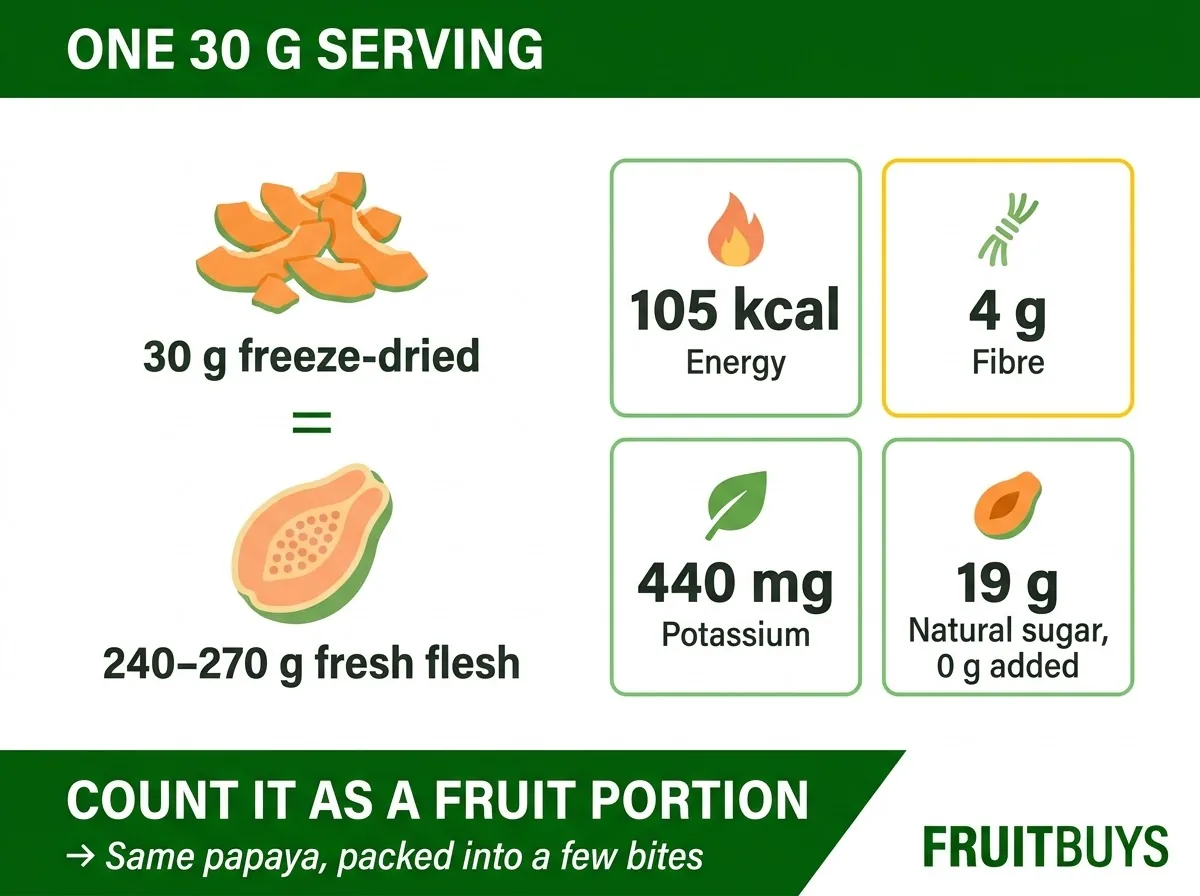
What it brings. A 30 g serving of freeze-dried papaya, roughly the fruit of 240–270 g of fresh papaya flesh, carries typical values of about 105 kcal, 4 g of fibre and 440 mg of potassium, plus a large share of an adult’s daily vitamin C and the beta-carotene and lycopene that give papaya its colour. Vitamin C supports the normal function of the immune system, and potassium supports normal muscle function.
What to keep in mind. The same 30 g also carries about 19 g of natural fruit sugar, as much as the fresh papaya it came from, packed into a few bites. Dried fruit is easy to eat quickly, so treat a handful as a fruit portion, not as a free snack. People managing blood sugar should count it like any fruit and follow their own doctor’s or dietitian’s advice. People with a latex allergy can react to papaya and should check with their doctor before eating it.
Candied papaya adds sugar on top of all this, which is why the choice between candied and fruit-only matters more than the choice between dried and fresh.
Does freeze-dried papaya keep the vitamins of fresh papaya?
It keeps more of them than heat drying does. Vitamin C and the carotenoids that colour papaya are sensitive to heat, oxygen and light, and freeze-drying removes the water at low temperature under vacuum, so much more of them survive than in hot-air drying. That is also why freeze-dried papaya keeps its bright orange-red colour instead of turning brown.
Typical vitamin C in freeze-dried papaya is 300–450 mg per 100 g, against 60.9 mg in 100 g of fresh fruit, because about eight parts of fresh flesh go into one part of dried. Exact values vary with ripeness and season, so brands that print a vitamin figure on their pack use a lab panel on their own lot.
Is dried papaya good for digestion?
Its fibre is the part that counts. Freeze-dried papaya carries about 14 g of fibre per 100 g, so a 30 g serving adds around 4 g to the day, which helps you reach a normal fibre intake.
Papaya’s reputation for digestion often comes from papain, the enzyme in the latex of green papaya. Ripe papaya, fresh or dried, carries very little of it, so dried papaya should not be expected to work like a digestive enzyme. The difference is explained in does papaya powder contain papain. Anyone with an ongoing digestive problem should talk to a doctor rather than rely on a fruit snack.
Which papaya fits a snack or ingredient brand?
For a brand building a better-for-you snack, the choice comes down to the ingredient line on the back of the pack. Freeze-dried papaya gives you a one-word label, “papaya”, with 0 g added sugar, a natural orange-red colour and a crisp texture that sets the product apart on a shelf full of chewy candied fruit.
- Snack packs and toppings: freeze-dried slices or 10 mm dice, sold as crisp fruit.
- Cereal, granola and chocolate: 5 mm dice at 3–8% for a tropical colour accent.
- Smoothie mixes, drinks and baby food: freeze-dried papaya powder, 100% fruit with no carrier.
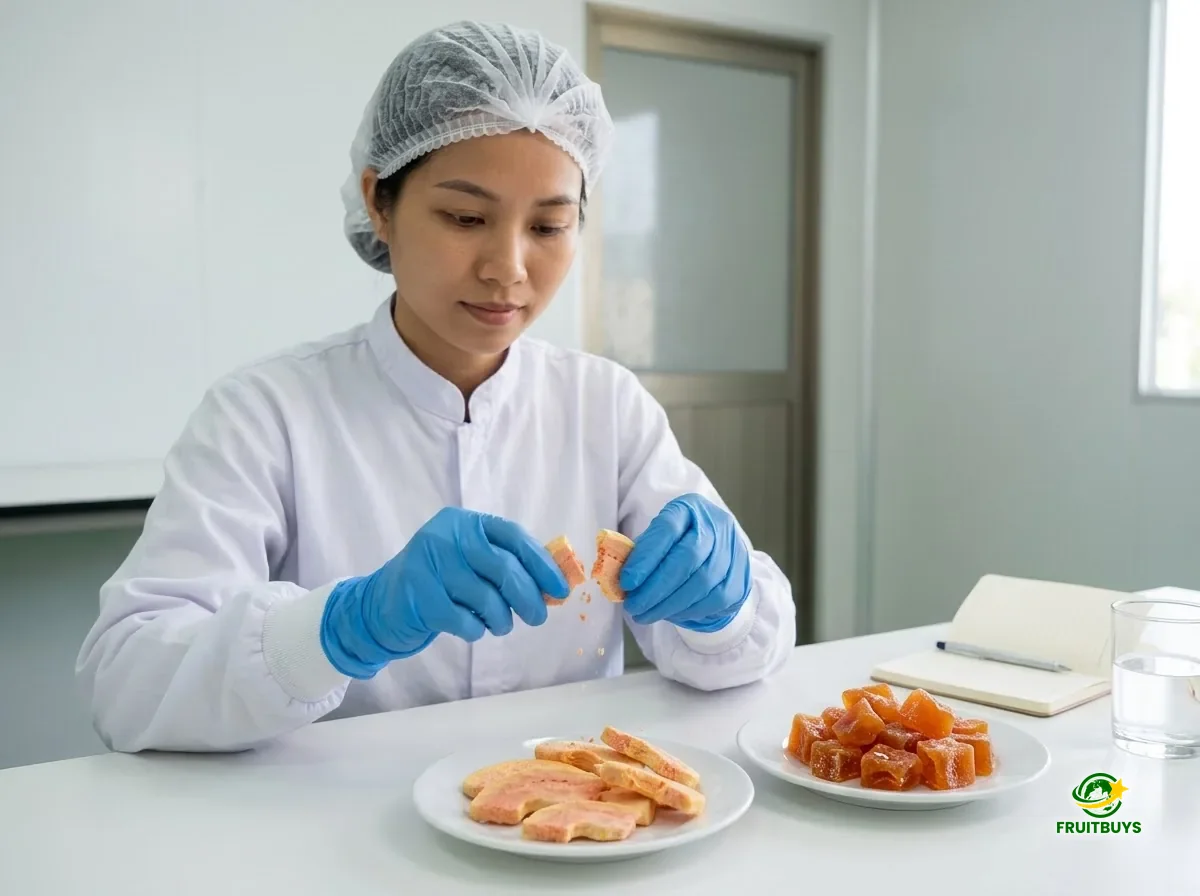
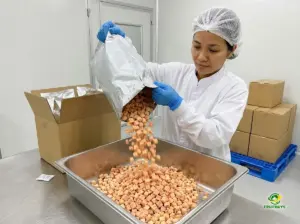
Freeze-dried papaya is crisp, not chewy. Position it as a crunchy fruit snack or topping, where the crunch is the reason to buy, and pack it in a sealed pouch so it stays that way. FruitBuys, an established Vietnamese B2B exporter specialising in freeze-dried fruits, supplies it from ripe Mekong Delta papaya in bulk cartons and private-label pouches from 500 kg per SKU. Cuts, specifications and container loads are on the freeze-dried papaya product page, and the powder on the freeze-dried papaya powder page.
Taste the difference
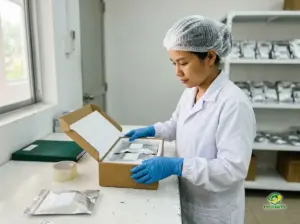
Ask for a sample of freeze-dried papaya and set it beside the candied papaya on your shelf. We send it in two sealed foil pouches with the specification.
FAQ
Is dried papaya good for you?
Dried papaya made from fruit alone gives fibre, potassium, vitamin C and carotenoids in a small portion. Candied papaya adds sugar on top, so check that the ingredient line reads only “papaya”.
Does dried papaya have added sugar?
Candied dried papaya does; freeze-dried papaya made from fruit alone does not. The ingredient line tells you which one you have.
How many calories are in dried papaya?
Freeze-dried papaya has about 350 kcal per 100 g, or about 105 kcal in a 30 g serving. Candied papaya varies by recipe, so read its label.
Does dried papaya have the same benefits as fresh papaya?
Fruit-only dried papaya carries the same fibre, minerals and carotenoids as the fresh fruit it came from, concentrated, and freeze-dried papaya keeps most of the vitamin C. It also concentrates the natural sugar, so portions are smaller.
Does dried papaya contain vitamin C?
Yes. Freeze-dried papaya carries a typical 300–450 mg per 100 g, because the fruit is never heated.
Is dried papaya good for digestion?
It adds fibre, about 4 g in a 30 g serving. Ripe papaya contains very little papain, so it does not act as a digestive enzyme.
Is freeze-dried papaya crunchy?
Yes. It is crisp and light from the bag and softens within minutes in milk or yogurt.