
Is Freeze-Dried Mango the Right Choice for Your Product, or Is Dried Mango Enough?
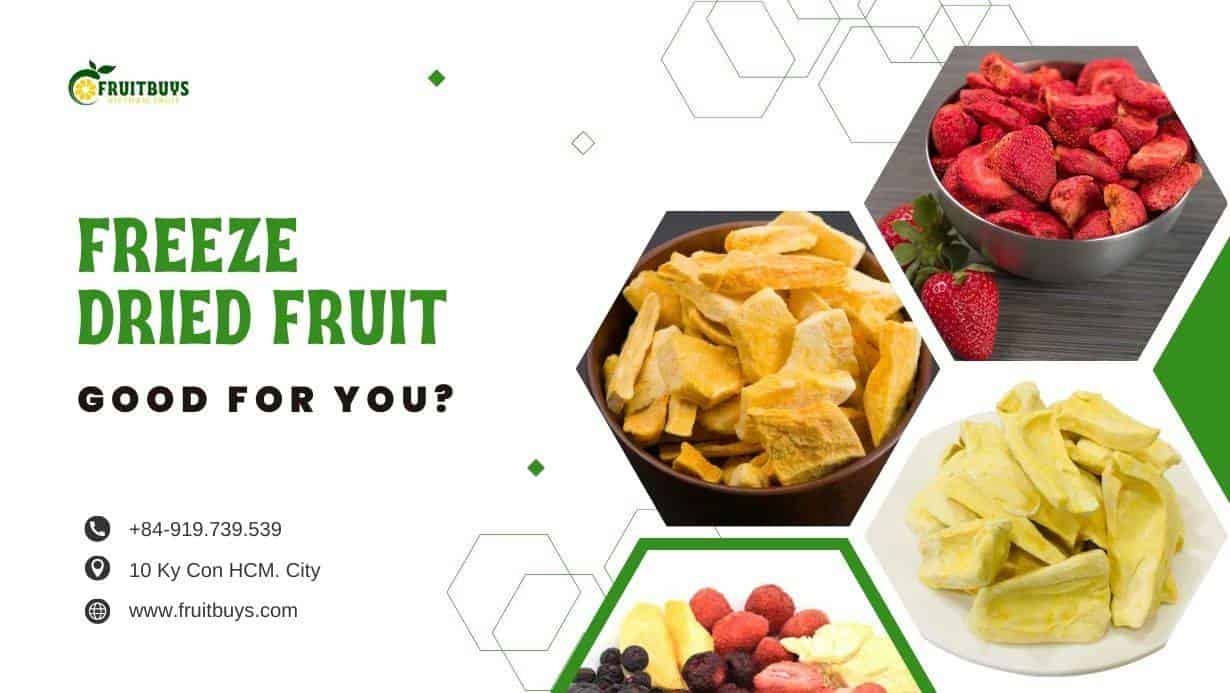
Freeze-dried mango is single-ingredient mango (Mangifera indica L.) from the freeze-dried fruit range, frozen and dried under vacuum until about 4% water remains, which leaves a light, crisp piece with nothing added.
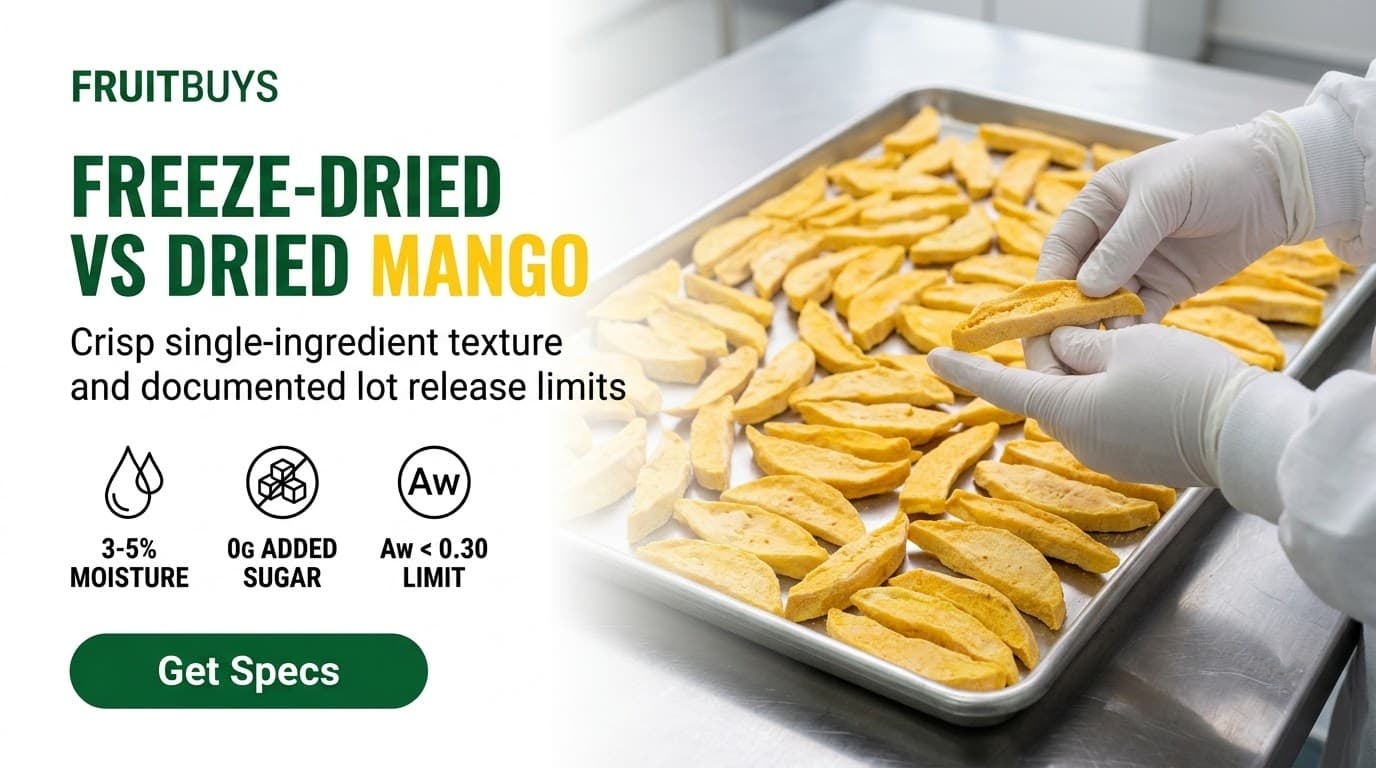
Freeze-dried mango is the right choice when your customer pays for crunch, shape or a “100% mango” label. Dried mango is enough, and cheaper, when the fruit will be chewed, baked, filled or rehydrated. The decision is less about the fruit than about what your product does to it. If freeze-dried is the right fit, the second decision is what to prepare before you contact a supplier: buyers who arrive with a defined format, application and document list get comparable quotes in one round; buyers who ask for “freeze-dried mango, price please” spend weeks clarifying.
What is the difference between freeze-dried and dried mango?
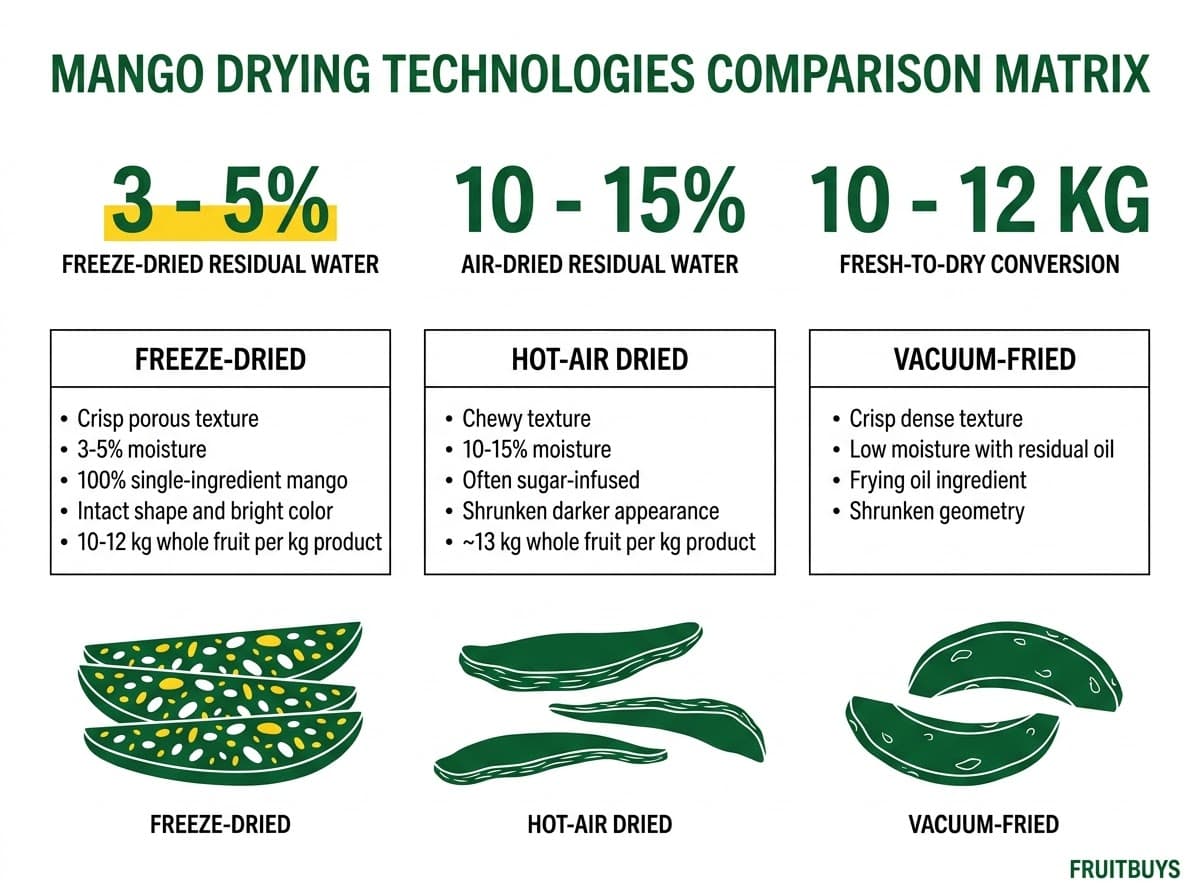
Freeze-dried mango is crisp and nearly water-free; hot-air dried mango is chewy and keeps several times more water; vacuum-fried mango is crisp but contains oil.
| Freeze-dried | Hot-air dried | Vacuum-fried | |
|---|---|---|---|
| Texture | Light, crisp, porous | Soft, chewy | Crisp, denser |
| Moisture | About 3–5% | About 10–15% | Low, with oil |
| Ingredients | 100% mango possible | Often sugar-infused; unsweetened versions exist | Mango plus frying oil |
| Shape and color | Close to the fresh cut | Shrunk, darker | Shrunk |
| Fruit per kg of product | About 10–12 kg whole fruit | About 13 kg whole fruit (industry norm) | Varies |
| Storage | Ambient, barrier packaging essential | Ambient; some unsweetened lines need cool storage | Ambient, oxidation risk |
| Relative cost | Highest | Lowest | Middle |
Freeze-dried mango does not need more fruit than air-dried; its premium comes from the drying process itself, as explained in why freeze-dried mango costs what it does.
Which products is freeze-dried mango worth it for?
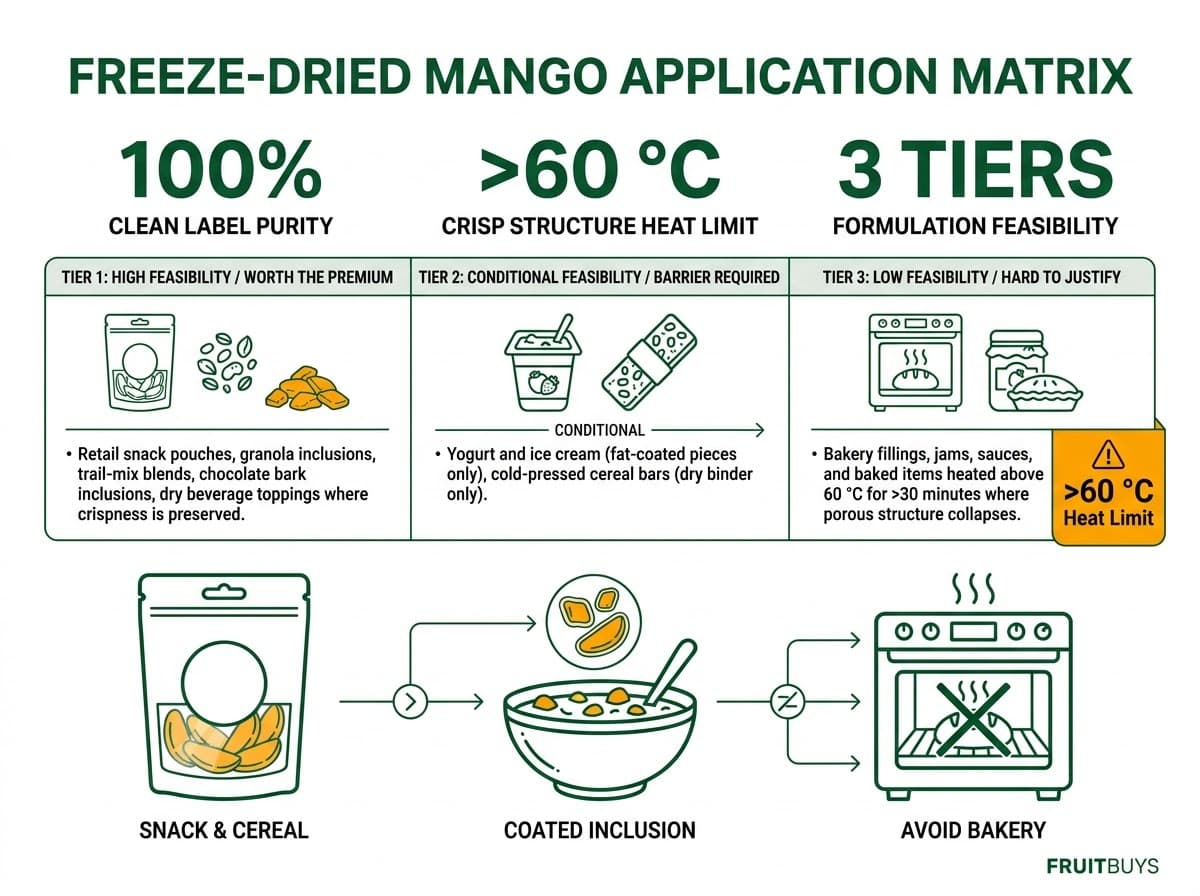
Products where the fruit is eaten dry and crisp, or where the label must say nothing but mango.
- Worth it: snack pouches and single-ingredient snacks; cereal, granola and trail-mix inclusions; chocolate pieces; dry toppings; smoothie and dessert applications where fast rehydration is the point.
- Worth it with care: yogurt and ice cream, only with coated pieces; cereal bars, only with a dry binder and cold pressing.
- Hard to justify: fillings, sauces, jams and baked goods held hot for long periods, where the crisp structure disappears and air-dried or frozen mango does the same job for less.
Which cut to choose for each application, and how to pilot it, is set out in our freeze-dried mango formats guide.
What risks come with freeze-dried mango that dried mango does not have?
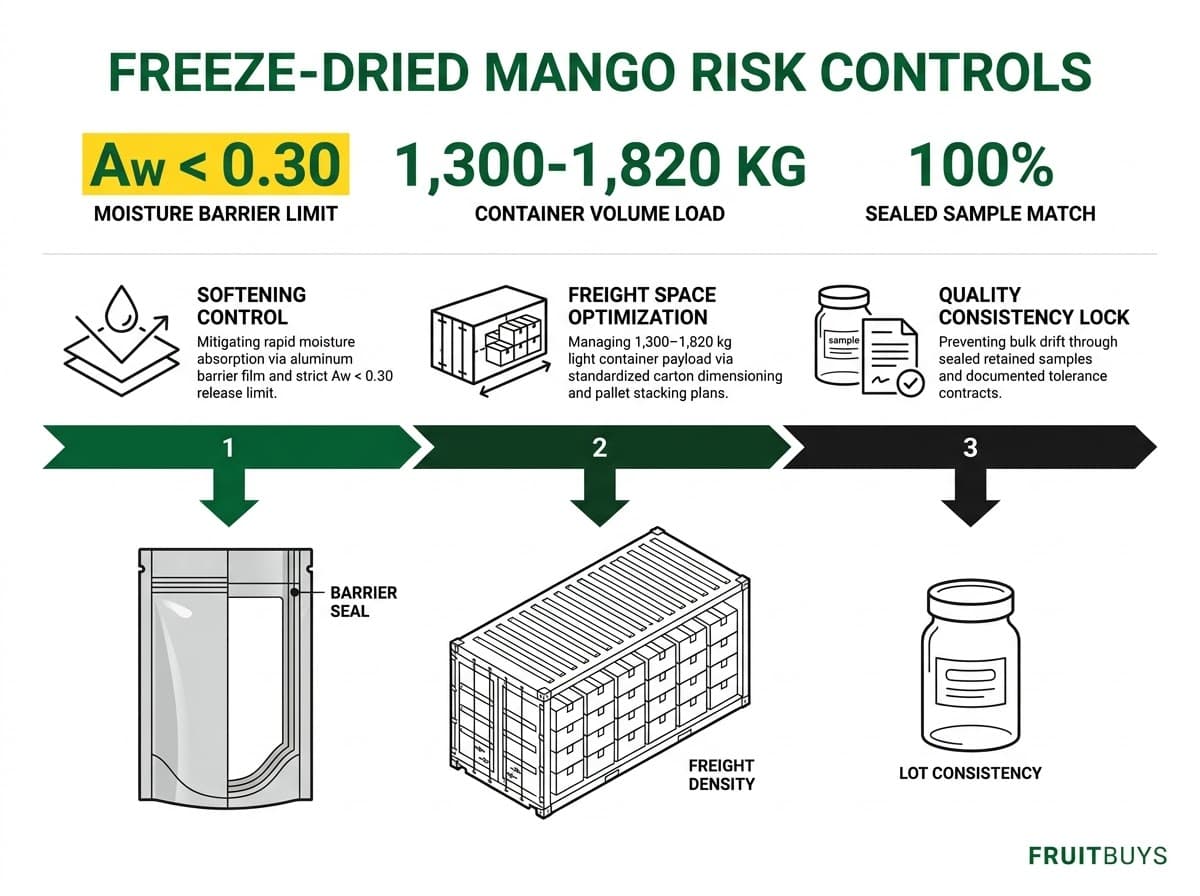
Three: it softens fast if packaging fails, a full container weighs very little, and bulk can drift from the sample. Each is manageable, and each has its own guide:
- Softening. Freeze-dried mango can pass its moisture and water activity limits at release and still soften or cake when the packaging fails. The release limits to lock are in the freeze-dried mango product specification — moisture 3–5%, Aw below 0.30, lot COA. The pouch, seal and shelf-life evidence are in the packaging and freight guide.
- Freight. A 20-foot container of slices carries about 1,300–1,820 kg, so freight is paid on space, not weight.
- Consistency. A good sample does not release a bulk lot. The retained sample, tolerances and batch records that do are in the sample-to-bulk guide.
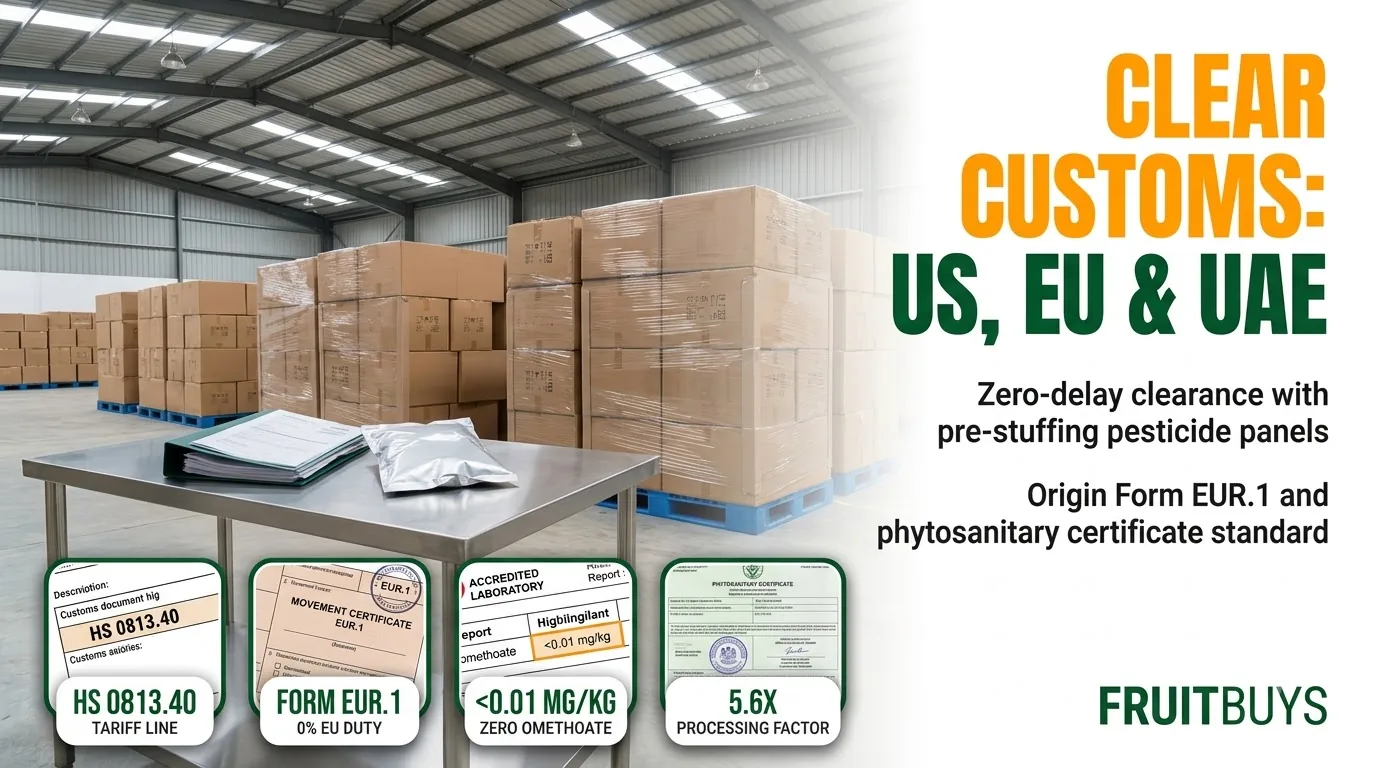
Import classification and the lab data that keep a container moving are covered in the customs and import guide, origin and cultivar choice in why source from Vietnam.
What should I decide before I contact a supplier?
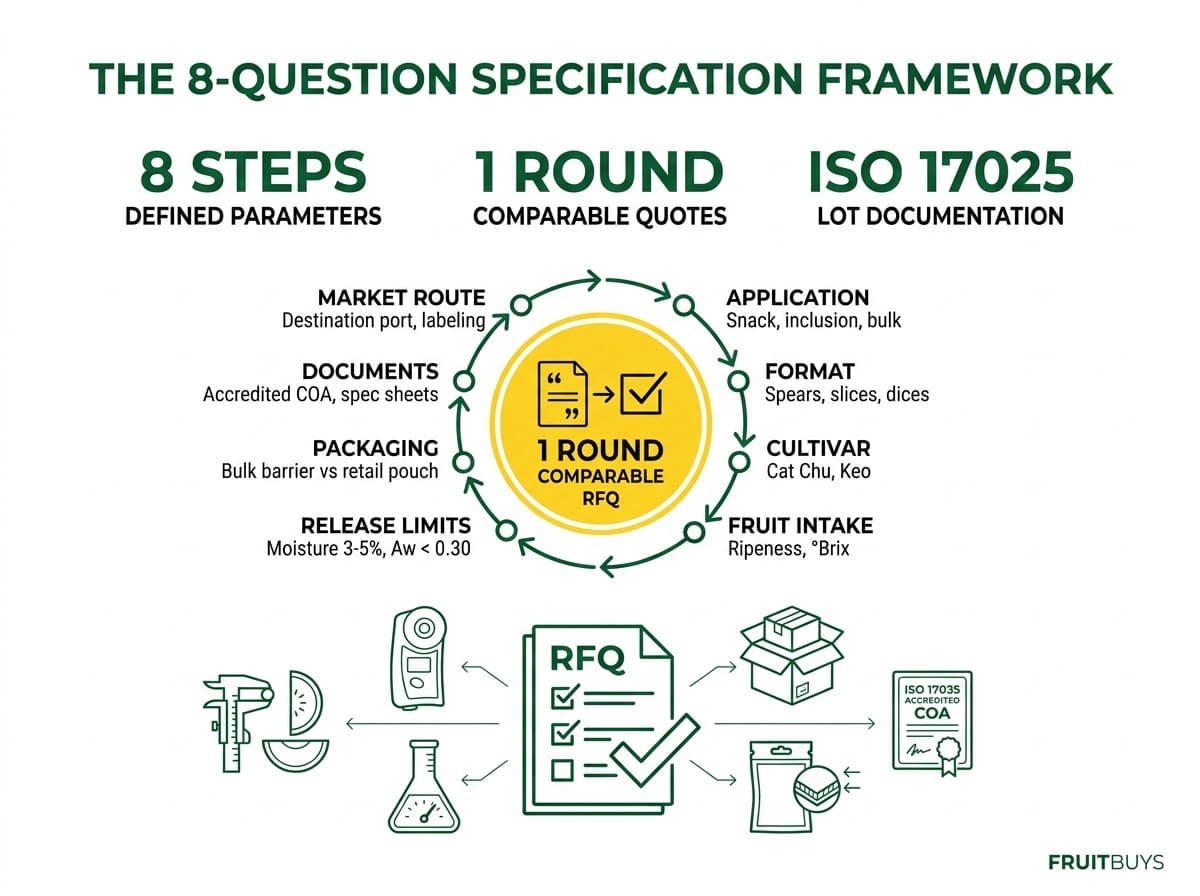
Answer eight questions first. They turn a price request into a product definition, and they are what a capable supplier will ask you anyway.
- Application: snack, inclusion, topping, beverage, bakery, private label or bulk ingredient?
- Format: slices, cubes, bites or granules, and at what size?
- Cultivar direction: Cát Chu, Keo or another, and does it matter to your color and flavor?
- Fruit acceptance: which ripeness and defect criteria should the factory apply at intake?
- Release values: what moisture and water activity must each lot meet, by which method?
- Packaging: bulk liner or retail pouch, what barrier, what shelf life will you print?
- Documents: which COA parameters, certificates and label data must match each lot?
- Market route: which country, which importer of record, which labeling rules?
Freeze-dried mango supply means delivering a defined product, not dried fruit in a bag. The more of these you answer before the first call, the fewer rounds it takes.
What does an unprepared RFQ cost?
Time, mostly: every missing answer becomes a clarification round, and every round delays the sample. A rough way to estimate it: delay ≈ number of undefined items × days per clarification round. If four of the eight questions are open and each round of emails takes about a week, the first comparable quote arrives a month later than it could have. Worse, two suppliers answering an undefined RFQ will quote different products, and the cheaper quote is often the one that assumed less.
What should the RFQ contain?
- Product identity: freeze-dried mango, 100% mango, format and size with tolerance
- Raw material: cultivar direction, growing area, ripeness and defect criteria
- Release values: moisture and water activity with methods, and the lot COA content (microbiology, SO₂, residues)
- Sample control: approved sample, sealed retained sample and bulk comparison rule
- Packaging: liner or pouch structure, barrier data, carton size and net weight per carton
- Documents: certificate scope, lot COA from an accredited laboratory, label and nutrition inputs
- Private label: if relevant, fix the product specification before the pouch artwork, not after
- Logistics: destination port, volume per shipment and delivery months
How do I qualify a supplier?
On documents that match lots, not on the best-looking sample. A supplier qualification is not a sample beauty contest. Ask for:
- Factory and certificates: the factory name, the certification body, certificate number, scope that covers freeze-dried fruit, and expiry date. A certificate shows the system; it does not replace lot testing.
- A recent lot COA from an ISO/IEC 17025 laboratory, with lot code, method, limit, result and release status.
- Batch records for a recent lot: fruit intake, drying cycle, sorting and packing, plus mass balance.
- The release rule: confirmation that a lot ships only when moisture and water activity both pass.
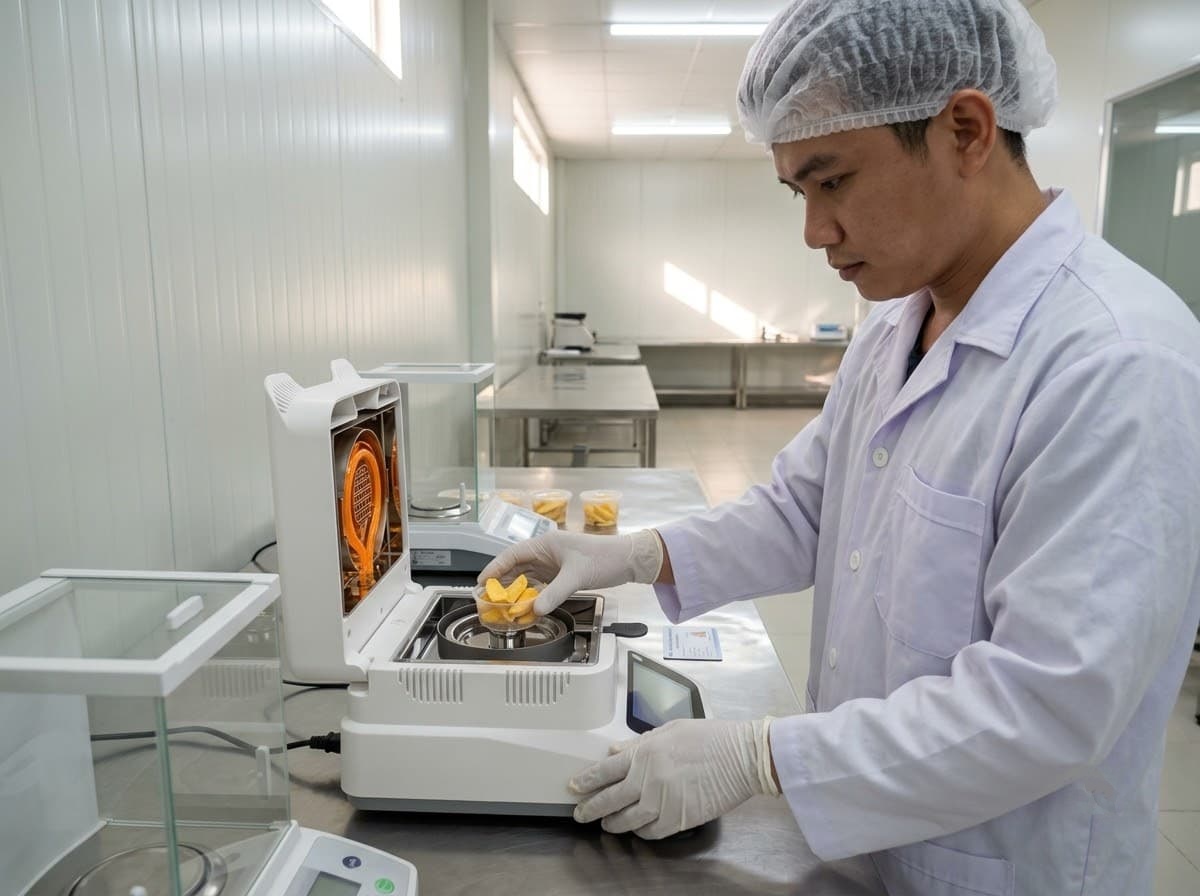
Hold every supplier to this list, including us. A supplier that sells through production partners, as FruitBuys does, should be able to show you the same documents for the factory that makes your product.
Decision rule
- Product is eaten dry and crisp, or the label must be 100% mango → freeze-dried.
- Product is chewy, baked, filled or rehydrated → start with hot-air dried or frozen mango.
- Freeze-dried chosen → answer the eight questions before the RFQ.
- Comparing suppliers → compare on the same format, release values and packaging, then on cost per usable kilogram.
- Qualifying a supplier → lot documents and batch records first, sample second.
When freeze-dried mango is not the right choice
If your margin depends on the lowest price per kilogram, your channel cannot keep stock dry, or the fruit loses its crispness in your product before anyone eats it, freeze-dried mango will cost you more than it earns. Buy air-dried, frozen or purée instead, and spend the difference elsewhere.
FAQ
Is freeze-dried mango the same as dried mango?
No. Freeze-dried mango is crisp and about 3–5% moisture; conventional dried mango is chewy at about 10–15% moisture and is often sugar-infused.
Does freeze-dried mango need refrigeration?
No. In sealed barrier packaging it is shelf-stable at ambient temperature. Once opened, keep it closed and dry; humidity, not heat, is what softens it.
Is freeze-dried mango ready to eat?
Only if the supplier can show validated pathogen control. Freeze-drying alone does not kill pathogens, so ask for the hazard analysis and the lot microbiology results.
Talk to us before you send an RFQ
Considering freeze-dried mango for a new product or a new supplier? Tell us your application, target market and the answers you already have to the eight questions. FruitBuys will help you fill in the rest and turn them into a specification that any supplier, including us, can quote against like-for-like. Reach our team from the freeze-dried mango product page.
Sources & Technical References
- FruitBuys Vietnam: “Premium Freeze Dried Mango”: release targets of 3–5% moisture and water activity below 0.30; the eight buyer questions; sample approval, COA and documentation principles. (https://fruitbuys.com/product/freeze-dried-mango)
- COLEAD: “Sector Study: Processed Mango – Dried Mango”: 13 : 1 fresh-to-dried ratio for air-dried mango. (https://resources.colead.link/en/system/files/file_fields/2023/10/04/02-driedmangostudyweb.pdf)
- MDPI Foods 11(15):2220: “Effect of Swell-Drying on Mango (Mangifera indica) Drying Kinetics”: UNECE moisture limit of 15% for preservative-free dried mango. (https://www.mdpi.com/2304-8158/11/15/2220)
- U.S. Food and Drug Administration: “Draft Guidance for Industry: Establishing Sanitation Programs for Low-Moisture Ready-to-Eat Human Foods and Taking Corrective Actions Following a Pathogen Contamination Event”. (https://www.fda.gov/regulatory-information/search-fda-guidance-documents/draft-guidance-industry-establishing-sanitation-programs-low-moisture-ready-eat-human-foods-and)