
Which freeze-dried papaya cut fits your cereal, trail mix, chocolate or yogurt line?
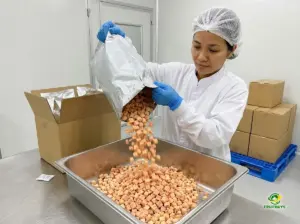
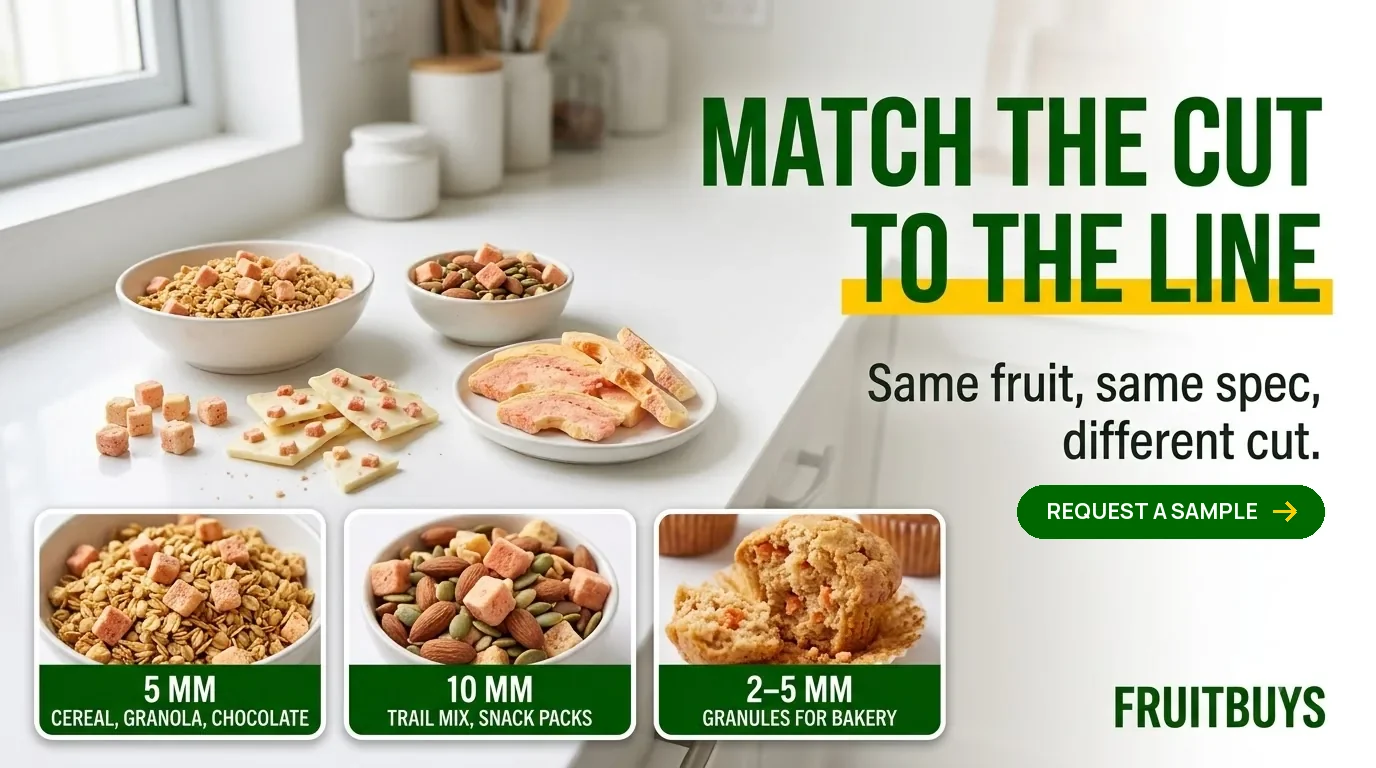
Use 5 mm dice for cereal, granola and chocolate, 10 mm dice or slices where the papaya is sold as the fruit itself, and 2–5 mm granules wherever it is baked in or bound into a bar. The cut decides three things at once: how evenly the papaya doses on your line, how much breaks into dust before it reaches the consumer, and how much sea freight you pay per kilogram. Pick it from the product, not from the price list, and write the tolerance into the specification so every lot arrives cut the same way.
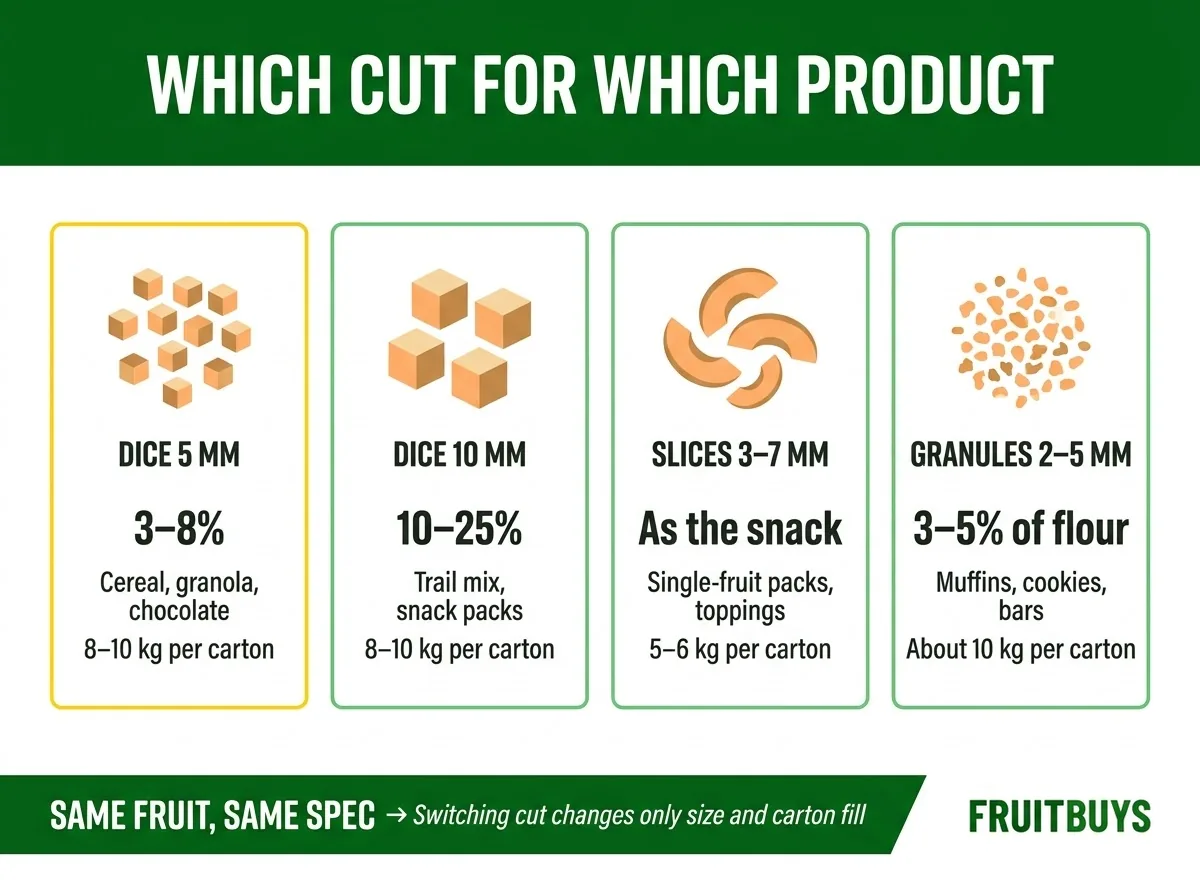
Which cut for which product?
| Cut | Size | Net per carton | Fits | Starting dose | Watch for |
|---|---|---|---|---|---|
| Dice 5 mm | 5 × 5 mm | 8–10 kg | Breakfast cereal, granola, muesli, chocolate bark, enrobed bites | 3–8% | Add after baking or toasting |
| Dice 10 mm | 10 × 10 mm | 8–10 kg | Trail mixes, freeze-dried fruit blends, snack packs | 10–25% of the mix | Pair only with other dry ingredients |
| Slices | 3–7 mm thick | 5–6 kg | Single-fruit snack packs, visible toppings | As the snack or topping | Breakage in transit and filling |
| Granules | 2–5 mm | ~10 kg | Muffins, cookies, bread, bars, chocolate fillings | 3–5% of flour weight | Bake at ≤180 °C |
| Powder | 60–80 mesh | 15–20 kg | Drinks, smoothie mixes, baby food, coatings | 3–6% in drinks | See the powder page |
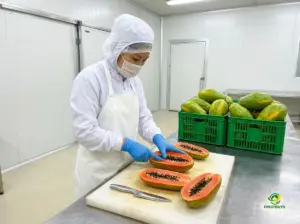
All cuts of freeze-dried papaya come from the same ripe red-flesh papaya, sorted at 11–13 °Brix and freeze-dried to ≤5% moisture and aw ≤0.30, so switching cut does not change colour, taste or the COA. What changes is shape, dose and how much air ships in each carton.
5 mm or 10 mm dice for cereal, trail mix and chocolate?
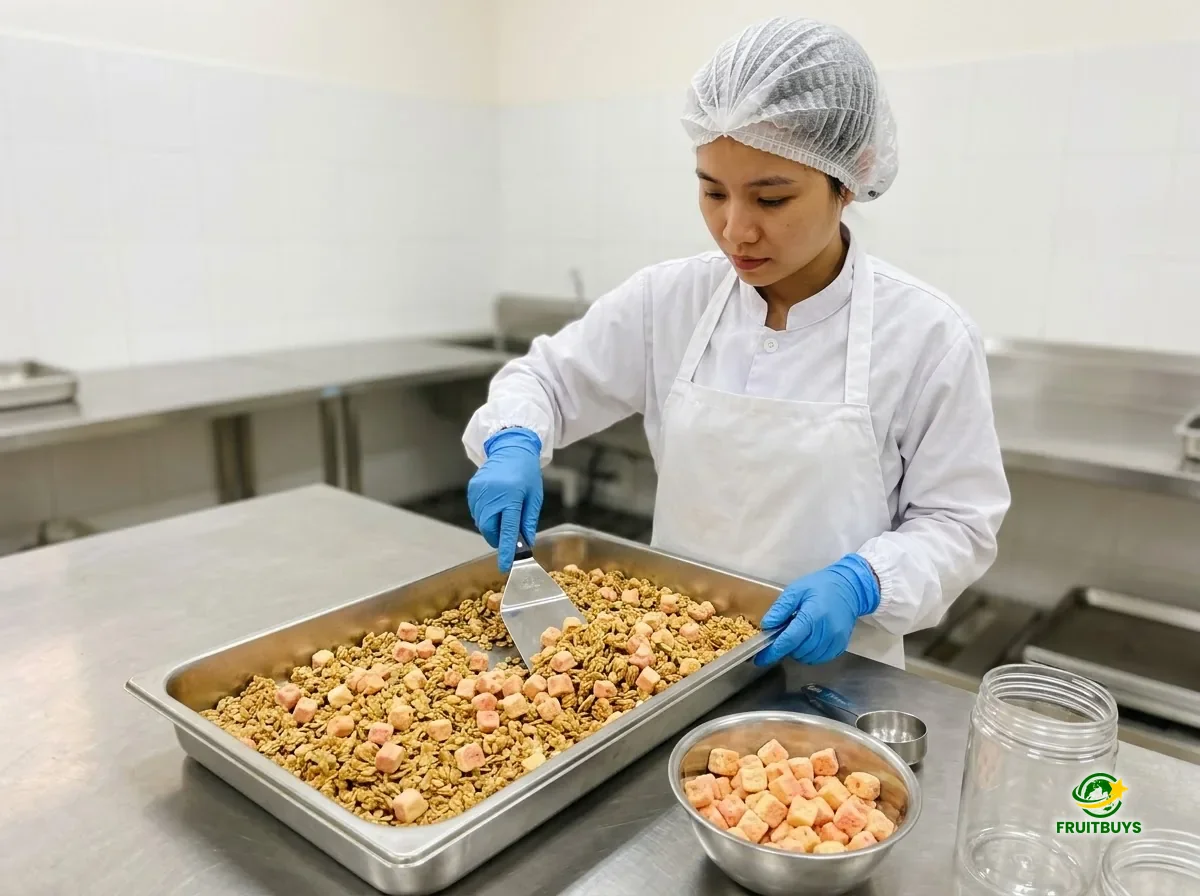
5 mm for anything poured or enrobed, 10 mm for anything picked up by hand. A 5 mm dice spreads evenly through a cereal or granola at 3–8%, which is enough to make the bowl read “tropical” from the first spoonful, and it sits flat in a chocolate bark without breaking the surface. A 10 mm dice is a piece the consumer sees and chooses, which is what a trail mix or a fruit blend sells on.
Freeze-dried papaya at aw ≤0.30 sits close to the water activity of dry breakfast cereal, so very little moisture moves between them inside a sealed pack and the dice stay crisp through the shelf life. Add the papaya after baking or toasting, when the cereal has cooled, to keep both colour and crunch. Chocolate is the easiest home of all: the fat coats each piece and keeps moisture out, so dice in a bar stay crisp as long as the chocolate does. Specify the inclusion grade (TPC <1,000 CFU/g) for chocolate and bars, because there is no heat step after the papaya goes in.
In fruit blends, 10 mm papaya pairs well with freeze-dried pineapple, mango or banana at similar water activity, and FruitBuys packs these mixes at source. Keep it apart from raisins or other fruit at a much higher water activity in the same bag: moisture moves from the wetter fruit into the papaya, and the papaya softens within weeks.
When do slices make sense, and how much breakage should you accept?
Slices make sense when the papaya is the product: a single-fruit snack pack, a gift pack, a topping laid on a bowl. They show the fruit’s shape and colour better than any dice, and they are also the cut most exposed to breakage, because a thin 3–7 mm slice snaps at its corners during transit and filling.
We pack slices lighter, at 5–6 kg per carton against 8–10 kg for dice, to protect their shape. That protection has a cost: per kilogram, slices take roughly 1.3–2 times the sea freight of dice. Fines under 2 mm are held at ≤5% in both dice and slices; agree a broken-slice limit for retail packs on the pre-shipment sample, so the approved sample becomes the reference for every container.
Use slices where the piece is seen, and dice where it is dosed. If the papaya goes into a mix by weight, dice deliver the same fruit with less breakage and lower freight per kilogram.
Do granules cut cost in bakery and bars?
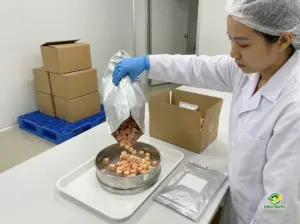
Yes, wherever nobody sees the cut. Granules of 2–5 mm pack at about 10 kg per carton, disperse evenly through a batter or bar mass, and give papaya colour and flavour at 3–5% of flour weight. In a muffin, cookie or bread, a 10 mm dice cut for show is wasted once it is baked in; granules deliver the same fruit for less per finished unit. Bake at ≤180 °C so the natural fruit sugars do not brown.
In a bar, freeze-dried papaya draws moisture from the binder syrup and softens over the shelf life, so bind it in as granules and run a shelf-life pilot in your own recipe. For a crisp bar with a dry binder, 5 mm dice work too.
How does freeze-dried papaya behave in yogurt, overnight oats and smoothie bowls?
It softens in 2–5 minutes in water, milk or yogurt and turns back into soft, sweet fruit with its orange-red colour. That is ideal at the moment of eating, and it is why the papaya belongs in a separate topping cup, a lid compartment or a dry sachet rather than mixed into the yogurt at the plant. In overnight oats the softening is the point: mixed in the evening, the dice are soft fruit by morning. For smoothie bowls, 10 mm dice or slices on top give colour and crunch for the first minutes; for a smoothie itself, use the powder.
Dairy and ready-to-eat lines should specify the inclusion grade, with Listeria and Enterobacteriaceae testing available for each lot on request, before the container is sealed. The full limits are in what moisture, water activity and microbiology limits a freeze-dried papaya contract should set.
What should the cut specification say?
Five lines cover it:
| Line | Standard | Why it matters |
|---|---|---|
| Cut and nominal size | Dice 5 × 5 or 10 × 10 mm; slices 3–7 mm; granules 2–5 mm | Defines the product your line doses |
| Size tolerance | ≥90% of pieces within the stated cut | Even dosing and look |
| Fines (<2 mm) | ≤5% in dice and slices | Yield; no dust at the bottom of a retail pack |
| Moisture / aw | ≤5.0% / ≤0.30 on arrival | Crisp pieces that do not cluster in the hopper |
| Micro grade | Standard, or inclusion grade (TPC <1,000 CFU/g) | Fits the next step in your process |
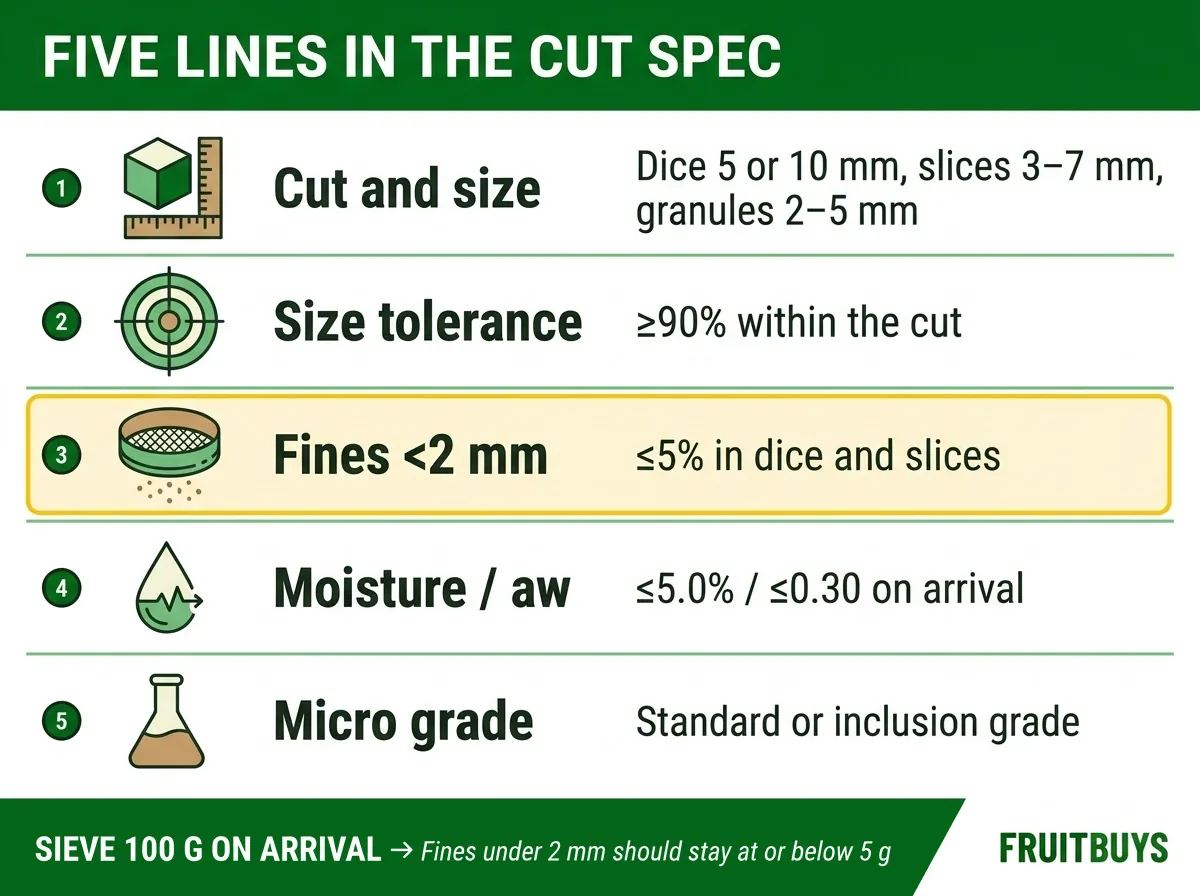
Custom cuts are made to your specification and confirmed on the pre-shipment sample. To check a lot on arrival, sieve 100 g through a 2 mm screen: the fines should stay at or below 5 g. How cut size and season move the price per kilogram is covered in how many kilograms of fresh papaya make 1 kg of freeze-dried papaya.
Request samples of two cuts
Tell us your product and target dose, and we send the two cuts most likely to fit, each in two sealed foil pouches: one for your trial, one kept sealed for your lab.
FAQ
What sizes does freeze-dried papaya come in?
Dice 5 × 5 mm and 10 × 10 mm, slices 3–7 mm, granules 2–5 mm and powder at 60–80 mesh. Custom cuts are made to order.
Which cut is best for granola and cereal?
5 mm dice at 3–8%, added after baking or toasting once the cereal has cooled.
Does freeze-dried papaya stay crunchy in chocolate?
Yes. The chocolate’s fat keeps moisture out, so the pieces stay crisp as long as the chocolate does.
Does freeze-dried papaya go soft in yogurt?
Yes, within 2–5 minutes, which is why it is packed in a separate topping cup or sachet and mixed in at the moment of eating.
Can freeze-dried papaya be mixed with other freeze-dried fruits?
Yes. It pairs with freeze-dried pineapple, mango or banana at similar water activity, and FruitBuys packs these blends at source. Keep it apart from fruit with much higher water activity, such as raisins.
Why do slices ship in lighter cartons?
To protect their shape. Slices pack at 5–6 kg per carton against 8–10 kg for dice, so they carry roughly 1.3–2 times the sea freight per kilogram.
How do I check the cut on arrival?
Sieve 100 g through a 2 mm screen; fines should be at or below 5 g, and at least 90% of pieces should match the stated cut.