
What are the benefits of sapodilla (chikoo), fresh or dried?
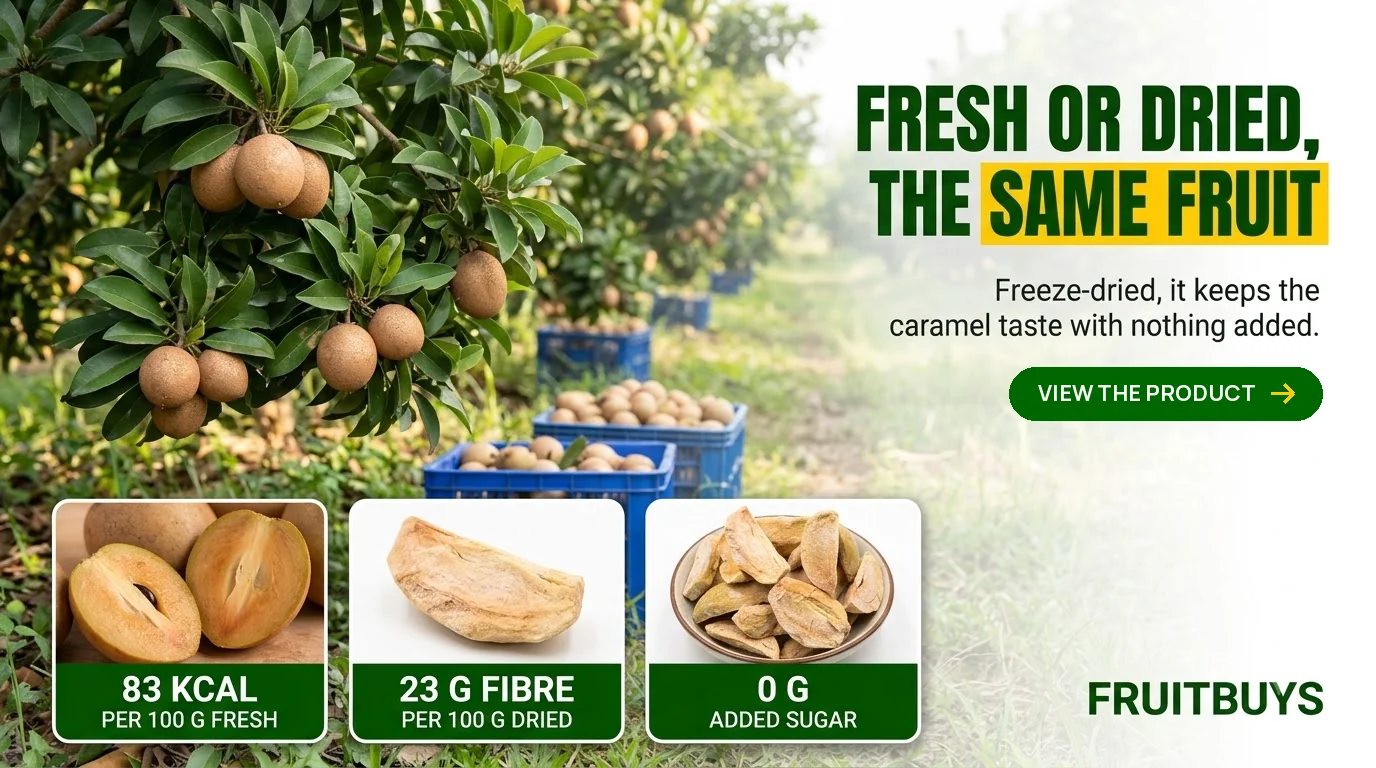
Sapodilla is a dessert that grows on a tree. A ripe one tastes of brown sugar and malt, and every gram of that sweetness comes from the fruit. Per 100 g of fresh flesh you get 83 kcal, 5.3 g of fibre and 193 mg of potassium, with almost no fat. Dried, the same fruit becomes a crisp, light snack: freeze-dried sapodilla carries 23 g of fibre per 100 g and no added sugar. Buying for a store or brand? Start with the guide to buying freeze-dried sapodilla in bulk.
What is sapodilla, and is chikoo the same fruit?
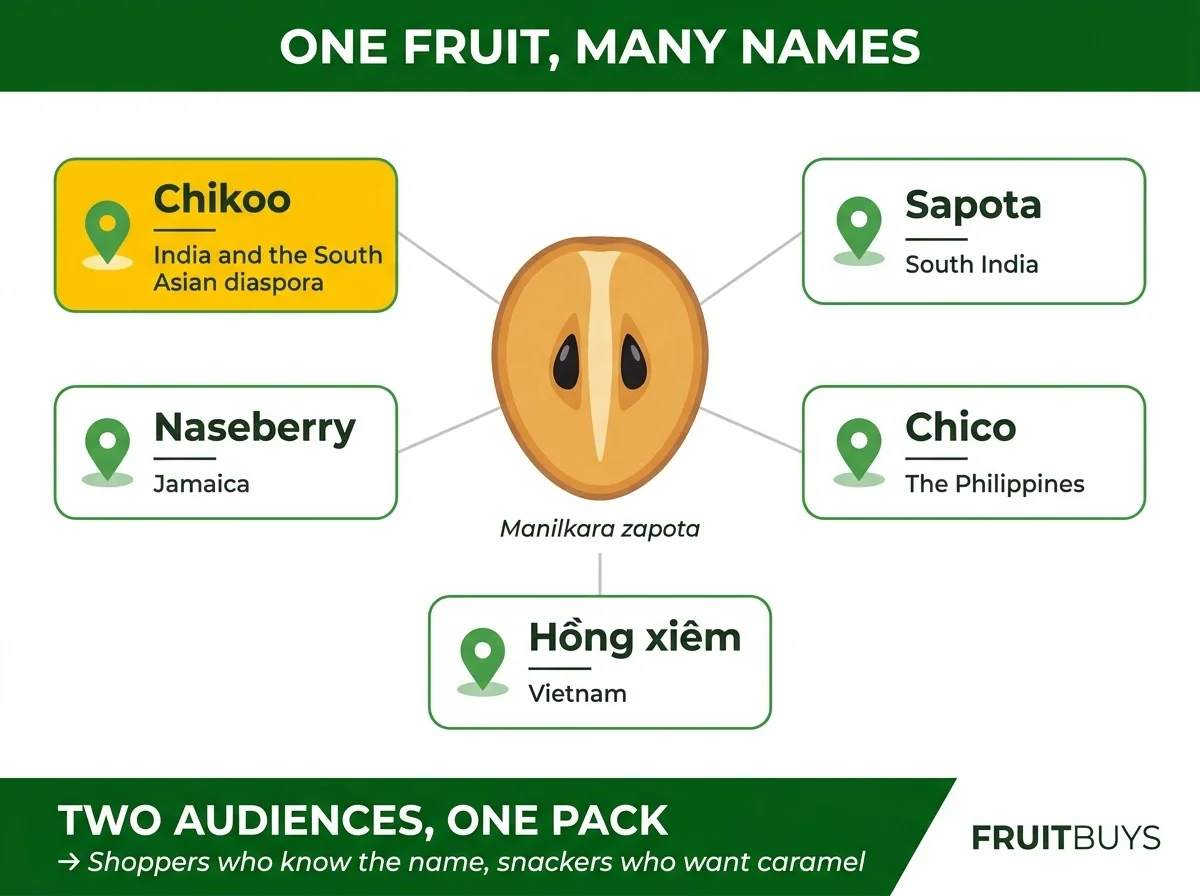
Yes. Sapodilla (Manilkara zapota) has many names: chikoo in India and across the South Asian diaspora, sapota in South India, naseberry in Jamaica, chico in the Philippines and hồng xiêm or sabôchê in Vietnam. It is a round or egg-shaped fruit with thin, sandy-brown skin, soft honey-coloured flesh and a few shiny black seeds.
For millions of people it is a childhood flavour: chikoo milkshake on a hot afternoon in Mumbai, a naseberry from a backyard tree in Kingston, a bag of ripe hồng xiêm from a Mekong Delta market. In Vietnam it grows in orchards in Tien Giang, Vinh Long and Ben Tre, where the trees flower and fruit almost continuously, so there is ripe sapodilla every month of the year.
What does sapodilla give you per 100 g, fresh or freeze-dried?
Drying takes the water out and leaves almost everything else. Fresh sapodilla flesh is about 78% water, so once it is freeze-dried, each gram holds about four times more of the fruit’s fibre, potassium and sugar.
| Per 100 g | Fresh sapodilla | Freeze-dried sapodilla |
|---|---|---|
| Energy | 83 kcal | 370 kcal |
| Dietary fibre | 5.3 g | 23 g |
| Potassium | 193 mg | 850 mg |
| Total carbohydrate | 20 g | 88 g |
| Added sugar | 0 g | 0 g |
| Protein | 0.4 g | 2 g |
| Fat | 1.1 g | 5 g |
| Iron | 0.8 mg | 3.5 mg |
| Calcium | 21 mg | 90 mg |
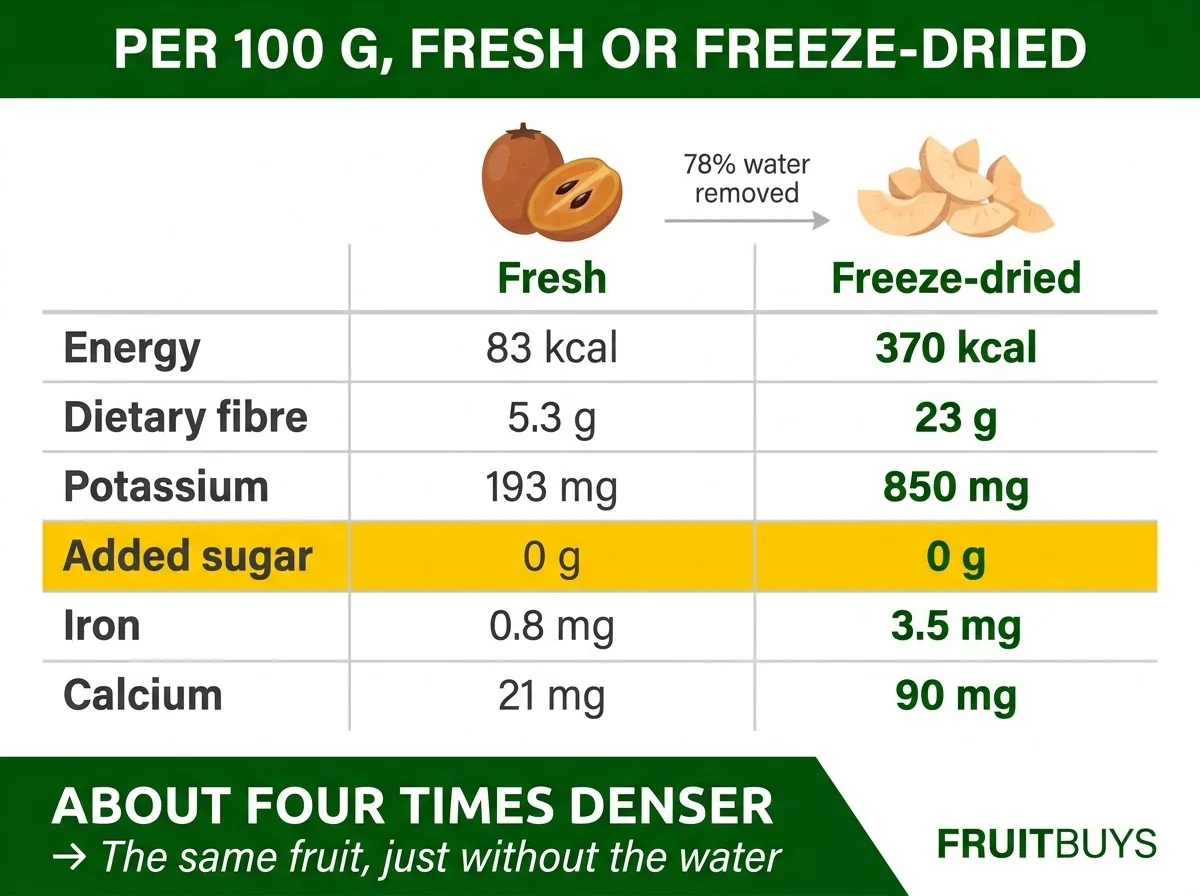
Typical values for fresh sapodilla flesh and for 100% freeze-dried sapodilla; natural variation by origin, season and ripeness applies. Lot nutrition panel available for label artwork.
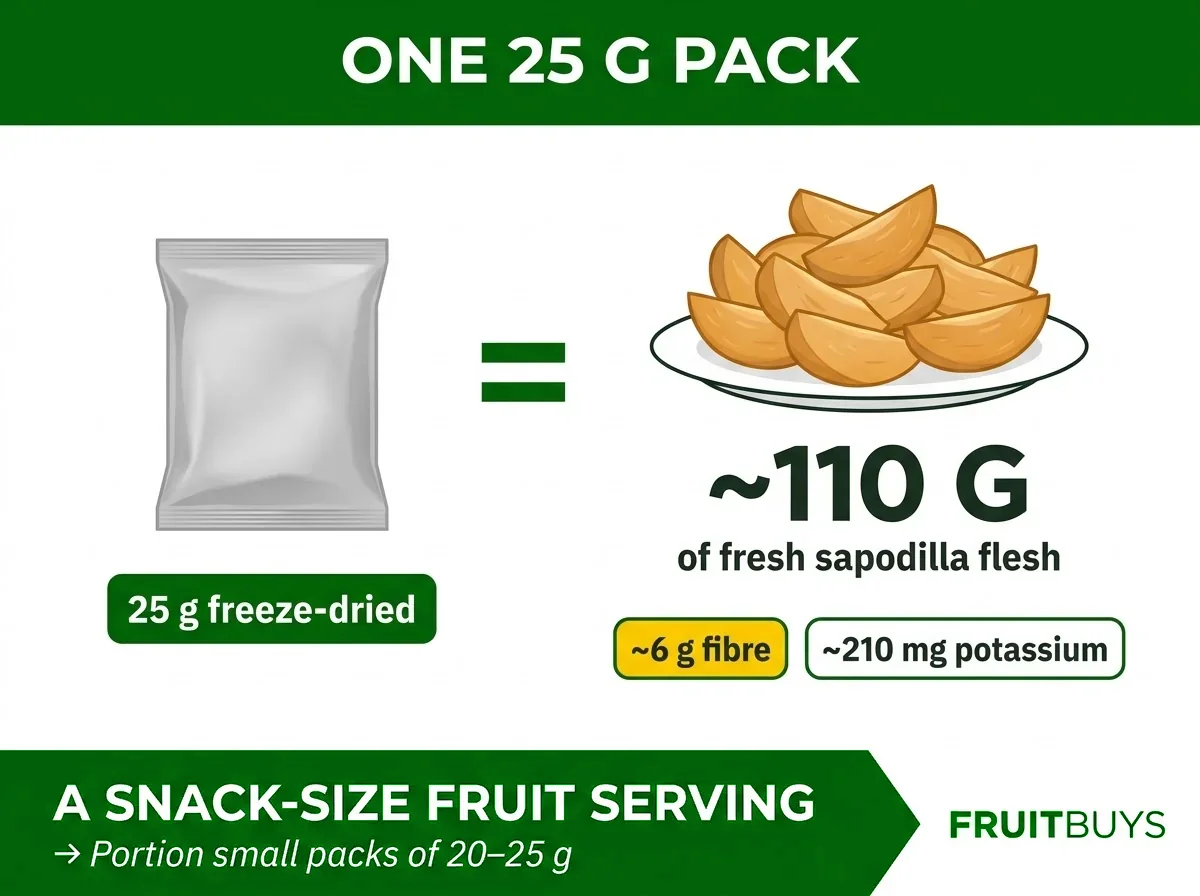
What this means for you: dried sapodilla is not “more nutritious” than the fruit it came from. It is the same fruit in a lighter, longer-lasting form. A 25 g pack of freeze-dried sapodilla holds the flesh of about 110 g of fresh fruit: roughly 92 kcal, nearly 6 g of fibre and about 210 mg of potassium.
What are the benefits of eating sapodilla?
The benefits come from the fruit itself, not from anything added:
- A caramel-sweet treat with no refined sugar. Sapodilla is one of the sweetest fruits that needs no help. That is why it works as a dessert on its own, blended into a shake or scooped over ice cream, and why families who want less refined sugar reach for it.
- Fibre that makes a snack filling. Fresh sapodilla meets the EU’s “source of fibre” level of 3 g per 100 g; freeze-dried sapodilla, at 23 g, is far above the 6 g needed for “high fibre”. Fibre is what makes a few wedges feel like a snack rather than a sweet, and most adults eat less of it than recommended.
- Potassium with almost no sodium. 193 mg per 100 g fresh, 850 mg per 100 g freeze-dried, with very little salt.
- Plant compounds from the whole flesh. Sapodilla flesh naturally contains polyphenols, the same family of plant compounds found in tea and cocoa. Freeze-drying is a cold process, so it keeps more of the fruit’s character than heat drying.
- Fits most diets. Plain sapodilla is vegan and gluten-free by ingredient, and freeze-dried sapodilla has a one-word ingredient list: sapodilla.
The number to respect is sugar. Sapodilla is a sweet fruit, and dried sapodilla concentrates that sweetness, so it is a fruit serving, not a free food.
Is sapodilla good for diabetics?
Sapodilla is one of the sweeter tropical fruits, at about 20 g of carbohydrate per 100 g of fresh flesh, with 5.3 g of fibre. For people managing blood sugar, the portion matters more than the fruit: half a medium sapodilla, or 10–15 g of freeze-dried wedges, eaten with yogurt or a few nuts, is a different load from a whole bowl. Follow your own doctor’s or dietitian’s advice on how much fruit fits your plan.
Is sapodilla good for weight loss?
It can fit a weight-management diet when it replaces a less filling sweet. Fresh sapodilla is 83 kcal per 100 g, and its fibre makes it more filling than the same calories of candy. Dried sapodilla is denser, at 370 kcal per 100 g, so the habit that helps is the portion:
- Buy or portion small packs of 20–25 g.
- Eat it with protein, such as yogurt, milk or nuts.
- Check the ingredients say only sapodilla. Sugar-infused dried fruit adds calories without adding fibre.
Can you eat sapodilla during pregnancy?
Ripe sapodilla is an ordinary fruit and can be part of a varied diet in pregnancy, like any other fruit. Eat it fully ripe and peeled, and remove the seeds. If you have been told to watch your blood sugar, count it as a sweet fruit serving and check portions with your midwife or doctor.
How do you choose, ripen and eat sapodilla?
- Ripeness is the whole flavour. Unripe sapodilla is firm and full of a sticky white latex that dries the mouth. Scratch the skin lightly with a fingernail: green underneath means it needs more days; brown-yellow means it is close. A ripe fruit gives slightly under the thumb, like a ripe pear.
- Ripen at room temperature, then keep it in the fridge for a day or two.
- Peel it and remove the seeds. The seeds are hard, with a small hook at one end, and are not eaten.
- Ways to eat it: chilled with a spoon, blended into a chikoo milkshake with milk and cardamom, over vanilla ice cream, or in a fruit salad with lime.
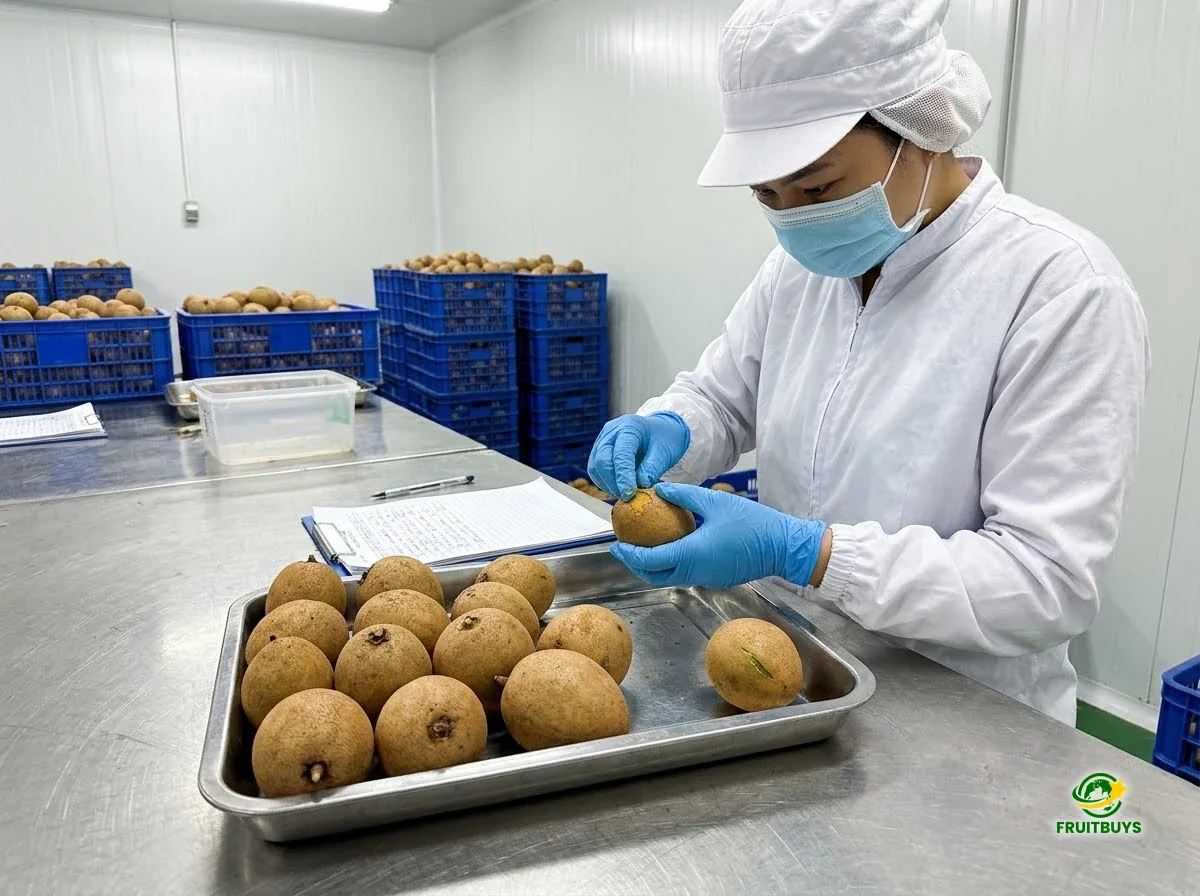
Dried sapodilla removes the ripeness gamble: the fruit is ripened before it is dried, so every piece tastes the same.
Which kind of dried sapodilla keeps the flavour best?
Two products are sold as dried sapodilla, and they are very different in the bag:
| Type | How it is made | Texture | Taste | Keeps |
|---|---|---|---|---|
| Air-dried or sun-dried | Slices dried with warm air for many hours | Chewy, dark brown, sticky | Cooked, molasses-like | Months, but softens and darkens |
| Freeze-dried | Frozen, then dried under vacuum without cooking | Light, crisp, melts on the tongue | Fresh brown sugar and malt, like the ripe fruit | 12 months sealed at ≤25 °C |
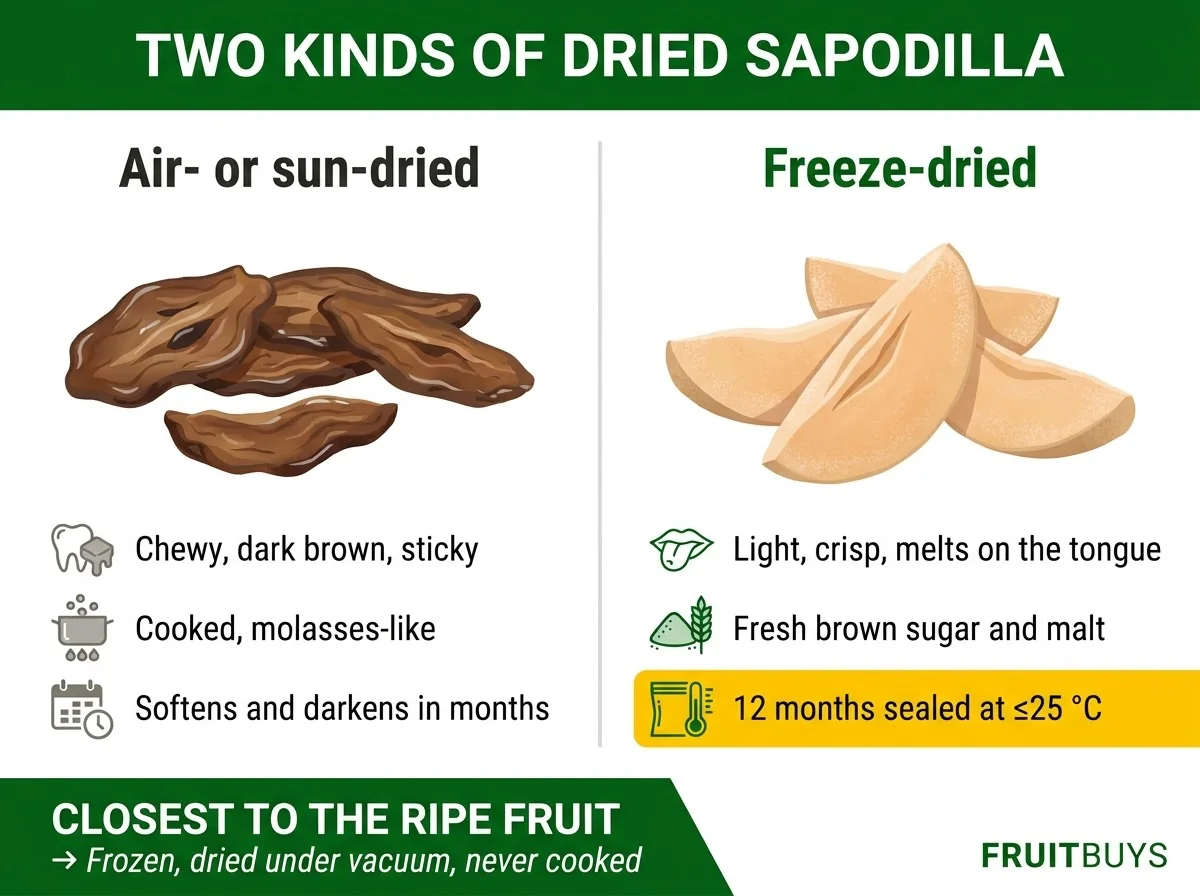
Air-drying cooks the sugar, so the fruit darkens and tastes of molasses. Freeze-drying keeps the shape, the tan colour and the fresh caramel flavour, then turns the soft flesh into a crunch that dissolves in the mouth. It is the closest thing to eating a ripe sapodilla from a bag. How it fits cereal, chocolate and snack products is in how to use freeze-dried sapodilla.
Storage: keep the bag sealed in a cool, dry place. Sealed in foil with a desiccant, freeze-dried sapodilla keeps 12 months at ≤25 °C and RH ≤60%, and 18–24 months in cool storage at ≤18 °C and RH ≤50%. Once opened, its natural sugar pulls moisture from the air, so reseal the bag tightly or finish it within a few days.
Buying sapodilla for your store or brand?
The flavour and the clean label are what sell sapodilla on a shelf. Freeze-dried sapodilla gives a brand two audiences in one pack: shoppers who already know chikoo and naseberry by name, and snack buyers looking for a caramel taste that comes from fruit, not sugar.
- “No added sugar”, “high fibre”, “100% fruit”: freeze-dried sapodilla, with 0 g added sugar and 23 g fibre per 100 g. Label-ready numbers are in freeze-dried sapodilla nutrition facts.
- Shakes, kulfi and bakery: freeze-dried chikoo powder, 100% fruit with no maltodextrin.
- Crisp to the end of shelf life: freeze-dried wedges, slices or dice in foil pouches with a desiccant, packed at origin.
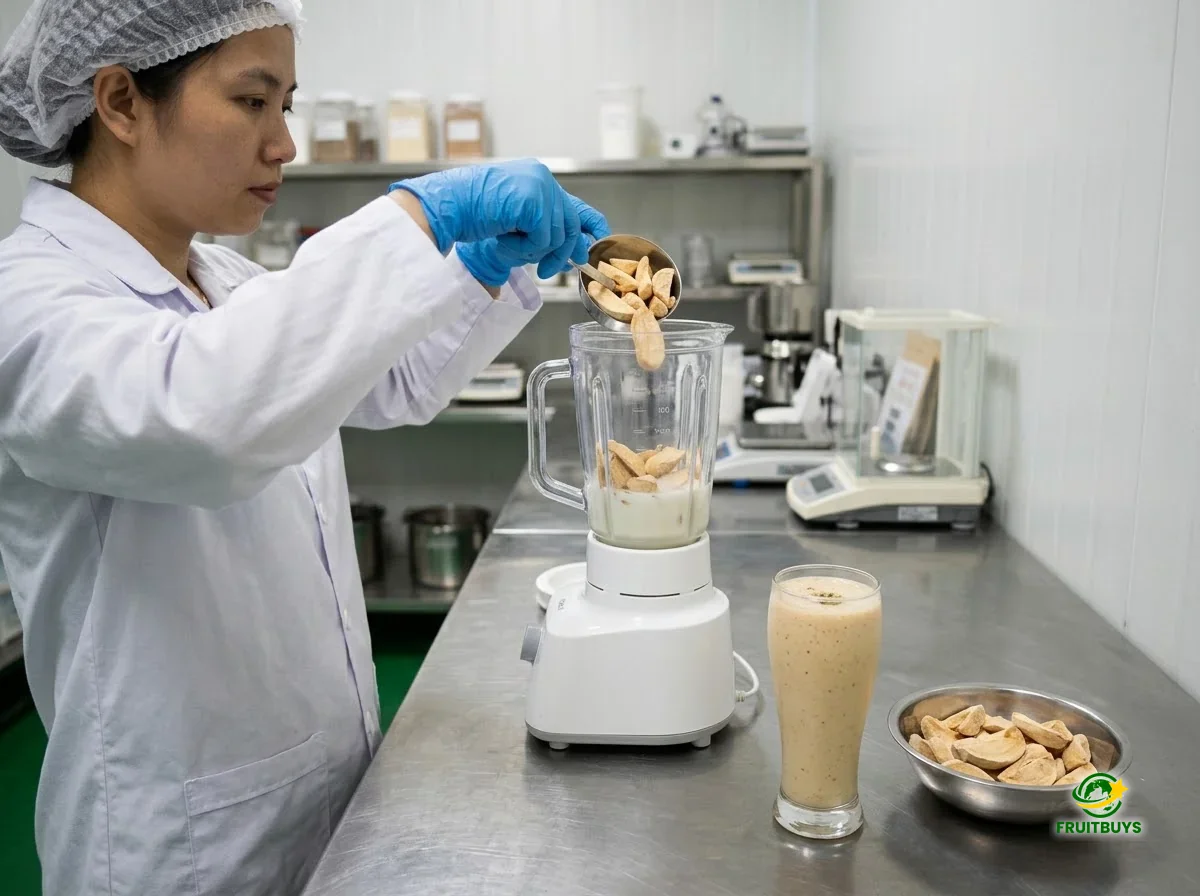
FruitBuys supplies freeze-dried sapodilla from Vietnam’s Mekong Delta in bulk cartons and private-label retail pouches, from 500 kg per SKU. Specifications are on the freeze-dried sapodilla product page.
Taste the fruit before you choose the format
Tell us your channel, pack size and the claims you want on the front, and we will send freeze-dried sapodilla from a production lot.
Email support@fruitbuys.com · WhatsApp +84 919 739 589
FAQ
Is sapodilla good for you?
Yes, as a fruit serving. Fresh sapodilla gives 5.3 g of fibre and 193 mg of potassium per 100 g, with almost no fat and no added sugar.
What does sapodilla taste like?
Brown sugar and malt, with a soft, slightly grainy texture like a ripe pear. Freeze-dried sapodilla keeps that taste and adds a crisp bite.
How many calories are in sapodilla?
About 83 kcal per 100 g of fresh flesh and 370 kcal per 100 g of freeze-dried sapodilla, because the water is gone.
Is chikoo the same as sapodilla?
Yes. Chikoo, sapota, naseberry, chico and sapodilla are names for the same fruit, Manilkara zapota.
Can you eat sapodilla seeds?
No. Remove the seeds before eating; they are hard, with a small hook at one end.
Is dried sapodilla high in sugar?
Per gram, yes, because the water is removed. Per fruit, no: the sugar is the fruit’s own, concentrated. Choose dried sapodilla with no added sugar.
When is sapodilla season in Vietnam?
All year. Mekong Delta orchards fruit almost continuously, so ripe sapodilla is harvested every month.
About the author
Udo Nguyen is CEO at FruitBuys Vietnam. He coordinates sapodilla sourcing with partner orchards in the Mekong Delta, freeze-drying and milling at qualified partner facilities, and the specifications and export documents that importers and food brands use to bring chikoo to their shelves.