How Much Freeze-Dried Mango Powder Goes into Drinks, Desserts and Bakery?
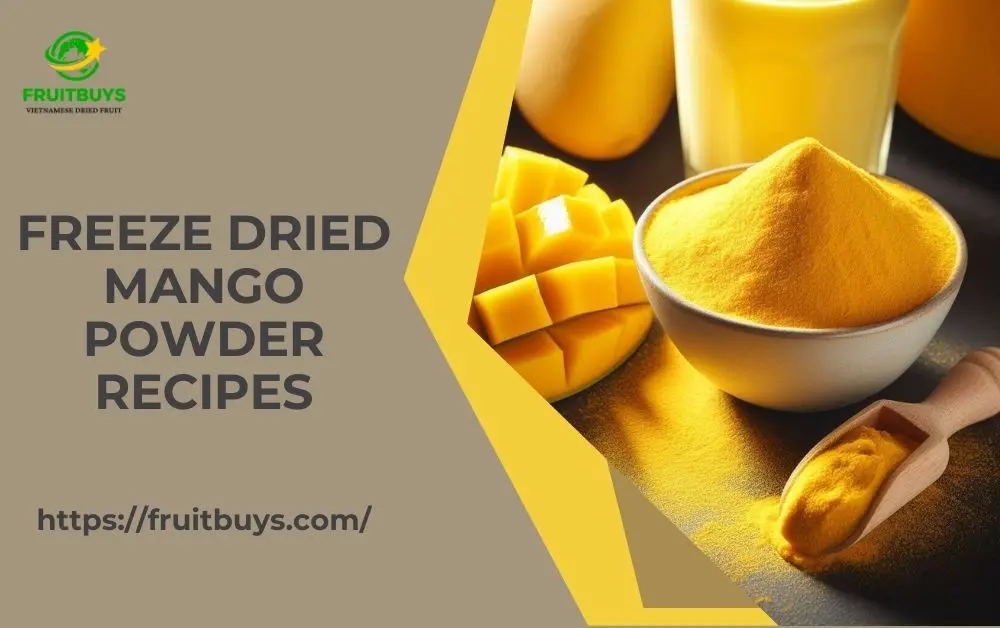
Start at 5–12% of the mix for drinks and dairy, 3–8% for white chocolate, 4–10% for bakery creams and 5–15% for baby puffs. One gram of freeze-dried mango powder carries the solids of about 6.3–6.7 g of fresh mango flesh, so 15 g of powder replaces about 100 g of fresh mango in a smoothie, with no peeling, no seasonal price swings and no waste. FruitBuys powder is 100% mango at 60–80 mesh, 3–5% moisture and water activity ≤0.30, so it colours, flavours and thickens without a carrier on your label.
The doses below are pilot starting points for product developers, café and beverage chains, and dessert and bakery producers. Adjust them for colour depth and flavour in your own base.
How do you convert fresh mango to powder?
Divide the fresh flesh weight by about 6.5. Freeze-drying removes water and keeps everything else, so the conversion runs the other way when you add water back:
- Replace fresh mango in a recipe: 100 g mango flesh ≈ 15 g powder plus about 85 ml of the recipe’s liquid.
- Make a mango purée: 1 part powder to about 5.5 parts cold water, stirred and rested for 2–3 minutes, gives a purée close to blended ripe flesh.
- Cost a serving: a 30 g dry sachet dosed at 10% uses 3 g of powder, so one kilogram covers about 330 sachets.
That conversion is why kitchens and plants switch from frozen or fresh mango to powder: one 20 kg carton stores dry on a shelf, every batch tastes the same across seasons, and nothing is lost to peel, seed or thawing.
Starting doses by application
| Application | Starting dose | When to add | What to watch |
|---|---|---|---|
| Smoothie, shake and juice mixes | 5–12% of dry mix | Last, into the dry blend | Disperses in 30–60 seconds; shake or blend, do not just stir |
| Lassi, yogurt drinks, set yogurt | 5–12% | Into cold dairy after fermentation | Adds body; reduce added stabiliser on trial |
| Ice cream and frozen desserts | 5–12% | Into the mix before freezing, or rippled as purée | No added water, so no icy texture |
| White chocolate and compound coatings | 3–8% | Sieved into melted chocolate at the end | Keep powder dry; no water near the chocolate |
| Buttercream, cheesecake, fillings | 4–10% | Beaten into the fat phase | Fruit acidity brightens sweet creams |
| Baby and toddler puffs and melts | 5–15% | Into the dry base before extrusion or forming | One-word ingredient: “mango” |
Beverage and café recipes
Mango smoothie (per 350 ml serving). Blend 15 g freeze-dried mango powder with 150 ml milk or plant milk, 100 g yogurt, ice and sweetener to taste. The powder replaces 100 g of fresh mango and gives the same thick body and golden colour every day of the year, which matters for a chain serving the same drink in March and in December.
Mango lassi (per 300 ml). Whisk 12–15 g powder into 200 g plain yogurt and 80 ml cold water or milk, with a pinch of cardamom. Vietnamese Keo mango gives a bright, sweet-tart lassi; for a richer, sweeter profile, ask for Cát Chu powder.
Ready-to-mix smoothie sachet (30 g). Dose powder at 10–12% of the dry blend alongside your milk or protein base and sweetener. Add the mango last so it is not crushed further in the mixer, and fill sachets in a dry room: pure fruit powder pulls moisture from humid air.
Iced mango tea or milk tea. Dissolve 8–10 g powder in a small amount of warm water to a paste, then top with tea, milk and ice. The paste step avoids floating specks in cold drinks.
For a crystal-clear drink, powder is the wrong ingredient: its fruit fibre stays in suspension. A juice concentrate suits clear drinks better, and FruitBuys will say so on the first call.
Dairy and frozen dessert recipes
Mango yogurt. Fold 6–8% powder into plain yogurt after fermentation. The fruit’s fibre adds thickness, so on a trial batch reduce added stabiliser before adding more powder.
Mango ice cream base. Add 8–10% powder to the cold mix before ageing. Because the powder brings no water, the mix stays rich and scoopable without the icy texture fresh fruit can cause.
Soft-serve and frozen yogurt. Pre-hydrate powder as a purée (1 : 5.5 with water) and blend into the mix for even colour through the machine.
Chocolate and confectionery
Mango white chocolate. Sieve 3–6% powder into melted white chocolate after tempering, or into the compound coating at the end of mixing. At under 5% moisture the powder colours and flavours the chocolate without making it thicken or seize. Keep tools and bowls completely dry: water, not the powder, is what makes chocolate seize.
Mango truffle centres and pralines. Use 6–8% in a white chocolate ganache for a natural yellow centre with real fruit acidity.
Panning and dusting. Dust freeze-dried mango powder over panned nuts or chocolate pieces as a final colour coat; use 2–5 mm freeze-dried mango granules where you want visible fruit.
Bakery creams and fillings
Mango buttercream. Beat 6–8% powder into the butter before adding sugar. The fruit acidity cuts sweetness, so many bakers reduce sugar slightly.
No-bake mango cheesecake. Add 8–10% powder to the cream cheese filling. It sets a firmer filling than fresh purée because it adds no water.
Baked goods. Powder works for colour and flavour in muffins and sponges at a few percent of flour weight, set on a trial bake, but it does not leave visible pieces. Where shoppers expect chewy mango pieces in a long bake, use soft-dried mango; FruitBuys supplies a low-sugar line on request, compared in freeze-dried or soft-dried mango.
Baby and toddler foods
Puffs, melts and teething wafers. Dose 5–15% into the dry base before extrusion or forming. The brief that buys this ingredient is usually the label: “mango” as one word, with no maltodextrin or refined sugar. At the higher end of the range the colour is a clear golden yellow straight from the fruit. Label values for 100% freeze-dried mango are in the nutrition facts guide.
How do you keep powder free-flowing on the line?
Open one 5 kg bag at a time, in a dry room, and use it through the shift. Pure fruit powder has no carrier, so above about 60% RH it begins to clump within 20–30 minutes. FruitBuys packs four 5 kg foil bags in each 20 kg carton for exactly this reason: each bag is one batch, and the rest stays sealed. For lines in humid rooms, FruitBuys can add 1–2% silicon dioxide on request as a free-flow agent, declared on the specification. Mesh choice and caking are covered in the freeze-dried mango powder buyer’s guide.
Pilot it in your base
Tell FruitBuys your application, base recipe and target colour. We send freeze-dried mango powder in 3–5 working days with a suggested starting dose, so your team can run a pilot batch the same week. Specifications, 20 kg cartons and container plans are on the freeze-dried mango powder product page; the wider programme is in the freeze-dried mango supplier guide.
[email protected] · WhatsApp Export +84 919 739 589
FAQ
How much freeze-dried mango powder equals one mango?
About 15 g of powder replaces 100 g of fresh mango flesh, so weigh the flesh your recipe uses and divide by about 6.5.
Can I add freeze-dried mango powder to water?
Yes. Mix 1 part powder with about 5.5 parts cold water for a purée, or blend straight into a smoothie. It disperses rather than dissolving clear.
Does mango powder need to be refrigerated?
No. Keep the bag sealed, dry and out of direct light. Once opened, use it within the shift and keep it away from humid air.
Can I use mango powder in white chocolate?
Yes, at 3–8%. Keep everything dry and sieve the powder in after tempering.
Is freeze-dried mango powder sweetened?
No. It is 100% mango; the sugars come from the fruit.