
What should you specify before buying freeze-dried sapodilla powder in bulk?
Specify five things: 100% fruit, with no carrier; 60–80 mesh; moisture ≤4.0% and water activity ≤0.25 at release; a flow grade that matches your filling line; and a bag size that matches your batch. Those five lines decide whether your chikoo shake tastes of fruit, whether the powder runs through your filler and whether the last bag in the warehouse is still loose. They also decide what you really pay, because the cheapest powder per kilo is often the most expensive per kilo of fruit.
Is it real fruit, or juice on a carrier?
This is the first question, and it changes the price comparison completely. Two products are sold as “sapodilla powder”:
| 100% freeze-dried fruit powder | Juice or pulp dried on a carrier | |
|---|---|---|
| Ingredient line | Sapodilla | Sapodilla, maltodextrin (or dextrose, gum arabic) |
| How it is made | Whole flesh freeze-dried, then milled | Juice or pulp mixed with carrier, then spray-dried |
| Dietary fibre | 23 g per 100 g | A fraction of that; the carrier adds none |
| In water | Cloudy, full-bodied suspension | Clear to slightly hazy, thin |
| Flavour | Brown sugar and malt, full strength | Diluted by the carrier share |
| Label claim | “100% fruit”, one-word ingredient | Carrier must be declared |
A carrier powder that is half maltodextrin delivers half the fruit. At the same dose it gives half the flavour, or at double the dose it costs you double. Ask for three things with every quote: the ingredient statement, the fibre value on a nutrition panel, and a 5 g sample stirred into 100 ml of cold water. Real freeze-dried fruit powder shows its fibre in all three, and that is the check every buyer should run, including on FruitBuys.
FruitBuys mills its powder from the same hand-peeled, freeze-dried lots as its freeze-dried sapodilla pieces. One fruit, one process, milled to order.
What does a kilo of powder really cost you?
Compare on fruit, not on powder. Each kilogram of freeze-dried sapodilla carries the fruit solids of 6.5–7.5 kg of ripe whole fruit, so the dose in your recipe tells you how much real fruit each unit contains:
| Your product | Dose | Powder per 1 kg of product | Whole fresh fruit equivalent |
|---|---|---|---|
| Shake or milk-tea premix | 4% | 40 g | 260–300 g |
| Ice cream base | 2% | 20 g | 130–150 g |
| Cream filling | 5% | 50 g | 325–375 g |
Now run the same line for a carrier powder. If half of it is maltodextrin, the fruit equivalent halves, and matching the flavour means doubling the dose. Price per kilogram of fruit delivered, not per kilogram of powder, is the number that belongs in your sourcing sheet. The fruit-to-finished ratio behind these figures is worked through in how many kilos of fresh sapodilla make 1 kg of freeze-dried.
Which specification lines belong in the contract?
| Line | Specify | Why it matters to you |
|---|---|---|
| Ingredient | 100% sapodilla (or + ≤1% E551) | Sets your label and your HS code |
| Mesh | 60–80 mesh, ≥95% passing | Even dispersion; no gritty specks in a drink |
| Moisture | ≤4.0% at release, contract ceiling 5.0% | Dry powder stays loose |
| Water activity | ≤0.25 at release, contract ceiling 0.30 | The real stability limit for a sugar-rich powder |
| Colour and flavour | Light tan to caramel; brown sugar and malt; no toasted note | Confirms ripe fruit and no heat damage |
| Microbiology | TPC ≤10⁴ CFU/g; Y&M ≤10² CFU/g; E. coli <10 CFU/g; Salmonella ND/25 g | Ready-to-eat use in cold drinks and dairy |
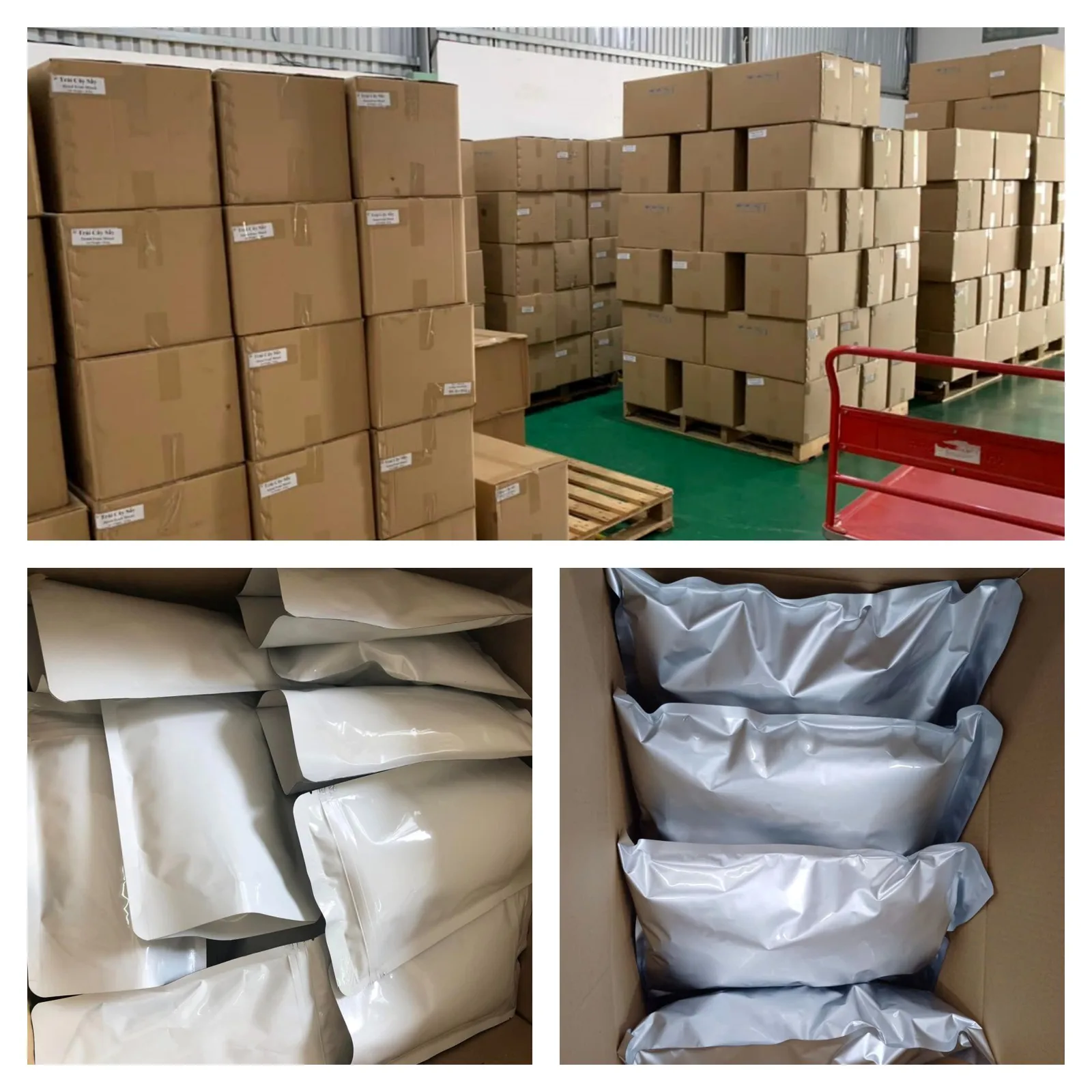
| Packing | 5 kg foil bag with desiccant, 4 bags per carton | One bag, one batch |
| Documents | Lot COA per full container, EUR.1, phytosanitary certificate | Standard dossier for clearance and your QA file |
The fruit going into the mill is the same as for the pieces: sorted at 18–24 °Brix, hand-peeled, deseeded by hand and released at aw ≤0.25. Milling runs chilled in a dehumidified room at RH ≤35–40%. That is not a detail: sapodilla powder is about 60% natural sugar, and a fast mill at room temperature heats it by friction until the sugar softens, sticks to the screen and turns the fresh caramel note toasted. Milled cold, it stays light tan, loose and full of brown-sugar and malt aroma, and goes straight into foil, so it reaches your plant as dry as it left the freeze-dryer. Ask any powder supplier how they mill a high-sugar fruit; the answer tells you what will arrive. Why aw rather than moisture decides crispness and flow in sapodilla is set out in what moisture and water activity keep freeze-dried sapodilla crisp.
Standard or free-flowing grade: which suits your line?
Choose by how you fill, not by habit.
- Standard grade, 100% sapodilla. For batch mixing in a dry room: beverage and dairy bases, fillings, chocolate, bakery mixes. It carries the one-word label. Soft clumps form from natural fruit sugar and break on stirring or a pass through a sieve.
- Free-flowing grade, with up to 1% silicon dioxide (E551). For auger fillers, sachets and stick packs, where the powder must run without bridging. The label adds “anti-caking agent (silicon dioxide)”, and the product can classify under HS 2106.90 instead of 1106.30.
Sapodilla powder is rich in natural sugar, and sugar draws moisture from the air within minutes of opening. Three plant habits keep it loose to the last scoop: open each 5 kg bag in a room below 40% RH, use the whole bag in one batch, and blend the powder with your other dry ingredients before any liquid goes in. If your packing room runs above 50% RH, take the free-flowing grade.
How much chikoo powder goes into a shake, kulfi, coffee or bakery mix?
| Application | Starting dose | What it brings |
|---|---|---|
| Chikoo shake, protein shake, smoothie, bubble-tea and milk-tea premixes | 2–5% | The caramel-malt flavour South Asian and Southeast Asian shoppers know, in place of refined sugar and added flavouring |
| Coffee and malt drinks | 2–5% | A caramel note without syrup |
| Yogurt, ice cream, chikoo kulfi, dairy desserts | 1–3% | Flavour and a natural tan colour for a South Asian favourite |
| Fillings, frostings and creams | 3–6% | Fruit flavour in a fat or sugar base |
| Chocolate, caramel white chocolate, compound coatings | 2–5% | Caramel flavour; add within the fat phase moisture budget |
| Bakery mixes and cookies | 2–4% | Brown-sugar flavour in dry mixes |
Start your bench trial at the middle of the range and adjust by taste. Sapodilla pairs naturally with milk, coffee, cocoa, cardamom, cinnamon and vanilla; a chikoo-cardamom milk drink or a sapodilla caramel latte premix needs no added flavouring. For crunchy inclusions in cereal, chocolate bark and trail mix, the pieces do the job better; doses and pairings are in how to use freeze-dried sapodilla in cereal, chocolate and snack products.
When is powder the wrong choice?
Powder is the right format when the fruit must disappear into a base. Choose pieces or dice when shoppers should see and bite the fruit: in granola, chocolate bark, trail mix or a snack pouch. If your recipe calls for a clear drink with no sediment, a fruit powder with real fibre will always leave body in the glass; an extract or flavour is the better tool there. And if your process cannot keep the open bag dry, specify the free-flowing grade from the start rather than fighting clumps on the line.
How do powder orders ship?
| Item | Standard |
|---|---|
| Carton | 58 × 28 × 34 cm, 4 × 5 kg = 20 kg |
| 20 ft container | About 550 cartons, about 11 t net |
| 40 ft HC | Mixed with freeze-dried sapodilla pieces |
| Samples | 3–5 working days by express courier |
| Production | 20–30 days for a 20 ft container, after deposit |
| Private label | Stick packs, sachets, jars and pouches, from 500 kg per SKU |
Dense powder puts about 11 t in a 20 ft container, two to three times the net weight of pieces, so freight per kilogram of fruit falls sharply. If you buy both formats, load them together: 20 kg powder cartons on the lower tiers and lighter piece cartons above, in a 20 ft or 40 ft HC. One container uses both its weight and its volume, and one customs entry brings in powder for your beverage line and wedges or dice for your snack range. HS codes, the EU border-check position and the document set are on the freeze-dried sapodilla powder product page.
Request a sample and run the cold-water test
Ask for a sample of both grades, stir 5 g of each into 100 ml of cold water, and taste them in your own base at your target dose. FruitBuys dispatches samples within 3–5 working days with the specification and the release QC log for the lot.
For the full supplier checklist across all sapodilla formats, see what to check before buying freeze-dried sapodilla in bulk from Vietnam.
FAQ
What is the difference between freeze-dried sapodilla powder and sapodilla juice powder?
Freeze-dried powder is the whole fruit flesh milled fine, with 23 g of fibre per 100 g. Juice powder is juice dried on a carrier such as maltodextrin, with far less fruit and fibre per kilo.
What mesh should I specify?
60–80 mesh, with at least 95% passing, for even dispersion in drinks and dairy.
Why does sapodilla powder clump?
Its natural sugar draws moisture once the bag is open. Open bags in a dry room, use each 5 kg bag in one batch, or choose the free-flowing grade.
What dose should I start with in a shake premix?
2–5%, with 4% a good starting point for a clear chikoo flavour.
Is the powder made from the same fruit as the pieces?
Yes. FruitBuys mills it to order from the same hand-peeled, freeze-dried lots.
Can I label it “100% fruit”?
Yes, with the standard grade. The free-flowing grade declares silicon dioxide as well.
How much powder fits in a 20 ft container?
About 550 cartons of 20 kg, about 11 t net.
About the author
Udo Nguyen is CEO at FruitBuys Vietnam. He coordinates sapodilla sourcing with partner orchards in the Mekong Delta, freeze-drying and milling at qualified partner facilities, and the specifications, loading plans and export documents that importers and food brands use to set their landed cost.



