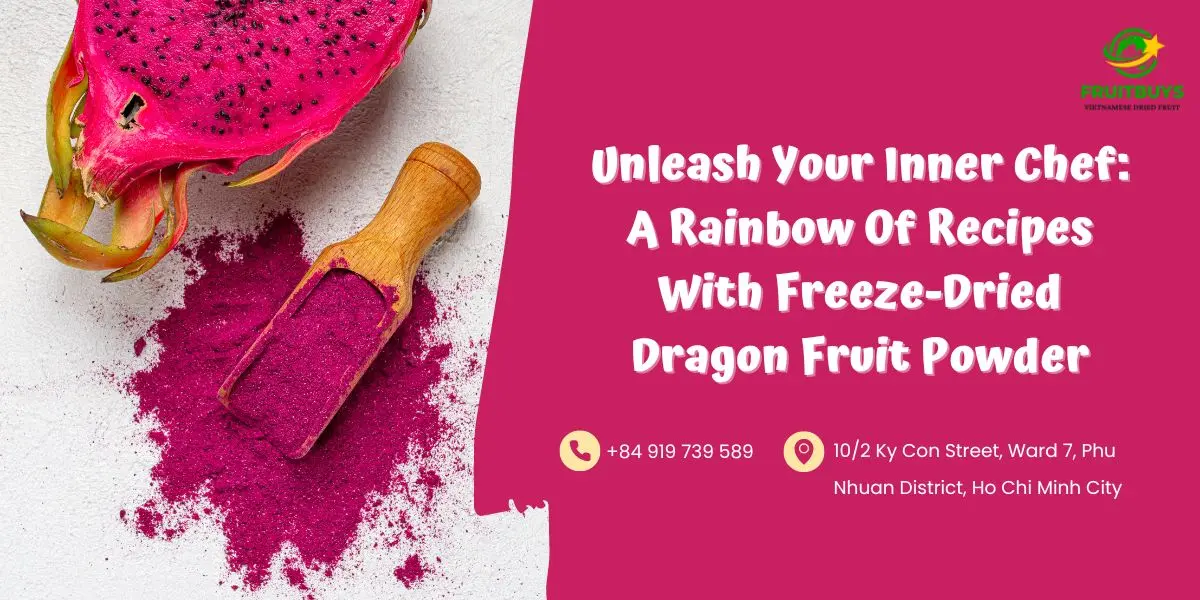
How much dragon fruit powder goes into each recipe, from one cup to a 50 kg batch?
Dose by weight of the finished recipe: 0.5–2% for color alone, 1–3% in yogurt and ice cream, 2–5% in drinks and chocolate, 3–6% in frosting and fillings. For a 10 kg buttercream batch that is 300–600 g of powder. Add it at the coolest stage, and the magenta stays bright.
What dose works for each type of recipe?
Every formula below starts from the same rule: weigh the finished recipe, then take a percentage. It scales from a single cup to a production batch without guesswork.
| Recipe type | Dose | Per 1 kg | Per 10 kg | Per 50 kg | When to add |
|---|---|---|---|---|---|
| Color only (any cold recipe) | 0.5–2% | 5–20 g | 50–200 g | 0.25–1 kg | At the end, cold |
| Yogurt, skyr, ice cream base | 1–3% | 10–30 g | 100–300 g | 0.5–1.5 kg | After pasteurization or fermentation |
| Drinks, smoothies, lemonade base | 2–5% | 20–50 g | 200–500 g | 1–2.5 kg | Into the cold base or syrup |
| White chocolate, compound coating | 2–5% | 20–50 g | 200–500 g | 1–2.5 kg | Into melted chocolate, before tempering |
| Bakery dough and batter | 2–4% | 20–40 g | 200–400 g | 1–2 kg | With the dry ingredients |
| Frosting, buttercream, fillings, glaze | 3–6% | 30–60 g | 300–600 g | 1.5–3 kg | Into the finished, cooled mix |
The low end of each range gives pastel pink and a near-neutral taste; the high end gives deep magenta and a clear, lightly sweet fruit note. Why the color behaves this way, with pH and heat limits, is covered in dragon fruit powder as a natural food color.
How do you make a dragon fruit syrup for a café bar?
A batch syrup gives every barista the same color in every cup.
Pink bar syrup, about 900 ml (about 30 drinks)
– 500 g sugar
– 500 ml water
– 100 g freeze-dried dragon fruit powder
– 10–15 ml lemon or lime juice
- Dissolve the sugar in hot water, then cool the syrup to room temperature.
- Whisk the powder with a little of the cooled syrup into a smooth paste, then whisk in the rest.
- Add the citrus juice; the acidity brightens the magenta.
- Bottle, chill and shake before each pour. Tiny black seed specks settle at the bottom, and they are the sign of real fruit.
At 30 ml of syrup per 350 ml drink, each cup carries about 3 g of powder, enough for a vivid pink refresher or lemonade. Keep the syrup chilled and set its use-by in your own food-safety plan. Cup-level dosing, pieces versus powder and color in milk drinks are covered in how to use freeze-dried dragon fruit in drinks.
How do you color buttercream and frosting without it weeping?
Dragon fruit buttercream, 10 kg batch
– 9.4–9.7 kg finished buttercream (American, Swiss or Italian meringue)
– 300–600 g freeze-dried dragon fruit powder (3–6%)
- Sift the powder to break any soft lumps.
- Beat it into the finished, room-temperature buttercream on low speed.
- Rest the frosting 10–15 minutes; the color deepens as the powder hydrates in the butter’s water phase.
- Adjust: add powder in 50 g steps for a deeper shade.
Because the powder is dry (released at ≤4.0% moisture), it pulls a little water from the frosting rather than adding any, so the buttercream holds its pipe and does not weep. At 6% expect a firmer texture; soften with a spoonful of cream if needed.
How do you use it in yogurt and fruit preparations?
Dragon fruit yogurt, 50 kg batch
– 49.25–49.5 kg plain yogurt or skyr, fermented and cooled
– 0.5–0.75 kg freeze-dried dragon fruit powder (1–1.5%)
- Hydrate the powder in three times its weight of milk or water for 10 minutes, stirring to a smooth slurry.
- Fold the slurry into the cooled yogurt, or blend it into the fruit preparation that goes into the cup.
- Fill and chill.
Adding powder after fermentation keeps the culture undisturbed and the color at its brightest. For a fruit-on-the-bottom pot, put the powder in the fruit prep at 3–6% and keep the white mass plain for a two-tone look.
How do you make a pink mirror glaze or white chocolate?
Pink mirror glaze (dose by weight of finished glaze: 2–4%)
1. Make your usual glaze: sugar, glucose and water to the boil, gelatine, condensed milk and white chocolate.
2. Let it cool below about 40 °C before the powder goes in; long heat dulls the pink.
3. Blend in the powder with an immersion blender, keeping the head submerged to avoid bubbles.
4. Strain, rest, and pour at your usual glazing temperature.
Pink white chocolate (dose: 2–5%)
– Use the powder dry and straight from a freshly opened bag. Moisture is what makes chocolate seize, and the powder’s water activity of ≤0.25 is what lets it blend in cleanly.
– Mix into melted chocolate, then temper as usual. For a silky mouthfeel, run the mix through a melanger or refiner; at 60–80 mesh the powder otherwise leaves a slight fruit texture that many brands keep as a feature.
Can you use dragon fruit powder in baking and ice cream?
Yes, with different expectations.
- Ice cream. Add 1–3% to the mix in the ageing vat, after pasteurization. The color stays bright in frozen storage when the tub is opaque.
- Cakes, cookies, macarons. At 2–4% in the batter, oven heat turns the pink toward mauve. For a clear pink, put the powder in the filling, the icing or a dusting on top. Macaron shells baked low and short keep more color than a sponge.
- Smoothie bowls and overnight oats. 1–2 teaspoons per serving (about 3–6 g) turns them magenta with no other color.
What does each batch cost in powder?
Use the percentage to cost the color line in your recipe sheet:
Powder cost per batch = batch weight (kg) × dose (%) × your powder price per kg
A 10 kg buttercream at 4% uses 400 g; a 50 kg yogurt at 1% uses 500 g; one batch of bar syrup uses 100 g for about 30 drinks. Because the powder brings color, fruit flavor and a “dragon fruit” line on the label in one ingredient, it often replaces both a color and a flavor in the same formula.
What should you check in the powder before scaling up?
- 100% fruit or free-flowing. The 100% grade keeps the cleanest label. A free-flowing grade with up to 1% anti-caking agent runs better in sachet and stick-pack lines.
- Mesh. 60–80 mesh suits drinks, frostings and doughs. Finer is not better: over-milling warms the powder and makes it sticky.
- Moisture and pack size. Released at ≤4.0% moisture and aw ≤0.25, in sealed foil bags with a desiccant. For a bakery or café, 1–5 kg bags sized to a day or two of use keep every batch free-flowing.
The full purchasing checklist is in what to specify before buying freeze-dried dragon fruit powder. FruitBuys sources red-flesh dragon fruit from the Lam Dong coastal belt (former Binh Thuan) and the Mekong Delta (Long An, Tien Giang) and mills it at qualified partner facilities. If your recipe needs visible fruit rather than an even color, freeze-dried crumbles or dice do that job better than powder, and we can send both. Grades, packing and documents are on the freeze-dried dragon fruit powder product page.
Test the formulas with our powder
Tell us the recipe, batch size and target shade, and we will ship pre-shipment samples of freeze-dried red dragon fruit powder in sealed foil bags within 24–48 hours of approval.
[email protected] · WhatsApp Export +84 919 739 589
FAQ
How much dragon fruit powder should I use in a smoothie?
1–2 teaspoons, about 3–6 g, per 350–500 ml smoothie gives a vivid pink. Add more for a stronger fruit taste.
Can you use dragon fruit powder in baking?
Yes, at 2–4% of the batter, but oven heat shifts the color toward mauve. For bright pink, use it in icing, fillings or toppings.
Why did my dragon fruit powder clump?
It picked up moisture from the air or was added straight onto ice or a wet surface. Keep the bag sealed, sift before use, and make a paste with a little liquid first.
Does dragon fruit powder need to be cooked?
No. It is ready to use straight from the bag, and it keeps its color best when added to cool or room-temperature recipes.
What flavors pair with dragon fruit powder?
Coconut, vanilla, lime, lychee, mango, passion fruit, raspberry and white chocolate. Dragon fruit is mild, so it carries the color while the partner flavor leads.