
How much real cantaloupe powder goes into a bubble tea, smoothie or drink mix?
Dose real cantaloupe powder at 20–30 g per 500 ml cup: 33–50 cups per kg. Cold vs hot mixing, pairings and label notes for drink brands.
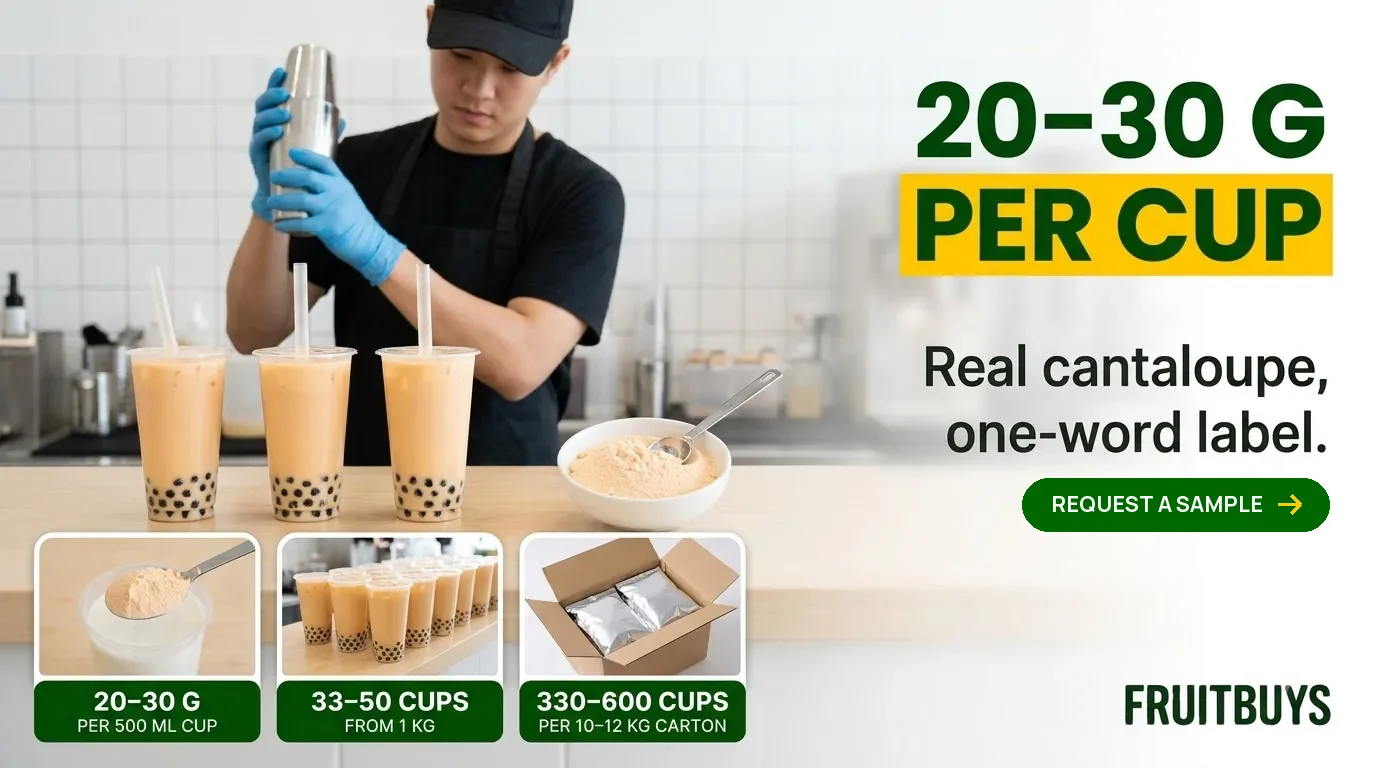
Start at 20–30 g of freeze-dried cantaloupe powder per 500 ml cup, about 4–6% of the drink. At that dose one kilogram makes 33–50 cups, and a standard 10–12 kg carton makes 330–600 cups of cantaloupe milk tea. Go to 8% (40 g per 500 ml) when the melon has to carry the drink on its own.
Dose is the first question drink teams ask me about cantaloupe powder, because real fruit behaves differently from the flavoured premixes most of them have used. The powder here is 100% cantaloupe, milled from freeze-dried cantaloupe with no carrier, sugar or flavouring, so the dose sets both the taste and the cost of each cup. The numbers below come from the starting ranges we give R&D teams with every cantaloupe powder sample.
How much powder per cup, per batch and per kilogram?
| Cup size | Light (4%) | Standard (5–6%) | Strong (8%) | Cups per kg at standard |
|---|---|---|---|---|
| 350 ml | 14 g | 18–21 g | 28 g | 48–56 |
| 500 ml | 20 g | 25–30 g | 40 g | 33–40 |
| 700 ml | 28 g | 35–42 g | 56 g | 24–29 |
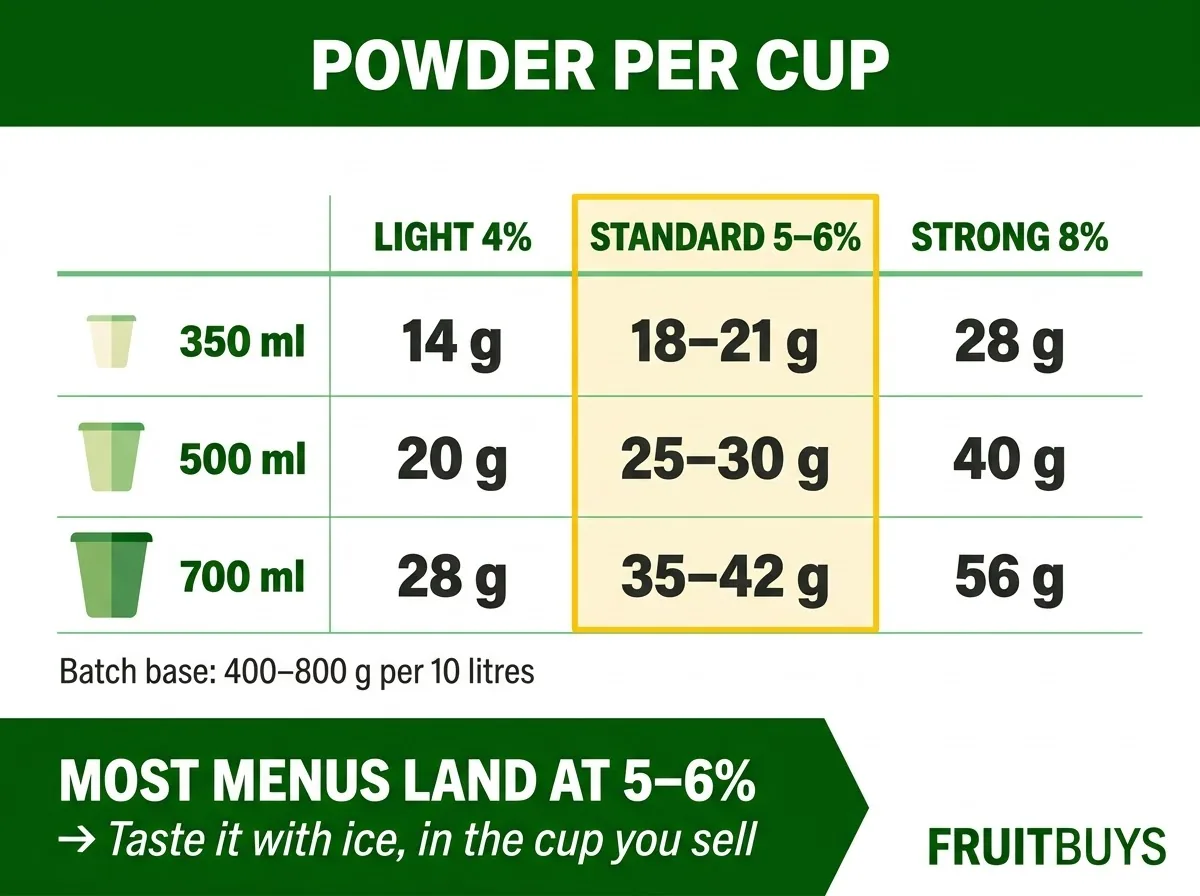
For a batch base, the same percentages scale directly: 400–800 g of powder per 10 litres covers light to strong. Most milk tea menus land in the standard column, because the milk and ice dilute the melon note; a smoothie with banana or yogurt can sit at the light end because the fruit body is already there.
Smoothies, agua fresca and powdered drink mixes start a little lower, at 3–6% (15–30 g per 500 ml). Frozen drinks and slushes need the upper end: cold dulls aroma, so a slush that tastes right at room temperature tastes flat when frozen.
Set the dose by tasting at serving temperature, with ice, in the cup you sell. A dose set on a warm bench drink usually ends up too weak.
Cold or hot: how do you mix it so it tastes like melon?
Cold is the natural home for cantaloupe powder. It disperses in cold milk or water in about ten seconds in a shaker. For hand stirring, mix the powder with a splash of the cold base into a smooth paste first, then top up: the paste stops dry pockets from floating on the surface.
Heat is where melon aroma goes. The volatile compounds that make cantaloupe smell like cantaloupe start to fade above about 70 °C. For a warm drink, add the powder at serving temperature rather than into boiling water. For a cooked syrup or a pasteurised base, add it after the heat step.
The fibre from the fruit gives a cloudy, smoothie-like body, the look of blended fresh melon. Left standing, some of that fibre settles, so a cup that waits for pickup needs a shake or a stir before it is handed over. In a sealed bottled drink, plan for a gentle settle and a “shake before drinking” line on the label.
What pairs with cantaloupe in a drink?
Cantaloupe is a soft, sweet, musky flavour. It pairs best with ingredients that let it lead:
| Pairing | What it does | Starting point |
|---|---|---|
| Fresh milk or oat milk | Classic melon milk; rounds out the musky note | Standard dose, 500 ml cup |
| Coconut milk | Tropical, creamy; good with tapioca pearls | Standard dose, coconut milk as part or all of the base |
| Lime | Lifts the sweetness; agua fresca and sparkling drinks | A squeeze per cup, light dose |
| Mint | Fresh top note; summer specials | A few leaves muddled, light to standard dose |
| Light green or jasmine tea | Fruit tea base where melon stays in front | Standard dose; brew the tea lighter than usual |
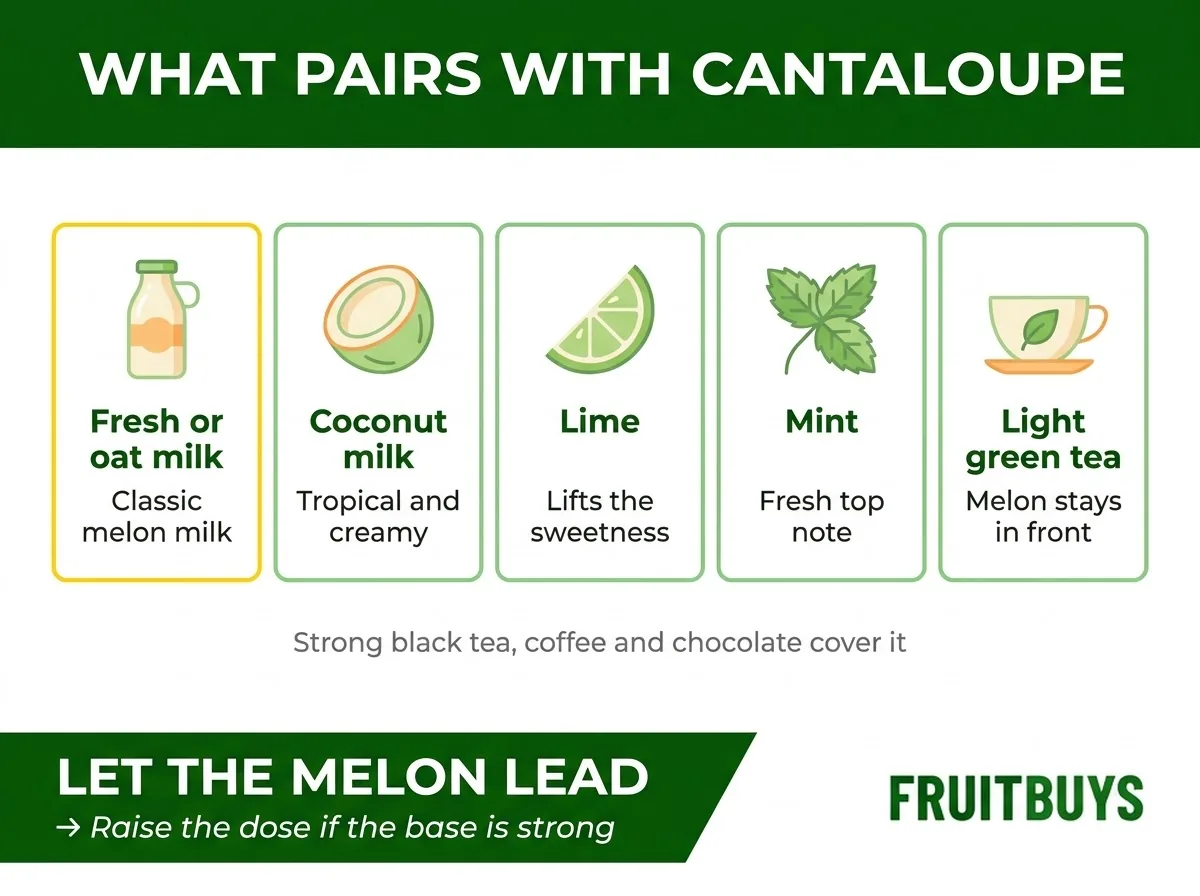
Strong black tea, coffee and chocolate cover cantaloupe. If the menu needs them, raise the dose to the strong column or keep melon as a separate layer. Two FruitBuys powders also pair well with cantaloupe in mixed-fruit specials: freeze-dried passion fruit powder for acidity and freeze-dried mango powder for body.
For a visible topping, freeze-dried cantaloupe dice float on milk foam and soften in 1–3 minutes. Add them at hand-off, not at the bar, so the customer gets a crisp-then-juicy piece.
Can you make a clear cantaloupe tea?
Yes, with dice or by letting the powder settle. Real fruit powder keeps its fibre, so it never turns a drink fully clear. For a clear iced tea, steep 10 mm freeze-dried cantaloupe dice in the brewed tea for a few minutes and strain. Or stir the powder into the tea, let it stand until the fibre settles, and pour off the clear upper layer. Both give a light, clear melon tea from the same fruit, with the same one-word ingredient line.
What does a real-fruit powder change on your label and menu?
The ingredient line for the cantaloupe part of the drink reads one word: cantaloupe. That is the line a drink brand uses to price a real-fruit cup above a syrup-flavoured one.
Per 25 g dose, the powder adds about 88 kcal, 17.5 g of the fruit’s own sugars, 655 mg of potassium and 0 g added sugars to the cup, using typical values for 100% freeze-dried cantaloupe. A lot nutrition panel gives you exact values for your menu boards and labels.
Three points help when the label team gets involved:
- Added sugars stay at zero for the fruit. FDA’s proposed front-of-package Nutrition Info box rates added sugars rather than total sugars, so the cantaloupe adds nothing to that line. Any sugar or syrup in your recipe still counts.
- The “healthy” rule applies to the ingredient, not the whole cup. Fruit with nothing added qualifies automatically under FDA’s updated rule, mandatory from 25 February 2028. A finished milk tea with added sugar is judged on its own recipe.
- Nutrient claims follow the finished drink. The powder reaches EU “high in potassium” levels per 100 g, but a drink is measured per 100 ml. At 25 g in 500 ml, the cup carries about 131 mg of potassium per 100 ml, which is below the EU “source of potassium” level for drinks (150 mg per 100 ml). “Made with real cantaloupe” is the strong, safe menu line; nutrient claims need the numbers checked on your final recipe.
The real cantaloupe powder vs flavouring guide sets real powder, juice powder, extract and flavouring side by side on a label.
Illustrative cost-in-use example (not a quotation)
Your cost of cantaloupe per cup is simple arithmetic: powder price per kg × grams per cup ÷ 1,000. At an illustrative USD 20 per kg:
| Grams per cup | Cups per kg | Cantaloupe cost per cup |
|---|---|---|
| 20 g | 50 | USD 0.40 |
| 25 g | 40 | USD 0.50 |
| 30 g | 33 | USD 0.60 |
Run the same sum for your current melon base, using its dose and price, and compare like with like. A flavoured premix also carries the sugar and creamer you would otherwise add, so add those back to the real-fruit side before you compare.
How do you keep the powder right on a busy bar?
Cantaloupe powder is about 70% natural sugar, and it picks up humidity from the air once a bag is open. On a bar with steam wands and ice machines, that happens fast. Three habits keep it free-flowing:
- Open one bag at a time. FruitBuys packs powder in 1 kg or 5 kg foil bags so a store or a batch kitchen can use one bag through before opening the next.
- Decant a shift’s worth. Keep the bar canister small and refill it from the sealed bag, rather than leaving the bag open by the machine.
- Reseal with desiccant. If a bag must be reopened, close it straight away with a fresh desiccant sachet.
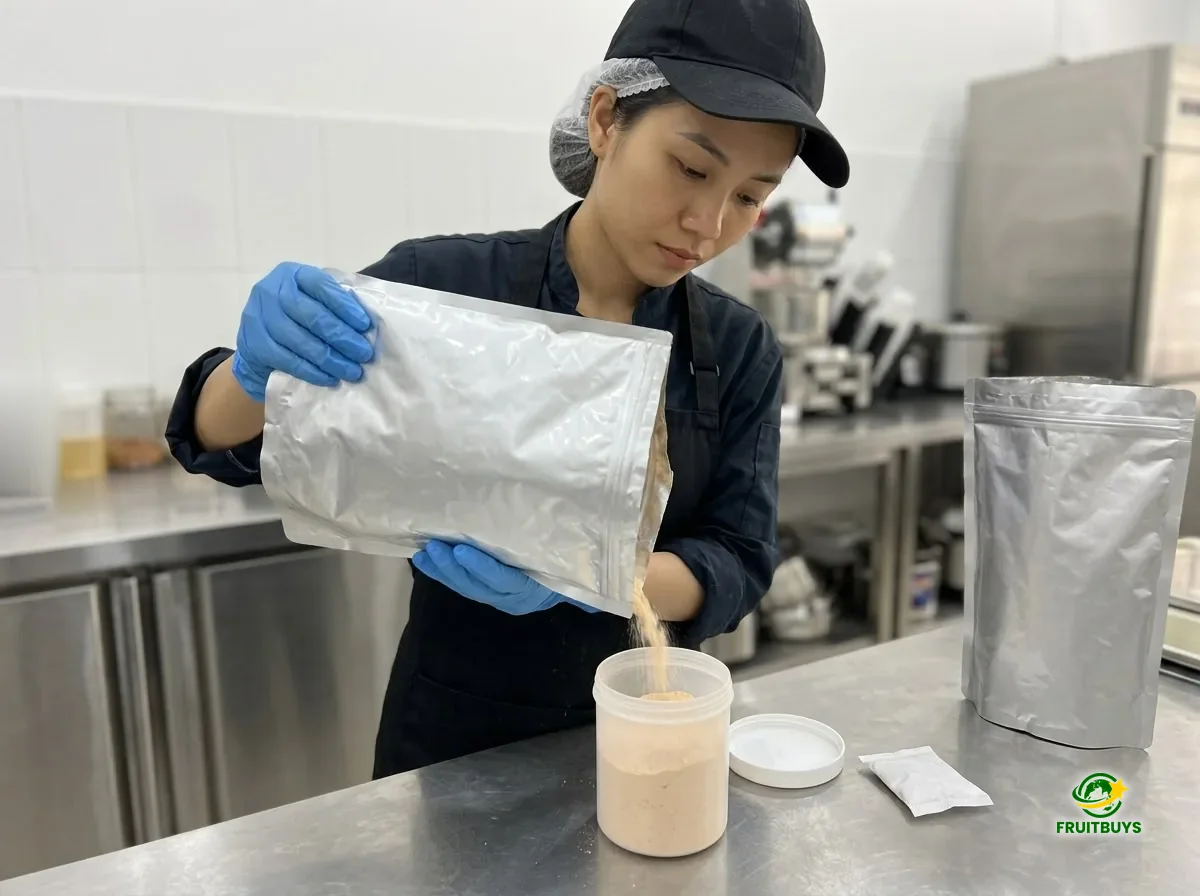
Soft lumps that form after opening break up in the shaker or through a sieve and do not change the taste. For storage in hot back rooms and warehouses, see the packaging and shelf-life guide.
If your stores want a ready-to-scoop base with sugar and milk powder already in it, blend the cantaloupe powder into your own neutral base in a dry room, pack it in sealed bags with desiccant, and dose that base by weight. We share starting ratios with your R&D team with the sample.
FAQ
Can I use cantaloupe powder in a clear iced tea?
Yes, but use dice or let it settle. Steep freeze-dried dice in the tea and strain, or stir the powder in, let the fibre settle and pour off the clear layer.
Will the powder settle at the bottom of the cup?
Some fibre settles if the cup stands. Shake or stir the cup before hand-off, and add a “shake before drinking” line to bottled drinks.
Can I pre-mix it with sugar and creamer?
Yes. Blend in a dry room, pack the mix in sealed bags with desiccant and use each bag through, because the cantaloupe makes the blend take up moisture once opened.
Does it work in hot drinks?
Yes, added at serving temperature. Melon aroma fades above about 70 °C, so do not boil it.
Is it vegan?
The powder is 100% cantaloupe, so it is vegan. The finished drink depends on your milk base.
How much cantaloupe is in one cup?
At 25 g per 500 ml cup, the drink carries the flesh of about 325–425 g of whole fresh melon, since 1 kg of powder comes from 13–17 kg of whole cantaloupe.
Request a sample
Tell us your cup size, base and target dose, and FruitBuys sends a cantaloupe powder sample with starting ratios for your menu. Samples ship within 3–5 working days.