
Real cantaloupe powder, juice powder, extract or flavouring: what are you buying?
Fruit powder, juice powder, extract or flavouring: how to read a melon ingredient list in 30 seconds and which one gives a real-fruit label.
“Cantaloupe powder”, “melon powder” and “cantaloupe extract powder” can describe four different ingredients, and the ingredient list tells you which one is in the bag. A real fruit powder lists one ingredient: cantaloupe. A juice powder lists a carrier alongside the juice. An extract can be either, depending on the supplier. A flavour powder or drink base lists sugar, creamer or a carrier, and flavouring.
The difference reaches your own label. The ingredient you buy decides what your pack can say in its name, how much cantaloupe you must declare, and how the added-sugar line reads. Buyers often send me a “melon powder” specification that turns out to describe a flavoured drink base, so this guide starts where I start: with the ingredient list.
What are the four kinds of “melon powder”?
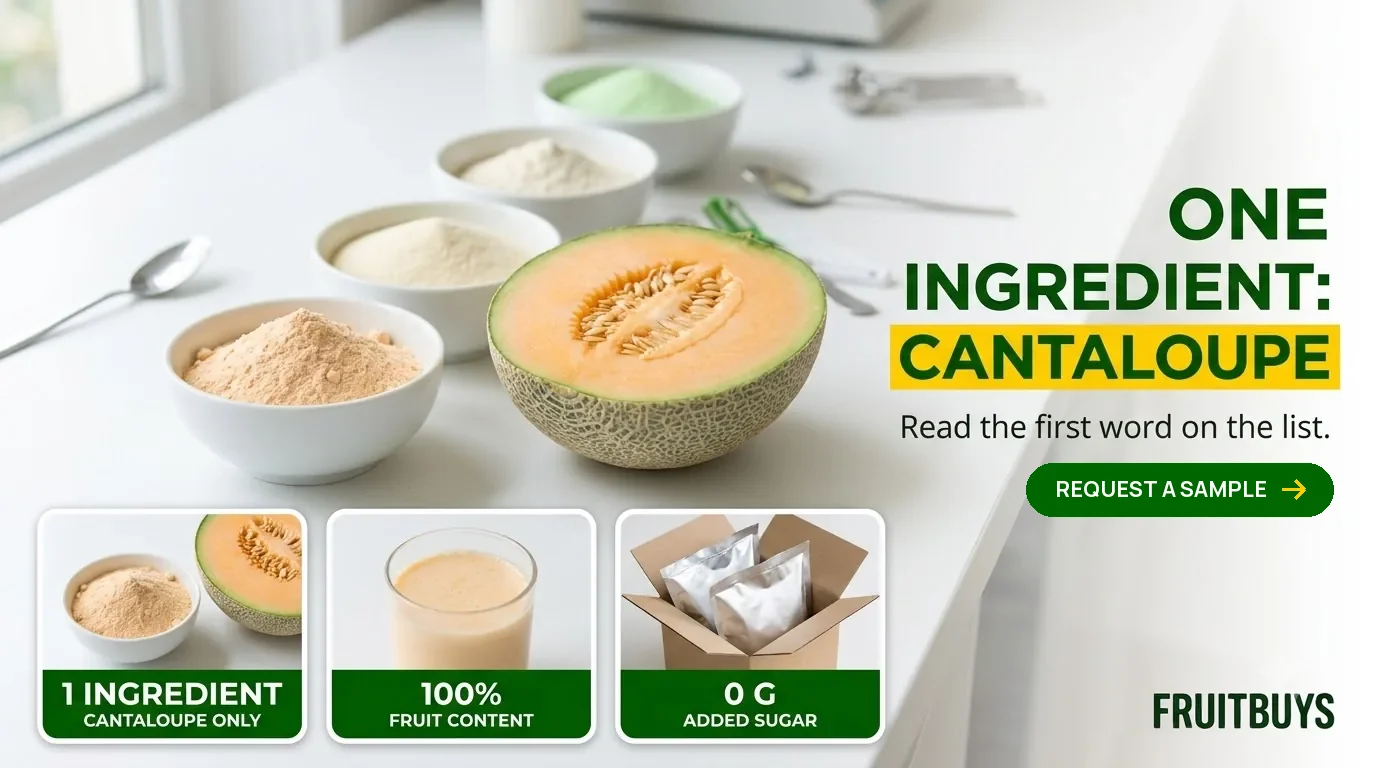
Freeze-dried fruit powder. Whole cantaloupe flesh, freeze-dried and then milled. Nothing is added, so the powder is 100% fruit, including the fruit’s own fibre. FruitBuys cantaloupe powder is this type: milled from freeze-dried cantaloupe to 60–80 mesh, with no carrier or anti-caking agent.
Juice powder. Cantaloupe juice, usually concentrated, dried with a carrier such as maltodextrin or gum arabic so it can be spray-dried. The carrier can make up a large share of the powder, and the fibre is mostly gone with the pulp. It dissolves more clearly than a whole-fruit powder.
Extract powder. The name is used loosely. Some “cantaloupe extract powders” are juice powders under another name; others are concentrated extracts on a carrier, built to deliver a measured amount of a component. The ingredient list and the specification sheet are the only reliable guide.
Flavour powder or drink base. A ready-to-use blend for drinks, typically sugar or another sweetener, creamer, a carrier, and cantaloupe or melon flavouring, sometimes with colour and acidity regulators. It is built to give a strong, consistent melon taste at a set dose and price, and the fruit, if any, is a small part.
How do you read the ingredient list in 30 seconds?
Five checks tell you which type you hold:
- Read the first ingredient. Ingredients are listed by weight. If the first word is not cantaloupe, cantaloupe is not the main ingredient.
- Count the ingredients. One ingredient means a whole-fruit powder. Two or more means something was added.
- Look for a carrier. Maltodextrin, dextrin, gum arabic or modified starch point to a juice powder or an extract.
- Look for sugar and creamer. Sugar, glucose syrup solids, non-dairy creamer or milk powder point to a drink base.
- Look for flavouring and colour. “Flavouring”, “natural flavouring” or “melon flavour”, and colours such as added beta-carotene or E-numbers, mean the taste or colour does not come only from the fruit.
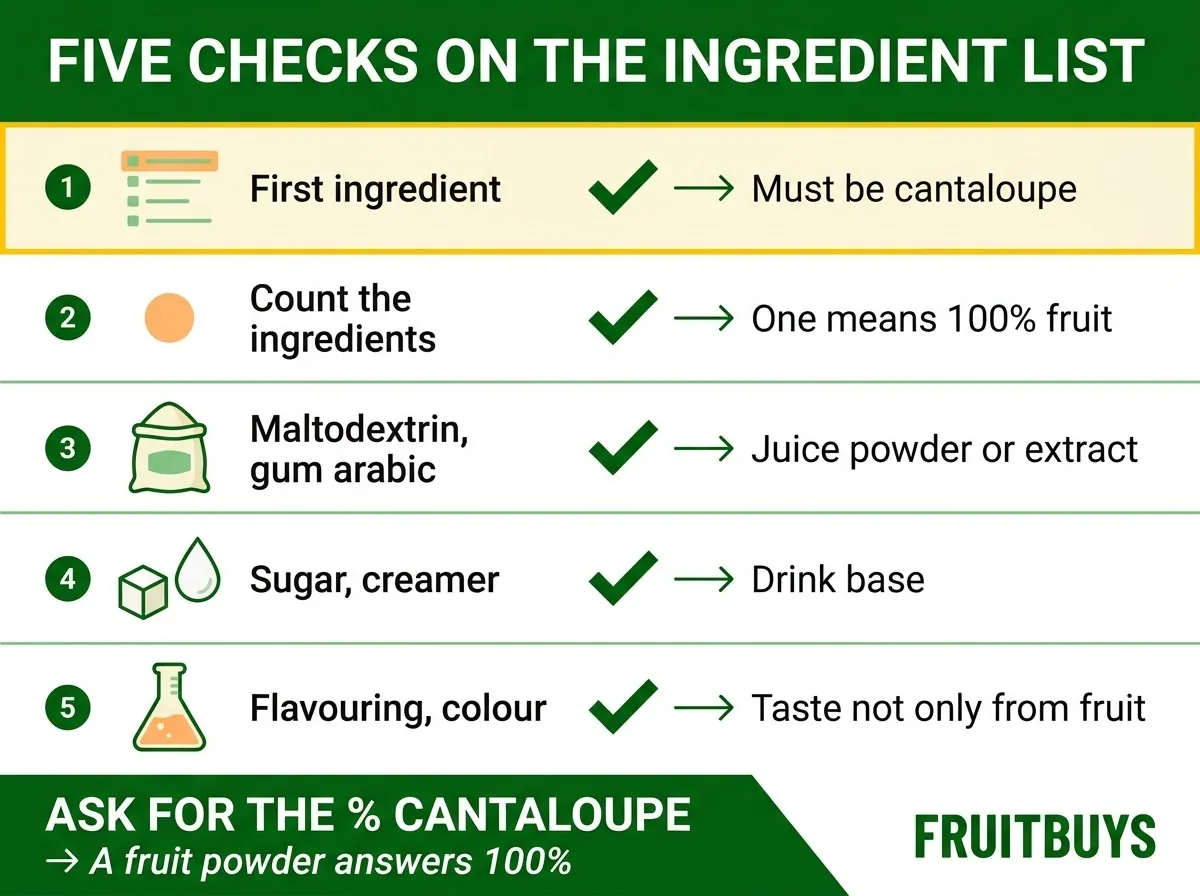
Ask the supplier for the percentage of cantaloupe in the product. For a single-ingredient powder the answer is 100%, and it should be on the specification.
What changes in colour, fruit content and aroma?
| Freeze-dried fruit powder | Juice powder | Extract powder | Flavour powder or drink base | |
|---|---|---|---|---|
| Typical ingredient line | Cantaloupe | Cantaloupe juice, maltodextrin | Varies: extract, carrier | Sugar, creamer, carrier, flavouring, colour |
| Cantaloupe content | 100% | Partial; depends on carrier share | Varies | Low or none |
| Colour source | The fruit’s own beta-carotene, light orange | From the juice; often lighter than whole fruit | Varies | Often added colour |
| Fibre and body | Keeps the fruit fibre; cloudy, smoothie-like drink | Little fibre; clearer drink | Little fibre | Body comes from creamer |
| Taste | Fresh-melon aroma and sweetness; fades above about 70 °C | Juice-like, milder | Depends on design | Strong, uniform melon taste, built for consistency |
| Added sugar from the ingredient | 0 g | Usually 0 g; check | Check | Often high |
| Where it is typically used | Real-fruit drinks, smoothies, ice cream, yogurt, bakery creams, clean-label lines | Clear drinks, instant mixes | Functional or standardised products | Quick-service drink bars, value lines |
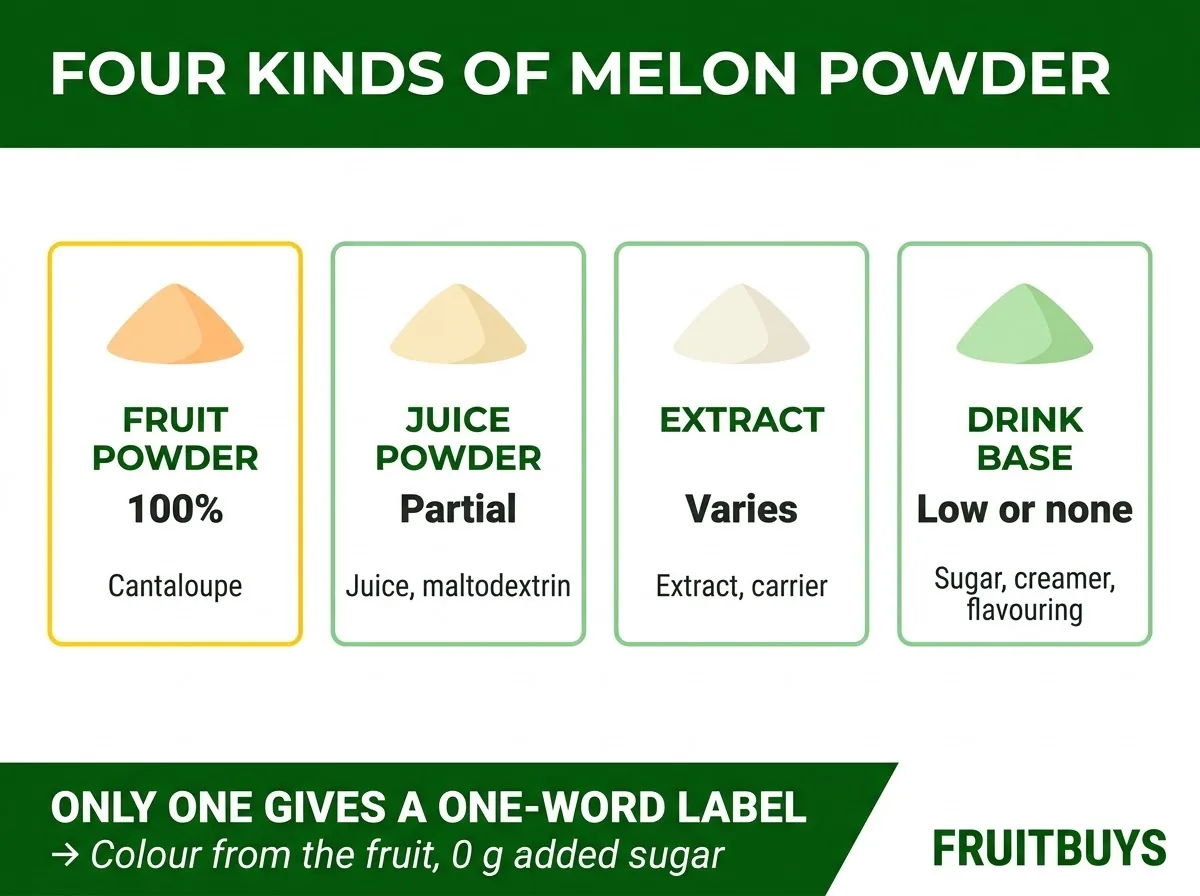
Each type has its place in the market. For a product sold on real fruit, though, only the first column gives you a one-word ingredient line and a cantaloupe colour that came from cantaloupe.
What can each one claim on the front of the pack?
The ingredient you buy shapes three label decisions.
The product name. If cantaloupe is in the name or the picture, EU rules require you to declare its percentage in the ingredient list. With a 100% fruit powder, that percentage is simply the dose you use. In the US, a product that takes its cantaloupe taste from flavouring rather than from the fruit carries that in its name, for example “cantaloupe flavored”. A powder made only from fruit lets the name say cantaloupe without a qualifier.
Added sugars. A freeze-dried fruit powder adds 0 g of added sugars to your panel; the sugar in it is the fruit’s own. A drink base that contains sugar adds it to your added-sugars line. FDA’s proposed front-of-package Nutrition Info box rates added sugars, not total sugars, so this choice shows on the front of a US pack once the rule is final.
“Healthy” and real-fruit messages. Fruit with nothing added qualifies automatically for the “healthy” claim under FDA’s updated rule, mandatory from 25 February 2028; the claim then depends on your full recipe. Front-of-pack lines such as “made with real cantaloupe” are straightforward when the cantaloupe ingredient is fruit and nothing else.
For a brand, that is the commercial point: a one-word ingredient line supports real-fruit positioning and the shelf price that goes with it.
Can you combine them?
Yes, and many manufacturers do. Each ingredient behaves differently under heat and at different doses, so a combination can give you both a strong taste and a real-fruit label.
Two set-ups work well with FruitBuys powder:
- Split dosing for cooked products. Keep your existing flavour system in the part of the recipe that is cooked or pasteurised, then add cantaloupe powder after the heat step. The fruit brings the colour, the fresh note and the ingredient declaration; your current system carries heat stability.
- Fruit-led drinks. In milk tea, smoothies and frozen drinks, use the powder at 4–8% of the drink, or 20–30 g per 500 ml cup, as the main melon source. The bubble tea and drinks guide gives doses by cup size.

If your recipe calls for a green-fleshed melon or a Hami-style note, check which melon a “melon powder” is made from before you compare; the cantaloupe vs honeydew vs Hami melon guide explains the differences.
FAQ
Is “cantaloupe extract powder” the same as cantaloupe fruit powder?
Not necessarily. “Extract” is used loosely and can mean a juice powder on a carrier or a concentrated extract. A fruit powder lists only cantaloupe; check the ingredient list and the cantaloupe percentage.
Does a real fruit powder need a carrier?
No. A freeze-dried cantaloupe powder is milled from freeze-dried fruit and needs no carrier. Carriers are used when juice is spray-dried.
Can a melon flavouring be called natural?
It depends on where the flavouring comes from. In the EU, “natural cantaloupe flavouring” requires at least 95% of the flavouring part to come from cantaloupe; other natural flavourings are labelled more generally. Your flavour supplier’s declaration settles the wording.
Why does real cantaloupe powder make a cloudy drink?
It keeps the fruit’s fibre, which gives the drink body and a blended-melon look. Juice powders and flavour bases have little or no fibre, so they mix clearer.
Does freeze-dried cantaloupe powder contain added sugar?
No. It is 100% cantaloupe, about 70% natural fruit sugar, with 0 g added sugars.
Request a sample
Send us the ingredient list of the melon powder you use today, and FruitBuys sends a cantaloupe powder sample with a starting dose, so your team can compare the two side by side in your own product.