Where do Vietnamese bananas for freeze-drying come from, and will supply hold all year?
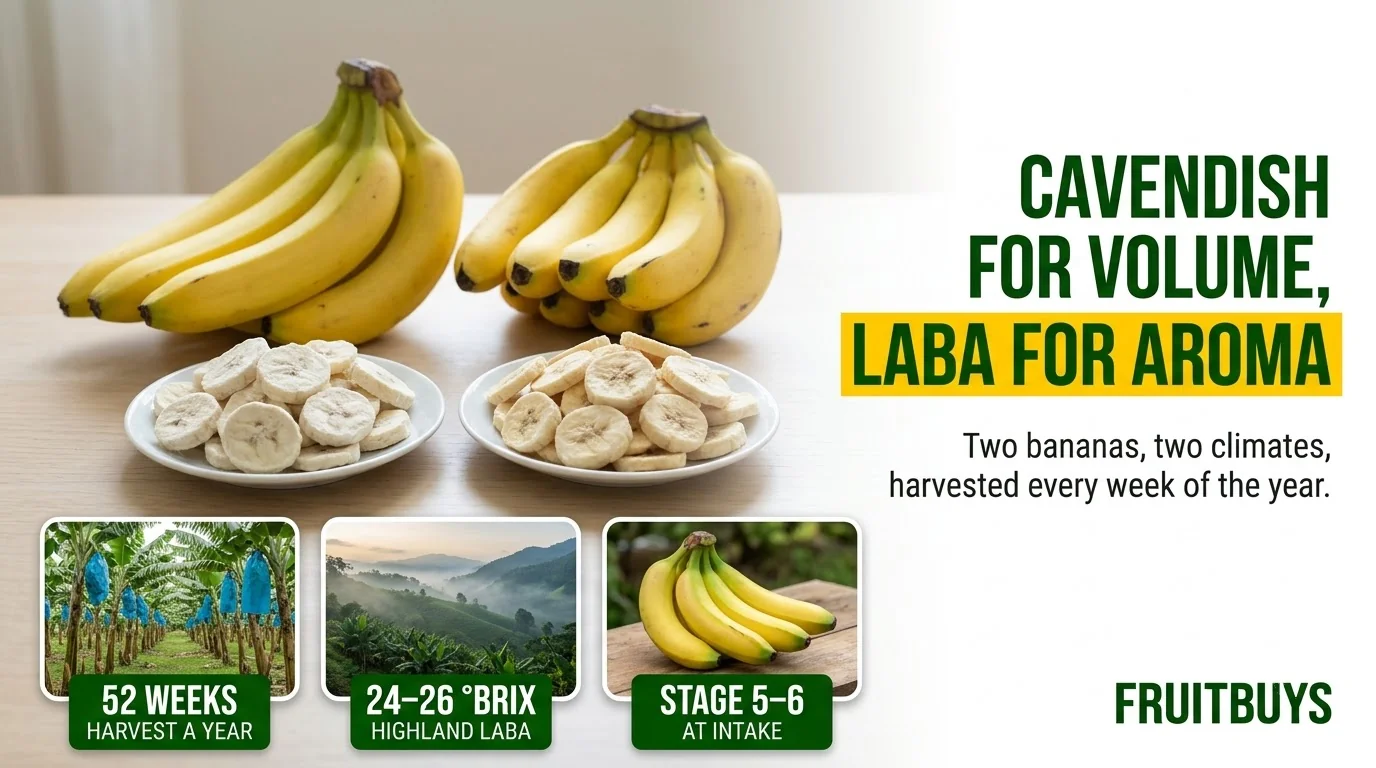
FruitBuys sources two bananas from two climates: Cavendish G9 from the lowlands of Dong Nai, Binh Duong and the Mekong Delta, close to Cat Lai port, and Laba from the Lam Dong highlands. Both are harvested year-round, with no off-season gap, so a freeze-dried banana programme can be called off month by month. The choice between them is a choice between steady ingredient volume and a snack that sells on aroma.
Why can Vietnam supply banana all year?
Because banana in southern Vietnam is not a seasonal crop. Plantings are staggered, the climate stays warm, and bunches are cut every week of the year. For your contract that means three things:
- No pre-season stockpiling. You do not need to buy a year’s banana in one harvest window and pay to store it.
- Fresh fruit in every lot. Each container is made from banana cut weeks before, not months.
- Call-offs that follow your sales. A year’s volume can be produced and shipped in staggered containers, so stock arrives when your line needs it.
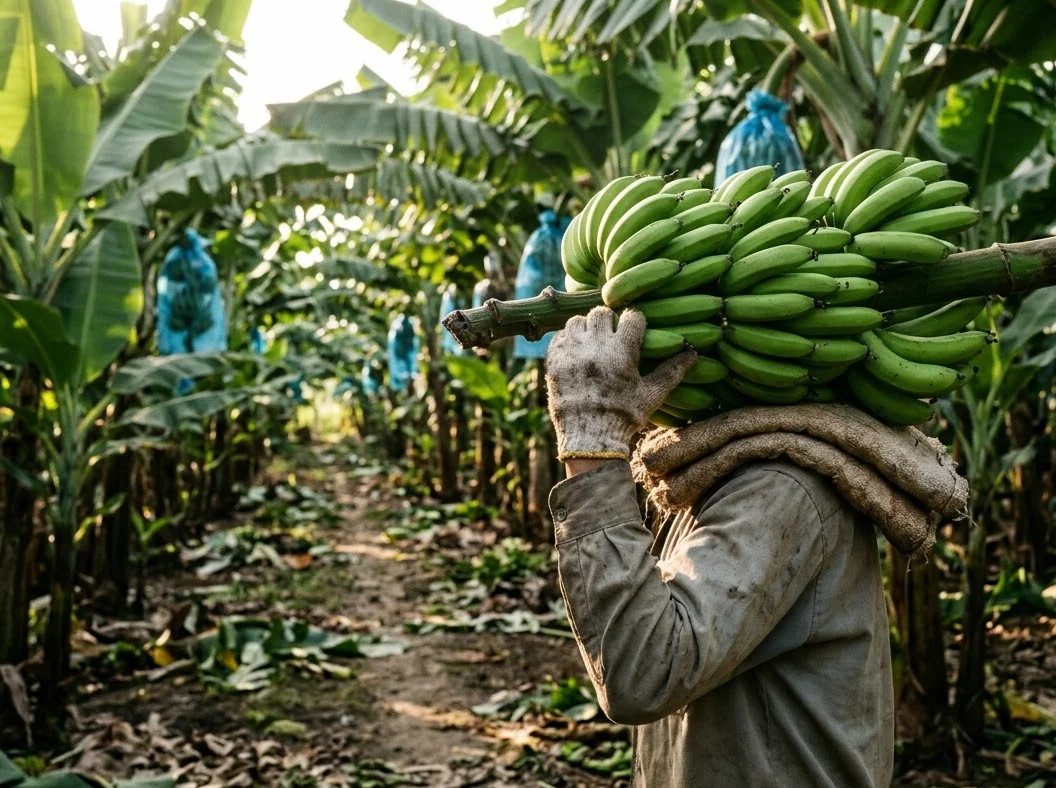
What does move through the year is sweetness. Banana harvested after the rains and in the cooler months can sit at the top or bottom of its Brix range, which is why FruitBuys buys on ripeness stage and Brix, not on the calendar.
Cavendish G9 or Laba: which one fits your product?
| Cavendish G9 | Laba (Lam Dong) | |
|---|---|---|
| Where it grows | Lowlands: Dong Nai, Binh Duong, Mekong Delta | Highlands: Lam Dong |
| Sweetness at intake | 20–22 °Brix | 24–26 °Brix |
| After freeze-drying | Clean, mild banana; cream colour; even slices | Sweeter, denser bite; markedly stronger banana aroma |
| Peeled flesh per kg finished | 5–6 kg | 4.8–5.2 kg |
| Whole fruit per kg finished | 8–10 kg | 8–10 kg |
| Best for | Cereal, bakery, chocolate, mixes, powder base | Retail snack slices, printed foil pouches, flavour-led powder |
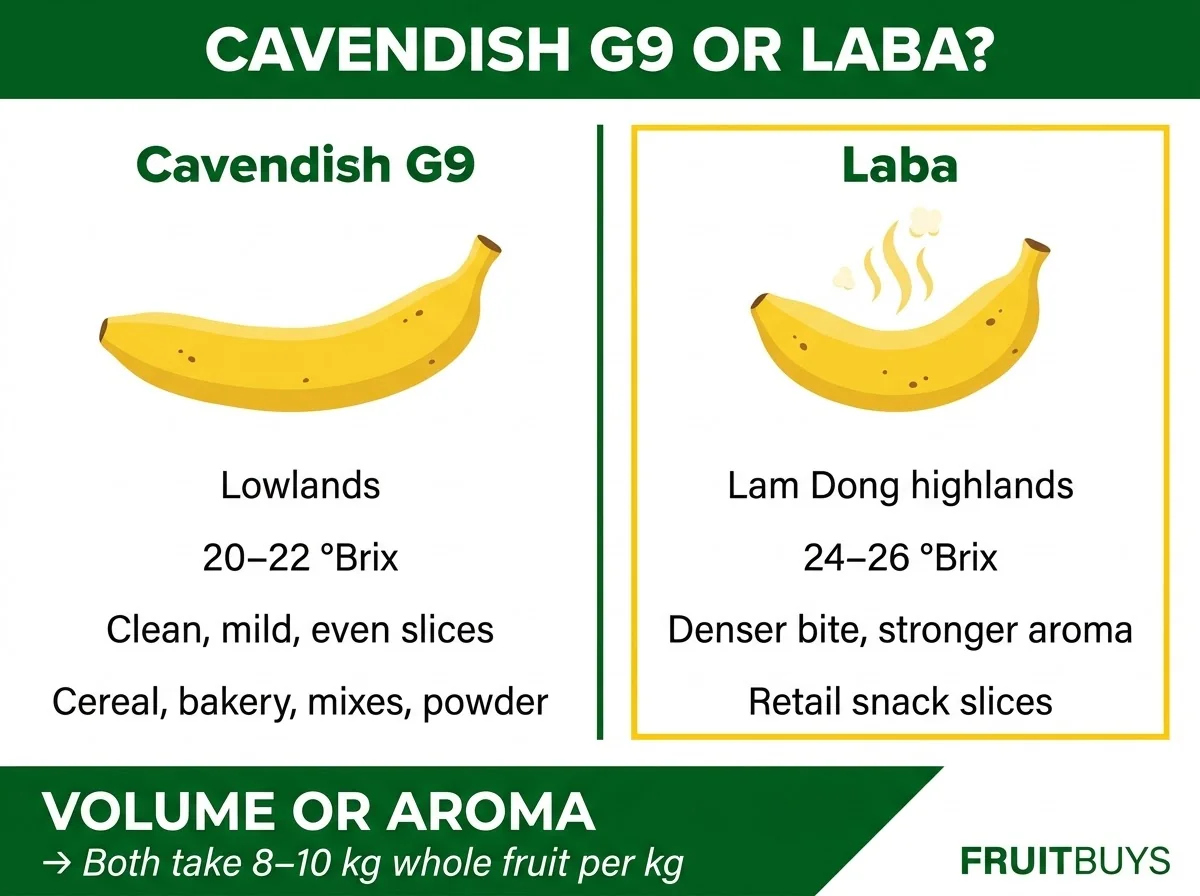
Cavendish G9 is the steady export banana: consistent shape, consistent flavour, batch after batch. It is the sensible choice wherever banana shares the spoon with other ingredients and the line needs the same piece every week.
Laba answers the question every snack buyer eventually asks: why buy Vietnamese banana when Cavendish is grown everywhere? Freeze-drying is hard on aroma, and many dried Cavendish slices come out sweet and crisp but smelling of very little. Laba carries more solids and more of the fruit’s natural aroma, and much more of it survives the dryer. The consumer smells ripe banana the moment the pouch tears, and that first breath earns the second purchase.
Laba’s higher solids mean less flesh per kilo of finished slices. Its fruit is shorter and more curved, with a thicker peel, so peeling gives some of that back. Off the bunch, both varieties need the same 8–10 kg of whole banana per kilo finished. How that ratio builds a cost floor is in how many bananas make 1 kg of freeze-dried banana.
Lowland or highland: why does the growing area matter?
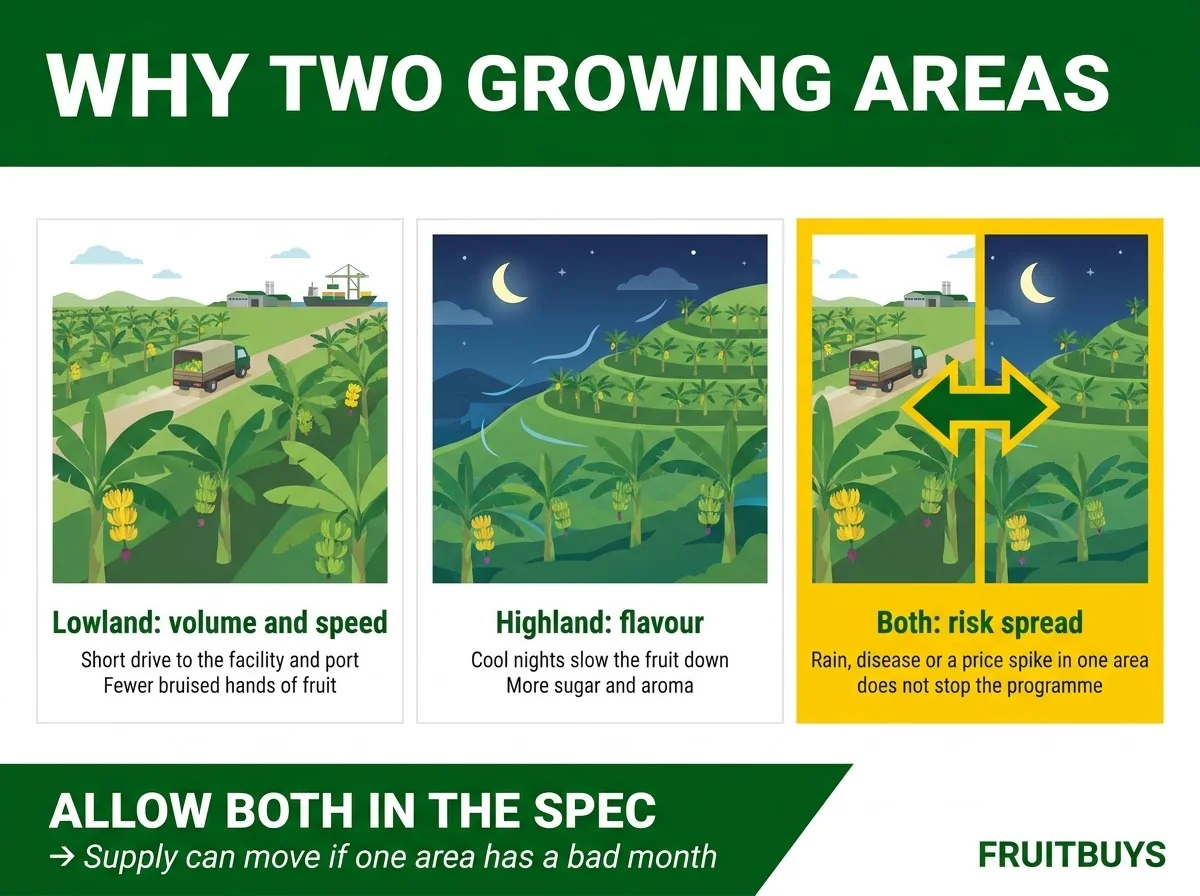
The lowland belt of Dong Nai, Binh Duong and the Mekong Delta gives volume and speed. Farms sit within a short drive of the partner facility and of Cat Lai port, so banana goes from bunch to freezer with less handling and fewer bruised hands of fruit.
The Lam Dong highlands around Da Lat give flavour. Cooler nights slow the fruit down on the plant, and slower-grown banana packs in more sugar and aroma. Highland fruit travels further to the facility, which is one reason Laba is sold as a flavour line rather than a commodity.
Two regions also spread the risk. Heavy rain, a local disease outbreak or a price spike in one area does not stop a programme that can draw on another, as long as the specification allows for both.
Why is ripeness stage 5–6 the cut-off?
Because it is where banana gives the best colour, flavour and yield at the same time. FruitBuys buys at stage 5–6, yellow with green tips to fully yellow, at 20–22 °Brix for Cavendish.
| Ripeness | What happens in the dryer | What you get |
|---|---|---|
| Stage 4, still green | Starch has not turned to sugar | White but chalky, astringent slices with no aroma |
| Stage 5–6 | Sugar and aroma at their peak, flesh still firm enough to slice cleanly | Cream colour, sweet, crisp, smells of banana |
| Stage 7, brown-flecked | Flesh is soft; sugar bleeds onto trays | Broken slices, sticking, scorched edges, more loss |
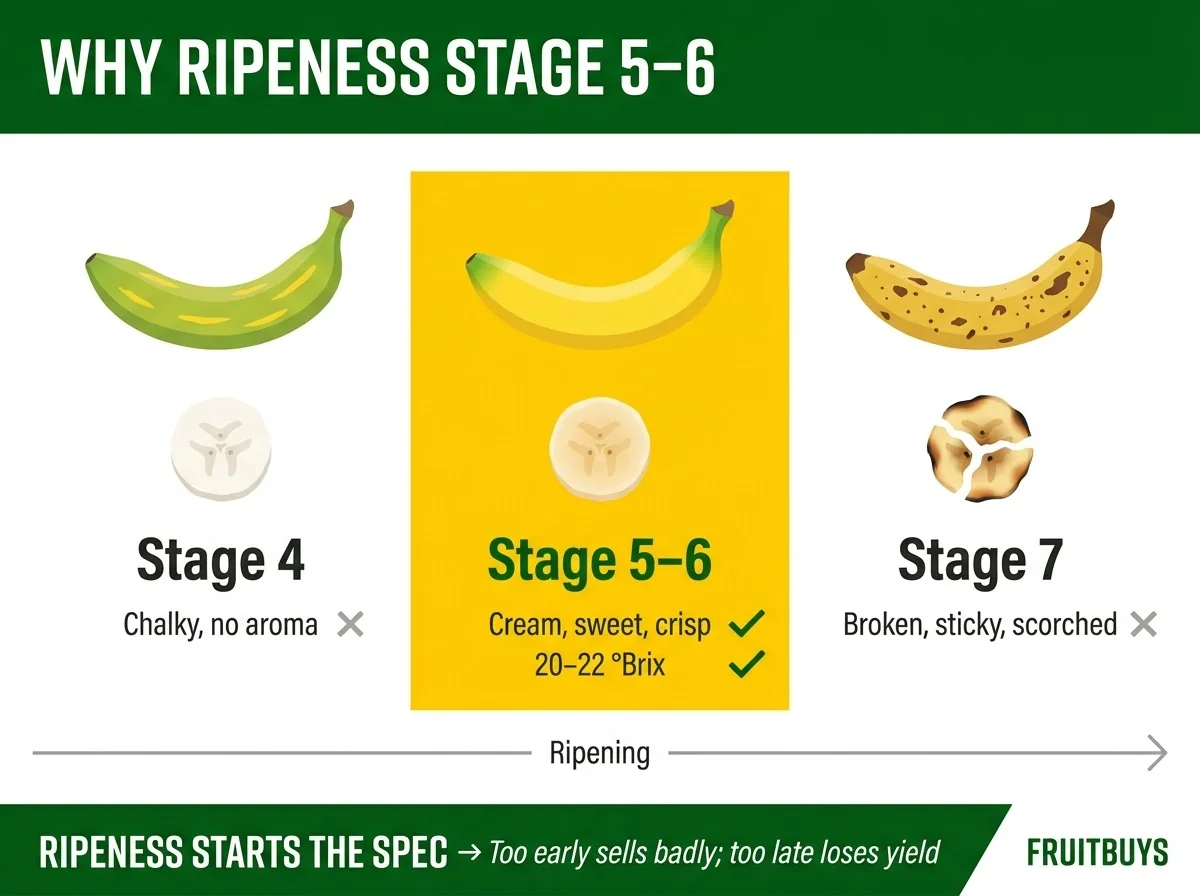
Every tray loaded at the wrong stage costs money on one side or the other: stage 4 sells badly, stage 7 loses yield. That is why ripeness sits at the start of the specification, not the end. Colour control after slicing, the vitamin C and citric acid dip and breakage are covered in why freeze-dried banana turns brown or breaks.
What do 2026’s export boom and Panama disease mean for your contract?
Vietnamese banana is in demand. Exports reached US$222.6 million in the first seven months of 2026, making banana Vietnam’s second-largest fruit export after durian, and China took about two-thirds of it. Fresh export prices early in the year ran about 30% above a year earlier.
For a freeze-dried buyer that cuts both ways. The good news: the growing base, packing houses and farm investment behind that boom make Vietnamese banana a deeper and better-organised supply base. The pressure: good fresh fruit now has buyers in China, Japan and Korea competing for it, so the raw material a freeze-drying facility buys is no longer cheap or unlimited.
Panama disease (Fusarium wilt) is the other constraint. It is a soil disease that has spread through banana areas across Asia, including parts of Vietnam, and it limits how much new land can safely be planted. It does not affect the safety or eating quality of the fruit that is harvested; it is a supply question, not a food-safety one. The same disease has now been found on a farm in Ecuador, so no single origin is immune.
What this means in practice:
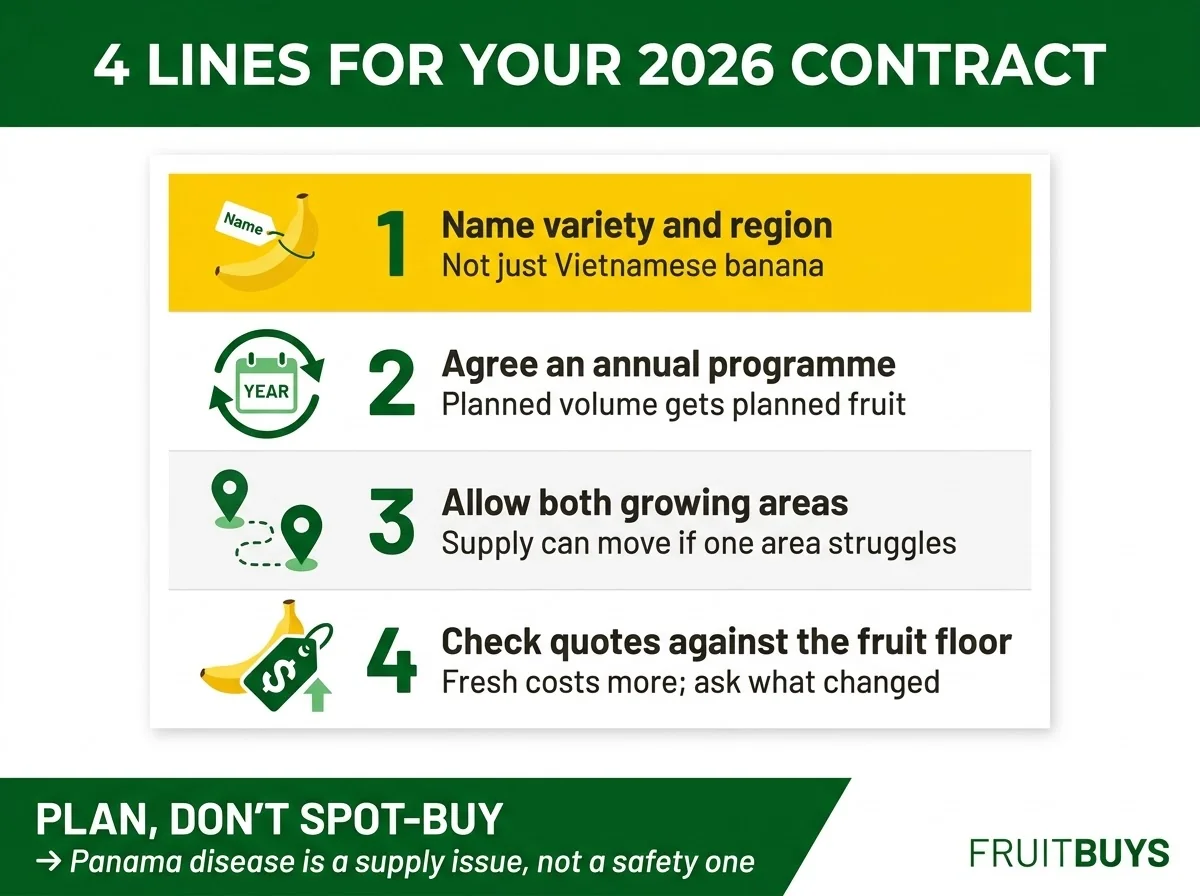
- Name the variety and region in the spec. “Vietnamese banana” with no variety is an invitation to fill the lot with whatever was cheapest that week.
- Agree an annual programme rather than spot buying. Planned volumes get planned fruit; spot orders compete with the fresh market on the day.
- Allow both growing areas where your product can take either, so supply can move if one area has a bad month.
- Read quotes against the raw-material floor. If fresh banana costs more this year and a quote has not moved since last year, ask what changed in the bag.
When is a different banana the better fit?
If your brief calls for a certified organic banana, or a variety other than Cavendish or Laba, send it with the RFQ. Certified organic banana in Vietnam comes from scattered holdings, so volume and timing depend on the region, and FruitBuys will tell you plainly what one region can supply before you plan a launch around it. For most buyers whose real concern is pesticide residues, a residue panel on the lot against your destination’s limits is the faster route, covered in what freeze-dried banana needs to clear US, EU, UK and UAE customs.
FAQ
Where are Vietnamese bananas grown?
Mainly in the southern lowlands (Dong Nai, Binh Duong, the Mekong Delta) and in the Lam Dong highlands, plus northern provinces that supply the fresh trade.
What is Laba banana?
A Cavendish-type banana grown in the Lam Dong highlands, sweeter (24–26 °Brix) and more aromatic than lowland Cavendish, and the variety FruitBuys uses for flavour-led snack slices.
Is banana harvested all year in Vietnam?
Yes. Southern Vietnam harvests banana every week of the year, so freeze-dried banana can be produced and shipped on a monthly call-off.
What ripeness is best for freeze-drying banana?
Stage 5–6, yellow with green tips to fully yellow, at 20–22 °Brix for Cavendish.
Does Panama disease affect freeze-dried banana safety?
No. It is a soil disease that affects banana plants and supply, not the safety of harvested fruit.
Can I get both varieties in one order?
Yes. Many brands take Cavendish for dice or powder and Laba for retail slices in the same container.
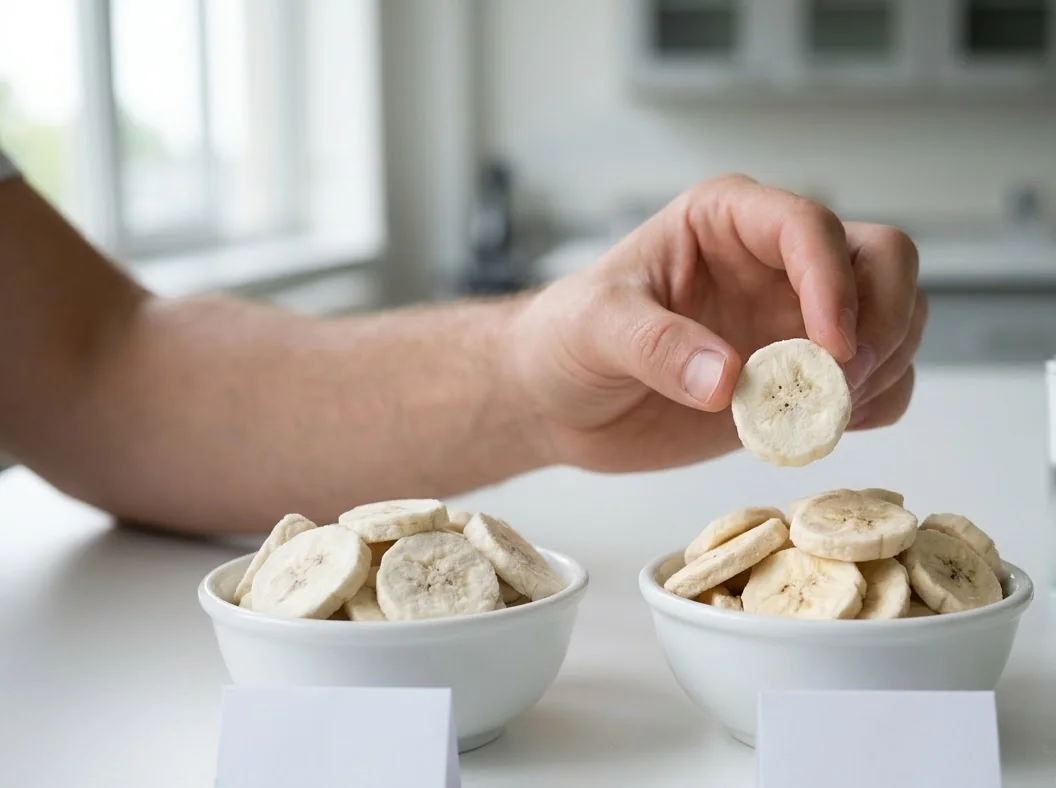
Taste both bananas side by side
Send your product, target market and expected volume. FruitBuys sends samples of Cavendish G9 and Laba freeze-dried slices, so your team can taste the difference before choosing the variety for your specification. The sourcing guide is freeze-dried banana wholesale and bulk, and product details are on the freeze-dried banana page. Prefer to talk it through? Email [email protected] or WhatsApp +84 919 739 589.