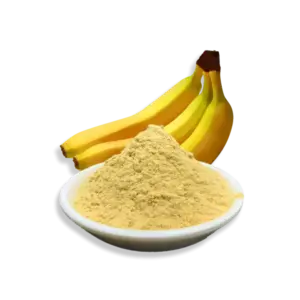

Freeze-Dried Banana
Freeze-dried banana wholesale sourcing becomes risky when the buyer approves taste before locking the product file. A sample may look bright, crisp and clean, but bulk release can still fail through moisture drift, high breakage, powder caking, weak packaging, incomplete COA, label-data gaps or destination-market mismatch. Importers, distributors, QA managers, R&D developers and private label buyers need more than a product photo and a short specification. They need a controlled route from raw material to format, sample, packaging, testing, documentation and shipment readiness.

FruitBuys supplies freeze-dried banana as one locked, documented, quality-controlled product under one accountable relationship. This guide explains how to qualify slices, cubes, bites and powder before approving samples, retail packs, ingredient use or private label development.
What Is Freeze-Dried Banana Wholesale?
Freeze-dried banana wholesale is not only bulk product supply.
It is a controlled product route covering format, specification, sample approval, packaging, COA, label data and documentation.
Buyers should qualify the product file before approving bulk release.
Freeze-dried banana is banana fruit processed through freeze-drying, where frozen water is removed mainly by sublimation under reduced pressure. A peer-reviewed review of food freeze-drying describes the process through freezing, primary drying and secondary drying, and explains that process parameters affect physical properties of food materials (PMC). For buyers, this matters because freeze-dried banana is not judged only by flavor. The product must hold structure, color, crispness, particle size, moisture, Aw and packaging stability. A slice for retail snack pouches, a cube for cereal inclusions and a powder for beverage formulation require different control points.
FruitBuys supplies freeze-dried banana through an Integrated Product Supply Model. That model connects raw material direction, qualified production partners, QC, packaging alignment, documentation and logistics coordination under one supplier relationship. The buyer does not manage separate product samples, test files, packaging inputs and document handover without a single accountable party. This pillar article maps the full qualification route. Each section links to a dedicated spoke article so the buyer can move from product interest to RFQ without losing technical control.

Buyer Decision Map
Wholesale freeze-dried banana decisions should follow a sequence. When buyers jump directly to sample approval, the missing details return later as QA questions, label revisions or shipment-document friction.
| Decision Stage | Buyer Question | Required Output |
|---|---|---|
| Application | What will the banana do in the final product? | Snack, cereal, bakery, beverage, topping or private label route |
| Format | Which physical format fits the application? | Slices, cubes, bites or powder |
| Specification | What measurable criteria control approval? | Moisture, Aw, size, color, breakage, fines or mesh |
| Sample | Does the sample represent the bulk target? | Approved reference sample and retained sample |
| Testing | What must the COA prove? | Lot-specific moisture, Aw and required lab panel |
| Packaging | Can the pack protect the format? | Bulk bag, retail pouch, carton and storage file |
| Label | What destination label route applies? | Nutrition file, ingredient statement and layout basis |
| Documentation | What files must match the shipment? | Specification, COA, packing list, label file and certificate scope |
| RFQ | What should the buyer submit? | Complete product-control brief |
The full request route is summarized in the freeze-dried banana RFQ checklist. This hub explains why each field matters.
Raw Material and Fresh-to-Dry Conversion
The working FruitBuys dataset uses a planning ratio of 5–6 kg peeled banana pulp to produce 1 kg finished freeze-dried banana. This is a working range, not a universal constant. The ratio depends on the starting boundary, banana maturity, trimming loss, moisture of fresh pulp, drying endpoint, breakage rules and whether fines count as saleable output.
The buyer must confirm whether the conversion ratio starts from:
- Whole banana
- Peeled banana
- Peeled and trimmed pulp
- Saleable slices only
- Total dryer output including broken pieces and fines
- Powder route after milling
The article fresh-to-dry conversion ratio explains this calculation boundary in detail. Buyers should not compare supplier ratios unless the starting and ending points are the same. A stable conversion ratio does not guarantee stable quality. One lot can deliver the expected dry weight but carry more broken slices, darker color or higher fines.

That is why conversion control must sit beside moisture, Aw, physical inspection, packaging and COA. FruitBuys connects this stage to raw material sourcing governance. Banana maturity and raw-material suitability influence color, sweetness, browning risk, texture and finished format. A slice project and powder project do not need the same intake logic.
Product Formats: Slices, Cubes, Bites and Powder
Format selection is an application decision.
Slices, cubes, bites and powder carry different risks in breakage, caking, size control, packaging and release testing.
Buyers should choose the format after defining the final product use.
Freeze-dried banana can move as slices, cubes, bites or powder. These formats should not be treated as interchangeable.
| Format | Best-Fit Use | Main Risk | Required Proof |
|---|---|---|---|
| Slices | Retail snack pouch, topping, visual inclusion | Breakage, brown centers, thickness variation | Thickness, color range, intact ratio, breakage limit |
| Cubes | Cereal, bakery, confectionery, ingredient inclusion | Size distribution drift | Cube size, oversize/undersize limit, fines |
| Bites | Snack mix, granola, smaller-piece pouch | Confusion with broken pieces | Bite-size range, fines, distribution |
| Powder | Beverage, bakery, dry blend, ingredient pack | Caking, clumping, mesh drift | Particle size, moisture, Aw, bulk density where required |
The complete comparison is in banana slices, cubes, bites and powder comparison. Powder-specific review sits in freeze-dried banana powder specification. The wrong format can pass sample tasting and fail in production. A full slice may look strong in a sample pouch but break in a cereal blend.

A powder may smell ripe but cake in storage. A cube may look clean but fail dosing if size distribution is not measured. FruitBuys uses quality control and documentation to convert format preference into measurable release criteria. The buyer approves a format, not a vague product name.
Moisture and Water Activity
The current working targets for this dataset are 3–5% moisture and Aw below 0.30. These values should be treated as release targets until confirmed by a lot-specific COA. Moisture and Aw are not the same measurement. FDA defines water activity as the ratio between the vapor pressure of a food and the vapor pressure of distilled water under identical conditions. FDA also notes that temperature can affect Aw, which makes test condition relevant when comparing results. (U.S. Food and Drug Administration)
For freeze-dried banana, water control affects:
- Crispness
- Powder caking
- Slice breakage behavior
- Storage stability
- Packaging performance
- Shelf-life confidence
- Lot-release decision
The dedicated article freeze-dried banana moisture and Aw explains how buyers should review these numbers. Aw below 0.30 can support stability control, but it does not prove sterility or replace microbiology. FDA’s 2025 draft guidance for low-moisture ready-to-eat human foods focuses on sanitation programs and corrective actions following pathogen contamination events, and it emphasizes that product testing alone cannot carry the full verification burden (U.S. Food and Drug Administration).

That is the core buyer rule: low moisture supports control, but it is not a shortcut around sanitation, microbiology, packaging or lot-specific documentation.
Color, Browning, Thickness and Breakage
Freeze-dried banana is judged visually before it is judged by a lab report. That creates a risk: buyers can over-approve attractive pieces and under-specify the production standard.
The sample should define:
- Color range
- Brown-center tolerance
- Slice thickness
- Cube or bite size
- Intact ratio
- Broken-piece limit
- Fines limit
- Powder mesh where applicable
- Sensory reference
Research on freeze-dried banana slices has shown that pretreatment can affect browning and quality characteristics. A study on banana slices pretreated with ascorbic acid and quince seed mucilage reported effects on browning and physical-functional properties, supporting the broader point that pretreatment and process route matter for color control (PubMed).
This does not prove that any specific FruitBuys lot uses that treatment. The buyer must request the ingredient statement, treatment declaration and lot evidence when those details matter. The technical article banana browning and breakage control explains how to turn visual quality into measurable criteria. A strong specification should not say only “natural yellow color” or “low breakage.” It should define pass, review and reject conditions.
Applications Across Food and Beverage Development
Freeze-dried banana can support several food and beverage routes, but each route needs a different product file.
| Application | Likely Format | Key Control |
|---|---|---|
| Retail snack | Slices or bites | Color, intact ratio, breakage, pouch protection |
| Cereal or granola | Cubes or bites | Size distribution, fines, mixing breakage |
| Bakery | Powder, cubes or bites | Moisture behavior, flavor, particle control |
| Confectionery | Cubes or bites | Aw compatibility, size, coating behavior |
| Dessert topping | Slices, bites or powder | Texture after moisture contact |
| Beverage or dry mix | Powder | Mesh, dispersion, caking, microbiology |
| Private label SKU | Slices, bites or powder | Product, pack, label and release file alignment |
The dedicated article freeze-dried banana applications maps these application routes in detail. Application should come before format. A buyer who asks for slices without describing the final product may receive a visually strong sample that cannot survive mixing, handling or storage.

A buyer who asks for powder without defining particle distribution may receive a sample that cannot scale into formulation. FruitBuys uses application mapping to align raw material sourcing governance, quality control, documentation and OEM/Private Label Delivery. The buyer’s final product tells us which banana format must be built and verified.
Powder as a Separate Ingredient Route
Freeze-dried banana powder is not the same as uncontrolled fines.
Powder requires particle-size control, moisture and Aw proof, caking review, packaging and lot-specific COA.
Buyers should qualify powder against the final formulation.
Powder needs a separate specification because it behaves differently from slices, cubes and bites. It has higher surface exposure and stronger moisture sensitivity. It can cake, clump, lose flow or shift particle distribution if the product and package are not controlled.
A powder specification should include:
- Mesh or particle-size distribution
- Oversize and undersize limits
- Moisture
- Aw
- Bulk density where required
- Color
- Aroma and flavor reference
- Caking review
- Microbiology panel
- Packaging route
- COA template
The detailed route is in freeze-dried banana powder specification. Powder should not be approved from aroma and mesh alone. A mesh number does not prove flow, dispersion, caking behavior, packaging performance or microbiology. For beverage developers, powder can be a useful route. For QA managers, it is a tighter documentation task.

Packaging and Shelf-Life Control
Freeze-dried banana can leave drying within specification and still fail later if packaging is weak. The product’s porous structure makes moisture protection central. The current dataset uses 12–24 months as a conditional shelf-life direction. It should not be published as an unconditional claim. Shelf life depends on:
- Final product format
- Final moisture result
- Final Aw result
- Inner bag or pouch structure
- Seal method
- Carton protection
- Storage condition
- Retained sample or validation route
- Lot-specific COA
Research on freeze-dried apple and banana slices links water activity and glass transition with mechanical and optical properties. For buyers, the practical point is direct: water control affects texture and appearance in freeze-dried banana, not only lab numbers (ScienceDirect).

For the current dataset, the carton planning data is 60 × 39 × 39 cm with 10 kg net per carton. Final carton performance still requires pack-structure and loading review. The complete packaging route is in freeze-dried banana packaging and shelf-life control. Packaging should be approved with the product, not after the product.
COA and Laboratory Testing
A COA should prove the release status of an identified lot. It should not function as a generic product sheet.
For freeze-dried banana, a strong COA should identify:
- Product name
- Product format
- Lot number
- Moisture result
- Aw result
- Method
- Result
- Unit
- Acceptance limit
- Sample identity
- Microbiology panel where required
- Contaminant or residue panel where required
- Report date
- Release status
The dedicated article COA and laboratory testing explains the proof file.
A COA cannot replace:
- Product specification
- Laboratory report
- Physical inspection
- Certificate-scope review
- Label-data review
- Packaging file
- Sample-to-bulk protocol
EU-bound buyers should review contaminant scope carefully. Commission Regulation (EU) 2023/915 sets maximum levels for certain contaminants in food and repealed Regulation (EC) No 1881/2006. Final applicability still depends on product category, current consolidated text and buyer requirement (EUR-Lex). FruitBuys connects COA review to quality control and documentation. The document must match the product format and lot. A COA for slices should not be reused to release powder unless the lot, sample and scope match.
Nutrition Facts and Label Data
Nutrition data should not be copied from a reference pouch into a private label pack. The supplied reference label for this dataset can be normalized to 100 g for preliminary review only. The visible values calculate to approximately:
| Nutrient | Reference Normalized Value per 100 g | Status |
|---|---|---|
| Calories | 400 kcal | Reference only |
| Total Carbohydrate | 90 g | Reference only |
| Total Sugars | 76.67 g | Reference only |
| Dietary Fiber | 6.67 g | Reference only |
| Protein | 6.67 g | Reference only |
| Potassium | 1,667 mg | Reference only |
Those numbers should not be published as final FruitBuys values without product-specific nutrition evidence. FDA states that Nutrition Facts label requirements were updated, including added sugars and required declarations for vitamin D and potassium, while calcium and iron remain required nutrients. FDA also explains that serving size information appears prominently and is based on the amount people typically eat, not a recommendation. (U.S. Food and Drug Administration)
The dedicated article freeze-dried banana Nutrition Facts explains how to build the nutrition file. The buyer must confirm:
- Product format
- Ingredient statement
- Pretreatment declaration
- Serving size
- Pack size
- Destination market
- Analysis or calculation basis
- Rounding review
- Label-language route
- Claims review
Nutrition Facts support label development. COA supports lot release. They should align, but they are not the same file.
US, EU and UAE Market Readiness
Market readiness is destination-specific.
One supplier file does not automatically satisfy US, EU and UAE review.
Buyers should define the destination before locking label, testing, packaging and document scope.
The article US, EU and UAE market readiness covers this route.
For the United States, FDA’s FSVP rule requires importers to establish and follow risk-based foreign supplier verification activities to verify that imported food meets applicable US requirements and is not adulterated or misbranded with respect to allergen labeling. (U.S. Food and Drug Administration) FDA also states that facilities engaged in manufacturing, processing, packing or holding food for US consumption must register unless an exemption applies. (U.S. Food and Drug Administration)
For the EU, Regulation (EU) No 1169/2011 covers food information to consumers and has a current consolidated version listed in EUR-Lex records. (EUR-Lex) EU contaminant review should consider Regulation (EU) 2023/915 where applicable. (EUR-Lex) The European Commission also states that no phytosanitary certificate is needed for fruits of pineapple, coconut, durian, banana or date, but buyers still need exact route confirmation for processed product and importer requirements. (Food Safety)
For UAE-focused packs, Abu Dhabi Agriculture and Food Safety Authority’s general food-labeling requirements state that prepackaged food must not be presented in a false, misleading or deceptive way, and mandatory information must be clear and legible under normal conditions (Docslib). FruitBuys does not turn these rules into generic claims. The buyer must define the market, product format, pack route, testing scope and label route.
Sample-to-Bulk Consistency
A good sample is not a bulk-release standard. It becomes useful only when converted into measurable criteria. The article sample-to-bulk consistency explains how buyers should control this step.
A reference sample should lock:
- Format
- Color range
- Brown-center tolerance
- Thickness or particle size
- Moisture and Aw targets
- Sensory standard
- Intact ratio
- Breakage limit
- Fines limit
- Powder mesh where applicable
- Packaging route
- COA scope
- Deviation rule
The most dangerous phrase in sample approval is “same as sample.” It sounds clear, but it does not define measurement, tolerance, method or release authority. Bulk production needs a comparison protocol. FruitBuys uses quality control and documentation to align sample, specification, retained sample, COA, packaging and lot-release records. The buyer should approve the release standard before bulk production, not after receiving the lot.
OEM and Private Label Delivery
Private label freeze-dried banana requires the tightest alignment because product, pouch, label and consumer-facing presentation meet in one SKU. The article OEM and private label delivery covers this route.
A private label brief should define:
- Destination market
- Product format
- Intended application
- Pack size
- Pouch route
- Ingredient statement
- Nutrition Facts or nutrition declaration route
- Storage statement
- Shelf-life evidence route
- COA scope
- Artwork inputs
- Lot-code location
- Sample approval rule
- Bulk-release rule
FruitBuys supplies the configured private label product. We align product format, packaging direction, label inputs, coding, documentation and release requirements before production release. Private label work should not start with artwork. Artwork should follow the product file. A polished pouch cannot fix missing Nutrition Facts, unsupported storage language, weak COA scope or wrong format.
HS Code and Documentation Readiness
Shipment documentation must match the exact product. Slices, bites, cubes and powder may not use the same classification route. The article HS code and documentation readiness explains this in detail. At the international HS level, bananas, including plantains, fresh or dried, fall under heading 0803. WCO lists 0803.90 for “other” bananas under that heading. Banana powder may require a different starting point under heading 1106 for flour, meal and powder of products of Chapter 8. Final classification must be confirmed by national schedule and destination review. (Food Safety)
A shipment file should align:
- Commercial product name
- Product format
- Ingredient statement
- HS or national classification route
- Packing list
- COA
- Laboratory reports
- Label file
- Certificate scope
- Carton data
- Lot code
- Storage statement
- Importer-specific requirements
Do not release documents when one file says “banana slices” and another file supports “banana powder.” Product identity must stay consistent.
Application Mapping
| Buyer Type | Application | Required Format | Proof Needed | FruitBuys Delivery |
|---|---|---|---|---|
| Importer | Bulk product qualification | Slices, cubes, bites or powder | Specification, COA, label route, document set | Documentation and Export Logistics Coordination |
| QA manager | Supplier and lot approval | Defined commercial format | Moisture, Aw, methods, limits, lab reports | Quality Control and lot release |
| Retail snack brand | Branded consumer pouch | Slices or bites | Color, breakage, packaging file, Nutrition Facts | OEM / Private Label Delivery |
| Cereal manufacturer | Inclusion | Cubes or bites | Size distribution, fines, moisture, Aw | Format-specific QC |
| Beverage developer | Powdered formulation | Powder | Mesh, caking, moisture, Aw, microbiology | Powder specification and QA file |
| Bakery manufacturer | Dough, filling or topping | Powder, cubes or bites | Application trial, moisture behavior, flavor stability | Application-matched sample route |
| Distributor | Market trial or resale | Defined format and pack route | Standardized spec, COA, packaging, document set | Market Trial Support and release control |
| Procurement manager | Supplier qualification | Defined commercial product | RFQ, release file, certificate-scope review | Single accountable product route |
Why FruitBuys Delivers This
FruitBuys supplies export-ready Vietnamese freeze-dried banana through an Integrated Product Supply Model. The buyer does not receive a loose product list or disconnected service chain. FruitBuys configures the product, sample, QC route, packaging direction, documentation and logistics handover under one supplier relationship. For freeze-dried banana wholesale, FruitBuys applies six controls.
Raw Material Sourcing Governance aligns banana maturity, raw-material suitability and conversion basis with the requested format. This supports slices, bites, cubes and powder with different intake and preparation logic.
MOQ Flexibility/Market Trial Support supports controlled validation when buyers need to test a new application, channel or private label route before broader planning. The trial still requires clear product and release criteria.
OEM/Private Label Delivery aligns product format, pack size, label inputs, artwork data, coding and release requirements. Private label delivery starts with the product file, not pouch decoration.
Quality Control turns moisture, Aw, size, color, breakage, fines, caking and sensory expectations into measurable approval points.
Documentation connects specification, COA, laboratory reports, Nutrition Facts route, certificate scope, packing records, shipment documents and lot identity.
Export Logistics Coordination aligns carton data, lot coding, storage requirements, document handover and shipment-readiness files.
FruitBuys supplies one locked, documented, quality-controlled product under one relationship. That is the operating control buyers need when moving from sample to bulk.
Buyer Checklist
Before requesting freeze-dried banana samples or documents, confirm:
- Destination market
- Intended application
- Product format
- Pack route
- Ingredient statement requirement
- Pretreatment declaration requirement
- Moisture target
- Aw target
- Size, thickness, mesh or particle distribution
- Color range
- Brown-center tolerance
- Breakage limit
- Fines limit
- Caking review for powder
- COA template
- Microbiology panel
- Contaminant or residue panel where required
- Packaging structure
- Seal method
- Carton specification
- Shelf-life evidence route
- Nutrition Facts or nutrition declaration route
- Certificate-scope requirement
- HS or national classification review
- Sample-to-bulk protocol
- Deviation-handling rule
- Shipment-document route
A strong RFQ reduces rework because it tells FruitBuys which product needs to be supplied, verified, packed, documented and released.
Summary
FruitBuys supplies freeze-dried banana as slices, cubes, bites and powder under an Integrated Product Supply Model. The working dataset uses 5–6 kg peeled banana pulp for 1 kg finished product, 3–5% moisture and Aw below 0.30, subject to lot-specific COA confirmation. Buyers should qualify format, application, moisture, Aw, color, breakage, packaging, COA, Nutrition Facts, market-readiness and documentation before bulk approval. FruitBuys connects supply through Raw Material Sourcing Governance, Quality Control, Documentation, OEM/private label delivery, Market Trial Support and Export Logistics Coordination.
FAQ
What is the best freeze-dried banana format for wholesale buyers?
The best format depends on application. Slices suit visual snack pouches. Cubes and bites suit inclusions. Powder suits beverages, bakery and dry blends.
What is the working conversion ratio for freeze-dried banana?
This dataset uses 5–6 kg peeled banana pulp for 1 kg finished freeze-dried banana. Buyers should confirm the calculation boundary.
What moisture and Aw should buyers request?
This dataset uses 3–5% moisture and Aw below 0.30 as working targets. Lot-specific COA confirmation is required.
Can one COA cover all formats?
No. A COA should match the exact product format, lot, test method, result and acceptance limit.
Is banana powder the same as broken fines?
No. Powder should be intentionally specified by particle size, moisture, Aw, caking behavior, packaging and COA.
Can shelf life be stated as 12–24 months?
Only conditionally. Shelf life depends on product format, moisture, Aw, packaging structure, seal integrity, storage condition and validation evidence.
What should buyers submit first?
Submit application, destination, format, packaging route, testing scope, label route and required release evidence.
Conclusion
Freeze-dried banana wholesale qualification should not depend on a clean sample alone. Buyers need a product route that locks format, application, moisture, Aw, color, breakage, powder behavior, packaging, COA, label data, market-readiness and shipment documentation. FruitBuys supplies freeze-dried banana through one accountable Integrated Product Supply Model, connecting raw material direction, qualified production partners, QC, packaging alignment, documentation and logistics coordination. That route gives buyers a controlled product file before sample approval becomes bulk release.
Submit the RFQ after confirming the intended application, product format, destination market and required release evidence.
References
- Nowak, D.; Jakubczyk, E. The Freeze-Drying of Foods: The Characteristic of the Process Course and the Effect of Its Parameters on the Physical Properties of Food Materials. Foods, 2020. (PMC)
- U.S. Food and Drug Administration. Water Activity (aw) in Foods. FDA technical guidance. (U.S. Food and Drug Administration)
- U.S. Food and Drug Administration. Draft Guidance for Industry: Establishing Sanitation Programs for Low-Moisture Ready-to-Eat Human Foods and Taking Corrective Actions Following a Pathogen Contamination Event. January 2025. (U.S. Food and Drug Administration)
- Moraga, G. et al. Implication of Water Activity and Glass Transition on the Mechanical and Optical Properties of Freeze-Dried Apple and Banana Slices. Journal of Food Engineering, 2011. (ScienceDirect)
- Milani, A. et al. Production and Characterization of Freeze-Dried Banana Slices Pretreated with Ascorbic Acid and Quince Seed Mucilage. Food Science & Nutrition, 2020. (PubMed)
- U.S. Food and Drug Administration. Guidance for Industry: Foreign Supplier Verification Programs for Importers of Food for Humans and Animals. (U.S. Food and Drug Administration)
- U.S. Food and Drug Administration. Registration of Food Facilities and Other Submissions. (U.S. Food and Drug Administration)
- U.S. Food and Drug Administration. What’s on the Nutrition Facts Label. (U.S. Food and Drug Administration)
- European Union. Regulation (EU) No 1169/2011 on the provision of food information to consumers. EUR-Lex record. (EUR-Lex)
- European Union. Commission Regulation (EU) 2023/915 on maximum levels for certain contaminants in food. EUR-Lex record. (EUR-Lex)
- European Commission. Trade in plants and plant products from non-EU countries. Plant-health information including banana phytosanitary-certificate exemption. (Food Safety)
- Abu Dhabi Agriculture and Food Safety Authority. Code of Practice No. 05 of 2019: General Food Labelling Requirements. (Docslib)