

Are dried bananas good for you, and which type is best to eat?
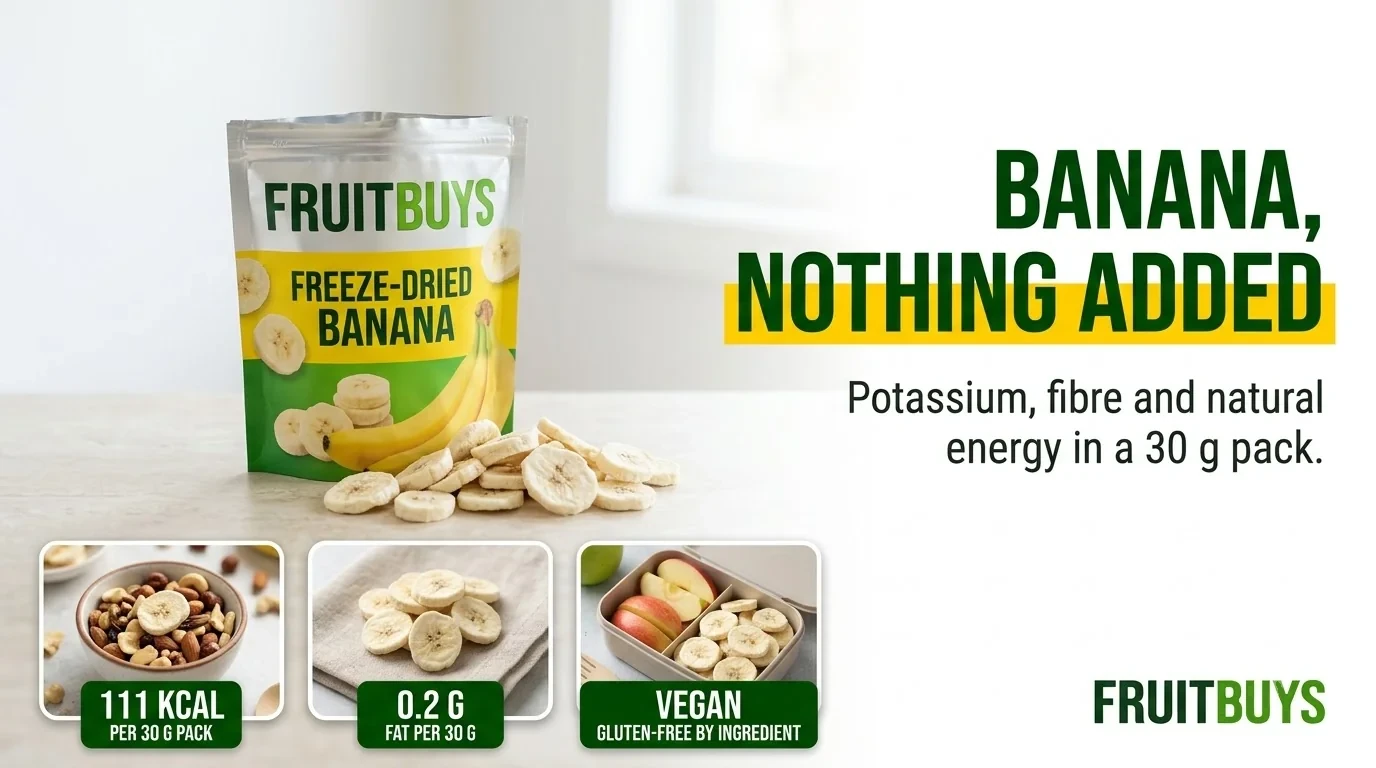
Yes, in a measured portion and with nothing added. Dried bananas carry the potassium, fiber and natural sugar of fresh banana in a light, shelf-stable form. The best choice for everyday eating is freeze-dried or unsweetened soft-dried banana. Per 100 g, freeze-dried banana gives 1,600 mg potassium, 7 g fiber, almost no fat and 0 g added sugar. A 30 g pack, about one whole banana, is 111 kcal. Buying for a store or brand? Start with the freeze-dried banana wholesale guide.
What does drying do to a banana’s nutrition?
Drying takes the water out and leaves almost everything else behind. A fresh banana is about three-quarters water, so once it is dried, each gram holds about four times more of the fruit’s potassium, fiber and sugar. Texture, serving size and what changes in drying are compared in freeze-dried vs fresh bananas.
| Per 100 g | Fresh banana | Freeze-dried banana |
|---|---|---|
| Water | About 75 g | About 2–5 g |
| Energy | 89 kcal | 370 kcal |
| Potassium | 358 mg | 1,600 mg |
| Dietary fiber | 2.6 g | 7 g |
| Total sugars | 12 g | 65 g (0 g added) |
| Protein | 1.1 g | 4 g |
| Fat | 0.3 g | 0.5 g |
Typical harvest values for freeze-dried banana; natural sugars and potassium move within ±5–10% with season and ripeness. Lot nutrition panel available for label artwork. Fresh values are standard reference values for raw banana.
What this means for you: a dried banana is not “more nutritious” than the fruit it came from. It is the same banana in a smaller, lighter, longer-lasting form. That is its real benefit. About 30 g of freeze-dried banana is one whole medium banana that fits in a pocket, keeps for months, and does not turn brown in a lunchbox.
Which type of dried banana is best to eat?
Four products are sold as dried banana. They look alike in a photo and are very different in the bag:
| Type | How it is made | Texture | What is added | Best for |
|---|---|---|---|---|
| Freeze-dried | Frozen, then dried under vacuum without cooking | Light, crisp, melts on the tongue | Vitamin C and citric acid to keep the colour; no sugar | Everyday snacking, kids, cereal and yogurt toppings |
| Soft-dried, unsweetened | Whole or split bananas warm-air or sun dried | Chewy, sticky, dark brown | Nothing | Trail mix, chewy snacks, baking |
| Soft-dried, sweetened | Soaked in syrup or honey, then dried | Soft, candied | Sugar or honey | Treats |
| Banana chips | Slices fried in oil, often coated in sugar or syrup | Hard, crunchy | Oil, often sugar | Occasional snacking |
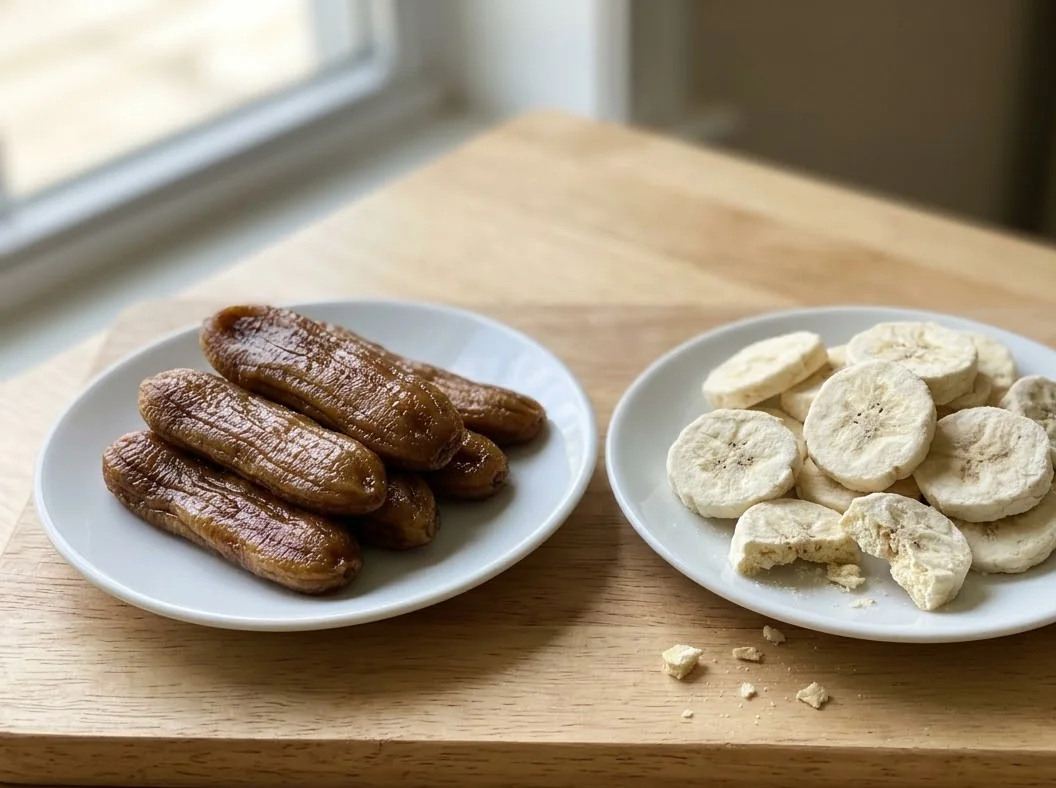
For the most benefit per bite, choose freeze-dried or unsweetened soft-dried banana. Both are banana without added sugar. Soft-dried banana, the dark, chewy kind sold across Southeast Asia, is dried slowly with heat, so it browns and loses some of the fresh aroma. Freeze-dried banana is never cooked, so it keeps the cream colour and the smell of a ripe banana, and it crunches instead of chewing. Banana chips are a different snack with their own trade-offs, set out in are banana chips healthy.
What are the health benefits of dried bananas?
The benefits come from the fruit itself:
- Potassium without sodium. 1,600 mg per 100 g, or about 480 mg in a 30 g pack, with almost no sodium. In the EU, potassium is authorised for the claims that it contributes to normal muscle function and to the maintenance of normal blood pressure, for foods that meet the conditions.
- Fiber for a fuller snack. 7 g per 100 g, above the 6 g the EU sets for a “high fibre” claim. Fiber is why a handful of dried banana feels more filling than the same calories of candy, and part of why dried fruit is a common choice for people who want more regular digestion as part of a varied diet.
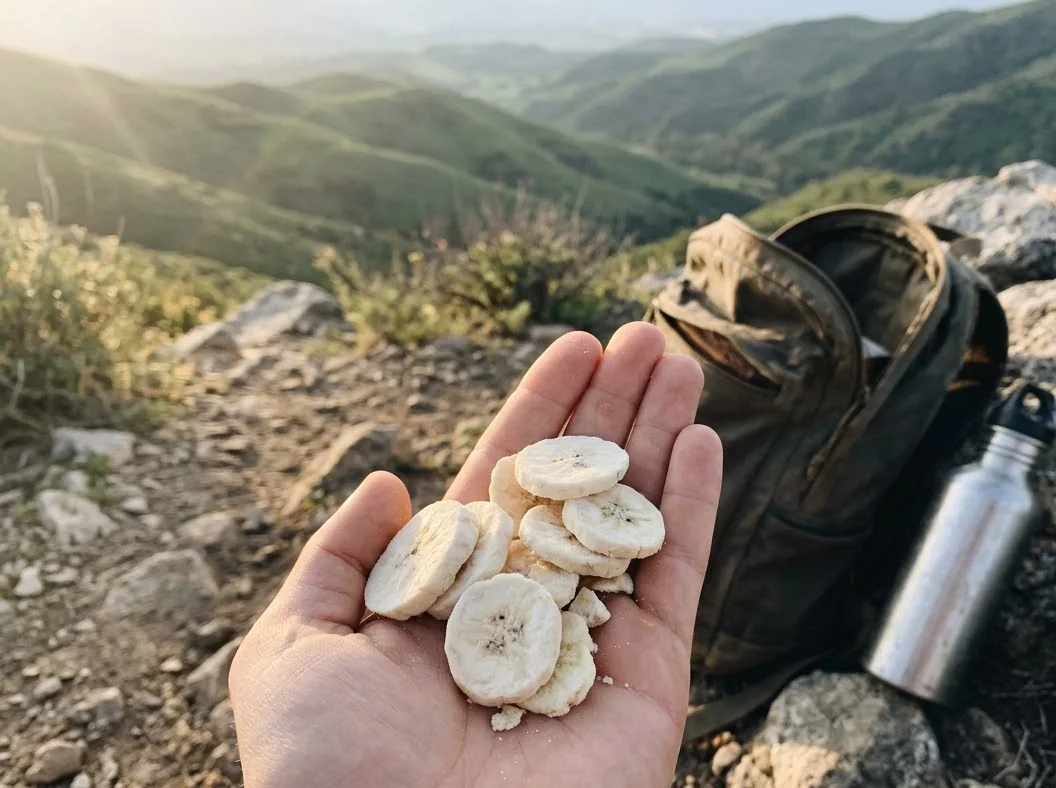
- Fast, natural energy. The sugars are the banana’s own. That is why runners, cyclists and hikers carry dried banana: about 26 g of carbohydrate in a 30 g pack, in a form that will not bruise in a backpack.
- Almost no fat. Freeze-dried and unsweetened soft-dried banana have 0.5 g fat per 100 g. Banana chips are the exception, because they are fried.
- Fits most diets. Plain dried banana is vegan and gluten-free by ingredient, which is why it shows up in lunchboxes, office pantries and gym bags.
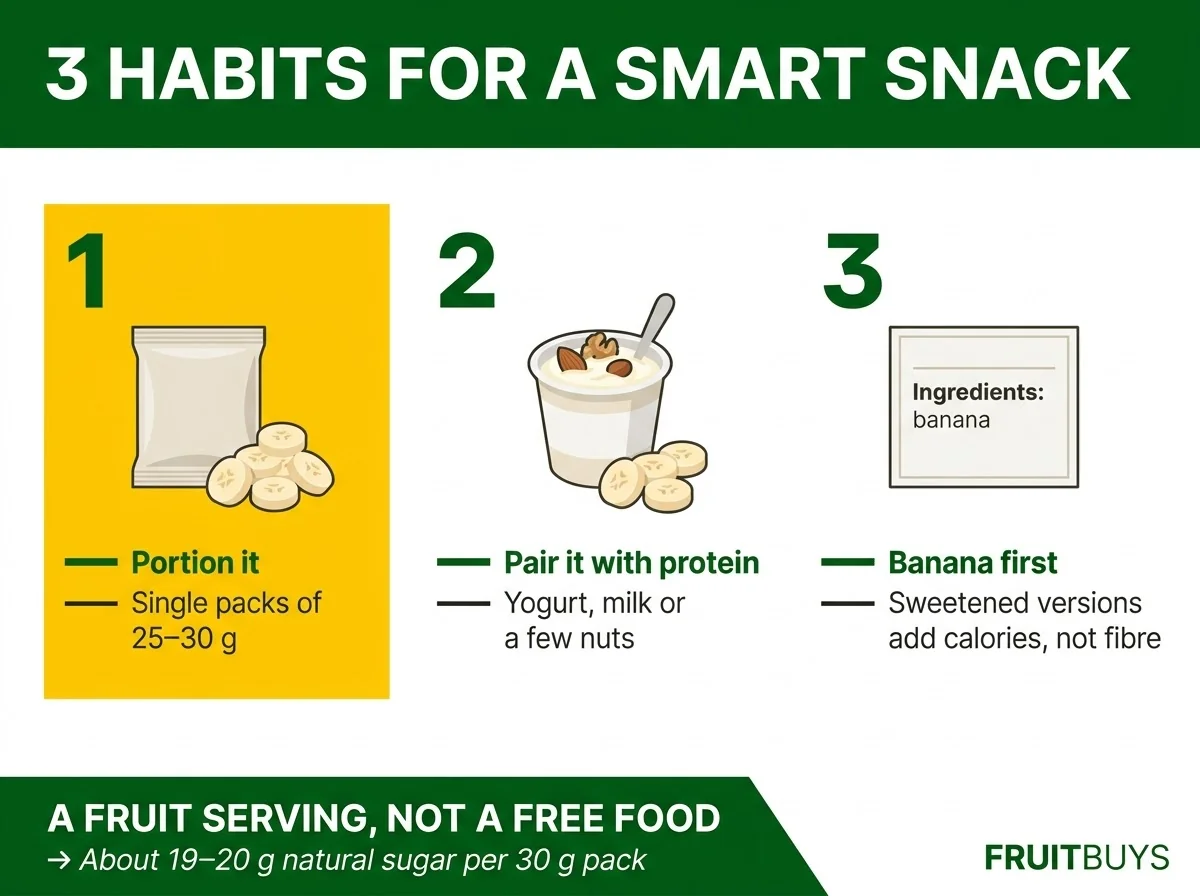
The number to respect is sugar: about 19–20 g in a 30 g pack. That makes dried banana a fruit serving, not a free food.
How many calories are in dried bananas?
It depends on the type and the portion:
| 30 g pack (about one banana’s worth) | Calories | Fat | Sugar |
|---|---|---|---|
| Freeze-dried, no added sugar | 111 kcal | 0.2 g | About 20 g, all natural |
| Soft-dried, unsweetened | Fewer per gram (holds 15–25% water) | Very low | Natural only |
| Soft-dried, sweetened | Similar per gram, but part of it is added sugar | Very low | Natural plus added |
| Banana chips (fried) | About 155 kcal | About 10 g | Natural, often added |
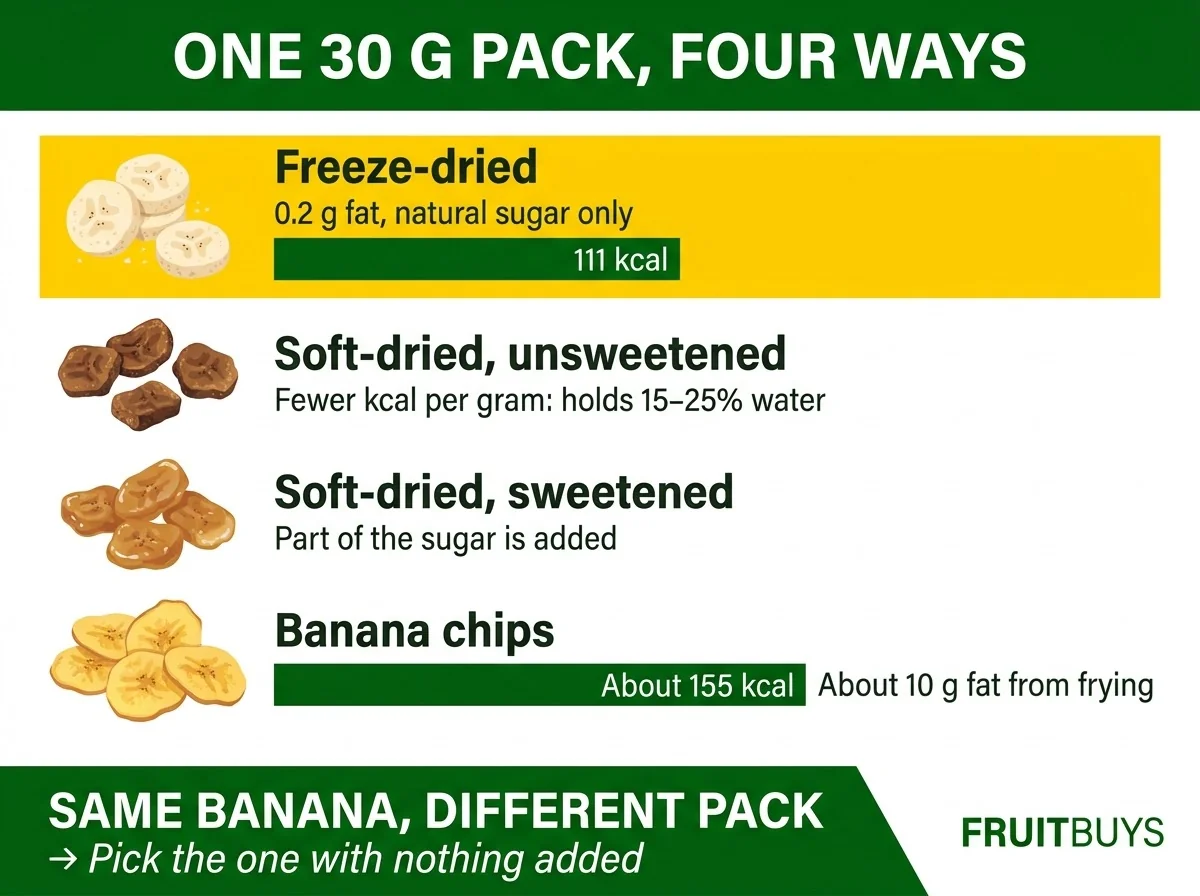
Per 100 g, freeze-dried banana is 370 kcal. That sounds high next to fresh fruit only because the water is gone: 100 g of freeze-dried banana carries the fruit of three to four bananas, so it is several servings, not one.
Are dried bananas good for weight loss?
They can fit a weight-management diet when they replace a less filling snack and the portion is measured. A 30 g pack of freeze-dried banana is about 111 kcal with 2 g of fiber and almost no fat. The risk is the bag: dried banana is light, sweet and easy to keep eating.
Three habits keep it useful:
- Buy single-serve packs of 25–30 g, or portion a large bag into small containers.
- Pair it with protein, such as yogurt, milk or a few nuts, which slows how fast you eat.
- Choose “banana” as the main ingredient. Sweetened versions add calories without adding fiber.
Are dried bananas good for diabetics?
They are high in natural sugar, about 20 g per 30 g pack, so people managing blood sugar should count them as a fruit serving, not a free snack. Pairing them with protein or fat, such as yogurt or nuts, slows the rise, and smaller portions help. Follow your own doctor’s or dietitian’s advice for how much fruit fits your plan.
Is unsweetened dried banana better than sweetened?
Yes, for everyday eating. A ripe banana is already sweet, at 20–22 °Brix for Cavendish and 24–26 °Brix for highland Laba. Added syrup brings little flavour and a lot of extra sugar.
The label tells you which one you have:
- Ingredients: banana (or banana, ascorbic acid, citric acid). No sugar added, whether freeze-dried or soft-dried.
- Ingredients: banana, sugar (or honey, syrup). Sweetened, even if the front says “natural”.
- “No added sugar” on the front means none was added; the total sugars on the panel will still be high, because they come from the fruit.
How do you eat and store dried bananas?
Ways to eat them:
- Straight from the bag as a snack.
- On cereal, granola, oatmeal or yogurt, added just before eating so freeze-dried slices stay crisp.
- Crushed over ice cream or blended into a smoothie.
- In trail mix, where chewy soft-dried pieces hold up well.
- As a powder in shakes and baking: about 30 g of freeze-dried banana powder equals one banana.
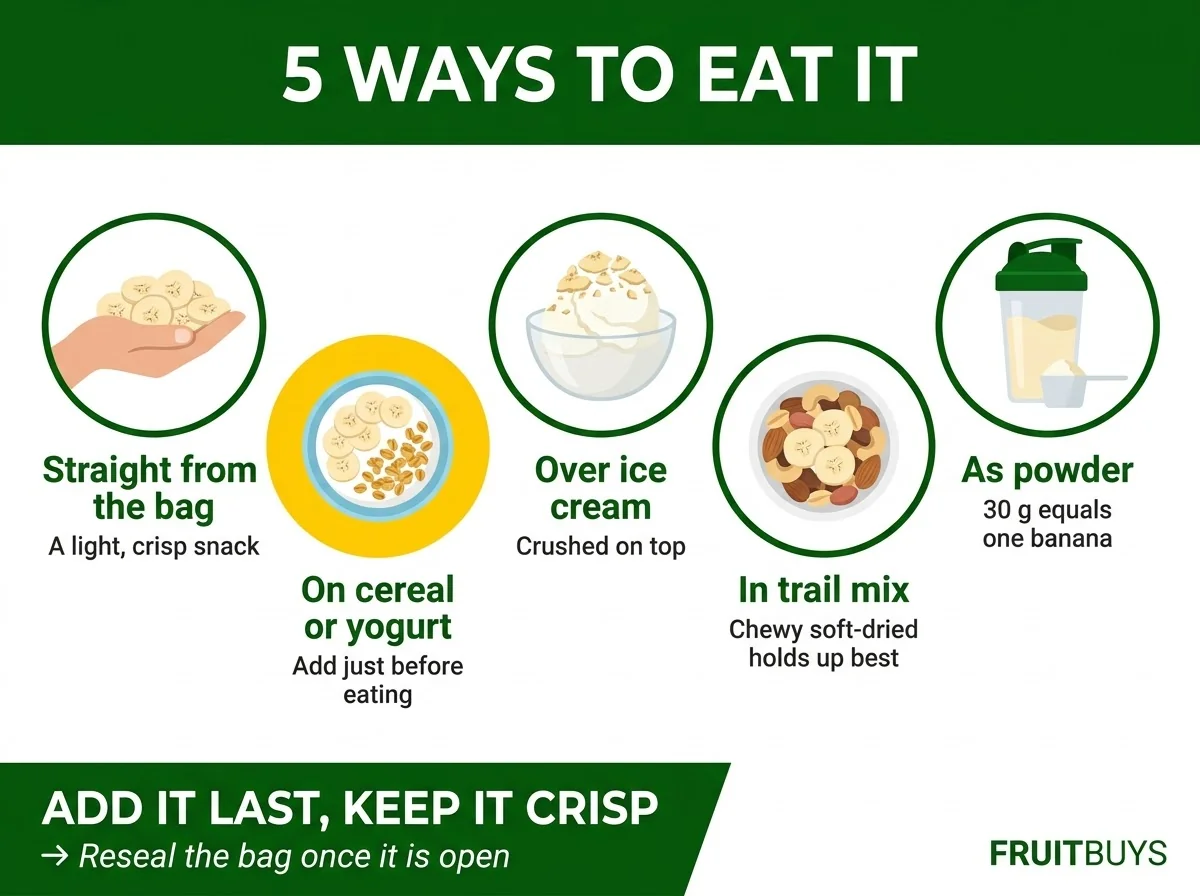
Storage: keep the bag sealed in a cool, dry place. Sealed in foil with a desiccant, freeze-dried banana keeps 12 months at ≤25 °C and RH ≤60%, and 18–24 months in cool storage at ≤18 °C and RH ≤50%. Once opened, its natural sugar pulls moisture from the air, so reseal the bag tightly or finish it within a few days.
Buying dried bananas for your store or brand?
The benefits above are what sell dried banana on a shelf, so the product choice decides the pack claims:
- “No added sugar”, “high fibre”, “high in potassium”: freeze-dried banana, with 0 g added sugar, 7 g fiber and 1,600 mg potassium per 100 g.
- A clean ingredient list: freeze-dried banana with vitamin C and citric acid, or the no-dip line that reads simply banana.
- Crisp texture to the end of shelf life: freeze-dried in foil pouches with a desiccant, packed at origin.
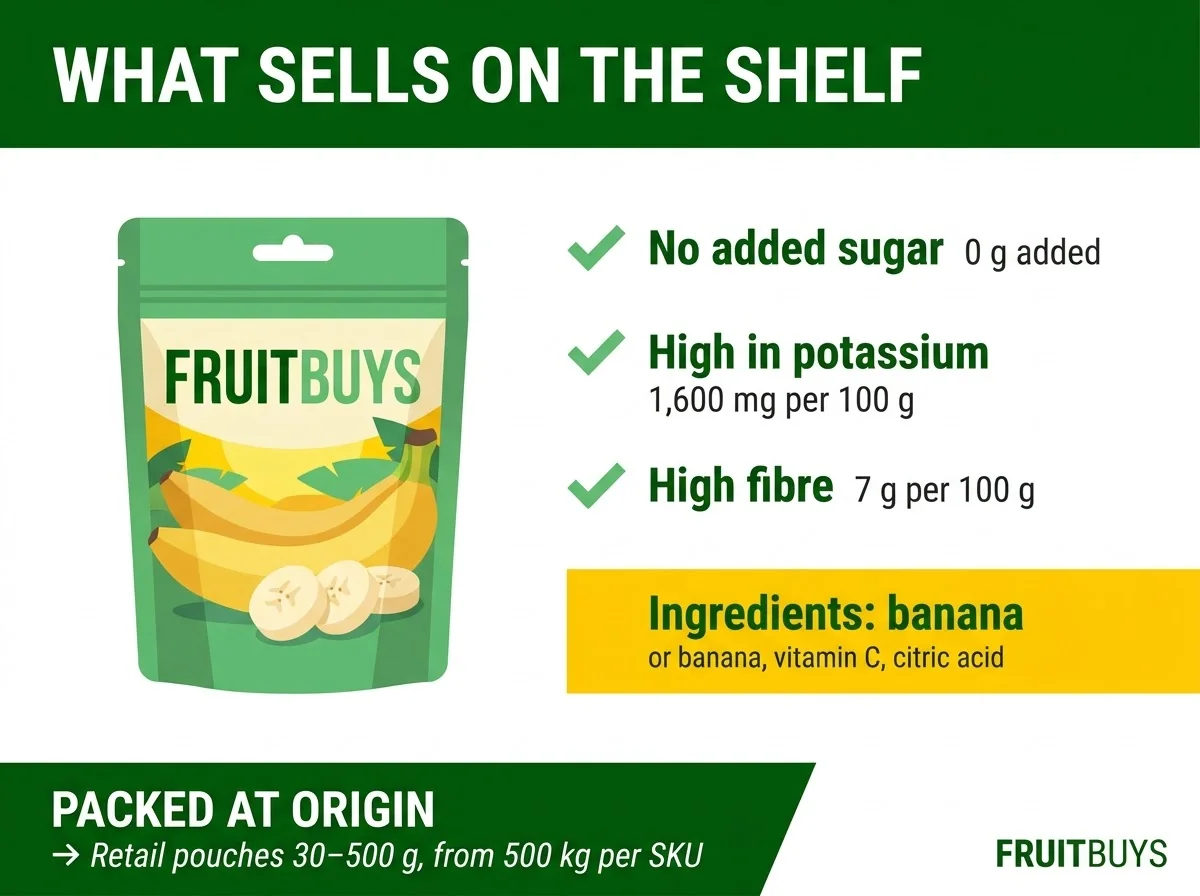
Vietnam is one of the world’s growing banana origins, and in 2026 fresh banana became its second-largest fruit export. FruitBuys supplies freeze-dried banana slices, dice and powder from Cavendish grown near Cat Lai port and Laba from the Lam Dong highlands. Retail pouches of 30 g to 500 g are packed in Vietnam, and private label starts at 500 kg per SKU. If your range needs the dark, chewy soft-dried style, a soft-dried specialist is the better fit for that line, and freeze-dried banana sits next to it as the crisp, light option. Specifications are on the freeze-dried banana product page.
Try the fruit before you choose the format
Tell us your channel, pack size and the claims you want on the front, and we will send freeze-dried banana from a production lot.
Email [email protected] · WhatsApp +84 919 739 589
FAQ
Are dried bananas good for you?
In portions of about 30 g, yes. Freeze-dried banana gives about 480 mg of potassium and 2 g of fiber per pack, with almost no fat and no added sugar.
What are the benefits of dried bananas?
Potassium, fiber and natural energy from the fruit itself, in a form that keeps for months. Choose unsweetened or freeze-dried to get them without added sugar.
How many calories are in dried bananas?
About 111 kcal per 30 g of freeze-dried banana, or 370 kcal per 100 g. Fried banana chips run higher, at about 155 kcal per 30 g.
How many dried bananas equal one banana?
About 30 g of freeze-dried banana, or 30 g of freeze-dried banana powder, equals one medium fresh banana.
Do dried bananas have more sugar than fresh bananas?
Per gram, yes, because the water is gone. Per banana, no: the sugar is the same fruit’s sugar, concentrated.
Do dried bananas still have potassium?
Yes. Drying removes water, not potassium: freeze-dried banana carries 1,600 mg per 100 g.
Are dried bananas good for diabetics?
They are high in natural sugar. Count them as a fruit serving, pair them with protein and follow your own doctor’s or dietitian’s advice.
How do you store dried bananas?
Sealed, in a cool, dry place. Freeze-dried banana keeps 12 months at ≤25 °C and RH ≤60% in its foil bag; once opened, reseal it tightly.
About the author. Udo Nguyen is CEO of FruitBuys Vietnam. He coordinates freeze-dried fruit sourcing, qualified partner facilities and export documentation for importers, food manufacturers and private-label brands.



