

Are banana chips healthy, and how do fried chips compare with freeze-dried banana?
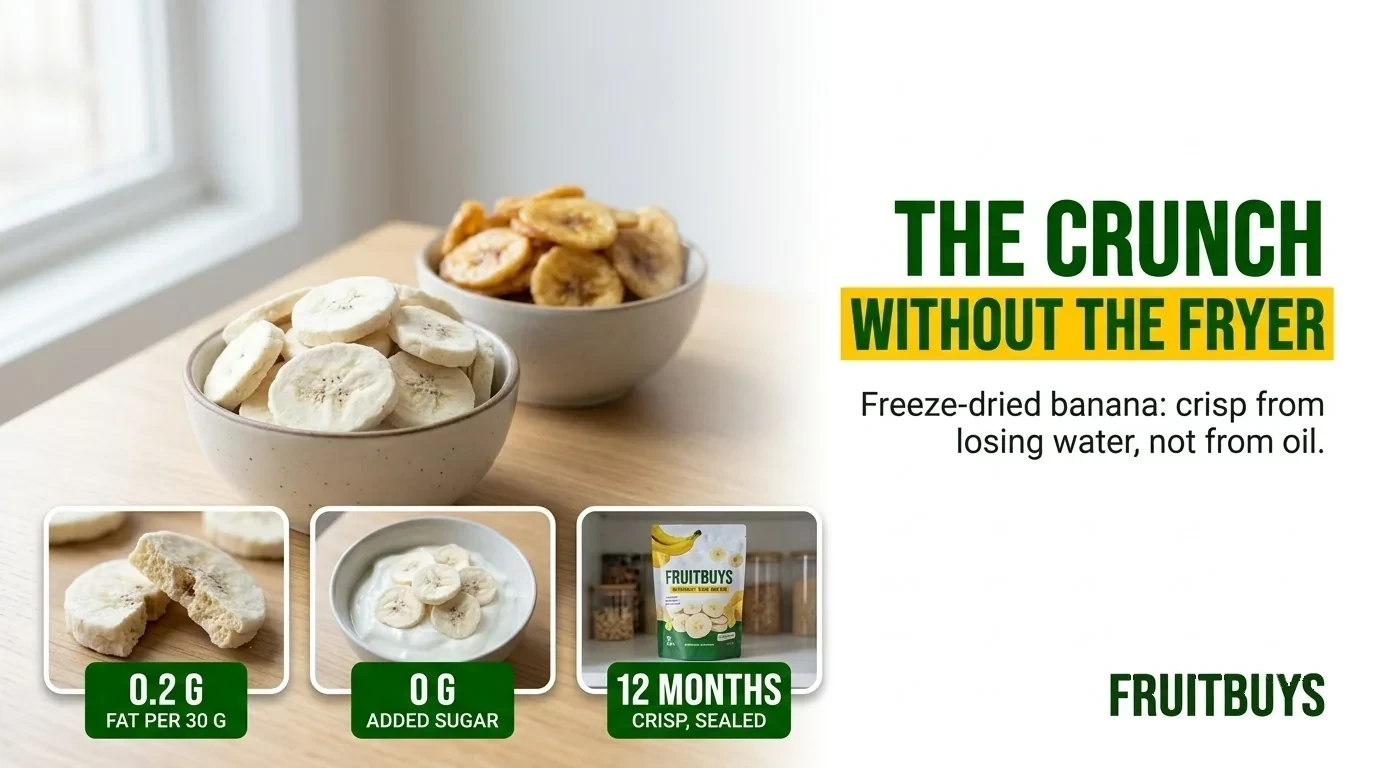
Banana chips are a fried snack, not a dried fruit, so they are healthy only in small amounts. Most are deep-fried in coconut or palm oil, and many are coated in sugar or syrup. A 30 g handful carries about 155 kcal and 10 g of fat, most of it saturated. If you want the crunch with the banana’s own nutrition, freeze-dried banana gives a crisp slice with 0.2 g fat and 0 g added sugar per 30 g pack. Buying for a store or brand? Start with the freeze-dried banana wholesale guide.
What are banana chips, exactly?
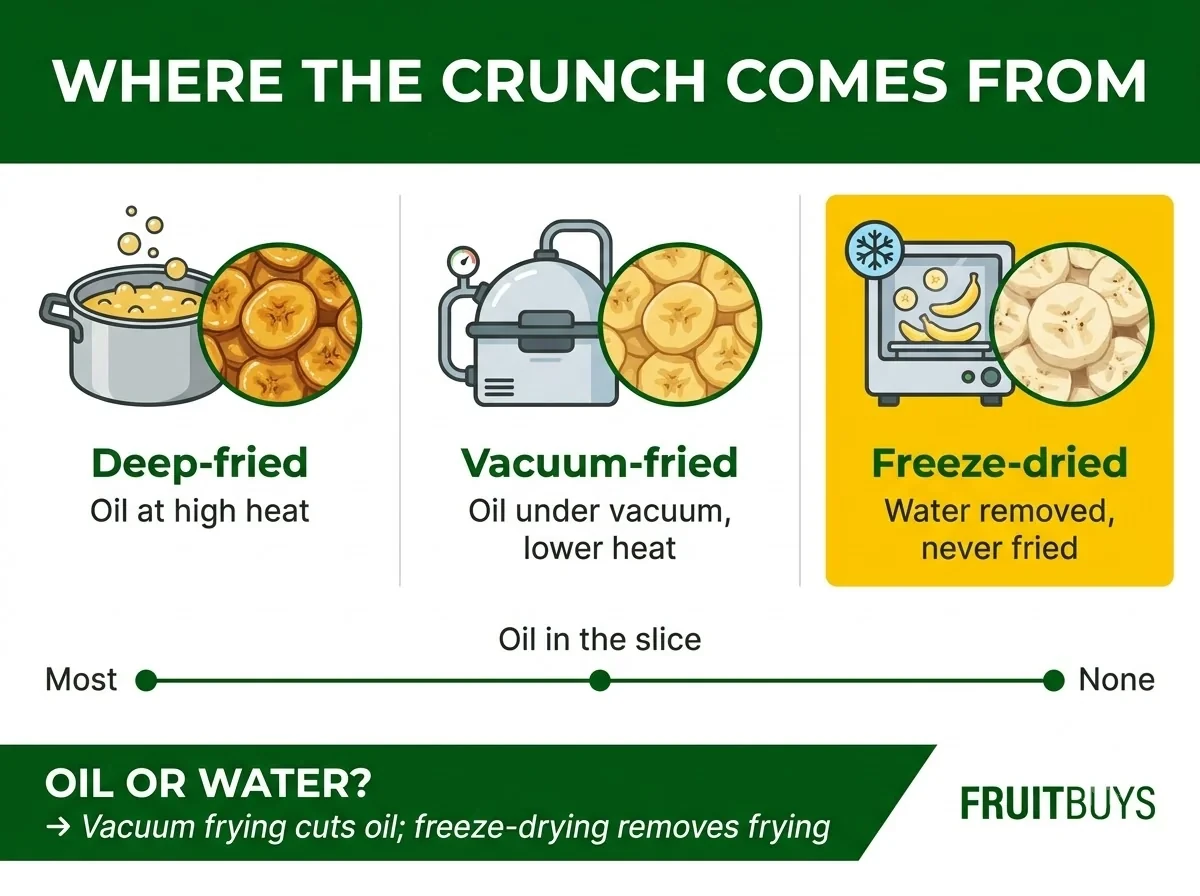
Banana chips are slices of firm banana fried until hard and crunchy. Three styles share the name:
| Style | How it is made | Typical fruit | What is added | Texture |
|---|---|---|---|---|
| Deep-fried chips | Fried in oil at high temperature | Firm, starchy cooking bananas, often not fully ripe | Coconut or palm oil; often sugar, honey or syrup coating | Hard, glassy crunch |
| Vacuum-fried chips | Fried in oil under vacuum at lower temperature | Ripe or semi-ripe bananas | Oil; sometimes sugar or salt | Lighter crunch, more banana colour |
| Freeze-dried banana | Frozen, then dried under vacuum; never fried | Ripe dessert banana, stage 5–6 | Vitamin C and citric acid to keep the colour; no oil, no sugar | Light, crisp, melts on the tongue |
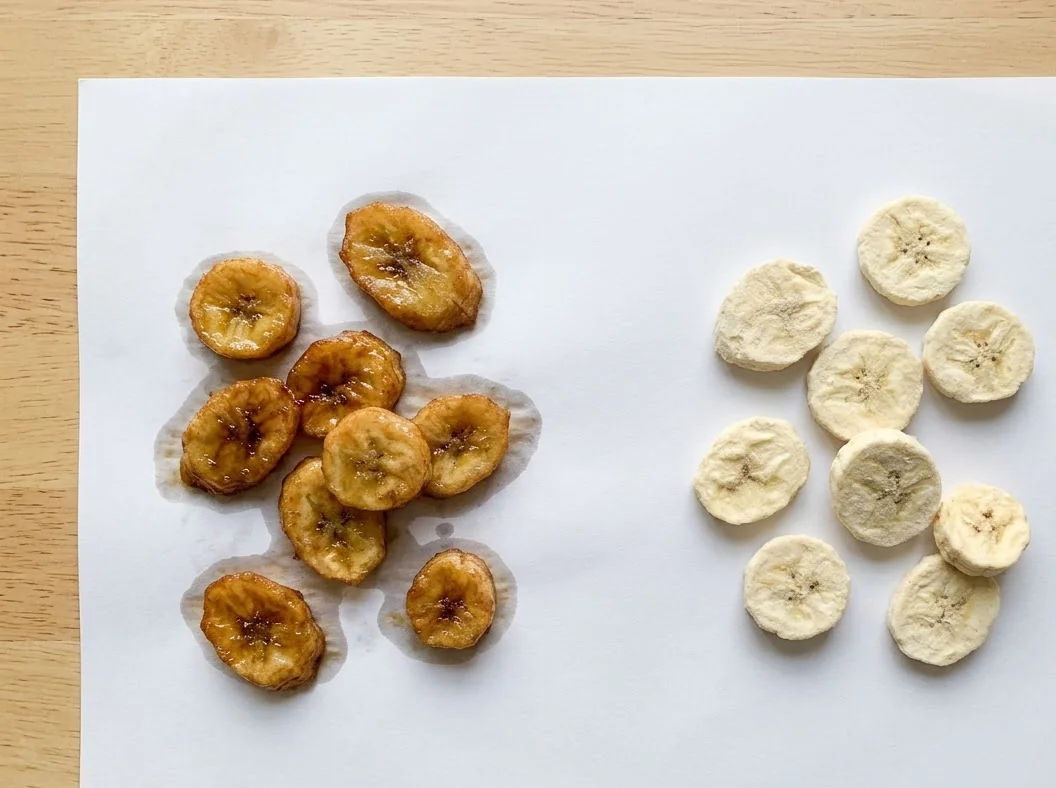
The first two are chips. The third looks like a chip in the bag but is fruit with the water removed, and that is where the nutrition gap opens.
How do banana chips compare with freeze-dried banana?
Per 30 g pack:
| Per 30 g | Deep-fried banana chips | Freeze-dried banana |
|---|---|---|
| Energy | About 155 kcal | 111 kcal |
| Fat | About 10 g (mostly saturated) | 0.2 g |
| Total sugars | About 10 g, often with added sugar | About 20 g, all from the fruit, 0 g added |
| Potassium | About 160 mg | 480 mg |
| Dietary fiber | About 2 g | About 2 g |
| Ingredients | Banana, oil, often sugar or syrup | Banana, vitamin C, citric acid |
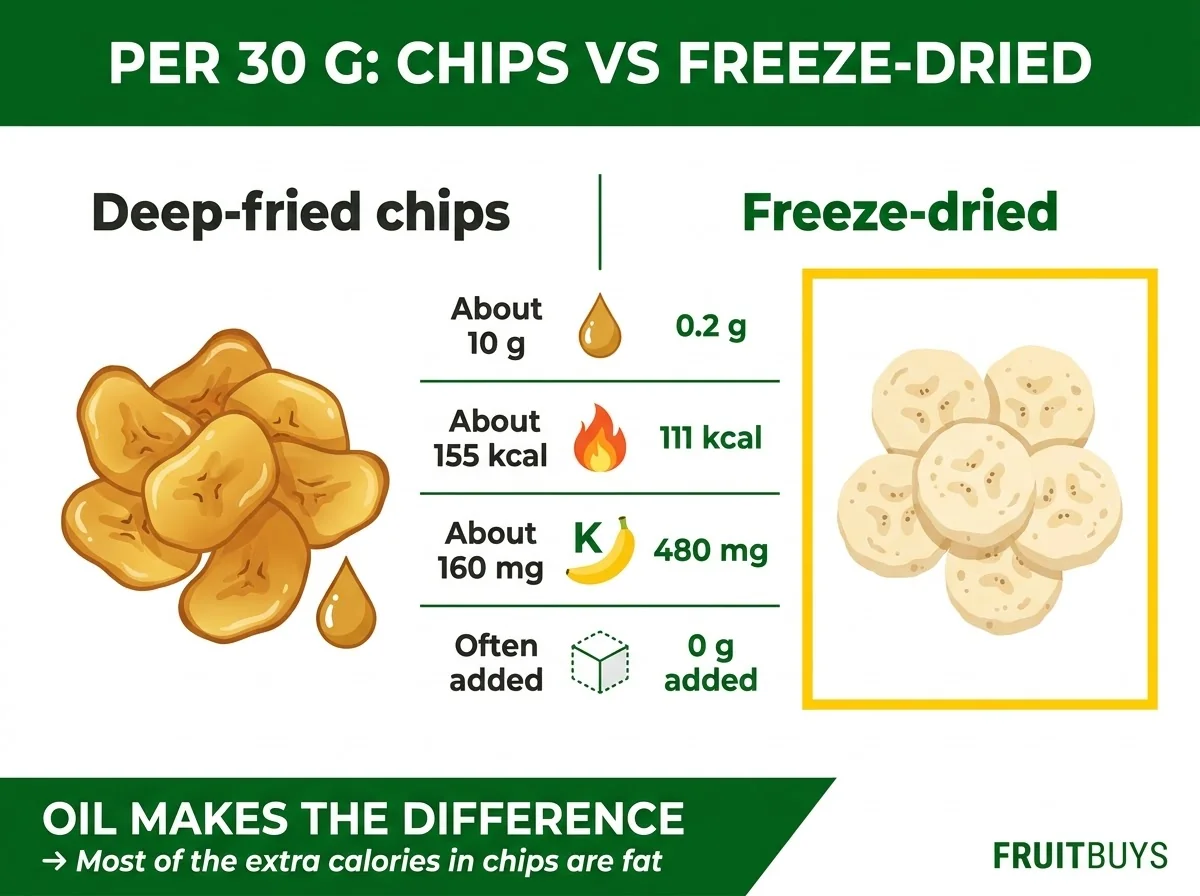
Freeze-dried values are typical harvest values for freeze-dried banana and move within ±5–10% with season and ripeness. Chip values are standard reference values for fried banana chips; individual brands vary with oil uptake and coating.
What this means for you: fried chips get their crunch from oil, so most of their extra calories come from fat. Freeze-dried banana gets its crunch from removing water, so its calories come from the banana itself. Freeze-dried banana carries more natural sugar per gram because it is made from ripe fruit, and about three times the potassium of a fried chip.
What are the disadvantages of banana chips?
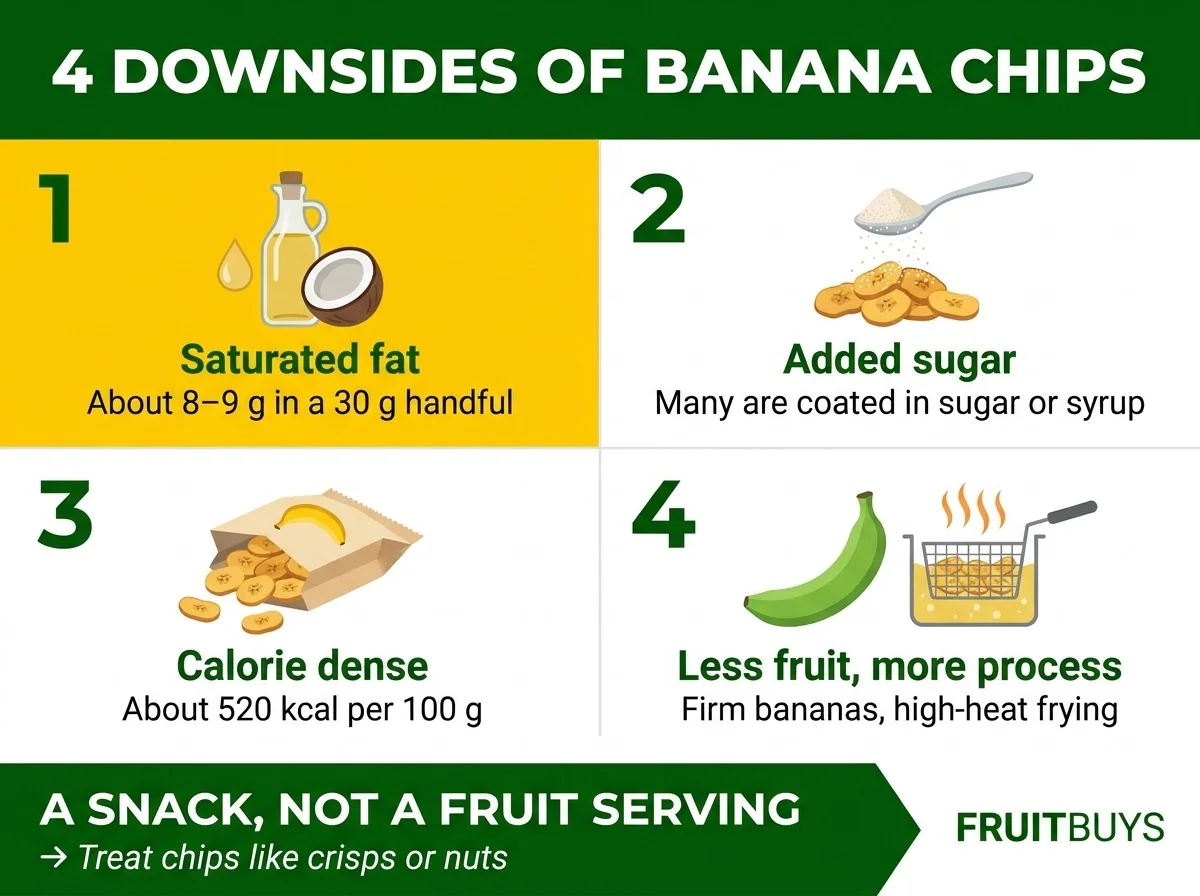
Four things work against banana chips as an everyday snack:
- Saturated fat. Coconut and palm oil are mostly saturated fat, and a 30 g handful of deep-fried chips can carry around 8–9 g of it, close to half of a typical daily reference intake.
- Added sugar. Many chips are tossed in sugar, honey or syrup after frying. The ingredient list tells you; “banana, coconut oil, sugar” is a sweet, not a fruit serving.
- Calorie density. At about 520 kcal per 100 g, a 150 g bag eaten in front of the TV is nearly 800 kcal.
- Less fruit, more process. Chips are often made from firm, starchy bananas picked before full ripeness so they hold together in the fryer. Frying at high heat also browns the sugars and flattens the fresh banana aroma.
Do banana chips have any benefits?
Yes, a few. Banana chips still contain some fiber and potassium from the fruit, they keep for months without refrigeration, and they are a satisfying crunchy snack with no artificial flavour if the ingredient list is short. As a topping on yogurt or a handful on a hike, they can fit a balanced diet. The difference is the portion: think of them like nuts or crisps, not like fruit.
Is vacuum-fried banana healthier than deep-fried?
Somewhat. Vacuum frying works at a lower temperature, so the chips keep more colour and banana flavour and usually absorb less oil than deep-fried chips. They are still fried, though, and still carry several grams of fat per handful. If the goal is the crunch without the oil, freeze-dried banana is the step that removes frying altogether.
Freeze-dried vs dehydrated banana chips: what is the difference?
“Dehydrated banana chips” usually means banana slices dried with warm air until hard, or fried chips sold under a softer name. Warm-air dried slices are leathery to hard and brown in colour, because heat darkens banana sugar. Freeze-dried banana is dried cold under vacuum, so it stays cream-coloured and light, and it crunches then dissolves instead of needing a firm chew. Both can be made without oil or sugar, so read the ingredient list: if oil is on it, it is a fried chip.
What about Vietnamese banana chips?
Vietnam is one of the best-known origins for banana chips, from the classic sweet coconut-oil chips to vacuum-fried slices made in the Mekong Delta. They are a staple in Asian snack aisles and trail mixes. The same country now supplies freeze-dried banana from Cavendish grown near Cat Lai port and Laba from the Lam Dong highlands, which gives buyers who know Vietnamese chips an oil-free alternative from the same supply base. More on chewy soft-dried banana is in are dried bananas good for you.
How do you choose a healthier crunchy banana snack?
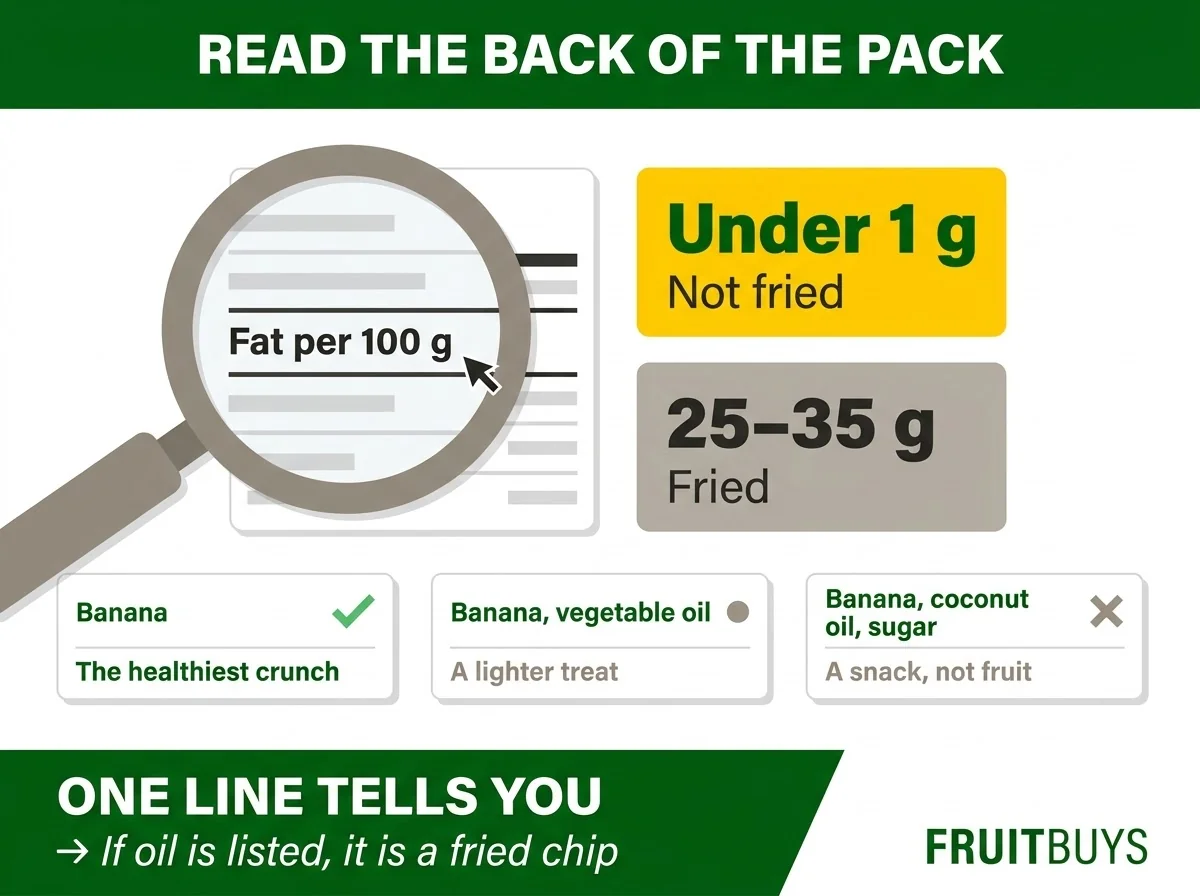
Read the back of the pack, not the front:
- Ingredients: banana (or banana, ascorbic acid, citric acid): freeze-dried or oil-free dried banana. The healthiest crunchy option.
- Ingredients: banana, vegetable oil: vacuum-fried chips. A lighter treat.
- Ingredients: banana, coconut oil, sugar (or honey): classic sweet banana chips. Enjoy as a snack, not as fruit.
- Fat per 100 g: under 1 g means not fried; 25–35 g means fried.
Buying banana snacks for your store or brand?
Shoppers now read the fat and added-sugar lines before they read the brand. That is where a crunchy banana snack wins or loses shelf space:
- “No added sugar”, “not fried”, “high in potassium”, “high fibre”: freeze-dried banana, with 0 g added sugar, 0.5 g fat, 1,600 mg potassium and 7 g fiber per 100 g.
- A crunch that lasts to the end of shelf life: freeze-dried banana in foil pouches with a desiccant, packed at origin, keeps 12 months at ≤25 °C and RH ≤60%.
- A cleaner ingredient line: banana with vitamin C and citric acid, or the no-dip line that reads simply banana.
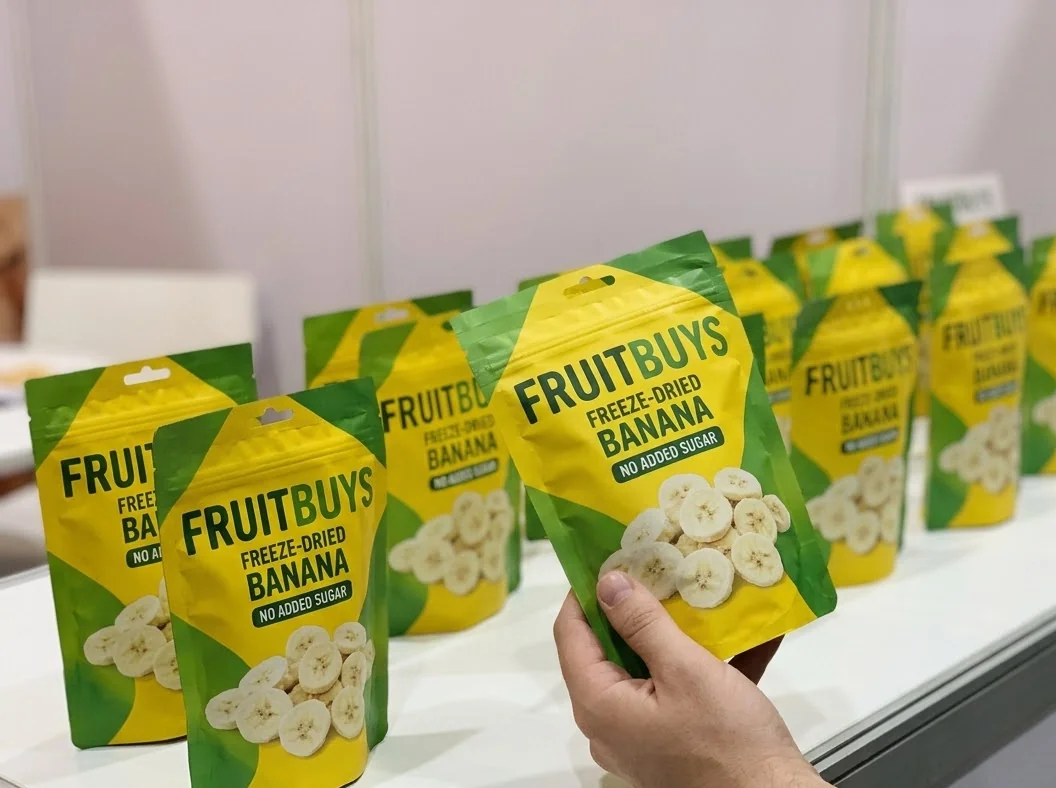
FruitBuys supplies freeze-dried banana slices, dice and powder, not fried chips. If your range needs a classic fried banana chip, a chip specialist is the better fit for that line, and freeze-dried banana sits next to it as the “not fried” option that shoppers comparing fat labels are looking for. Retail pouches of 30 g to 500 g are packed in Vietnam, and private label starts at 500 kg per SKU. Specifications are on the freeze-dried banana product page.
Taste the difference before you choose
Tell us your channel, pack size and the claims you want on the front, and we will send freeze-dried banana from a production lot to taste next to your current chips.
Email [email protected] · WhatsApp +84 919 739 589
FAQ
Are banana chips healthy?
In small portions they can fit a balanced diet, but they are fried and often sweetened. A 30 g handful is about 155 kcal with 10 g of fat, mostly saturated.
Are banana chips good for weight loss?
Not as a regular snack. They are calorie-dense from frying oil. Freeze-dried banana gives the same crunch at about 111 kcal and 0.2 g fat per 30 g.
Is fried banana healthy?
Frying adds fat and calories to a fruit that has almost none. The banana’s potassium and fiber are still there, but in a snack that now behaves more like crisps.
What are the disadvantages of banana chips?
Saturated fat from coconut or palm oil, added sugar on many brands, high calorie density, and less fresh banana flavour after high-heat frying.
Are banana chips the same as dried bananas?
No. Banana chips are fried. Dried bananas are dried without oil, either soft-dried and chewy or freeze-dried and crisp.
Are freeze-dried banana chips fried?
No. Freeze-dried banana is frozen and dried under vacuum. Its crunch comes from removing water, not from oil.
Do banana chips have potassium?
Yes, but less per gram than freeze-dried banana: about 160 mg per 30 g of fried chips against about 480 mg in freeze-dried banana.
Are vacuum-fried banana chips healthier?
Somewhat, because they usually absorb less oil and keep more colour, but they are still fried.
About the author. Udo Nguyen is CEO of FruitBuys Vietnam. He coordinates freeze-dried fruit sourcing, qualified partner facilities and export documentation for importers, food manufacturers and private-label brands.



