Red or white freeze-dried dragon fruit: which should you buy?
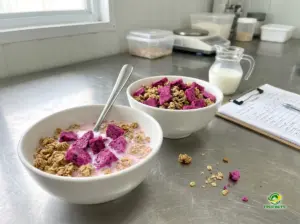
Red. Brands buy freeze-dried dragon fruit for its colour, and only red flesh (Selenicereus monacanthus) brings it: a vivid magenta that turns a white cereal bowl or yogurt pink with nothing else on the ingredient line, and colours a product at 0.5–2% as powder. White flesh dries pale and, as a processing fruit, costs no less.
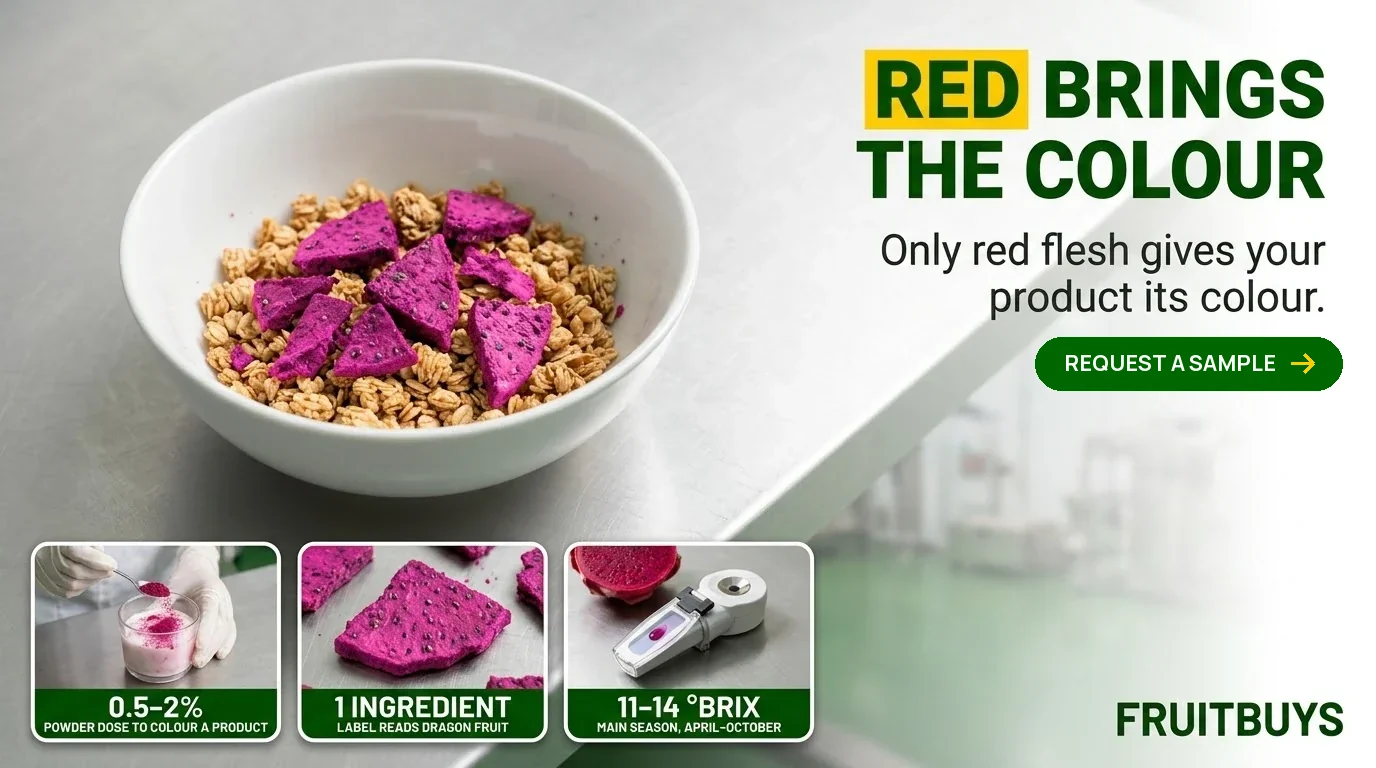
That is why the FruitBuys freeze-dried range is red flesh only, sourced from the Lam Dong coastal belt (former Binh Thuan), Vietnam’s largest dragon fruit growing area, and the Mekong Delta orchards of Long An and Tien Giang.
Why does the range stop at red?
White flesh is a fine fruit with real strengths: a clean, mild, lightly tart taste and a striking contrast of ivory flesh and black seeds that suits tea blends and tropical mixes that must not turn pink. Freeze-drying keeps that crunch and contrast, but it also takes away the juiciness that carries white flesh when fresh, and leaves a pale piece whose flavour sits in the background of a blend.
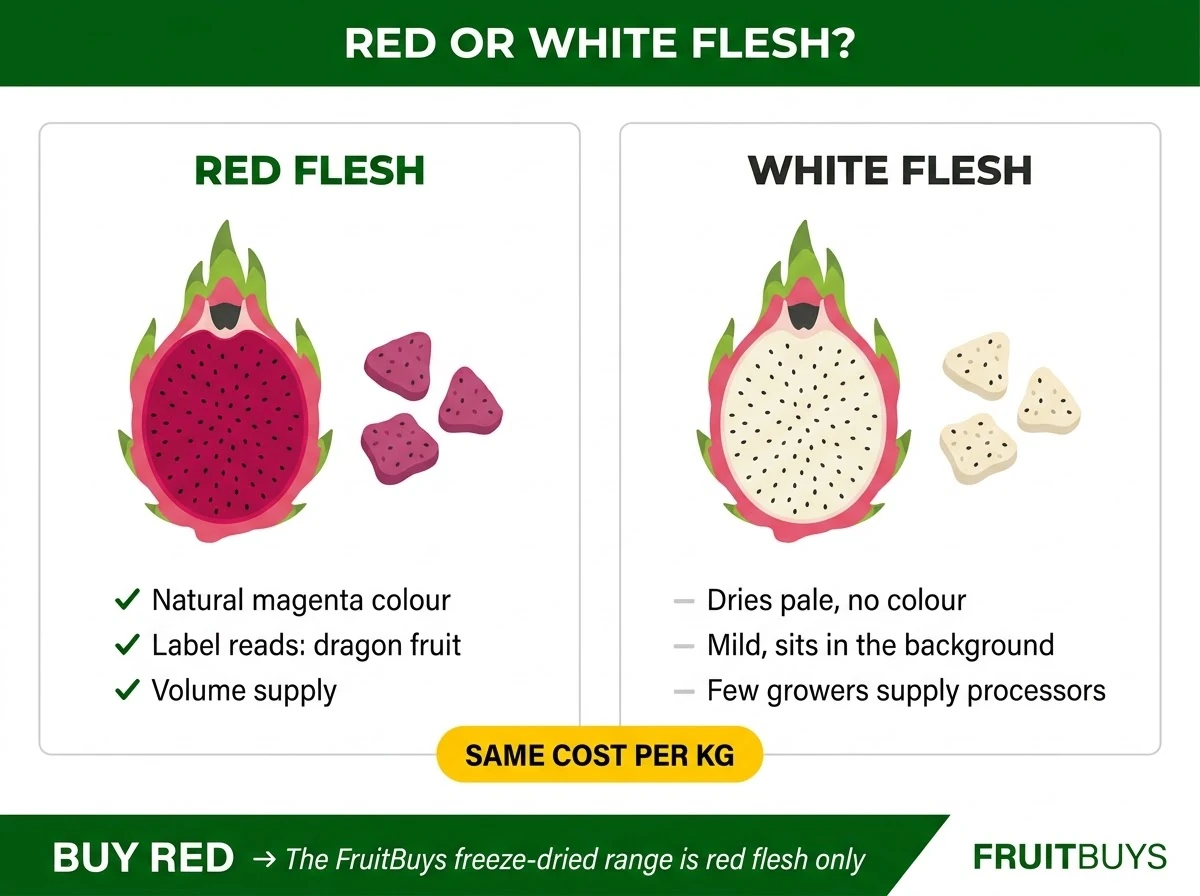
Red flesh does a second job that white cannot: it brings its own colour, which is why brands building clean-label snacks and pink products put their volume into red. And white does not save money. Almost no brand orders white-flesh dragon fruit for freeze-drying, so few growers supply it to processors, and without volume behind it the fruit comes no cheaper than red. A buyer who picks white to cut cost ends up paying the same per kilogram for a product without the colour.
What does red flesh do in each application?
| Application | What the red fruit does | Typical cut |
|---|---|---|
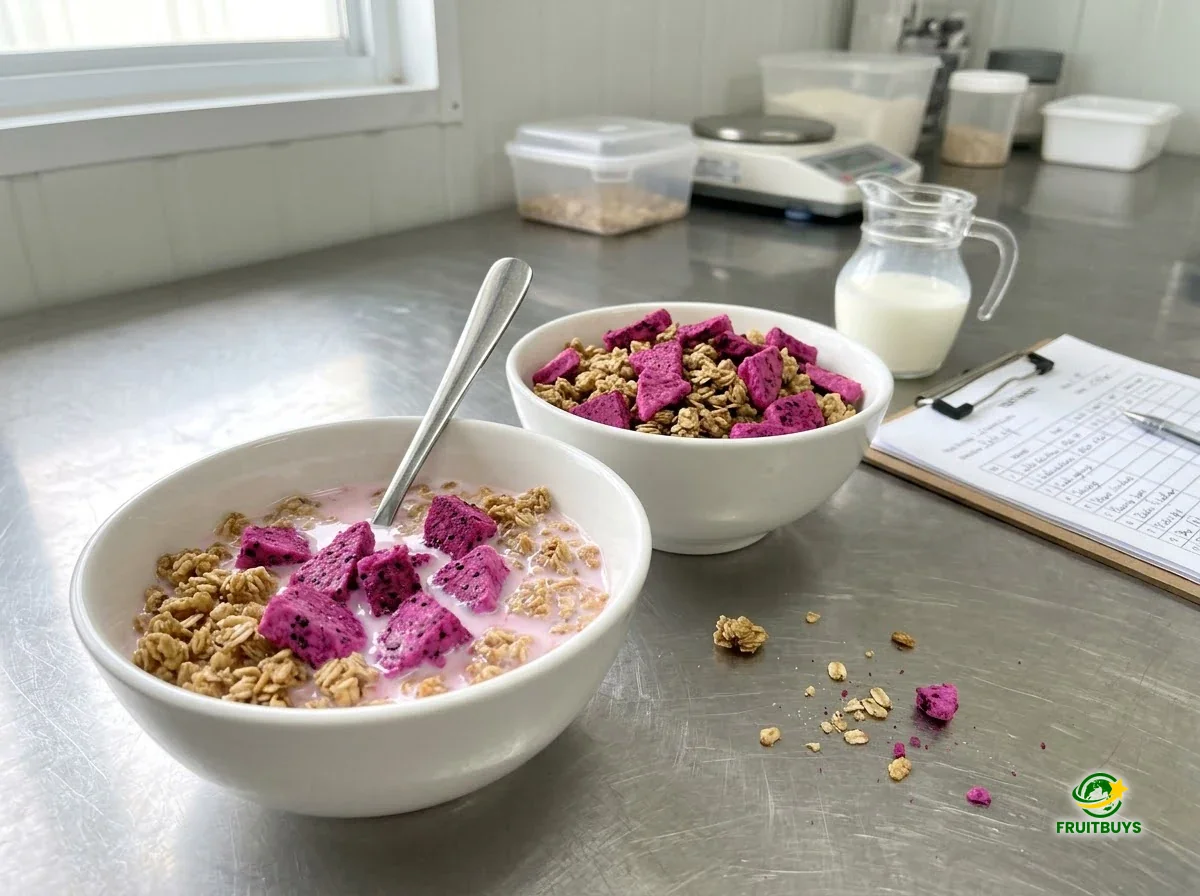
| Breakfast cereal, granola | Pink pieces are the visual hook on a brown base | Dice 5–10 mm |
| Smoothie bowls, yogurt toppers | The colour is the reason the topping is on the bowl | Natural pieces |
| Retail snack pouch | Magenta and the black seed ring sell through the window | Slices or pieces |
| Chocolate, bark, bakery inclusions | Strong contrast against dark chocolate | Dice |
| Drinks, tea blends, cocktail garnish | Colours the water pink within minutes | Slices, powder |
Format by application is covered in freeze-dried dragon fruit formats.
What does red dragon fruit taste like freeze-dried?
A clean, mildly tart sweetness with a light berry note, concentrated by drying. The texture is the other half of the appeal: a clean crack, a light porous crunch and a melt on the tongue in a few seconds, with the tiny black seeds adding a faint pop. Red can carry a product on its own as the hero fruit, which is what a snack brand or a smoothie-bowl topping needs.
Is the red colour worth the cost of the fruit?
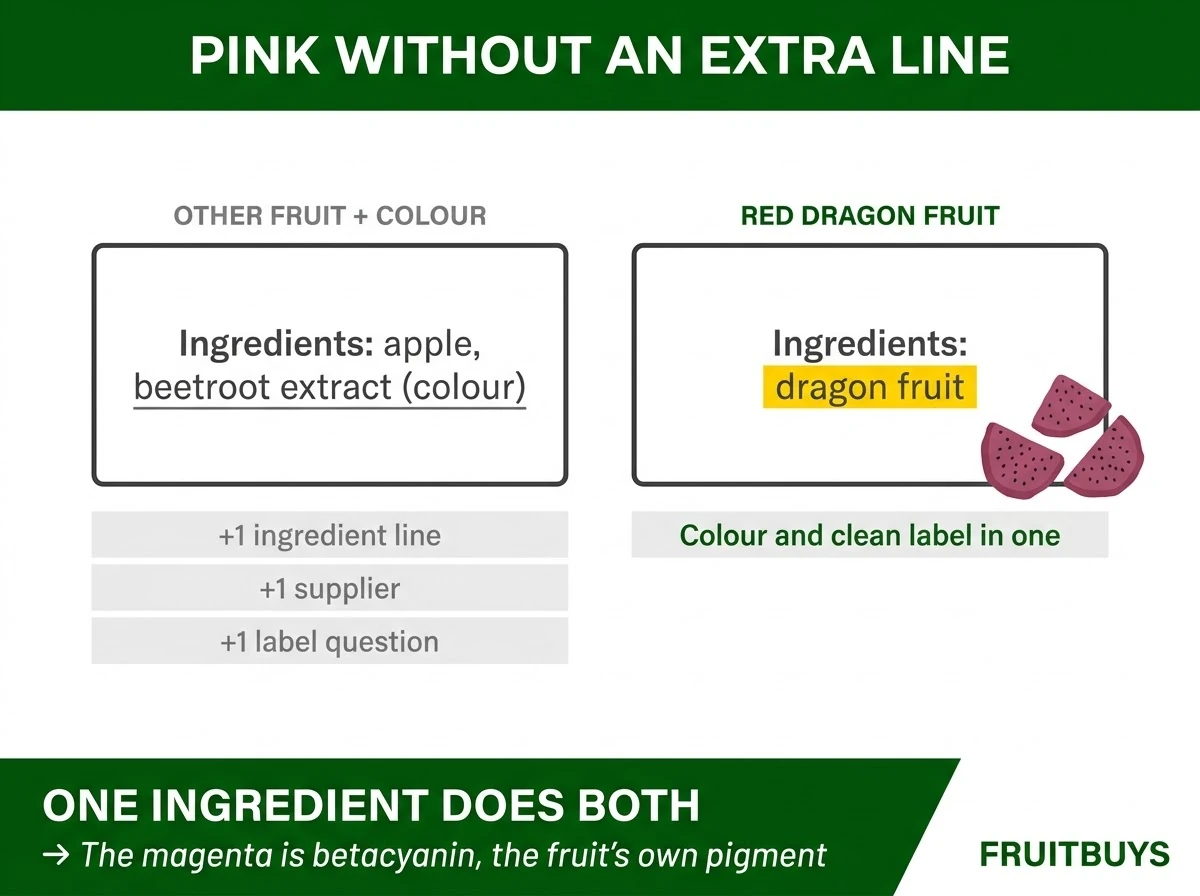
Yes, because it replaces an ingredient. A product that needs pink and uses any other fruit has to add colour: a beetroot or anthocyanin extract, or a synthetic dye. Each one adds an ingredient line, a supplier and, in most retail chains, a label question. Red dragon fruit gives the colour and the clean label in one ingredient: the declaration reads “dragon fruit”. For a cereal, tea or snack brand, that single line earns its place at the shelf. The chain behind each kilogram, from 13–15 kg of whole fruit to the finished carton, is set out in how many kilos of dragon fruit make 1 kg of freeze-dried.
Does the red colour hold?
In a dry product, yes. The magenta comes from betacyanin, a natural pigment that is stable in a dry, dark, sealed pack. Three things fade it:
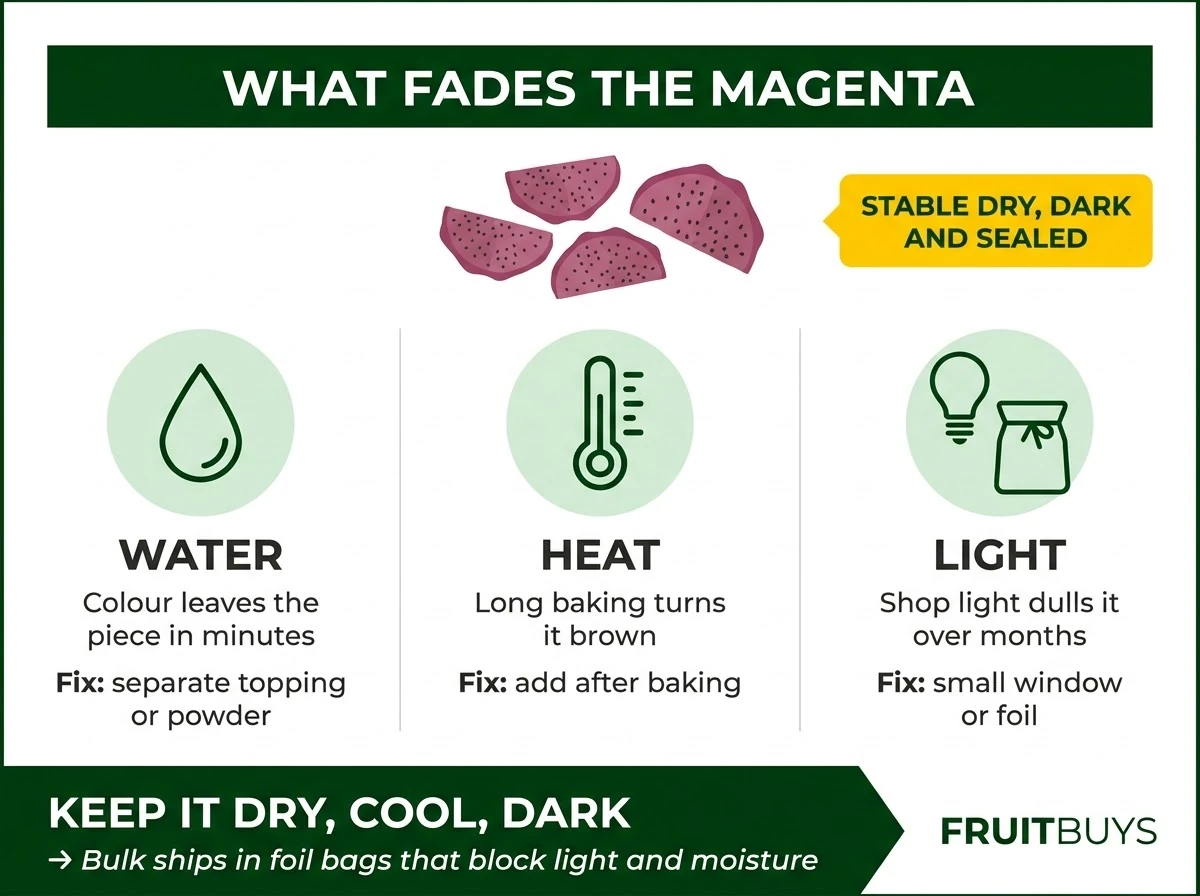
- Water. Betacyanin is water-soluble. In milk, yogurt or a wet filling the colour leaves the piece and tints the base within minutes. Great in a smoothie bowl; a defect in a white yogurt cup.
- Heat. Long exposure to baking or hot-filling temperatures turns magenta toward brown. Add the fruit after baking.
- Light. A clear window on a retail pouch under shop lighting dulls the colour over months. Keep windows small or use a high-barrier window film.
Partner facilities pack bulk fruit in foil bags that block light and moisture. How colour is held from lot to lot across seasons is covered in how to make sure the bulk shipment matches the sample.
Is red flesh available year-round?
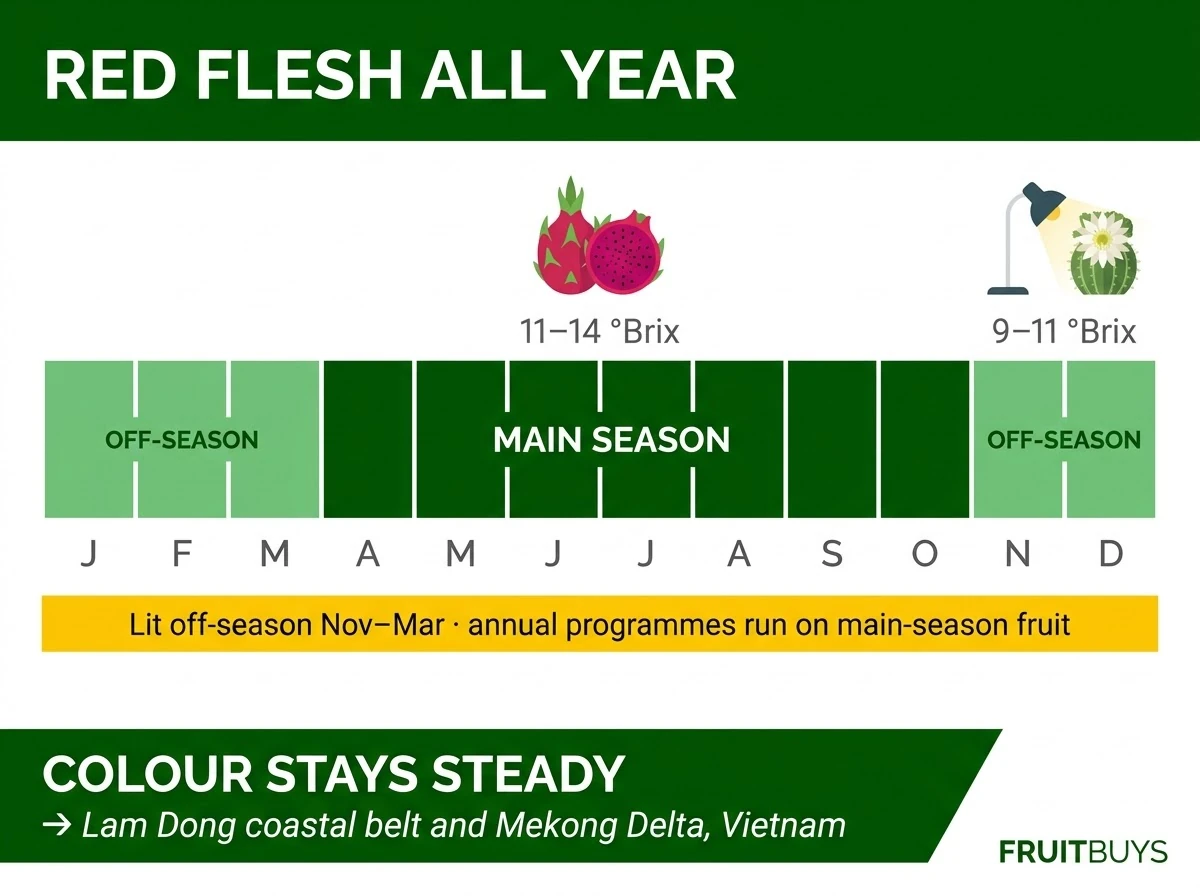
Yes. Southern Vietnam’s main season runs from April to October, with fruit at 11–14 °Brix. From November to March, growers light their orchards at night to bring the cactus into flower, and off-season fruit arrives at 9–11 °Brix: a little milder and sometimes a shade lighter. For an annual programme, FruitBuys allocates main-season fruit to your volume, so the colour and sweetness you approve stay steady through the year.
What does red dragon fruit bring nutritionally?
On the FruitBuys laboratory baseline, 400 kcal, 16 g fibre and 1,800 mg potassium per 100 g, with no added sugar. That supports “high fibre” and “no added sugars” on most packs. Full values are in freeze-dried dragon fruit nutrition facts.
What if your product has to stay white?
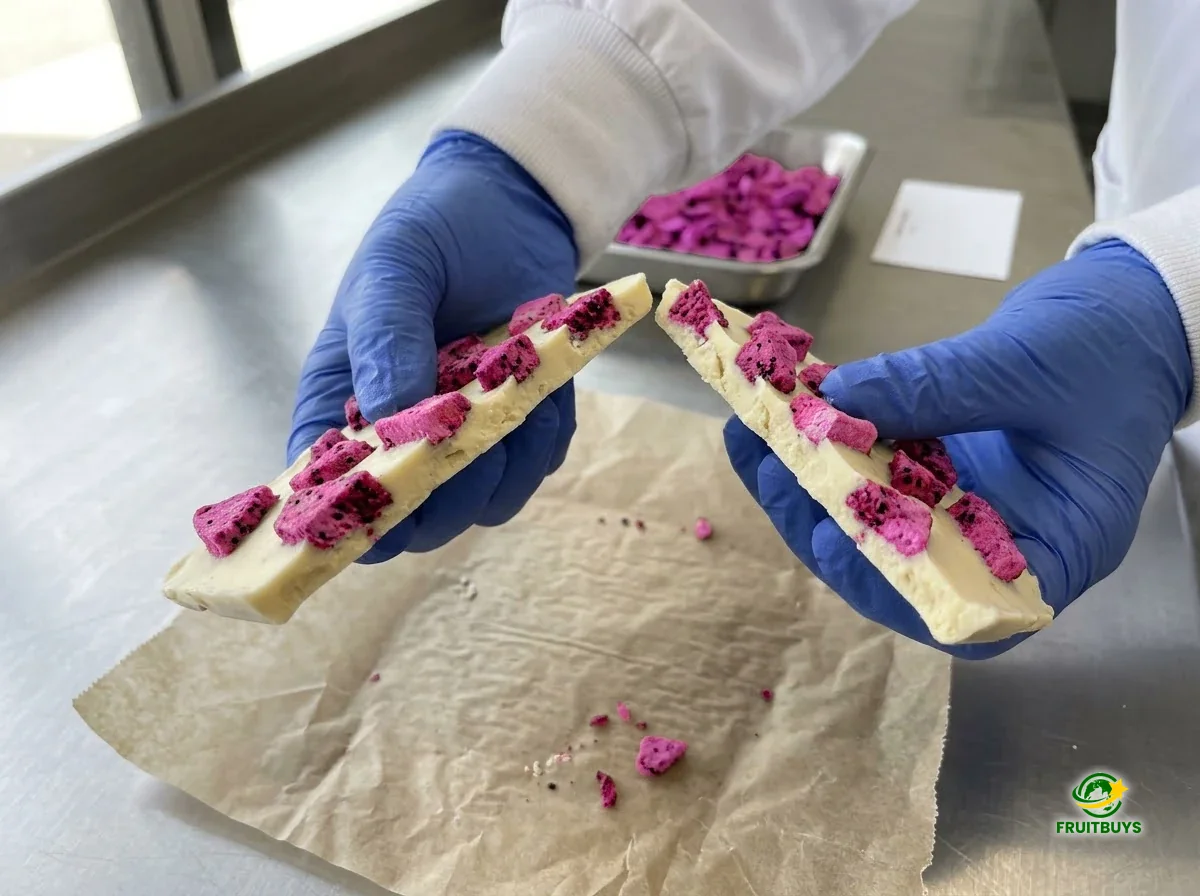
Keep the colour in the piece. In a white chocolate bar, a pale cereal cluster or a cream filling, red dragon fruit tints the base wherever moisture reaches it. A fat or chocolate coating on the dice, a separate topping compartment, or adding the fruit at the very end of the line keeps the magenta where you want it: as bright flecks on a white background. If the base must stay pure white, pair the product with a fruit whose colour suits it.
Test the colour in your own base
Tell us your application and target market, and we send red freeze-dried dragon fruit in the cut that fits, so your team can taste it, test it in your base and put it under your shop lights. Specification and packing data are on the freeze-dried red dragon fruit product page. Consumer-facing reading on the fruit is in dried dragon fruit benefits. The full buying checklist is in what to check before buying freeze-dried dragon fruit in bulk.
[email protected] · WhatsApp Export +84 919 739 589
FAQ
Should I buy red or white freeze-dried dragon fruit?
Red. It carries the natural magenta colour that brands buy dragon fruit for, and white flesh is no cheaper as a processing fruit.
Does FruitBuys supply white-flesh freeze-dried dragon fruit?
No. The freeze-dried range is red flesh only.
Is red dragon fruit coloured with dye?
No. The magenta is betacyanin, the fruit’s own pigment. The ingredient line reads “dragon fruit” only.
Will red dragon fruit stain my yogurt or milk?
Yes, within minutes, because the pigment is water-soluble. Serve it as a separate topping or choose powder for an even colour.
Where does the red dragon fruit come from?
The Lam Dong coastal belt (former Binh Thuan) and the Mekong Delta (Long An, Tien Giang), with fruit available year-round from main-season and lit off-season harvests.