
What should you check before buying freeze-dried dragon fruit in bulk?
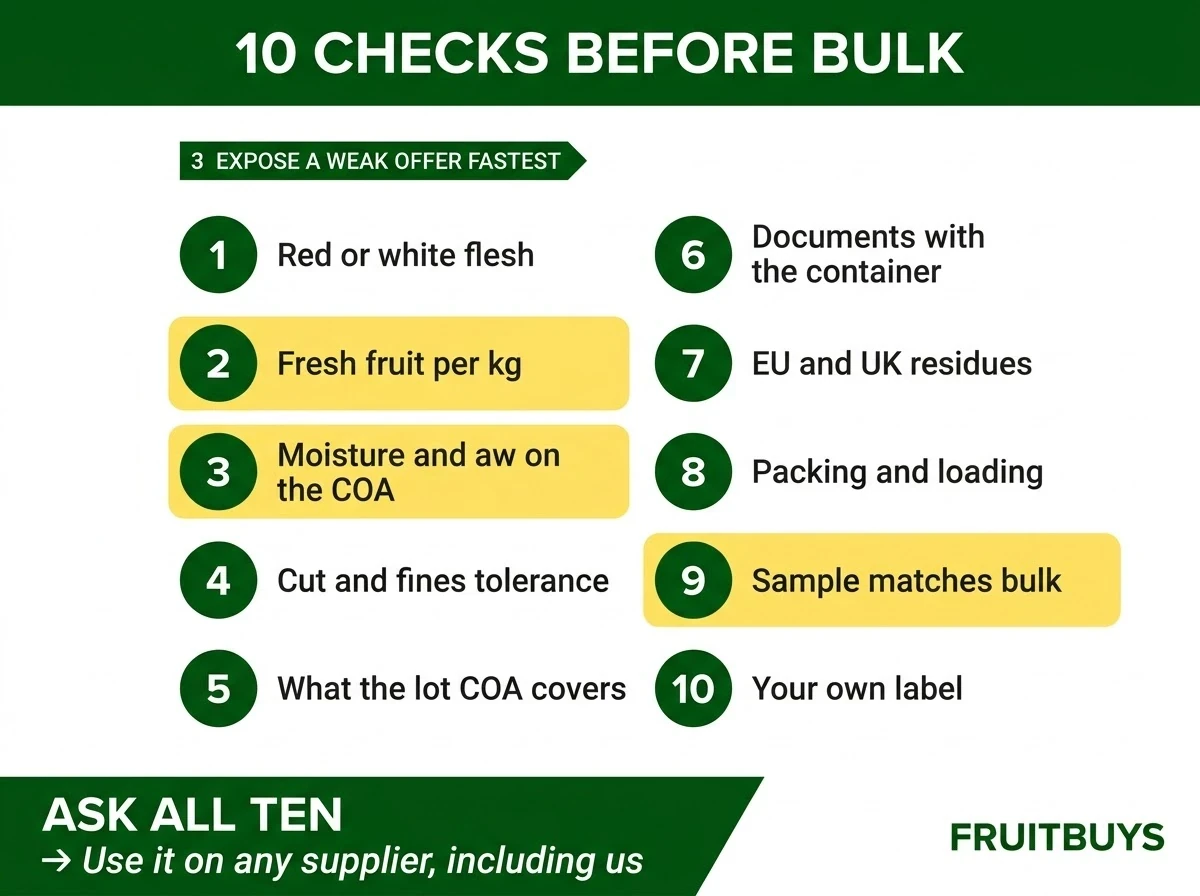
Ten checks decide whether a freeze-dried red dragon fruit offer holds up, starting with yield: 13–15 kg of fresh fruit per kilogram, released at ≤4.0% moisture. Most suppliers answer three of the ten. The table below is the checklist FruitBuys builds every programme around; use it on any supplier, including us.
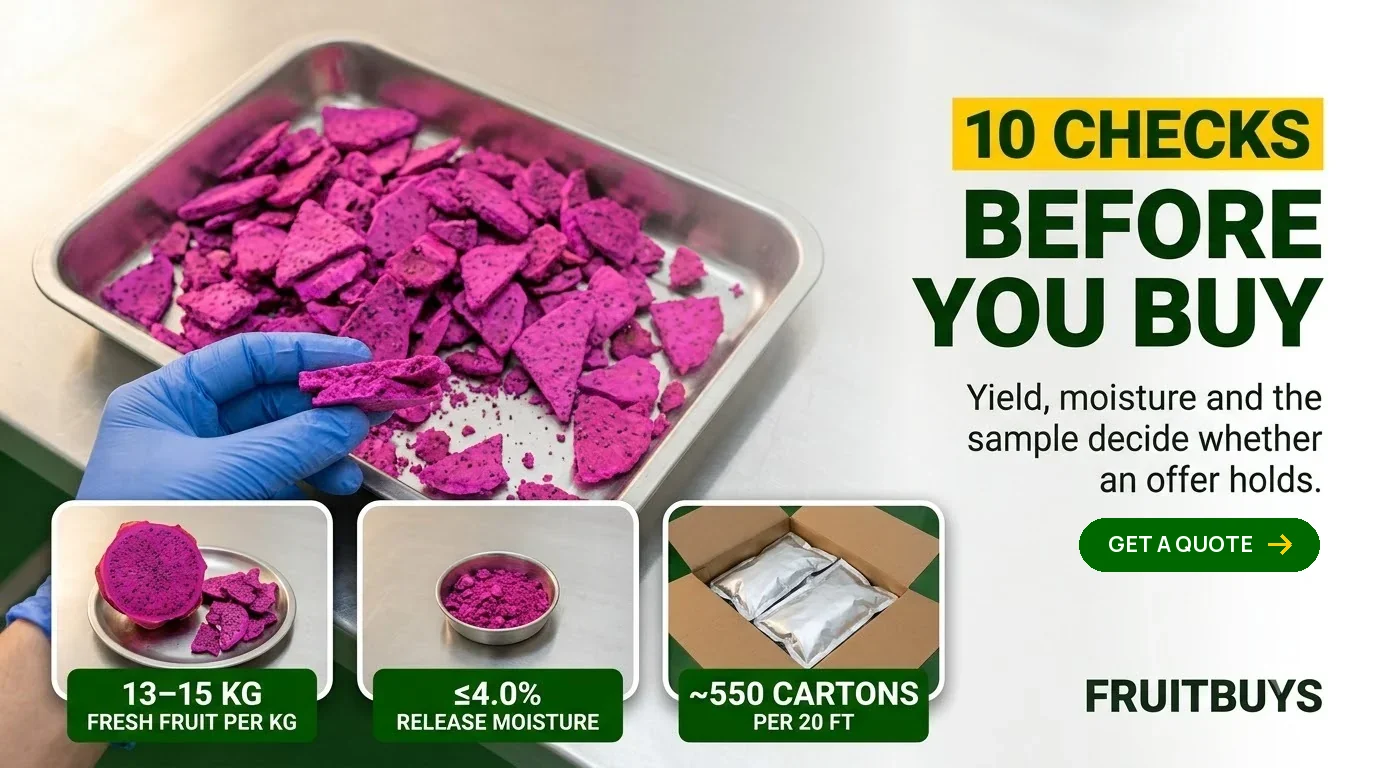
Every offer looks alike on a sample tray: magenta pieces, a crisp snap, a reasonable price. The differences show up later, in a carton that arrives wetter than the sample, a granola line choking on fines, a border lab asking about residues, or a second lot a shade paler than the first. Get the ten answers right and you have more than a safe purchase: a hero fruit for clean-label cereals, snacks and smoothie bowls, with a one-word ingredient line and a colour that sells the pack on its own.
The ten checks
| # | Ask the supplier | What a solid answer looks like | What it protects |
|---|---|---|---|
| 1 | Red flesh or white? (red vs white) | Red flesh, one-ingredient label | Colour without a colouring agent: “100% fruit, no added colour” on the front of pack |
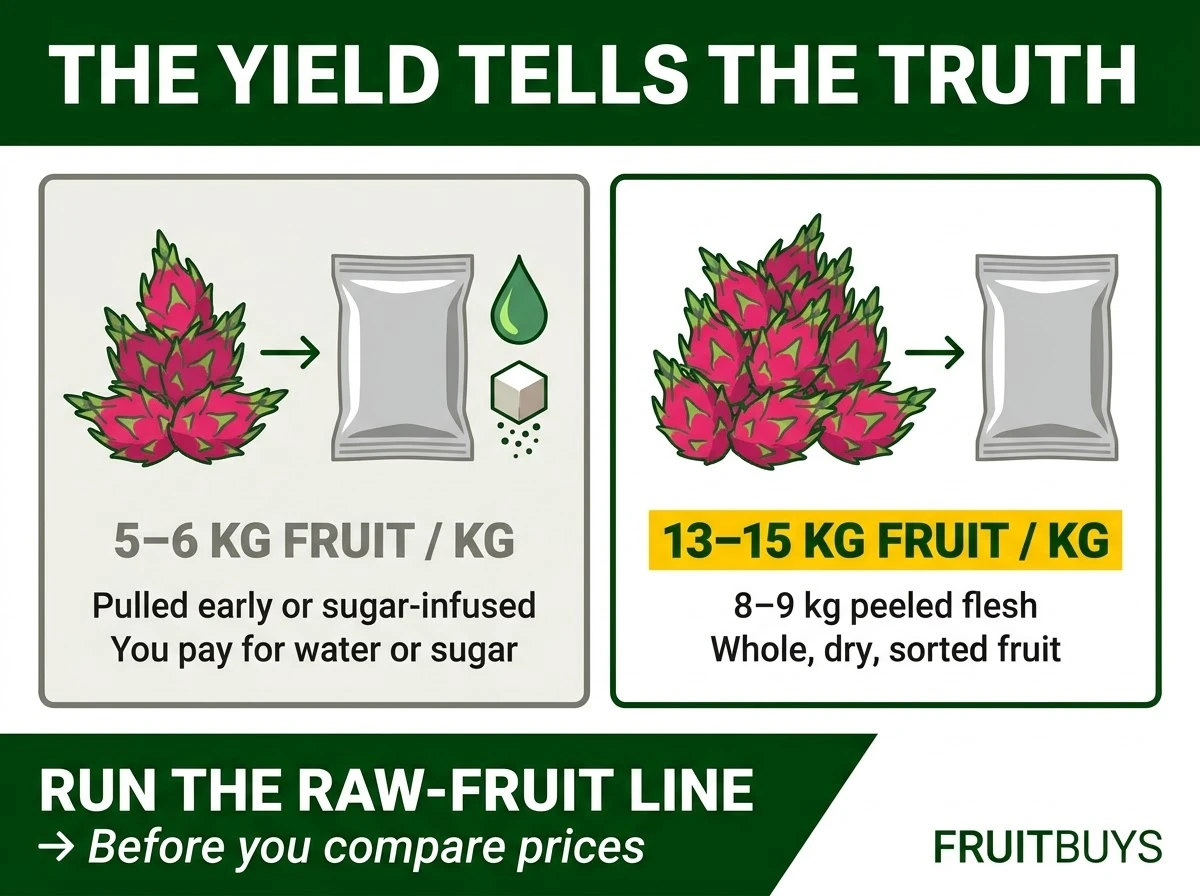
| 2 | How much fresh fruit per kilogram? (conversion ratio) | 13–15 kg whole fruit, or 8–9 kg peeled flesh | Your price: a lower ratio means you are paying for water, dust or sugar |
| 3 | Moisture and water activity on the COA? (limits) | Contract ≤5.0% / aw ≤0.30; release ≤4.0% / aw ≤0.25 | Your line and your shelf: pieces that flow through the hopper and stay crisp in the pack instead of turning chewy |
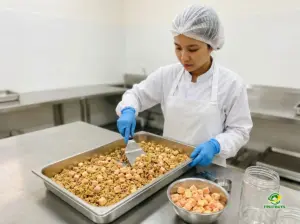
| 4 | Cut and fines tolerance? (formats) | ≥85% on size; fines through 3 mm by cut, from ≤3–5% for dice | Yield per batch: clean pieces in the bar or yogurt, no pink dust clouding the base |
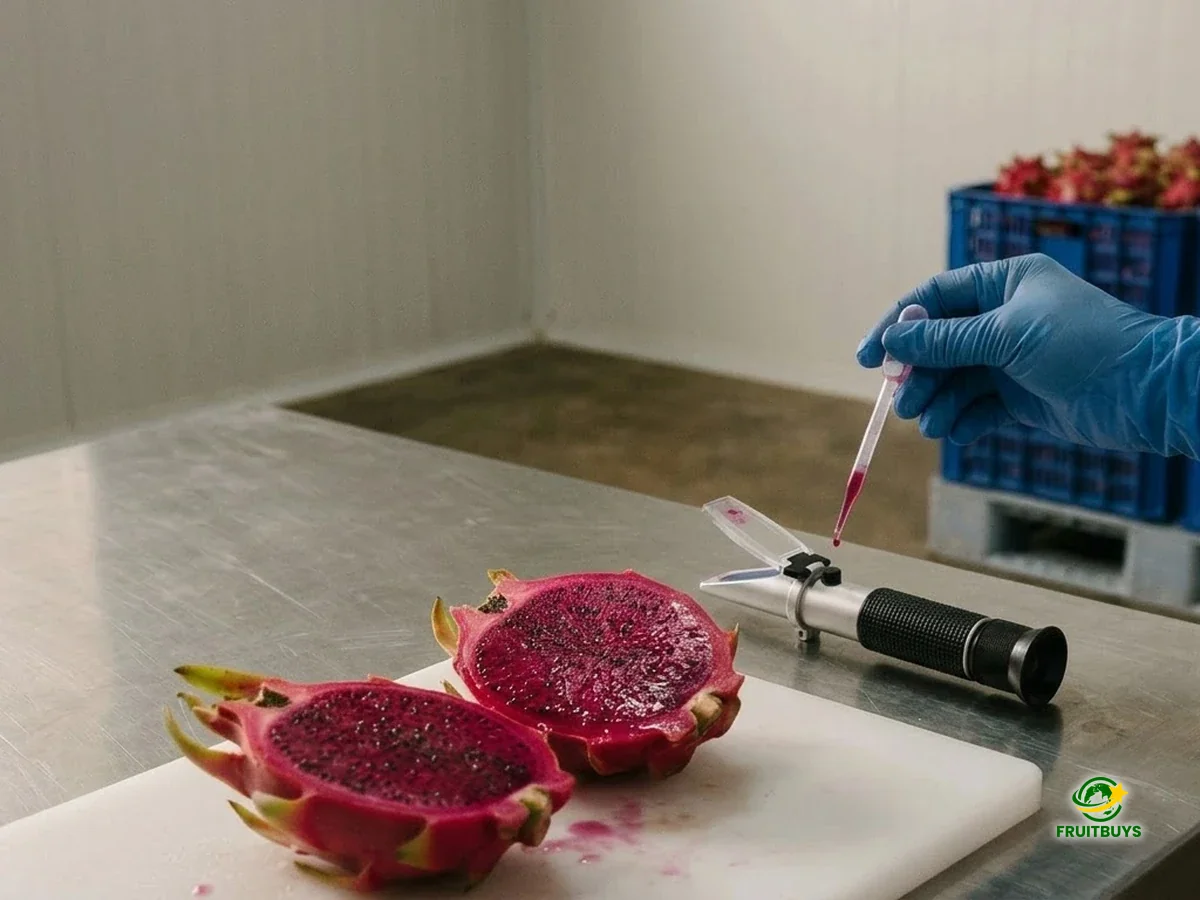
| 5 | What does the lot COA cover? | Moisture, aw, TPC, yeasts and moulds, E. coli, Salmonella on every container lot | Release at your dock without waiting on your own lab |
| 6 | Which documents travel with the container? (market compliance) | Invoice, packing list, B/L, C/O or EUR.1, phytosanitary certificate, lot COA | A first-time clearance with no missing paper; EU and UK entry at 0% duty |
| 7 | How are residues handled for the EU and UK? | Optional multi-residue panel before stuffing; results read on the fresh basis | No port hold while a border lab argues over a dried-fruit reading |
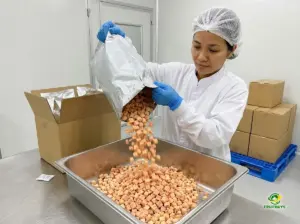
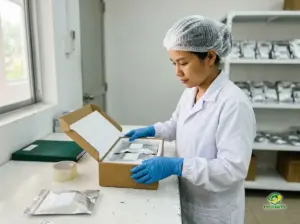
| 8 | How is it packed and loaded? (packing and loading) | Foil bags with silica gel, 10 kg cartons, about 550 cartons per 20 ft floor-loaded | Freight per kilogram, and fruit that arrives as crisp as it left |
| 9 | How do you know bulk will match the sample? (sample to bulk) | PSS from the packed lot; retained sample per lot; one processing line per contract | No dispute, demurrage or independent survey at Rotterdam or Long Beach |
| 10 | Can it go out under my brand? (private label) | Private label from 500 kg, 30–500 g foil pouches | A market test on your own label without a container commitment |
Label data sits in freeze-dried dragon fruit nutrition facts: 400 kcal, 16 g fibre and 1,800 mg potassium per 100 g, with no added sugar.
Which three answers expose a weak offer fastest?
The yield. A price that only works at 5 or 6 kg of fruit per kilogram is buying something other than whole, dry, sorted fruit. Usually the lot was pulled from the dryer early and ships at 6–8% moisture, or the fruit was infused with sugar to add cheap weight. Either way you pay for water or sugar, and an infused lot breaks the clean label your pack is built on. Run the raw-fruit line yourself before you compare prices.
The moisture on the COA. “Below 6%” or “below 8%” on a freeze-dried sheet means you pay freeze-dried prices for water, and the fruit goes chewy within weeks of opening. Ask for release moisture and water activity, both, on the lot COA.
The pre-shipment sample. A supplier who will only send a sample from a sample room, not from your packed lot, is asking you to approve a promise. Approval belongs on the lot, before loading and before the balance payment.
These three answers protect more than the product. When a container lands soft, pale or off-spec, it is the buyer who signed the order who explains the returns, the relabelling or the missed launch to management. Settling them before the contract is how procurement keeps that conversation from ever happening.
How does FruitBuys hold the programme together?
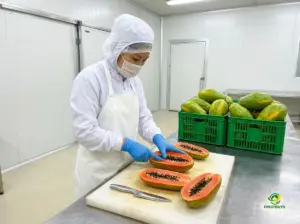
By managing the fruit through the seasons, not just the paperwork. Fresh red-flesh fruit comes from the Lam Dong coastal belt (former Binh Thuan), Vietnam’s largest dragon fruit growing area, and the Mekong Delta orchards of Long An and Tien Giang.
The crop moves through the year, and the programme moves with it:
| What changes | What FruitBuys does | What you see |
|---|---|---|
| Rainy months: fruit takes on water, Brix falls, skins split | Rejects 10–20% at the gate instead of 5–10%; wetter flesh runs to the long end of the 18–24 h drying window | Even magenta, no dark spots, release moisture still ≤4.0% |
| Off-season, Nov–Mar: lit orchards, 9–11 °Brix, smaller fruit with more peel per kilogram | Allocates main-season fruit (11–14 °Brix) to annual contracts | Steadier colour, taste and cost per kilogram across the year |
| Packing: dry fruit meets humid air | Packing room at 20–24 °C, RH ≤35–40%, under 20 minutes’ exposure before sealing | Crisp fruit at your dock, not a soft top layer |
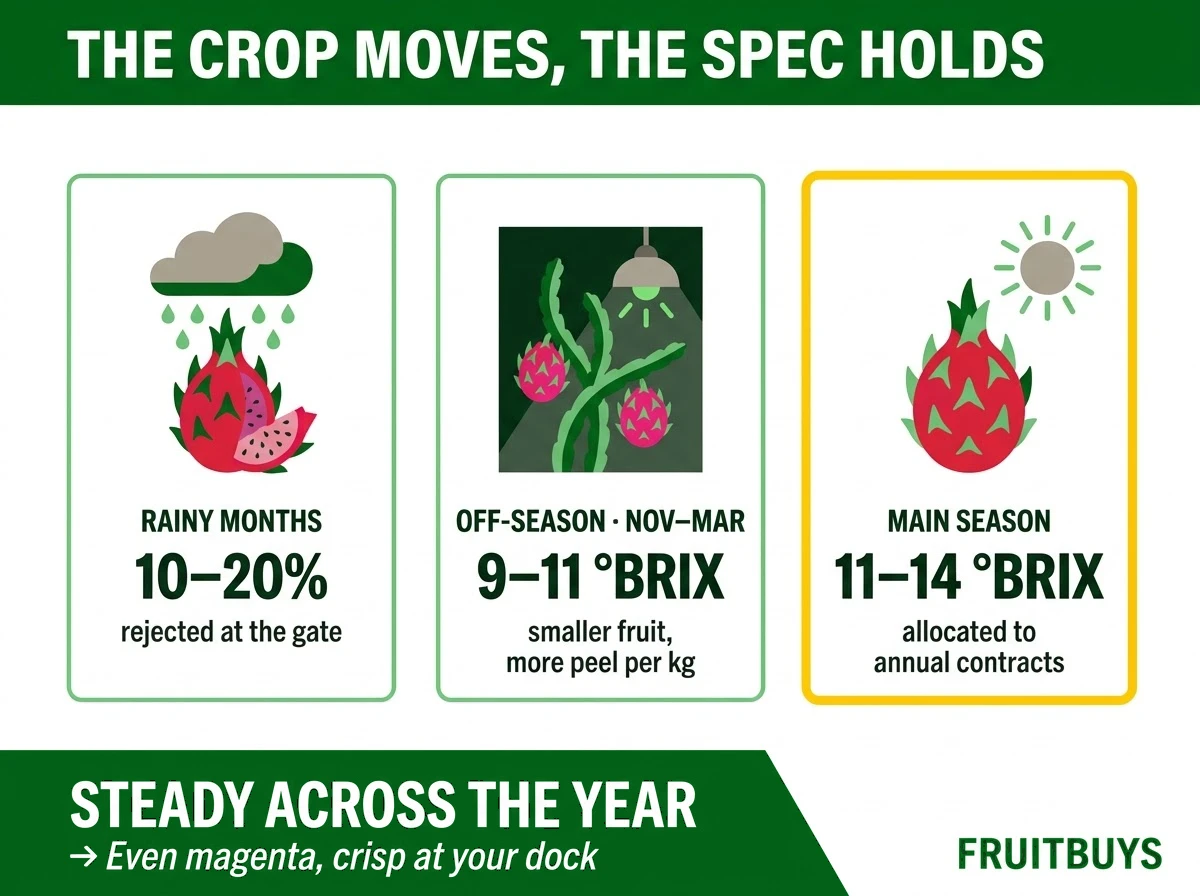
The agricultural range is real, and the job is to keep it inside your specification. FruitBuys selects the raw fruit by region and season, sets the freezing, drying and packing window, signs off the release QC of every lot and owns the export dossier from COA to phytosanitary certificate. Processing runs on one locked line at a contracted partner facility for the full contract year, holding HACCP, ISO 22000, BRC (qualified processing facility) and US FDA Facility Registration (Halal certification available on request), with audit access for your QA team. One contact answers for the fruit, the process, the lab work and the documents.
What volume and timing should you plan for?
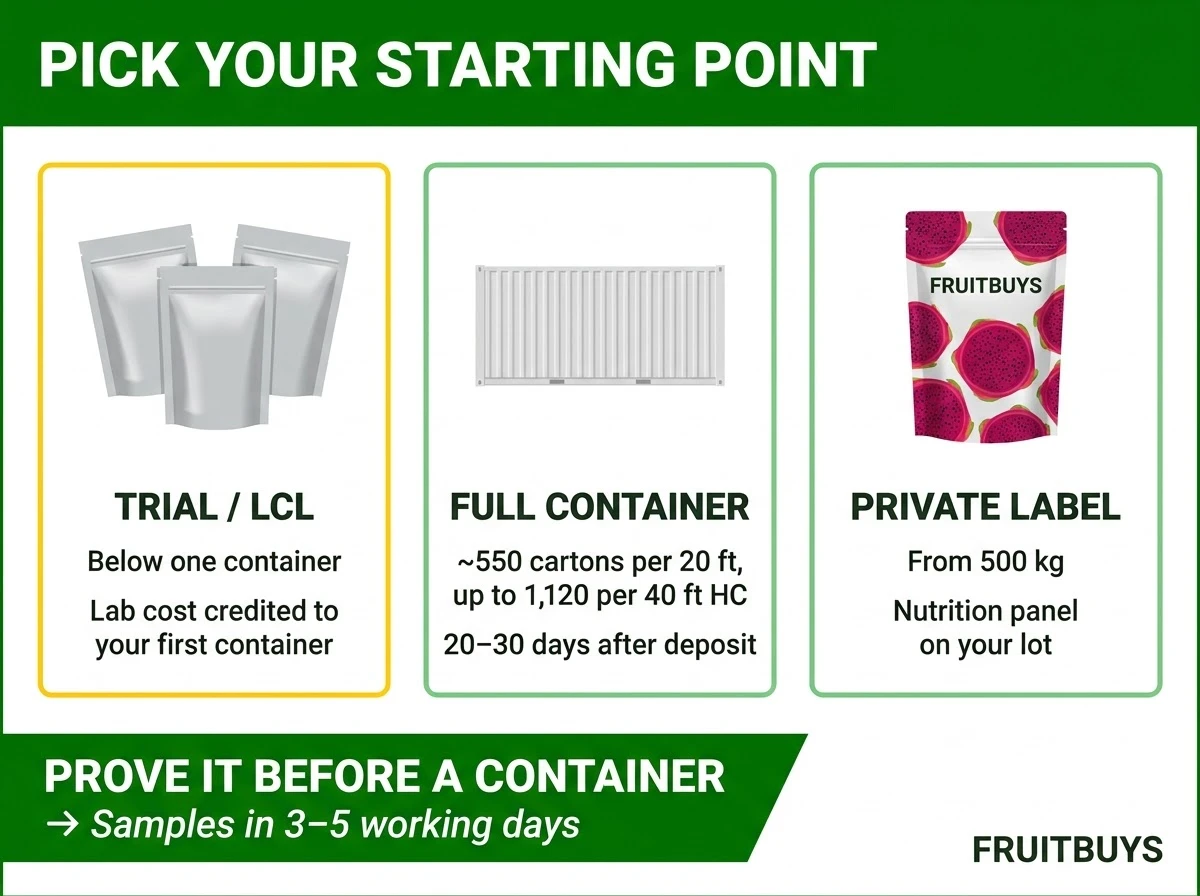
| Trial / LCL | Full container | Private label | |
|---|---|---|---|
| Volume | Below one container | About 550 cartons per 20 ft; up to 1,120 per 40 ft HC | From 500 kg |
| Sample | 3–5 working days | 3–5 working days | 3–5 working days |
| Production | Scheduled with your order | 20–30 days per 20 ft after deposit | Scheduled against pouch printing |
| Lab work | Free release QC log; independent tests at net lab cost, credited in full to your first container | Third-party lot COA on every container | Nutrition panel on your commercial lot |
Annual capacity is around 100 tonnes a year of finished freeze-dried red dragon fruit, pieces and powder, across qualified partner facilities. Shipping terms are FOB, CIF or DDP from Cat Lai sea port or Tan Son Nhat airport.
Where does FruitBuys focus, and how do you start with a smaller order?
On red flesh, produced to order. White-flesh fruit dries pale and gives a pack no visual impact, so every tonne of capacity goes to the red line that brands actually sell. Producing to your specification is what keeps every lot matched to the one you approved, and it takes the lead times above. If you want to prove the fruit before a full container, start with a sample or a trial/LCL lot on the same specification: it ships with the internal QC log and the most recent baseline report, and any third-party lot test is credited in full to your first container order. Organic-certified fruit is outside the standard programme.
For powder, which follows its own specification and HS code, see what to specify before buying dragon fruit powder in bulk and the powder product page. All freeze-dried lines are listed under freeze-dried fruit.
Send your RFQ
Give us ten lines, one answer for each check above: flesh, cut, volume, destination, packaging, documents, panels, label needs, timing and Incoterm. We return a specification, a loading plan and a sample schedule in one reply. Full specification and packing data are on the freeze-dried red dragon fruit product page.
[email protected] · WhatsApp Export +84 919 739 589
FAQ
Where does FruitBuys source its dragon fruit?
The Lam Dong coastal belt (former Binh Thuan) and the Mekong Delta (Long An, Tien Giang). Red flesh is available year-round from main-season and lit off-season harvests.
What is the minimum order for freeze-dried dragon fruit?
Trial and LCL orders run below a full container; private label starts at 500 kg; a 20 ft container holds about 550 cartons.
How long does a bulk order take?
Samples in 3–5 working days and production in 20–30 days per 20 ft container after deposit.
Which certifications do the processing facilities hold?
HACCP, ISO 22000, BRC (qualified processing facility) and US FDA Facility Registration, with Halal certification available on request.
What shelf life does bulk freeze-dried dragon fruit have?
18–24 months in unopened original bulk bags in cool storage at ≤18 °C, RH ≤50%; 12 months once repacked into retail pouches at ≤25 °C, RH ≤60%.