Vietnam Dried Mango Export: Market Data, Suppliers & Pricing 2026

In 2024, Vietnam exported more than $308 million worth of mango a 43.5% increase over the prior year. That number does not belong to a country still figuring out export infrastructure. It belongs to a country that has spent two decades building the supply chain, the certification base, and the processing capacity to compete directly with the Philippines and Thailand for global dried mango market share.
If you are a dried mango supplier Vietnam search that landed you here, you are in the right place. This article gives you the current export data, the pricing benchmarks by origin, the supplier landscape, and the compliance picture you need to make a sourcing decision with confidence not guesswork.
Vietnam’s Position in the Global Dried Mango Market
The global dried mango market was valued at approximately $1.0–1.2 billion in 2025 and is growing at 6.2–7.6% CAGR through 2032–2033. The Philippines has historically held the largest share at approximately 35% of global dried mango exports, followed by Thailand at roughly 25%. Vietnam has been closing that gap consistently.
What changed? Three things: scale, price competitiveness, and compliance infrastructure.
Vietnam produces approximately 1 million tons of mango annually across 114,000+ hectares of cultivation. That production base primarily in the Mekong Delta across Đồng Tháp, Tiền Giang, An Giang, Vĩnh Long, Bến Tre, and Cần Thơ provides the raw material volume needed to compete at container-level B2B quantities without supply disruption. Đồng Tháp province alone accounts for over 14,000 hectares of mango cultivation.
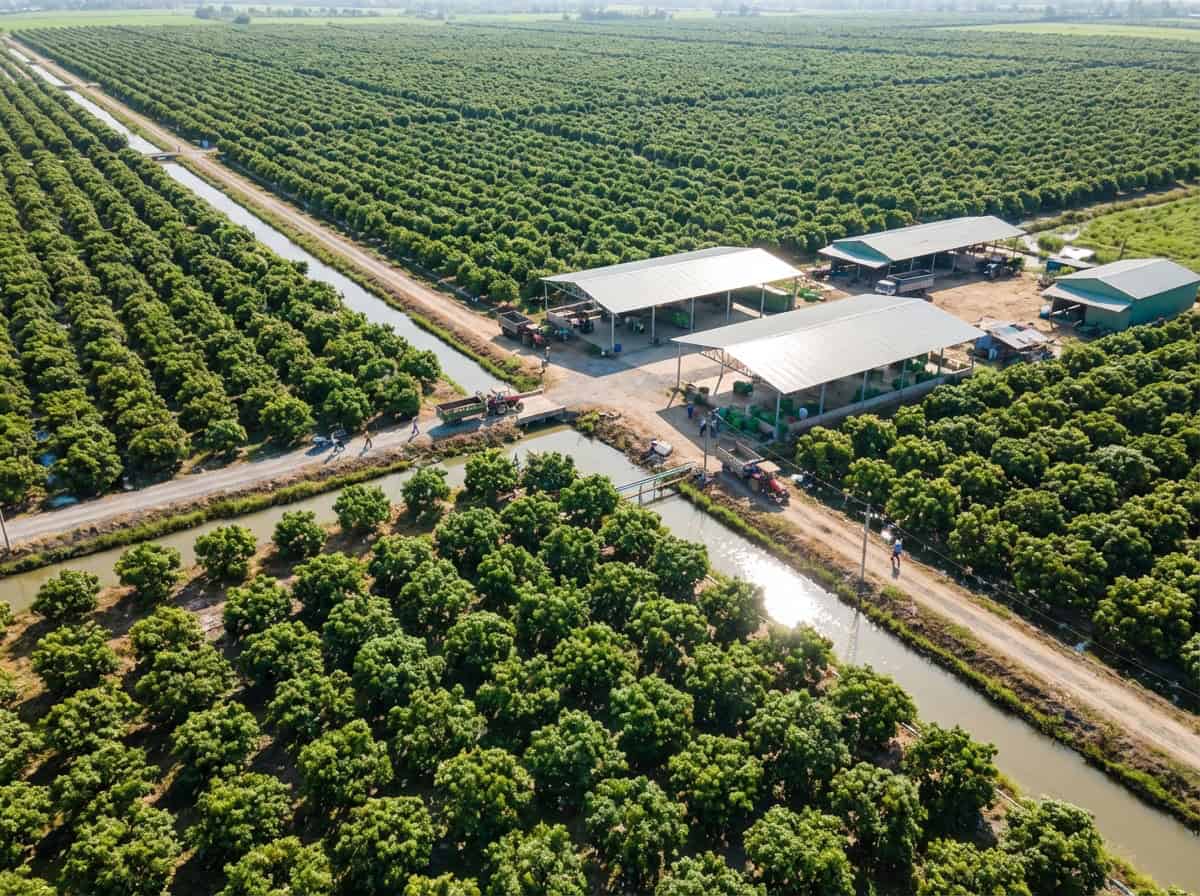
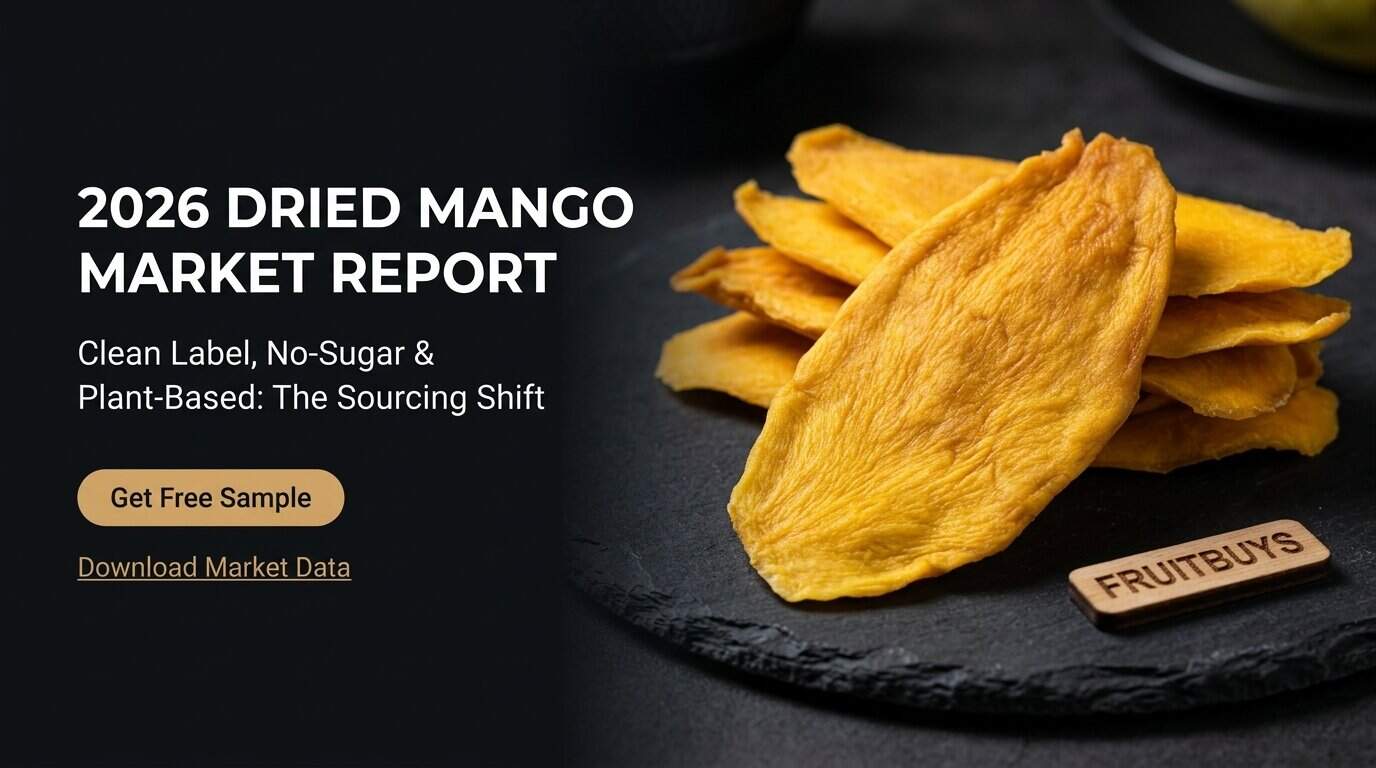
In 2024, Vietnam mango exports crossed $308 million in total value, a 43.5% year-on-year increase. Dried mango exports in 2024 accounted for approximately 12,000 MT of soft-dried and sweetened formats combined a figure that will increase as the no-added-sugar segment develops and clean label demand from US and EU buyers drives product evolution away from sweetened formats.
The Vietnamese government’s agricultural development roadmap targets 140,000 hectares of mango cultivation, 1.5 million tons of annual production, and $650 million in mango exports by 2030. That is not speculation it is a funded program with provincial-level execution in the Mekong Delta. Buyers who build supply chain relationships with Vietnamese suppliers in 2026 are entering at the right point in that trajectory.
Vietnam Mango Export Data: Key Metrics 2024–2026
Use this table as a reference for internal justification documents, buyer presentations, and sourcing decision memos. Confidence levels are noted for each figure.
| Metric | Value | Source | Confidence |
|---|---|---|---|
| Vietnam total mango exports (2024) | >$308 million | Vietnam Customs | High |
| YoY export growth (2024 vs. 2023) | +43.5% | Vietnam Customs | High |
| Vietnam mango production (2023) | ~1.02 million tons | General Statistics Office of Vietnam | High |
| Vietnam total cultivated mango area | >114,000 hectares | MARD Vietnam | High |
| Vietnam dried mango exports (2024) | ~12,000 MT (soft-dried + sweetened) | SVC Group | Medium |
| Global dried mango market size (2025) | ~$1.0–1.2 billion | Metastat Insight / Business Research Insights | Medium |
| Global dried mango CAGR (2025–2033) | 6.2%–7.6% | Aggregated from 4 research firms | Medium |
| Global healthy snacks market (2025) | ~$101–108 billion | Fact.MR / IMARC | High |
| Sugar-free snack market CAGR | 8.8% (to ~$5.8B by 2034) | Market.us | Medium |
| No/low sugar snack segment share | 39% of healthy snack claims | Fact.MR | High |
| US consumers reducing sugar intake | 58% | Campfire Advisors / industry surveys | High |
| GCC dried mango consumption (2023) | 45M+ packs | Market Growth Reports | Medium |
| Government export target (2030) | $650M, 1.5M tons | MARD Vietnam | High |
A note on data confidence: Market size and CAGR figures for the dried mango segment vary significantly across research firms due to scope definition differences some include fresh trade, some exclude sweetened formats. The figures above represent the most conservative credible range across multiple sources. Use the Vietnam Customs figures (HIGH confidence) as your primary reference for supplier qualification documentation. Use market size figures as directional context only, with attribution.
The Varieties Driving Vietnam’s Export Quality
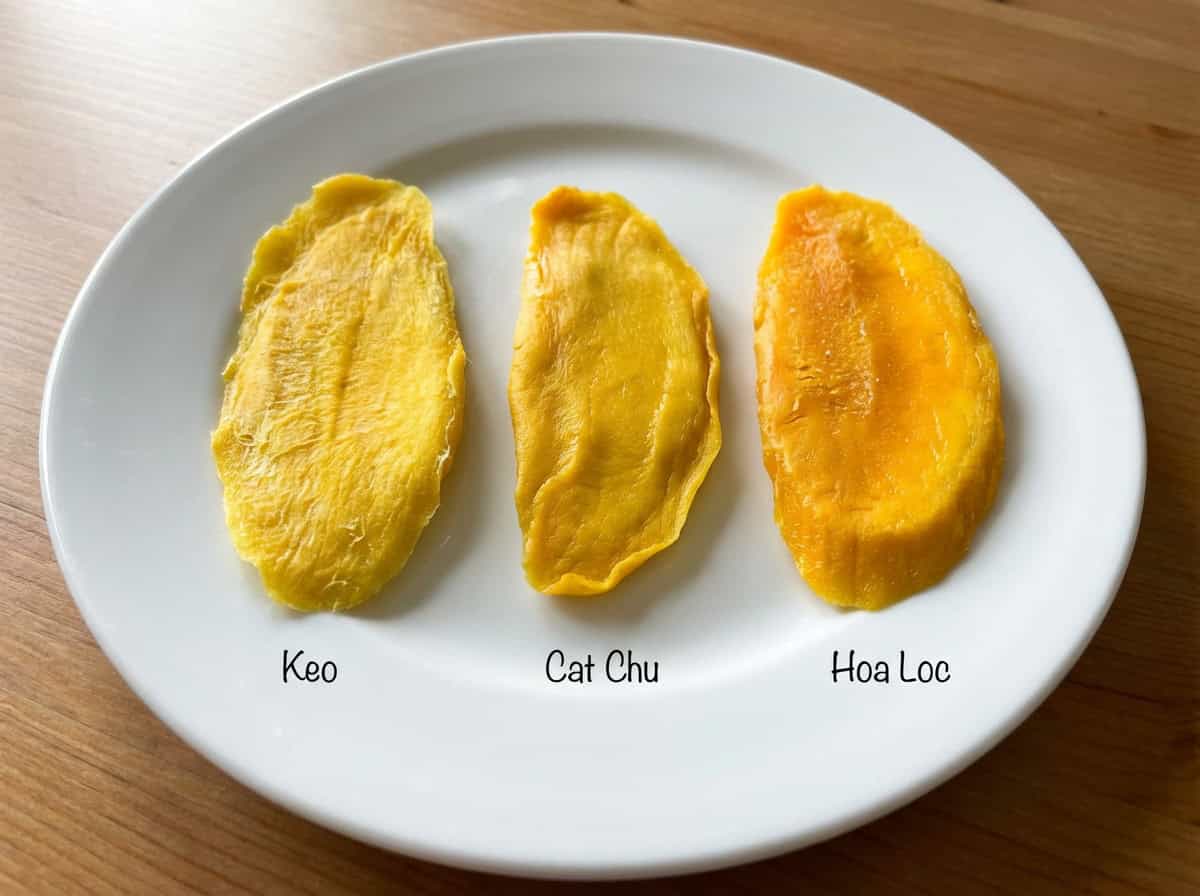
Not all Vietnamese dried mango is the same product. The variety determines natural sugar content, flavor profile, texture, and the price point your product can command at retail. Understanding the variety you are buying matters as much as understanding the processing method.
Production-Scale Variety: Xoài Keo (Acacia Mango)
- Natural Brix: 10–15°Bx
- Fruit weight: 250–450g
- Growing regions: Đồng Tháp, Bến Tre, Tiền Giang
- Availability: Near year-round through staggered planting
- Raw material cost: Lowest among commercial varieties
- Profile: Balanced sweet-sour flavor, moderate fiber, consistent supply at volume
- Best for: High-volume no-sugar dried mango at competitive export pricing, food manufacturing ingredient applications, private label mass market positioning
Premium Variety: Cát Chu
- Natural Brix: 18–20°Bx
- Fruit weight: 200–650g
- Growing regions: Cao Lãnh (Đồng Tháp), Tiền Giang, Cần Thơ, Vĩnh Long
- Availability: Near year-round through staggered planting
- Raw material cost: Higher than Keo (~70,000–80,000 VND/kg)
- Profile: Fine texture, low fiber, intense aroma, deep natural sweetness
- Best for: Premium retail positioning, specialty food store channel, private label where origin story matters. MOQ 1,000kg for dedicated production run.
Premium Variety: Hoà Lộc
- Natural Brix: 20–22°Bx
- Fruit weight: 300–700g
- Growing region: Hòa Hưng and Cái Bè, Tiền Giang (origin region only)
- Availability: Seasonal main harvest April–May, limited secondary harvest July–August and December–January
- Profile: Butter-smooth texture with virtually no fiber, the most intense natural aroma of any Vietnamese mango variety. Described by the US Ambassador to Vietnam as “the best mango in the world.”
- Best for: Ultra-premium retail, gift packaging, restaurant and hotel procurement, high-margin private label where a compelling origin story drives purchase. Advance booking required at least 60 days before harvest.
The practical implication for sourcing: Keo variety gives you the highest volume, most competitive price, and year-round supply. Cát Chu gives you elevated flavor and texture for a premium tier. Hoà Lộc gives you a retail story that no competitor origin can match but it requires planning lead time and commands a premium raw material cost.
Vietnam vs. Philippines vs. Thailand: The Sourcing Comparison
This is the comparison that no competitor content currently provides with B2B-grade specificity. Here is what the data actually shows.
| Criteria | Vietnam | Philippines | Thailand | India |
|---|---|---|---|---|
| Est. Export Price (Dried, FOB) | ~$2.50–3.50/kg | ~$3.50–4.50/kg | ~$3.80–5.00/kg | ~$2.20–3.20/kg |
| Price vs. Vietnam | Baseline | +20–30% | +25–40% | Comparable or lower |
| Global Market Share | Growing rapidly | ~35% | ~25% | Small |
| No-Sugar Products | Available AD method, COA verified | Rare most sweetened | Limited | Inconsistent batch to batch |
| OEM / Private Label | High flexibility MOQ 1,000kg | Limited flexibility | Low to medium | Variable |
| Year-Round Supply | Yes (Keo, Cát Chu varieties) | Seasonal (Carabao peak: March–May) | Seasonal | Multiple seasons, logistics risk |
| EU Tariff (EVFTA/FTA) | 0% since 2020 | No FTA benefit | No EU FTA | No EU FTA |
| US GSP/FTA | Free (GSP) | Standard rate | Standard rate | Standard rate |
| Cold Chain Required (No-Sugar) | Yes reefer mandatory | Yes | Yes | Yes |
| Documentation Readiness | HACCP, ISO 22000, COA, Phyto, C/O | HACCP, COA | HACCP, COA | Variable pesticide risk noted |
| Quality Consistency | High (controlled processing, COA per batch) | High for established brands | High for established brands | Known inconsistency issues |
| Allergen / Pesticide Risk | Low clean supply chain | Low | Low | Pesticide residue issues at some suppliers |
What this table tells you:
Philippines charges 20–30% more than Vietnam for dried mango with a much lower proportion of genuine no-sugar products available. Their competitive advantage is brand recognition. Cebu dried mango has decades of market positioning in the US and EU. That recognition was earned when Vietnam was not yet export-ready. The market conditions that created that advantage no longer exist.
Thailand charges 25–40% more than Vietnam with no EU trade agreement. A EU distributor buying from Thailand pays both a higher FOB price and the standard MFN tariff. A EU distributor buying from Vietnam pays a lower FOB price and 0% tariff under EVFTA. On a 17.6–19.0 MT reefer 40ft load, that combined difference represents a significant landed cost advantage per container.
India offers competitive raw material cost but has documented pesticide residue consistency issues at some supplier tiers and logistical complexity that adds to landed cost. For clean label positioning where your retail buyers and end consumers are reading ingredient labels and tracking certifications. India presents a risk profile that does not match the market you are selling into.
The EVFTA and GSP Advantage: What It Means in Numbers
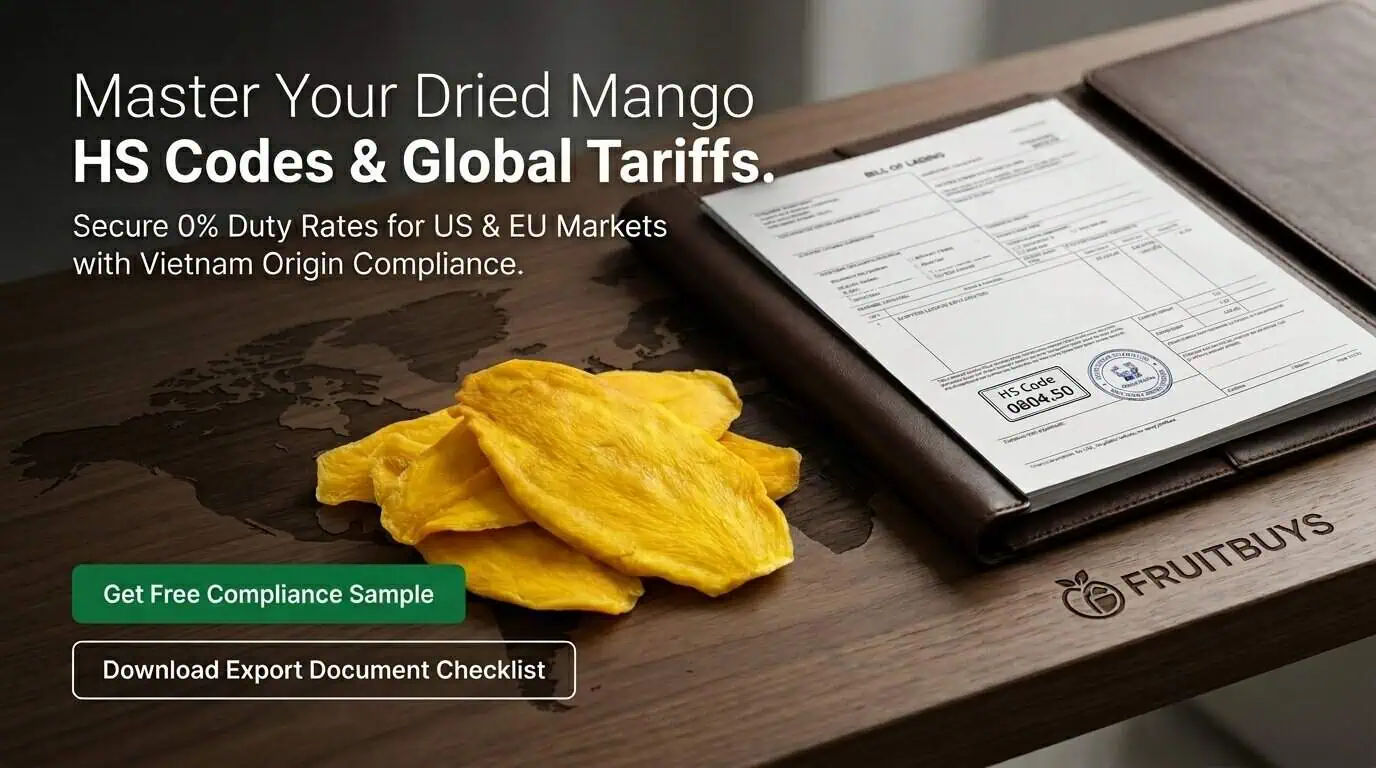
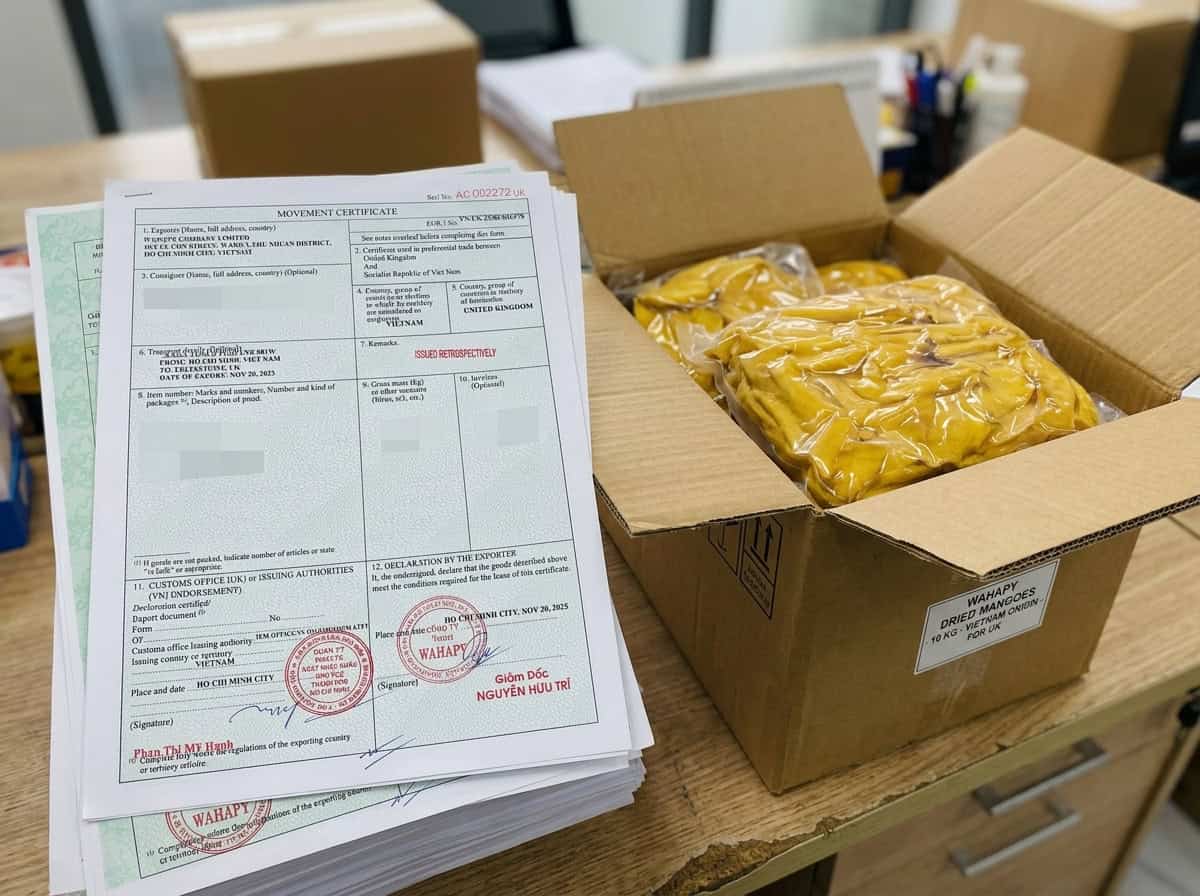
For EU buyers, the EVFTA tariff elimination on Vietnamese dried mango (HS 0804.50.00, 0% since August 2020) is not a marginal benefit it is a structural landed cost advantage over every competing origin except those with their own EU FTA.
To claim the 0% EVFTA rate, Vietnamese exporters must provide a Certificate of Origin Form EUR.1 issued by Vietnamese customs authorities. FRUITBUYS VIETNAM prepares EUR.1 documentation as standard for all EU-destined shipments. Your customs broker presents it at the EU port of entry. The 0% rate applies. No additional paperwork, no post-entry refund claims.
For US buyers, Vietnam’s GSP status provides preferential duty treatment on HS 0804.50.80.10 (Dried Mangoes). The general rate of 1.5¢/kg drops to Free under applicable GSP program provisions. On an 8–8.8 MT reefer 20ft container, that is not a life-changing saving but combined with Vietnam’s lower FOB price versus Philippines and Thailand, the total landed cost advantage per kilogram is material.
For UAE buyers: 5% GCC duty applies at the border. Halal certification is required for market entry and is available from FRUITBUYS on request. Arabic-language labeling is required for retail packaging. As of January 2025, GCC requires a 12-digit expanded HS code verify the full code with your UAE customs broker before the first shipment.
The Vietnamese Supplier Landscape
A buyer typing “dried mango supplier Vietnam” into Google gets Alibaba directory listings, a handful of company websites, and very little information that helps them distinguish between suppliers operating at export-grade standards and those who are not. Here is a factual overview of the named supplier landscape.
Vinamit: The largest Vietnamese dried fruit brand by B2C revenue, exporting to over 30 countries. Uses vacuum frying technology and HACCP/Halal/Kosher certification. Primary focus is B2C retail with products that largely contain added sugar. Limited flexibility for custom B2B orders. Not the right match for buyers who need no-sugar dried mango at OEM terms.
Nafoods Group: Vertically integrated from farm to export across three growing regions. HACCP, ISO, BRC certified. Services both B2B and B2C. Their strength is supply chain control. Their gap: the no-added-sugar dried mango segment is not a defined product line their dominant products are soft-dried with sugar and “less sugar” formats. MOQ for OEM runs high.
LAFOOCO: 100% Mekong Delta raw materials, present in US, Canada, EU, Japan, and the Middle East. Primary product strength is in vacuum-fried chips (VF technology). Not a specialist in soft-dried no-sugar formats.
Langfarm: A recognized domestic brand, specialty Đà Lạt positioning with premium packaging. Small processing capacity not suited to consistent container-scale B2B orders.
Luong Gia: A niche supplier with early positioning in preservative-free dried fruits. Limited public information on international certifications, OEM capability, and production capacity.
FRUITBUYS VIETNAM: Specialist B2B export source for premium Vietnamese dried fruits and healthy snacks. No MOQ trial orders. OEM/ODM from 1,000kg. Focused exclusively on export B2B no domestic retail channel competition with your product. Samples in 3–5 business days. Full export documentation pre-prepared for US, EU, and UAE.
The pattern in this landscape: The large Vietnamese suppliers are built around domestic brand equity and B2C retail volume. Their B2B export operations exist but are not their primary focus MOQ requirements are high, OEM flexibility is limited, and the no-added-sugar segment is either underdeveloped or absent. Buyers who need verified no-sugar dried mango at OEM terms with low trial MOQ are underserved by the large players. That is the gap FRUITBUYS was built to fill.
What a Container Order From Vietnam Looks Like
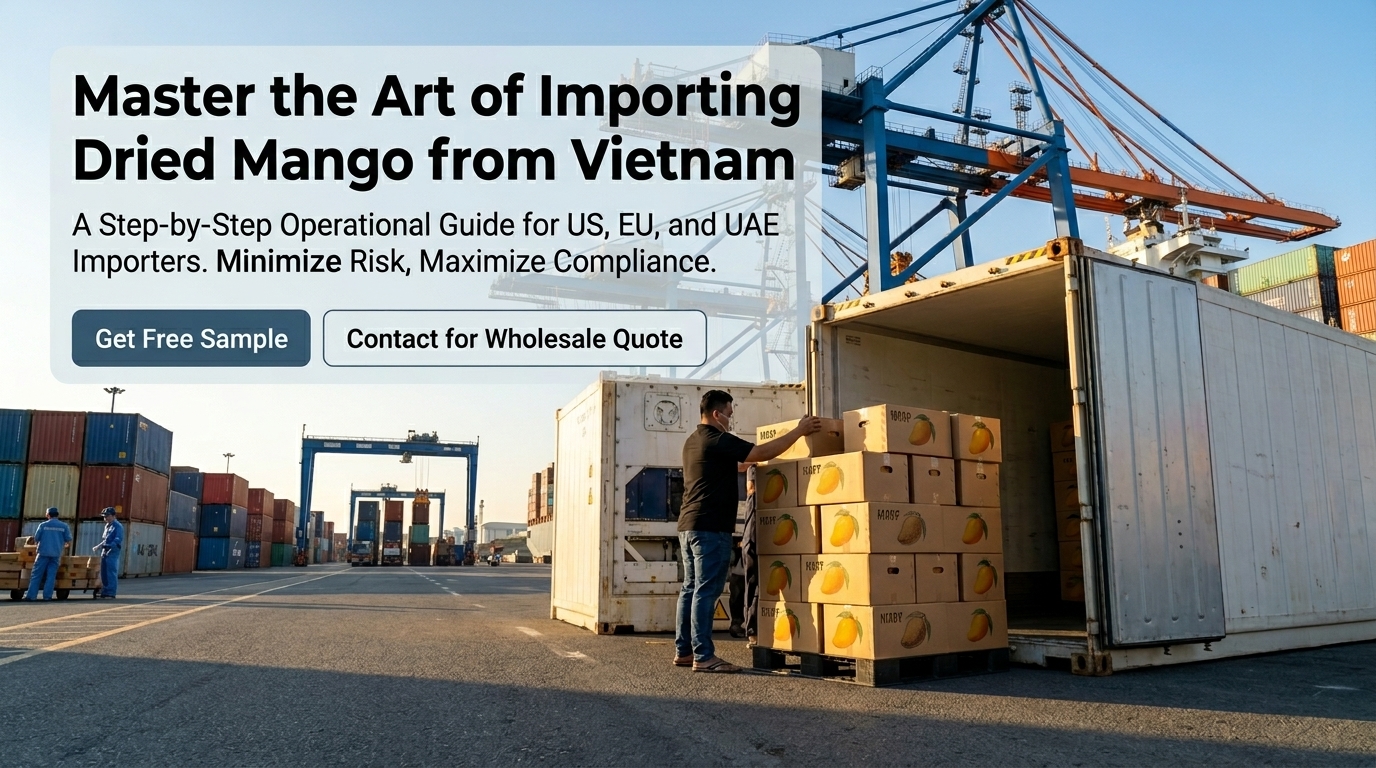
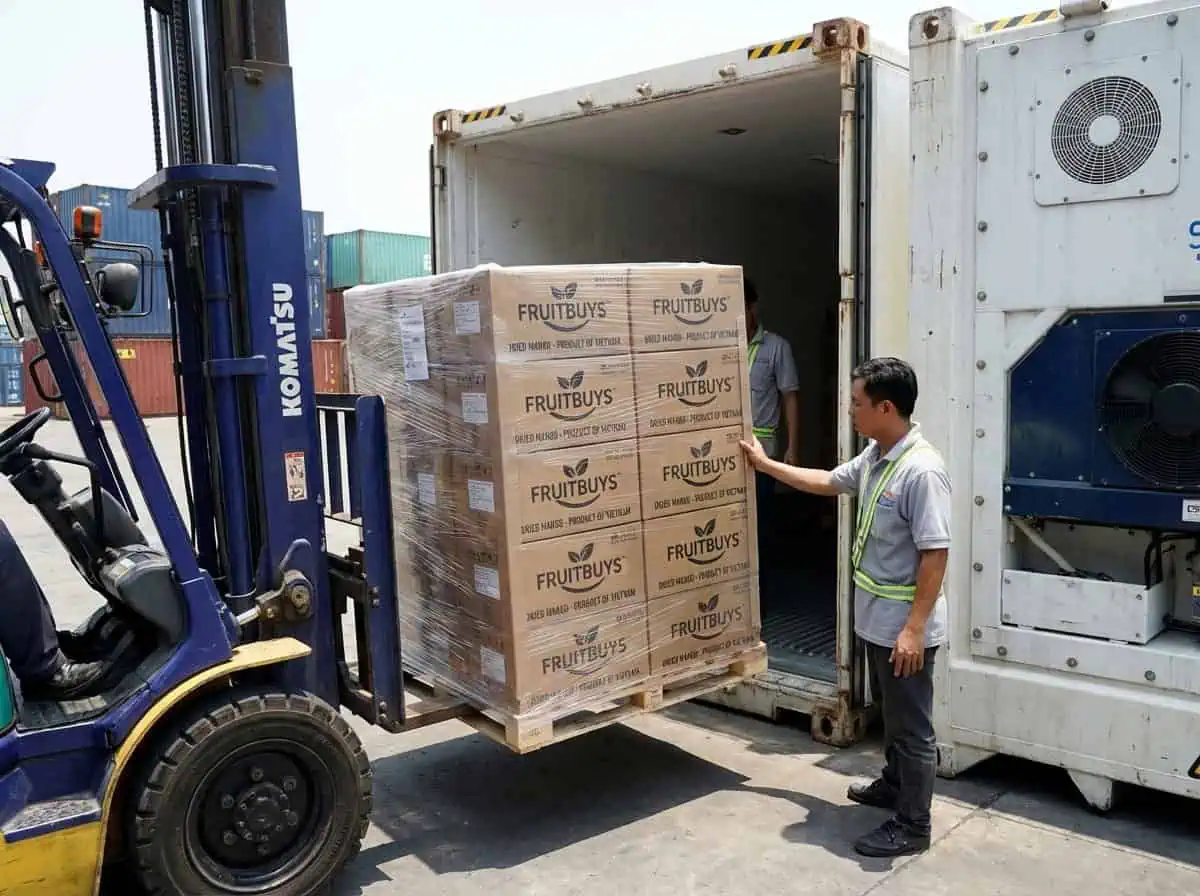
For buyers who have not yet placed a container order from Vietnam, here is the operational picture.
Lead time: 20–30 days production after deposit confirmation for a 20ft container.
Container loading (reefer mandatory for no-sugar formats):
| Container Type | Cartons (20kg net) | Net Weight | Cold Chain |
|---|---|---|---|
| Reefer 20ft | ~400–440 cartons | ~8.0–8.8 MT | Set at 15°C |
| Reefer 40ft | ~880–950 cartons | ~17.6–19.0 MT | Set at 15°C |
Transit times from Cát Lái Port, Ho Chi Minh City:
- US West Coast: 18–22 days
- US East Coast: 28–35 days
- Rotterdam (EU): 28–35 days
- Dubai (UAE): 18–22 days
Cold chain budget line: Reefer containers cost 30–50% more than dry containers per shipment. Budget $800–$1,500 per container for reefer surcharge and genset above dry container cost. This belongs in your landed cost model before you compare supplier quotes.
Payment: T/T 40% deposit on order confirmation, 60% balance before shipment or against B/L copy. L/C at sight available for established buyers.
Export documents included as standard: Certificate of Origin (C/O Form EUR.1 for EU / standard C/O for other markets), Phytosanitary Certificate, HACCP Certificate, ISO 22000, COA from accredited third-party lab (SGS/Bureau Veritas/Eurofins), Nutrition Facts label in FDA format and EU format.
Pricing: How to Read a Supplier Quote
Dried mango pricing from Vietnam is not a fixed number it varies across four variables. Understanding them prevents you from comparing quotes that are not actually comparable.
Variable 1 Variety: Keo variety is the lowest raw material cost and the standard for high-volume no-sugar production. Cát Chu costs more higher Brix means more raw fruit per kilogram of finished product. Hoà Lộc commands the highest premium. Same destination, same format, meaningfully different FOB price.
Variable 2 Cut format: Slices (3–5mm) for retail snacking have different yield ratios than dice (5–8mm) for food manufacturing. Uniform dice requires additional processing steps. Price per kilogram reflects those costs.
Variable 3 OEM packaging specification: Bulk 20kg cartons are the lowest per-kilogram cost. Custom retail OEM packaging adds design, film material, and filling line costs. The more custom the spec, the higher the per-unit cost but the more retail-ready the product arrives at your warehouse.
Variable 4 Order volume and frequency: A trial order of 500kg is priced differently than a 10MT container order, which is priced differently than a quarterly contract for 3 containers. Establish a supplier relationship and build toward contract pricing as your volume confirms.
For a quote specific to your variety, format, packaging, volume, and destination market, contact FRUITBUYS VIETNAM directly. We do not publish a public price list because a quote without knowing those four variables is not a quote it is a number chosen to win a comparison, not to reflect what your actual shipment will cost.
Frequently Asked Questions
Who are the main dried mango suppliers in Vietnam?
The named suppliers operating at export scale include Vinamit, Nafoods Group, LAFOOCO, Langfarm, Luong Gia, and FRUITBUYS VIETNAM. The large players are primarily B2C focused with high MOQ requirements for OEM. FRUITBUYS VIETNAM specializes in B2B export with no trial MOQ, OEM capability from 1,000kg, and a specific focus on no-added-sugar formats for US, EU, and UAE buyers.
How much does dried mango from Vietnam cost compared to Thailand or Philippines?
Vietnam FOB pricing for dried mango runs approximately $2.50–3.50/kg depending on variety and format. Thailand runs $3.80–5.00/kg. Philippines runs $3.50–4.50/kg. Vietnam is 20–40% cheaper than its two primary competitors on comparable certified product. Combined with EVFTA 0% tariff for EU buyers, the landed cost advantage over Thailand or Philippines is material at container volumes.
What certifications do Vietnamese dried mango suppliers hold?
Standard certifications across export-grade Vietnamese suppliers include HACCP, ISO 22000, and Phytosanitary certification. COA from third-party labs (SGS, Bureau Veritas, Eurofins) is standard practice at export-level suppliers. FRUITBUYS VIETNAM additionally provides Certificate of Origin for EVFTA/GSP tariff claims, FDA-format and EU-format Nutrition Facts labels, and Halal certification on request. BRC/IFS is available from specific manufacturing partners.
Does Vietnam produce dried mango without added sugar?
Yes through hot air drying (AD) without osmotic pre-treatment. This is the legitimate no-sugar method. However, not all Vietnamese suppliers produce this format many use osmotic dehydration with sugar syrup. Buyers must verify the production process and request COA with added sugars listed separately as 0g. FRUITBUYS VIETNAM produces exclusively through the AD method without osmotic pre-treatment.
What is the minimum order quantity for dried mango from Vietnam?
MOQ varies by supplier. Large integrated producers like Nafoods typically require 3–5 MT minimum. FRUITBUYS VIETNAM accepts trial orders with no minimum you can begin with samples and scale from there. OEM/private label production starts at 1,000kg. Container orders begin at approximately 8–8.8 MT for a reefer 20ft.
Is dried mango from Vietnam halal certified?
Halal certification is available from FRUITBUYS VIETNAM on request. It is a documented requirement for UAE and GCC market entry and is increasingly requested in some EU and UK Muslim consumer markets. Buyers targeting the Middle East should confirm Halal certification scope and issuing body with their UAE distributor before placing an order.
The Decision In Front of You
Vietnam’s dried mango export market grew 43.5% in one year. The data on clean label demand 58% of US consumers reducing sugar, 39% of global healthy snack launches carrying no/low sugar claims points in one direction. The price differential versus Philippines and Thailand exists today and will not narrow while Vietnam’s production scale continues to expand.
Buyers who add Vietnam to their sourcing mix this year do two things simultaneously: they lower their per-kilogram landed cost and they gain access to the no-added-sugar format that the health food channel is demanding with increasing urgency.
There is one action required to start. Request a free sample and a quotation from FRUITBUYS VIETNAM. We ship samples with full COA, technical spec sheet, process documentation, and cold chain handling instructions within 3–5 business days. You test in your own lab. If the product meets your specification, you place an order. We produce in 20–30 days.
Contact FRUITBUYS VIETNAM:
- WhatsApp: +84-909.499.619
- Email: hotro@fruitbuys.vn
- Website: https://fruitbuys.com
- Office: 10/2 Ky Con, Cau Kieu Ward, Ho Chi Minh City
- Warehouse: 182 An Phu Dong 09, An Phu Dong Ward, District 12, Ho Chi Minh City