
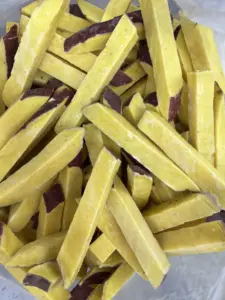
How many calories, how much fibre and sugar are in freeze-dried sweet potato?
Freeze-dried yellow sweet potato carries 350–365 kcal, 6–9 g of fibre, 1,300–1,450 mg of potassium and 10–18 g of natural sugar per 100 g, with 0 g added sugar and almost no fat or sodium. Fresh yellow sweet potato is about 126 kcal per 100 g; the freeze-dried number is higher only because the water has gone, not because anything was added. A 30 g snack serving holds the solids of about 115–130 g of fresh root. For a brand, those numbers mean front-of-pack claims in the EU without reformulation, and a clean “one ingredient” story everywhere. The product behind them is freeze-dried yellow sweet potato, Japanese-type, golden flesh, nothing added.
What is in 100 g, and in a 30 g serving?
| Nutrient | Per 100 g | Per 30 g serving | % Daily Value (30 g)* |
|---|---|---|---|
| Calories | 350–365 kcal | 105–110 kcal | |
| Total fat | 0.5 g | 0 g | 0% |
| Saturated fat | 0 g | 0 g | 0% |
| Trans fat | 0 g | 0 g | |
| Cholesterol | 0 mg | 0 mg | 0% |
| Sodium | 30–90 mg | 9–27 mg | 0–1% |
| Potassium | 1,300–1,450 mg | 390–435 mg | 8–9% |
| Total carbohydrate | 85–89 g | 25.5–26.7 g | 9–10% |
| Dietary fiber | 6–9 g | 1.8–2.7 g | 6–10% |
| Total sugars | 10–18 g (naturally occurring) | 3.0–5.4 g | |
| Added sugars | 0 g | 0 g | 0% |
| Protein | 3.5–6.0 g | 1.1–1.8 g |
*Based on a 2,000 calorie diet.
Typical values for 100% freeze-dried yellow sweet potato; values typically move within ±5–10% with season, origin and ripeness. Lot nutrition panel available for label artwork.
Why 30 g. In the US, the reference serving for snacks, including vegetable-based chips and crisps, is 30 g, so that is the column a US snack label is built on. In the EU, nutrition and claims run per 100 g.
Why does the natural sugar range from 10 to 18 g?
Because the root changes, not the recipe. A sweet potato fresh from the field is starchy and mild; given time to rest after harvest, it converts part of its starch into natural sugar and develops the chestnut-sweet, baked sweet potato flavour people know. Dry-season roots, which carry the most dry matter, sit at the sweeter end too. Nothing is added at any point, so the label reads 0 g added sugars whatever the lot. If your formulation depends on a narrow sweetness window, name it in your RFQ and the lot panel confirms each delivery.
The practical use: the natural sweetness lets a cereal, porridge or bakery recipe carry less refined sugar while keeping a sweet, roasted taste.
Which EU claims does it meet without reformulation?
Per 100 g, the typical values meet the thresholds of the EU nutrition-claims rules:
| EU claim | Threshold (per 100 g) | Freeze-dried yellow sweet potato |
|---|---|---|
| High fibre | ≥6 g fibre | 6–9 g: meets it, at the line on the lowest lots; the lot panel confirms |
| High in potassium | ≥30% of the reference intake (600 mg) | 1,300–1,450 mg: more than twice the threshold |
| Low sodium | ≤0.12 g sodium | 30–90 mg |
| No added sugars | No sugars or sweetening ingredients added | 100% sweet potato; add “contains naturally occurring sugars” |
| Low fat | ≤3 g fat | 0.5 g |
These claims apply to the finished product as sold, so a product that is mostly sweet potato carries them most easily; in a blend they depend on your dose. A general statement that fibre “supports digestion” is a positioning line, not an authorised claim for sweet potato fibre, so build the front of pack on “high fibre” itself.
What can a US label say, and what does the new “healthy” rule mean?
On a 30 g snack serving, the typical values support “fat free”, “low sodium” and “no added sugar”, with the statement the FDA requires when a food making a no-added-sugar claim is not low in calories. Potassium at 8–9% DV and fibre at 6–10% DV sit just under the 10% DV line for a “good source” claim on a 30 g serving, so those are numbers to show on the panel rather than claims for the front.
The bigger opportunity is the FDA’s updated “healthy” claim, with a compliance date of February 2028. For a vegetable product, the criteria cap added sugar at 2% DV, sodium at 10% DV and saturated fat at 5% DV. Freeze-dried sweet potato with nothing added sits well inside all three, so it is a natural base for brands rebuilding labels around the new definition. Final eligibility is confirmed on your finished product and its serving size.
Where does freeze-dried sweet potato sit on glycaemic index?
Glycaemic index depends on how sweet potato is cooked more than on the root itself. In one study of ten sweet potato cultivars, boiled roots sat in the 40s, while roasted and baked roots reached about 80 to 94: long, dry heat breaks starch down into forms the body absorbs fast. No published GI exists for freeze-dried sweet potato. What can be said is how it is processed: a 2–3 minute blanch and no baking, roasting or frying, which is far closer to the gentle end of that range than to the oven. A brand that wants a GI on pack should test its own finished product under ISO 26642.
For better-for-you, calorie-conscious and weight-management lines, the honest story is built on composition, not promises: complex carbohydrates for steady energy, natural fibre for satiety, zero oil and no trans fat.
Is freeze-dried sweet potato low-carb or keto?
No. At 85–89 g of carbohydrate per 100 g, freeze-dried sweet potato is a carbohydrate food, and calling it keto would mislead shoppers. Its place is in energy and fibre-led products: breakfast cereals, oatmeal, snack bars, sports and outdoor snacks, toddler foods. If your brand needs a low-carb vegetable crisp, choose a lower-starch vegetable instead.
Why is there no vitamin A headline on yellow sweet potato?
Because the colour comes from a different place. Orange-flesh sweet potato owes its colour to beta-carotene, around 8,500 µg per 100 g of fresh root, which is why it is marketed on vitamin A. Japanese-type yellow sweet potato carries only about 28 µg per 100 g: its golden colour comes from small amounts of other carotenoids. Orange-flesh vitamin A values still turn up on yellow sweet potato data sheets, so check any supplier’s numbers against the flesh colour before they reach your artwork.
What yellow sweet potato offers instead is taste and texture: drier, nuttier and sweeter than the orange type, with naturally occurring vitamin B6 and vitamin C. The lot panel puts finished numbers on your label if you want to declare them. If vitamin A is the headline your product needs, orange-flesh sweet potato is the right raw material for that SKU.
Typical values or a lot panel: which one goes on your label?
Use the typical values above to design formulations, cost recipes and draft artwork now. For the printed label, FruitBuys runs an independent nutrition panel on your commercial lot, in the US or EU format, through an independent ISO/IEC 17025 accredited laboratory. Book it with your first container so the panel and the stock arrive together.
For doughs, drinks and cereals made with powder, the same values apply to freeze-dried yellow sweet potato powder; serving size and claims then follow your finished recipe. How each cut behaves in cereal, cup soup and snacks is in freeze-dried sweet potato formats and applications.
FAQ
How many calories are in freeze-dried sweet potato?
350–365 kcal per 100 g, or about 105–110 kcal in a 30 g serving. The figure is higher than fresh sweet potato only because the water has been removed.
Is freeze-dried sweet potato healthy?
It is 100% sweet potato with 6–9 g of fibre and 1,300–1,450 mg of potassium per 100 g, no added sugar, almost no fat or sodium, and no oil. It fits better-for-you snack and cereal lines; specific claims depend on the market and the finished product.
Does freeze-dried sweet potato have added sugar?
No. All 10–18 g of sugars per 100 g are naturally occurring.
Is freeze-dried sweet potato keto-friendly?
No. With 85–89 g of carbohydrate per 100 g it is a carbohydrate food, not a keto ingredient.
Is yellow sweet potato high in vitamin A?
No. Yellow-flesh Japanese-type sweet potato is low in beta-carotene; the vitamin A story belongs to orange-flesh sweet potato.
Can I print these values on my label?
Use them for formulation and draft artwork. For the printed label, FruitBuys runs an independent nutrition panel on your commercial lot in US or EU format.
What is the glycaemic index of freeze-dried sweet potato?
No published value exists. Sweet potato GI depends strongly on cooking: low when boiled, high when baked or roasted. Freeze-dried sweet potato is only briefly blanched, so test your finished product if you want a GI on pack.



