
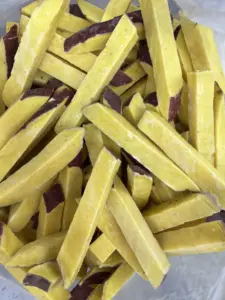
Which freeze-dried sweet potato cut fits your cereal, cup soup, snack or bar?
Choose the cut by what happens to the sweet potato in your product. If it meets hot water, choose 5–6 mm dice: they are soft in 1–2 minutes and fully rehydrated in 2–3 minutes at 85–95 °C, inside the window of a 3-minute cup noodle or instant oatmeal. If it is eaten dry, choose slices or sticks for a snack you can see, 8–10 mm dice for cereal, and broken chunks wherever the shape disappears into a bar or a mix. Every cut of freeze-dried yellow sweet potato is the same 100% Japanese-type root; what changes is how it behaves on your line and how many kilograms fit in a carton.
Cut, use and freight at a glance:
| Cut | Size | Best fit | Rehydration (85–95 °C) | Carton fill |
|---|---|---|---|---|
| Small dice | 5 × 5 or 6 × 6 mm | Cup noodles, instant oatmeal and congee, cup soup | 2–3 min | toward 10 kg |
| Large dice | 8 × 8 or 10 × 10 mm | Breakfast cereal, granola, muesli, ready meals | 3–5 min | toward 10 kg |
| Slices | 3–5 mm thick, Ø 25–45 mm | Ready-to-eat crisp snacks, bowl toppings | Eaten crisp | toward 7 kg |
| Sticks | 6 × 6 × 40 mm | “Fries-style” snack packs | Eaten crisp | toward 7 kg |
| Natural chunks | 10–25 mm | Granola clusters, snack bars, pet treats | Eaten crisp or in a mix | toward 10 kg |
| Granules | 1–4 mm | Bakery inclusions, seasoning blends, soup bases | Under 1 min | toward 10 kg |
Hot-air dried sweet potato needs 15–20 minutes of simmering to soften. Freeze-drying leaves an open, porous structure that drinks water back in minutes, and that single difference decides which instant products sweet potato can go into.
Which dice size works in cereal, oatmeal, congee and cup soup?
For anything prepared with hot water in three minutes, specify 5–6 mm. A 5–6 mm dice starts absorbing water the moment it is covered, turns soft in 1–2 minutes and is tender right through at 2–3 minutes. A 10 mm dice in the same cup is still firm in the middle when the consumer starts eating, a common complaint about vegetable pieces in instant food.
For dry breakfast cereal and granola, specify 8–10 mm. The larger dice is easier to see in the bowl, pours evenly with flakes and clusters, and in milk it softens over the 3–5 minutes most people take to eat. Freeze-dried dice keep their cut shape through drying, so they dose evenly on a cereal line instead of bridging in the hopper.
Cut sweet potato also does a job a flake cannot: it brings a chestnut-sweet, baked sweet potato flavour and a golden colour to the bowl with no added sugar or colour on the label. For a cup soup or a ready meal, the dry dice sit in the sachet with the seasoning and come back to a soft, sweet piece in the cup.
Before you lock the cut, run one test in your own kitchen: pour your product’s water at its real temperature over the dice and time it. Water at 85 °C from an office dispenser rehydrates more slowly than water off the boil, and your consumer uses the dispenser.
Slices and sticks: how do they work as a crisp snack?
Slices and sticks are the cuts that sell on shape. A 3–5 mm slice snaps clean and melts on the tongue; a 6 × 6 × 40 mm stick looks like a fry and eats like a crisp, with no oil and no salt unless you add a seasoning. For a “fries-style” pack or a better-for-you crisp, that is the whole pitch: it looks like sweet potato fries and contains only sweet potato.
These cuts pack lighter, toward 7 kg per carton, because a slice cannot be pressed without breaking. Keep them for the retail packs where the shape is what the shopper pays for, and buy denser cuts for everything else.
Where do chunks and broken grade save money?
Natural chunks of 10–25 mm are the cost-efficient grade. They are the same roots and the same drying, cut irregularly, so they pack toward 10 kg per carton instead of about 7 kg for slices. In the same container that is roughly 40% more product, and sea freight per kilogram falls by about 30%.
Use chunks wherever the shape disappears: granola clusters, snack bars, trail mix and pet treats. In a chewy bar, freeze-dried pieces draw moisture from a softer binder and lose their crunch over shelf life; coating the pieces in 10–15% cocoa butter or white chocolate before they go into the bar keeps them crisp. Pet treat and pet-food makers will find grades, spec and documents in freeze-dried sweet potato for pet food.
Granules for bakery and seasoning: what do they add?
Granules of 1–4 mm soften in under a minute in hot liquid and scatter evenly through a dry blend. They work as visible golden flecks in bread, crackers and cookies, as a sweet note in seasoning blends, and as body in soup bases. In bakery, fold granules into the dough for flecks of colour; for an even golden crumb all the way through, use powder instead.
For doughs, smoothies, plant-based drinks and confectionery colour, freeze-dried yellow sweet potato powder at 80–100 mesh is the better tool: it disperses evenly, mixes into warm water or milk without re-cooking, and carries the same colour and sweetness as the pieces.
Baby cereals and toddler snacks: what do manufacturers specify?
Brands making baby and toddler cereals, purées or melt-in-the-mouth snacks use freeze-dried sweet potato for a gentle carbohydrate, natural sweetness and colour without additives. Three lines belong in the specification:
- Cut: 5–6 mm dice for porridges and purées that rehydrate in minutes, or powder for cereals mixed with warm water or milk.
- Heavy metals: add a heavy-metal panel to every lot, matched to your market. The US FDA action level for lead in processed food for children under two is 20 ppb for single-ingredient root vegetables and dry infant cereals.
- Micro and moisture: the standard lot COA covers moisture, water activity, total plate count, yeasts and moulds, coliforms, E. coli and Salmonella.
FruitBuys books the heavy-metal panel with an independent laboratory before the container is stuffed, so the result is in your QA file before the vessel sails.
Private-label retail packs: which cut sells on shelf?
For a retail pack, the cut is the product. Slices and sticks look like a snack; dice look like an ingredient. Most private-label sweet potato snacks use slices or sticks in 30 g, 50 g or 100 g foil zip pouches, with a window to show the golden colour. FruitBuys packs and seals retail pouches at source from 500 kg per SKU, with digital printing in 7–10 working days for a first run. Pack options and OEM services are on the product page.
When is freeze-dried sweet potato the wrong cut entirely?
When the sweet potato has to survive long cooking. In a canned stew, a retorted pouch or a dish simmered for an hour, freeze-dried pieces rehydrate quickly and then keep softening until they lose their shape. For those products, frozen IQF sweet potato holds its texture better. Freeze-dried wins wherever the product is eaten dry, prepared in minutes or sold on a clean ambient label. If your range has both, FruitBuys can help you split the line so each product gets the format that suits it.
REQUEST SAMPLE → Ask for 5–6 mm, 8–10 mm dice and slices in one sample set, and run the rehydration test on all three in your own kitchen. Samples ship in 3–5 working days.
FAQ
How long does freeze-dried sweet potato take to rehydrate?
At 85–95 °C, 5–6 mm dice soften in 1–2 minutes and are fully rehydrated in 2–3 minutes; 8–10 mm dice take about 3–5 minutes; granules under 1 minute. Hot-air dried sweet potato typically needs 15–20 minutes of simmering.
Which size should I use in instant noodles?
5–6 mm dice. They rehydrate fully inside a 3-minute preparation window; larger dice can stay firm in the middle.
Are freeze-dried sweet potato chips fried?
No. Freeze-dried slices and sticks are crisp because the water has been removed by sublimation, not because they were cooked in oil. There is no oil and no added salt or sugar.
Does freeze-dried sweet potato stay crisp in milk or yogurt?
It softens as it absorbs liquid. In cereal it stays pleasant for the few minutes it takes to eat; for yogurt or ready-to-drink products, add it at the point of serving or pack it as a separate topper.
Can I use freeze-dried sweet potato in baked goods?
Yes. Fold granules into dough for golden flecks, or use powder for an even golden crumb. Larger dice and slices work best as toppings or inclusions added after baking.
Which cut costs least to ship?
Dice, chunks and granules pack toward 10 kg per carton against about 7 kg for slices and sticks, which lowers sea freight per kilogram by about 30%.
How do I trial different cuts?
Request a sample set with two dice sizes and slices, delivered in 3–5 working days. After approval, most buyers place a trial order of 1–2 full export cartons before a container contract.



