
Which HS code does freeze-dried sweet potato ship under, and what does each market check?
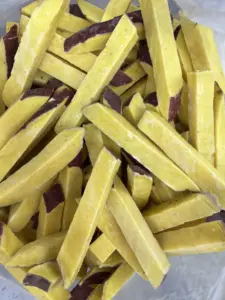
Freeze-dried sweet potato pieces (slices, dice, sticks, chunks, granules) ship under HS 0714.20; freeze-dried sweet potato powder ships under HS 1106.20. The form in the carton decides the code, and the code decides the duty: in the EU, 100% sweet potato powder of Vietnamese origin enters at 0% with Form EUR.1, against 166 EUR per tonne for origins without a trade agreement, and in the US the general rate on the powder line is free. Every freeze-dried yellow sweet potato container from FruitBuys ships with the same dossier: commercial invoice, packing list, bill of lading, C/O Form EUR.1, phytosanitary certificate and lot COA. This article covers which line to declare, what duty to expect and what each market checks at the border.
Pieces, powder, chips or starch: which heading applies?
Four headings cover “sweet potato” products, and the dividing line is what was done to the root:
| Product | HS heading | What puts it there |
|---|---|---|
| Freeze-dried slices, dice, sticks, chunks, granules | 0714.20 | Sweet potato, fresh, chilled, frozen or dried, whether or not sliced; nothing added |
| Freeze-dried powder, sweet potato flour | 1106.20 | Flour, meal and powder of the roots of heading 07.14 |
| Vacuum-fried chips, sugar-infused or seasoned pieces | 2008.99 | Prepared with oil, sugar or other ingredients, which moves the product out of Chapter 7 |
| Sweet potato starch | 1108.19 | Starch extracted from the root; a different product, not a powder of the root |
Two practical points follow. First, adding a seasoning or an anti-caking agent can move a product to another heading, so keep the declaration matched to the ingredient line. Second, the same line covers fresh and dried roots at six digits, and national tariffs split it further: US HTSUS 0714.20.20 (other than fresh or chilled) and EU CN 0714 20 90 (other than fresh, whole roots for human consumption). For a binding answer in the EU, your broker can request a Binding Tariff Information ruling.
What duty applies in each market?
Reference rates, checked November 2026:
| Market | Pieces (0714.20) | Powder (1106.20) | Origin document |
|---|---|---|---|
| European Union | CN 0714 20 90: 6.40 EUR per 100 kg for non-FTA origins; Vietnamese origin enters at the EVFTA preferential rate | CN 1106 20 90: 166 EUR per tonne for non-FTA origins; 0% for Vietnam | C/O Form EUR.1 |
| United Kingdom | 0714 20 90: 5.30 GBP per 100 kg standard rate; UKVFTA preferential rate for Vietnamese origin | UKVFTA preferential rate | C/O Form EUR.1 |
| United States | HTSUS 0714.20.20: 4.5% general rate | HTSUS 1106.20.90: free general rate | Commercial documents; no FTA |
| UAE / GCC | GCC common external tariff, generally 5% of CIF value, with exemptions for some basic foods | Same | Certificate of origin |
EU and UK rates are in the EU TARIC database; US rates are in the US Harmonized Tariff Schedule. In the US, add any applicable US trade tariffs in force on the entry date, confirmed by your customs broker against the current HTSUS schedule. In every market, your broker applies the national tariff line at entry.
What the table means for a landed-cost sheet: for a European buyer, the trade agreement removes the per-tonne duty that powder from origins without one carries, and Form EUR.1 is the document that unlocks it. A missing or late EUR.1 means paying the full third-country rate, so FruitBuys issues it with every EU and UK shipment.
Which documents travel with every container?
The standard FruitBuys export dossier: commercial invoice, packing list, bill of lading, C/O Form EUR.1 for EU and UK destinations, phytosanitary certificate and lot COA from an independent ISO/IEC 17025 accredited laboratory.
Why the phytosanitary certificate is in every dossier. Heading 0714.20 is shared with fresh sweet potatoes, which are a plant-health item in most markets. Port systems check plant-health documents on this code by default, so a phytosanitary certificate in every FruitBuys dossier lets your broker clear the container without explaining fresh versus dried.
By market:
- European Union and United Kingdom: EUR.1 for the preferential rate; the lot COA and any market panel in your QA file before arrival.
- United States: the partner facility holds US FDA Facility Registration; FruitBuys supplies the data your broker needs for FDA Prior Notice and the supplier file for your Foreign Supplier Verification Program.
- UAE and GCC: retail packs need importer product registration and Arabic labeling. The partner facility holds HACCP, ISO 22000 and BRC (qualified processing facility) certification.
What do importing countries test before clearance?
Border checks in the EU. Sweet potatoes and sweet potato powder are not on the EU list of products under increased official controls, so Vietnamese containers clear on standard check frequency.
Contaminants for a root crop. Roots take up what is in the soil, so heavy metals are the test that matters most for sweet potato. The EU maximum levels for contaminants set lead at 0.10 mg/kg for root and tuber vegetables, on a fresh-weight basis, and also cap cadmium for vegetables. For a dried product, the laboratory converts the dried result with a processing factor: freeze-dried sweet potato at 4% moisture made from roots at about 65.6% water has a factor of about 2.8, so a dried result divided by 2.8 gives the fresh-weight figure the limit applies to.
Pesticide residues. EU and UK buyers usually add a multi-residue screen. The same processing factor applies when comparing a dried result with a fresh-crop limit.
Baby food. In the US, FDA guidance sets an action level of 20 ppb lead for single-ingredient root vegetables and dry infant cereals for children under two. Brands supplying that segment write a heavy-metal panel into every lot.
Acrylamide. The EU is preparing its first binding acrylamide limits for snacks, cereals and baby food. Freeze-drying has no frying or baking step, so it adds none of the acrylamide those steps form in sweet potato; an acrylamide test is available as an optional panel for brands that want the number on file.
Who arranges and pays. FruitBuys books market panels with an independent ISO/IEC 17025 accredited laboratory in Vietnam before the container is stuffed, so the results travel with the shipment. Panels beyond the standard lot COA are paid by the buyer or shared by volume, agreed in the contract. Plan 3–5 working days of lab time into the booking.
When does your shipment need more than the standard dossier?
When your market, your customer or your product category asks for evidence beyond the standard lot COA: a retailer’s own residue list, a baby-food heavy-metal panel on every lot, or a GCC registration file for a retail pack. FruitBuys builds that into the pre-stuffing plan for your order rather than after the vessel sails. Tell us the destination, the format and the end use in your RFQ, and the dossier is set before production starts. Pack, carton and container details for the same shipment are in dried sweet potato shelf life and packaging, and powder specifications are on the freeze-dried yellow sweet potato powder page.
The same headings and documents apply to freeze-dried purple sweet potato and its powder; only the product description changes.
FAQ
What is the HS code for dried sweet potato?
0714.20 for dried sweet potato pieces, slices, dice and sticks with nothing added. In the US the line is HTSUS 0714.20.20; in the EU, CN 0714 20 90.
What is the HS code for sweet potato powder?
1106.20 for 100% sweet potato powder or flour; EU CN 1106 20 90, US HTSUS 1106.20.90.
What is the HS code for sweet potato chips?
Vacuum-fried or seasoned sweet potato chips are prepared products under heading 2008.99, not 0714.20.
Is sweet potato starch the same code as sweet potato powder?
No. Starch is extracted from the root and falls under 1108.19; powder of the whole root falls under 1106.20.
What duty does the EU charge on Vietnamese sweet potato powder?
0% with Form EUR.1 under the EU–Vietnam Free Trade Agreement, against 166 EUR per tonne for origins without a trade agreement.
Does freeze-dried sweet potato need a phytosanitary certificate?
FruitBuys includes one with every shipment. The HS line is shared with fresh sweet potatoes, so the certificate lets your broker clear the container without explaining fresh versus dried.
Is sweet potato under increased EU border checks?
No. Sweet potatoes and sweet potato powder are not listed in the EU regulation on increased official controls.



