

Are taro chips healthy, and how do fried, vacuum-fried and freeze-dried taro compare?
It depends on how the chip is made, far more than on the taro. A standard oil-fried taro chip carries about 7 g of fat and 139 kcal per 28 g bag serving, because a quarter of its weight is frying oil. Vacuum-fried chips are cooked at a lower temperature and keep a lighter, fruitier taste, but they are still fried. Freeze-dried taro has no oil at all: about 100 kcal and 0.1 g of fat per 28 g, with 3–4 g of the taro’s own fibre.
Taro itself is a good snack base: a filling, fibre-rich starch with a naturally sweet, nutty taste and almost no fat. What turns it into a heavy snack or a light one is the oil and salt added on the way to the bag. This guide compares the three ways taro reaches the snack shelf, how each one eats, which ones are gluten-free, and where the gap on the shelf sits for a snack brand.
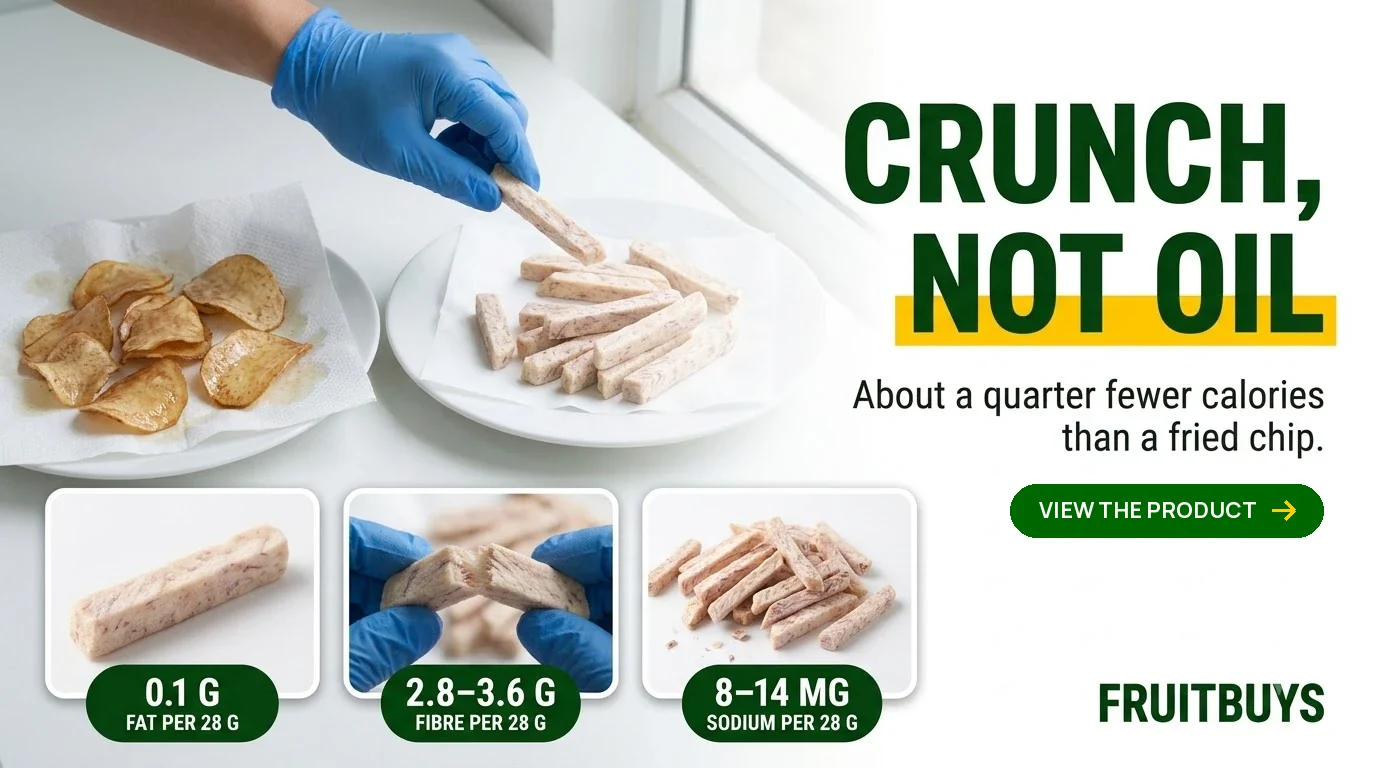
How many calories and how much fat are in taro chips?
Per 28 g (1 oz) serving and per 100 g:
| Oil-fried taro chips | Freeze-dried taro sticks | |
|---|---|---|
| Energy per 28 g | 139 kcal | 101–105 kcal |
| Fat per 28 g | 7.0 g | 0.1 g |
| Saturated fat per 28 g | 1.8 g | under 0.1 g |
| Fibre per 28 g | 2.0 g | 2.8–3.6 g |
| Sodium per 28 g | 96 mg | 8–14 mg |
| Energy per 100 g | 498 kcal | 360–375 kcal |
| Fat per 100 g | 24.9 g | 0.5 g |
| Added oil, salt, sugar | Oil and salt | None |
Oil-fried chips: USDA FoodData Central reference values for standard taro chips. Freeze-dried column: typical values for 100% freeze-dried taro; natural variation by origin, season and corm maturity applies. Lot nutrition panel available for label artwork.

Vacuum-fried taro chips sit between the two. Frying under vacuum lets the slice cook at a much lower oil temperature, so the taro keeps more of its colour and flavour and the chip tastes less of oil. It is still a fried snack, and its oil content depends on the slice thickness, the de-oiling step and the recipe, so the label numbers come from the panel on the actual product rather than from a general figure.
Read per serving, the freeze-dried stick has almost no fat, about a quarter fewer calories, more fibre and a fraction of the sodium. The difference is the oil.
How does each one eat?
This is the question snack buyers ask first, because a healthier snack nobody finishes is not a product.
- Oil-fried chips give a hard, glassy snap and a rich, salty, oily mouthfeel. The taro taste sits behind the oil and the seasoning.
- Vacuum-fried chips give a lighter, crisp bite with more of the natural taro sweetness and colour, and less oil on the fingers.
- Freeze-dried sticks and slices give a light, airy crunch that then melts on the tongue into a soft, starchy taro finish. They taste of steamed taro: mildly sweet and nutty, with chestnut and vanilla notes, and no oil at all.

Is freeze-dried taro as crunchy as a chip? It crunches differently. A fried chip snaps and stays hard as you chew; a freeze-dried stick crunches and then melts. Consumers who want a hard, salty snap will prefer a fried chip. Consumers who want something light that they can eat by the handful without feeling oily, or a snack for lunch boxes and office desks, take to the melt. Put both in front of a tasting panel before you choose.
Are taro chips gluten-free?
Taro is naturally gluten-free, so plain taro chips are gluten-free by ingredient. The risk sits in two places: seasonings that contain wheat or barley ingredients, and shared frying or packing lines. Read the seasoning list and ask how the line is controlled.
Freeze-dried taro is 100% taro, steamed and dried with nothing added, so it is naturally gluten-free. When your pack carries a gluten-free claim, a lot gluten test is available against the US threshold of below 20 ppm. It is also vegan and contains none of the major allergens as ingredients.
Where is the gap on the snack shelf?
In oil-free crunch. Most taro snacks on US and European shelves are fried, with around 7 g of fat per serving. Shoppers looking for a lighter snack have few options that still deliver crunch and a clean ingredient list. Freeze-dried taro fills that gap with a front of pack that reads:
- One ingredient: taro.
- No oil, no added sugar, no added salt in the plain version.
- Less than 0.5 g of fat per serving and very low sodium.
- About 3 g of fibre per serving from the taro itself.
- Made with real Vietnamese taro, steamed and freeze-dried.
Those lines support a better-for-you snack priced above a fried chip, and they hold up when a shopper turns the bag over.
The honest trade-off is shelf behaviour after opening. A freeze-dried snack holds its crunch at water activity ≤0.30 in a sealed foil pouch, and it starts drawing moisture from the air once the pouch is open. Pack it in single-serve or resealable foil zip pouches, so the last handful is as crisp as the first.
Which should a snack brand choose?
Match the product to the consumer you are selling to:
| Your consumer wants | Best fit | Why |
|---|---|---|
| A hard, salty chip with familiar snack flavour | Vacuum-fried taro chips | Crisp snap, natural taro colour, lighter than standard fried chips |
| A light, oil-free snack with a clean label | Freeze-dried taro sticks or slices | No oil, one ingredient, airy crunch and starchy melt |
| A seasoned oil-free snack | Seasoned freeze-dried taro sticks | Dry seasoning such as sea salt or chili-lime, from 500 kg per SKU |
| A topping or a mix-in | Freeze-dried taro dice or granules | Crisp in snack mixes and cereals, soft in hot drinks |
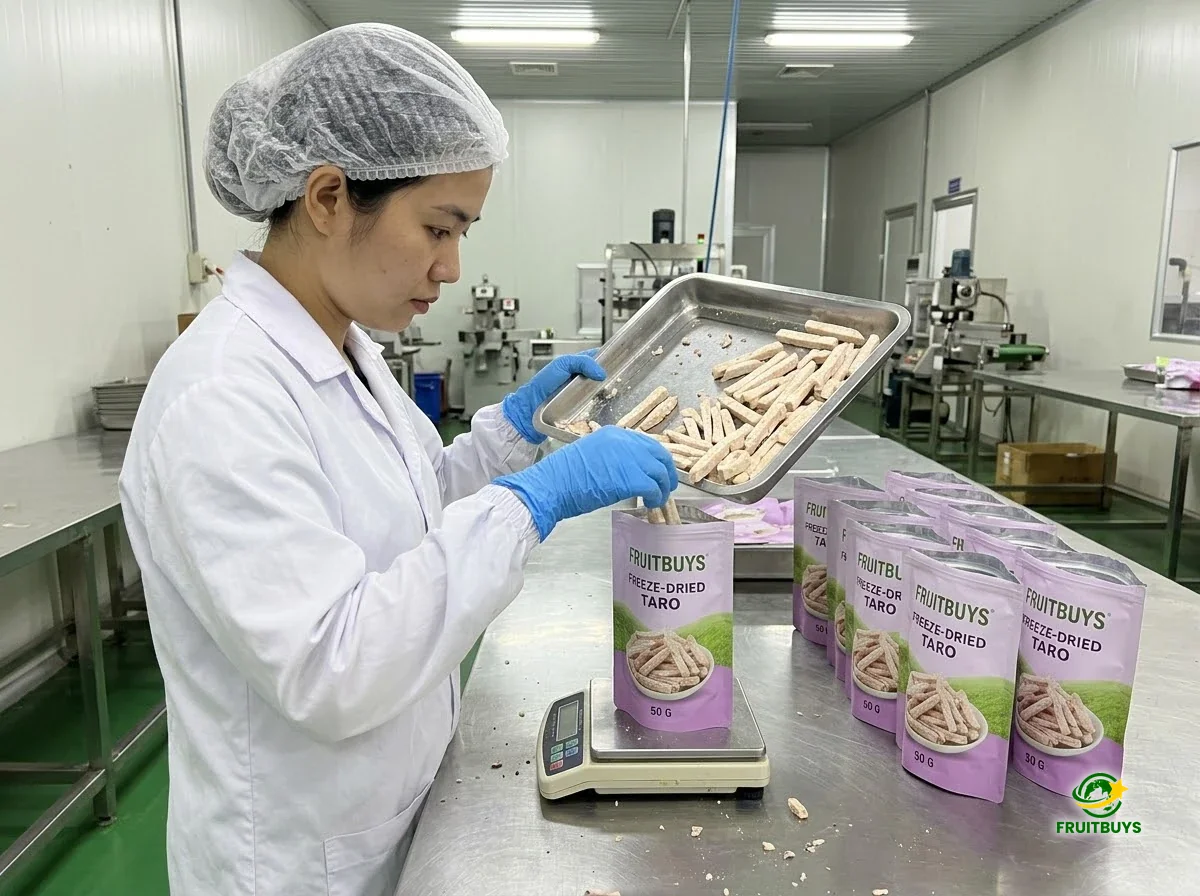
Freeze-dried taro in sticks, slices and dice covers the oil-free shelf, with ODM seasoning from 500 kg per SKU and retail packing in 30 g, 50 g, 100 g and 500 g foil zip pouches or your own sizes. For coatings, fillings and drink sachets in the same range, freeze-dried taro powder comes from the same supply.
For a private-label launch, retail pouches can be printed digitally from 3,000–5,000 pouches per SKU for a market test, or by rotogravure from 500 kg per SKU once the line repeats. A sealed retail pack of freeze-dried taro keeps 12 months at ≤25 °C, RH ≤60%; in the original sealed bulk bag in cool storage at ≤18 °C, RH ≤50%, it keeps 18–24 months.
If you are also weighing frozen or paste taro for a manufacturing line rather than a snack, the running-cost comparison is in frozen, paste or freeze-dried taro.
Start a taro snack programme
Tell us the snack you have in mind, your market and your flavour direction, and we send samples of the formats worth testing side by side, from plain sticks to seasoned versions.
FAQ
Are taro chips healthy?
Taro is a fibre-rich, low-fat starch. Oil-fried taro chips add about 7 g of fat per 28 g serving; freeze-dried taro sticks have about 0.1 g of fat and 3–4 g of fibre per 28 g, with no added oil or salt.
How many calories are in taro chips?
Standard oil-fried taro chips carry about 139 kcal per 28 g (498 kcal per 100 g). Freeze-dried taro carries about 100 kcal per 28 g (360–375 kcal per 100 g).
Are taro chips gluten-free?
Taro is naturally gluten-free. Check seasonings and shared lines on fried chips. Freeze-dried taro is 100% taro, and a lot gluten test is available for a gluten-free claim.
Are taro chips healthier than potato chips?
When both are fried in oil they are similar snacks. The bigger difference is the cooking method: an oil-free freeze-dried taro snack has a fraction of the fat of any fried chip.
What are freeze-dried taro chips?
Taro slices or sticks that are steamed through and freeze-dried, with no oil. They eat with a light, airy crunch that melts into a soft, starchy taro finish.
Do freeze-dried taro snacks stay crunchy?
Yes, in a sealed foil pouch at water activity ≤0.30. Once opened they pick up humidity, so single-serve or resealable pouches keep them crisp.
Can I make seasoned freeze-dried taro snacks under my own brand?
Yes. Seasoned freeze-dried taro sticks are available as ODM from 500 kg per SKU, packed in retail pouches under your label.