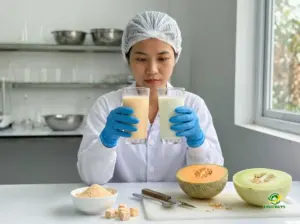
Cantaloupe, honeydew or Hami melon: which one is in your powder?
Cantaloupe, honeydew and Hami melon compared by rind, flesh colour, aroma and Brix, and what each does to the colour of a milk tea or dessert.
Cantaloupe, honeydew and Hami melon are all the same species, Cucumis melo, but they give a product three different results. Cantaloupe has a netted rind, orange flesh and a strong musky aroma. Honeydew has a smooth, pale rind, pale green flesh and a mild, clean sweetness. Hami melon is an elongated melon from western China with crisp, juicy flesh, usually pale orange.
For a drink or dessert, the flesh colour decides the colour of the finished cup, and the aroma decides whether consumers taste “melon” at all. Before you approve a “melon powder”, check which melon it is made from. FruitBuys supplies one: orange-flesh netted cantaloupe, freeze-dried as pieces and as powder.
How do you tell cantaloupe, honeydew and Hami melon apart?
| Cantaloupe (netted, orange flesh) | Honeydew | Hami melon | |
|---|---|---|---|
| Rind | Raised, cork-like net over green-grey or yellow skin | Smooth, waxy, creamy-white to pale yellow-green | Yellow to green, often lightly netted or streaked |
| Shape | Round to slightly oval | Round to oval | Elongated oval |
| Flesh colour | Orange to salmon | Pale green | Usually pale orange to cream |
| Texture | Soft, juicy, melting | Firm, juicy, smooth | Crisp, very juicy |
| Aroma | Strong, musky-floral; you smell it before you cut it | Mild, little musk | Sweet, light |
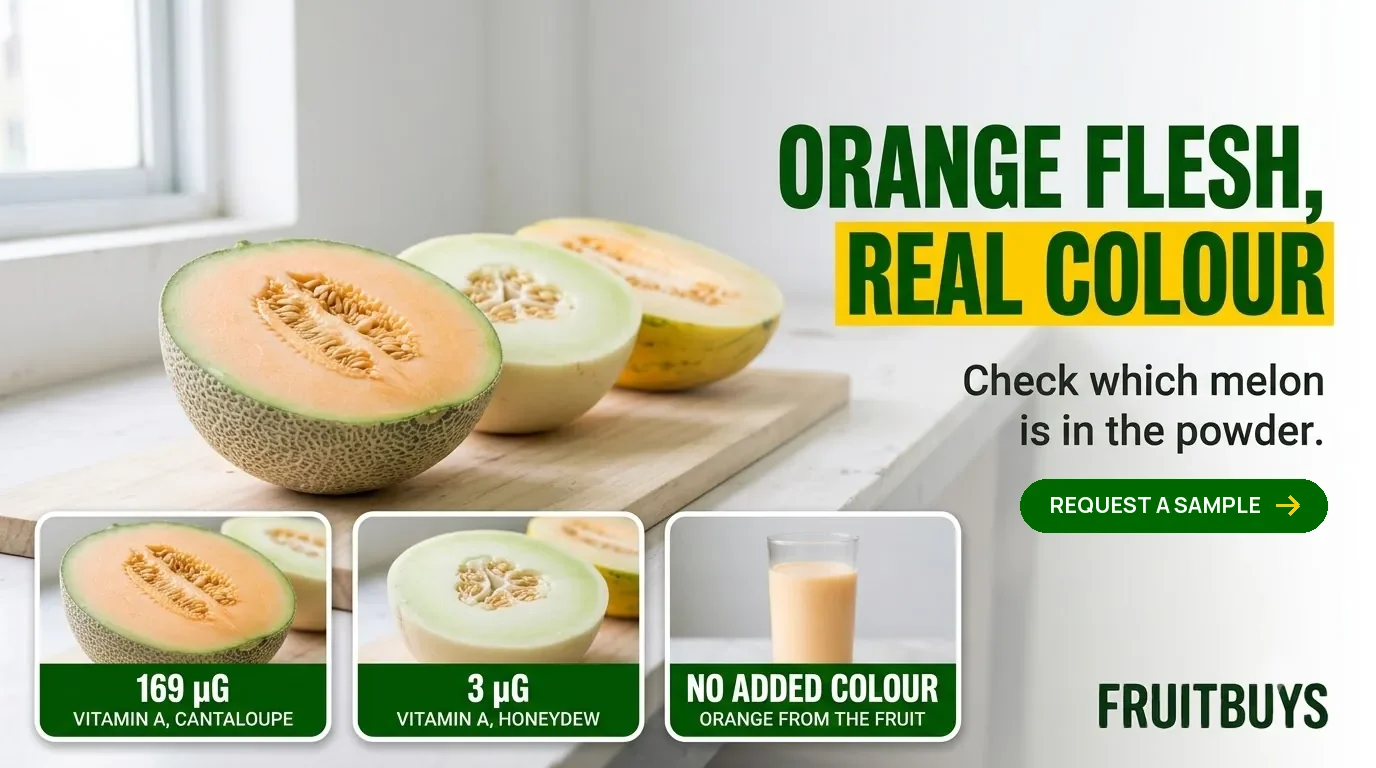
| Vitamin A, per 100 g fresh | 169 µg RAE, from beta-carotene | 3 µg RAE | Varies by type |
| Vitamin C, per 100 g fresh | 37 mg | 18 mg | Varies by type |
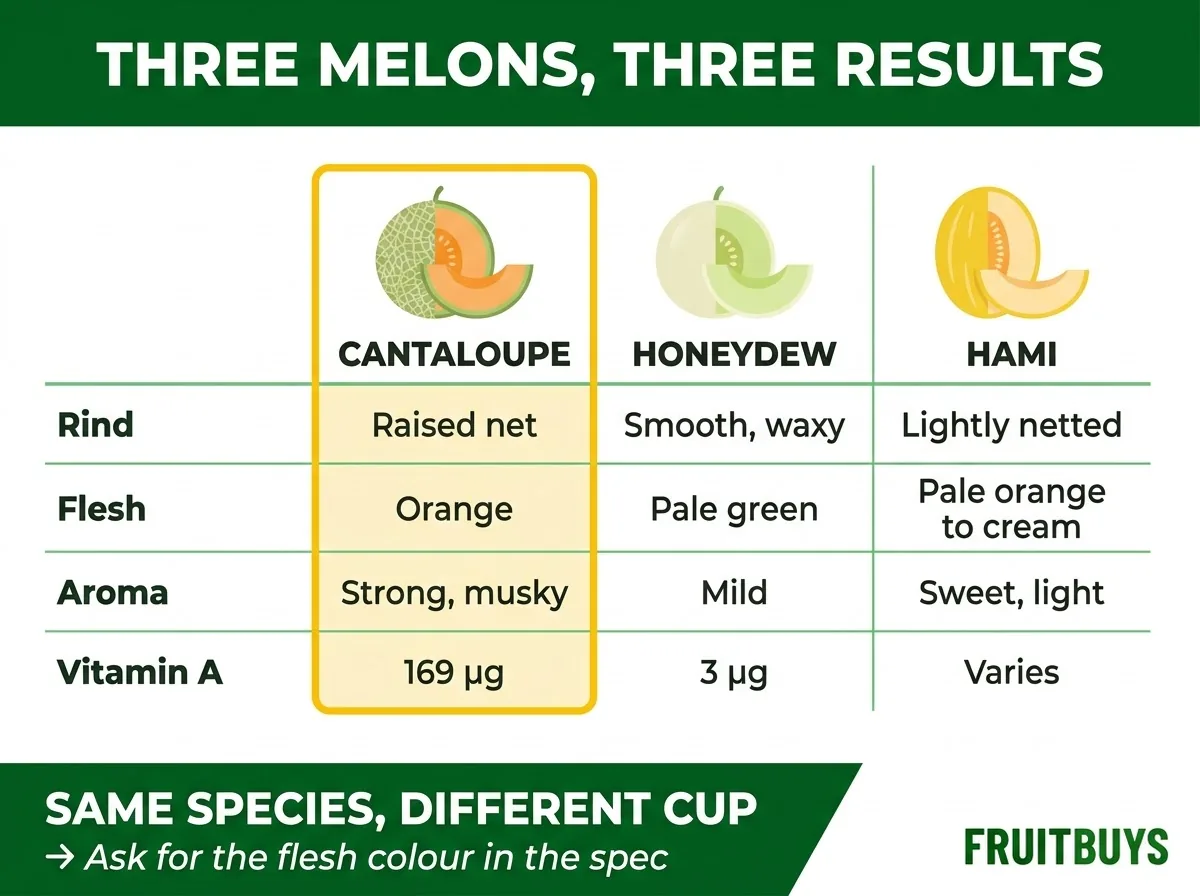
Vitamin values from USDA FoodData Central for raw cantaloupe and raw honeydew.
The vitamin A row explains the colour. Orange melon flesh is coloured by beta-carotene, and cantaloupe carries more than fifty times the vitamin A of honeydew. That pigment is what turns a milk tea or a scoop of ice cream light orange without any added colour.
Sweetness overlaps more than the names suggest. A ripe melon of any of the three can be very sweet; ripeness at harvest matters more than the type. FruitBuys accepts cantaloupe at ≥12 °Brix, typically 12–16 °Brix, and the dry-season lots from December to April run sweetest.
What is a Hami melon, and why do melon names change by market?
Hami melon takes its name from Hami, a city in Xinjiang in north-west China, where this type of melon has long been grown. In Chinese and Southeast Asian drink shops, “Hami melon” has become a flavour name in its own right, often used for melon milk teas and desserts with a pale orange colour and a light, sweet taste.
Melon names do not travel cleanly between markets:
| Name | What it usually means |
|---|---|
| Cantaloupe (US, Canada) | Netted, orange-fleshed melon, the type FruitBuys supplies |
| Muskmelon | In the US and India, often the same netted orange melon as above |
| Cantaloupe (much of Europe) | Often a smooth or ribbed, orange-fleshed melon such as Charentais, a different group from the netted type |
| Honeydew | Smooth, pale, green-fleshed melon |
| Hami melon | Elongated Chinese melon, crisp flesh |
| Dưa lưới (Vietnam) | “Net melon”: netted melons grown in net-houses, including orange-flesh cantaloupe |
For a specification, a common name is not enough. Ask for the flesh colour and, if it matters, the botanical group: FruitBuys cantaloupe is Cucumis melo L., reticulatus group, orange flesh. In Vietnam, common net-house cantaloupe varieties include Taki and TL3 with green-grey netted rind, and Kim Hoang Hau with a yellow rind; all have orange flesh.
What does each melon do to the colour of a drink or dessert?
| Melon | Colour in a milk tea or ice cream | What consumers taste |
|---|---|---|
| Cantaloupe | Light orange, from the fruit’s beta-carotene | A clear, musky “summer melon” note |
| Honeydew | Very pale, near white; the green fades in milk | Mild and fresh; the melon note is subtle |
| Hami | Pale orange to cream | Sweet and light |
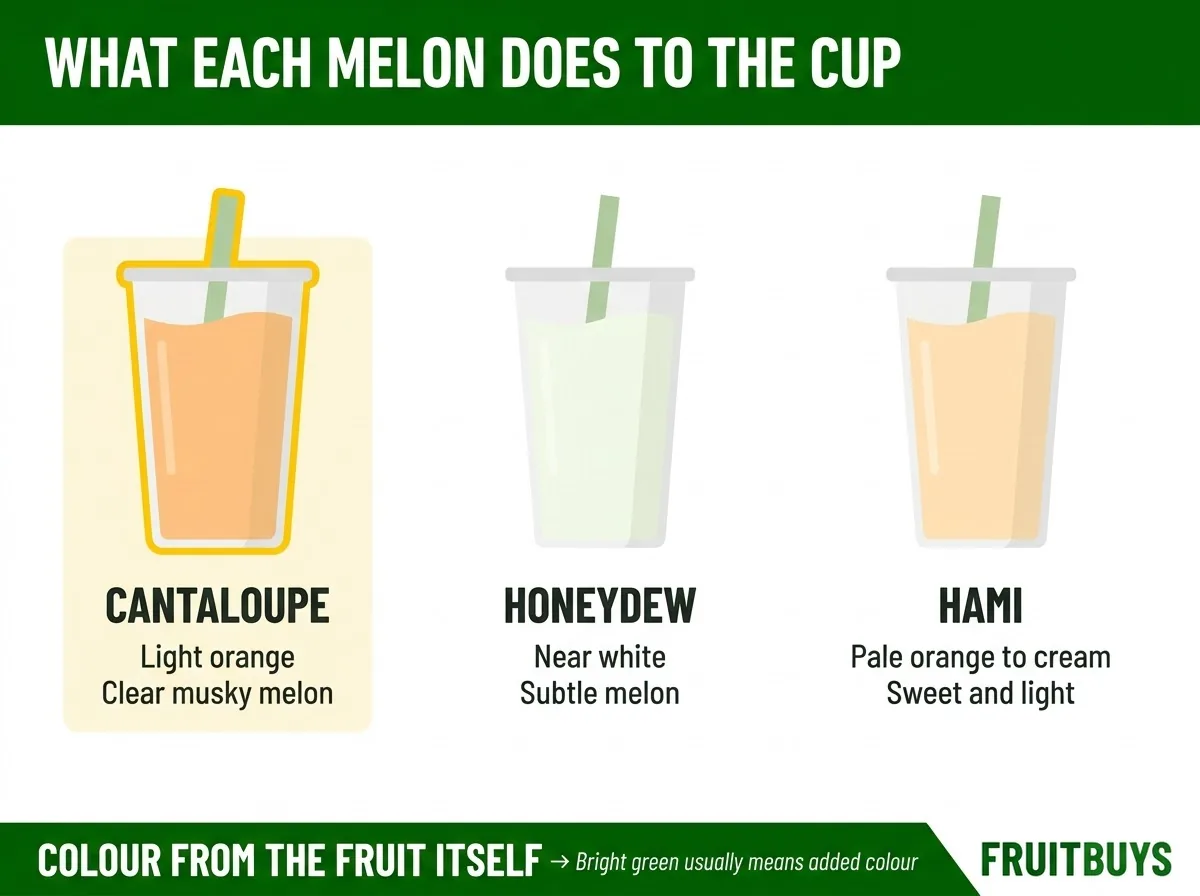
That is why a honeydew drink that looks bright green usually owes the colour to an added colour: honeydew’s own green is faint once milk goes in. Cantaloupe works the other way. Its colour and aroma both come from the fruit, so a cup made with real cantaloupe powder looks and tastes like melon without added colour or flavouring, and the label can say so. Doses and pairings for drinks are in the cantaloupe bubble tea and drinks guide.
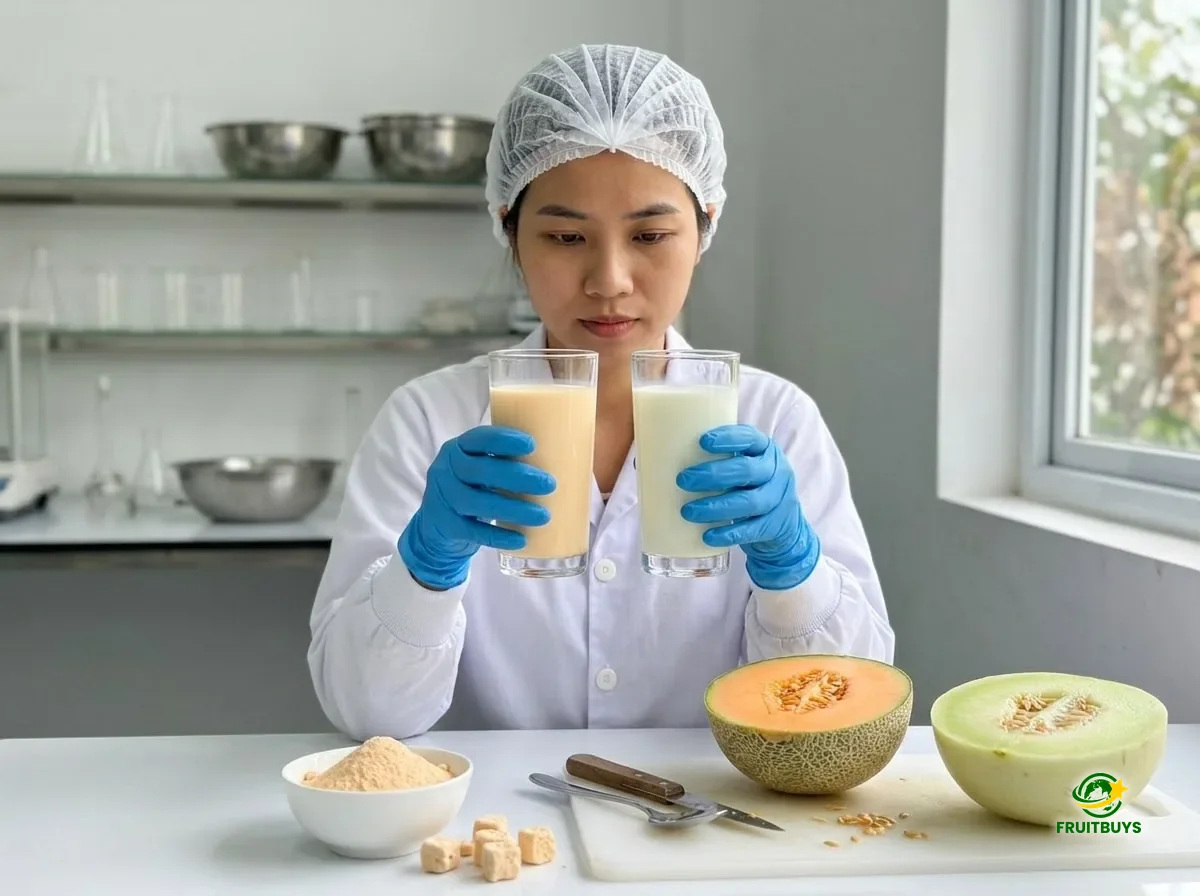
Which melon does FruitBuys supply, and why orange flesh?
FruitBuys supplies orange-flesh netted cantaloupe from Vietnamese net-houses, freeze-dried as slices, dice, granules and powder. We chose orange flesh because it does the most work in a product: the colour carries into the cup, the musky aroma survives freeze-drying, and the vitamin A and vitamin C give a brand nutrition claims to work with. The Vietnamese cantaloupe guide explains where and how it is grown.
If your concept is built on a pale green colour, cantaloupe will not deliver it, and FruitBuys does not supply honeydew. For a melon drink or dessert where you want the colour and taste to come from the fruit itself, orange-flesh cantaloupe is the one that gives both, and a sample in your own base shows the result faster than any spec sheet.
FAQ
Is cantaloupe the same as muskmelon?
In the US and India, usually yes: both names refer to the netted, orange-fleshed melon. In parts of Europe, “cantaloupe” can mean a smooth or ribbed orange melon such as Charentais.
Is Hami melon a type of cantaloupe?
Hami melon is a different type of Cucumis melo, grown mainly in Xinjiang, China, with crisp, juicy flesh. It is not the netted cantaloupe FruitBuys supplies.
Which melon has the most vitamin A?
Cantaloupe. Raw cantaloupe has 169 µg RAE of vitamin A per 100 g, against 3 µg for honeydew, because its orange flesh is rich in beta-carotene.
Does FruitBuys make honeydew or Hami melon powder?
No. FruitBuys freeze-dries orange-flesh netted cantaloupe only, as pieces and as powder.
Request a sample
Tell us the melon drink or dessert you are developing, and FruitBuys sends a cantaloupe powder sample so you can see the colour and taste in your own base.