
Freeze-dried, dehydrated or candied cantaloupe: which one fits your product?
Freeze-dried, dehydrated or candied cantaloupe compared: moisture, added sugar, texture, aroma, shelf life and the products each one suits.
Choose freeze-dried cantaloupe when your product needs a crisp piece, the fresh melon aroma and no added sugar. Choose dehydrated (hot-air dried) cantaloupe when you want a soft, chewy bite and a cooked, jammy sweetness. Candied cantaloupe is a confectionery ingredient: sugar-infused, sweet and soft.
The three forms start from the same fruit and end up as three different ingredients. The drying method decides the moisture, the texture, how much of the melon aroma survives, and what your label says about sugar. Getting it wrong usually means a reformulation: a cereal that goes soft, or a “no added sugar” pack that cannot carry the claim. Here is how they compare.
What changes between freeze-dried, dehydrated and candied cantaloupe?
| Freeze-dried | Dehydrated (hot-air dried) | Candied | |
|---|---|---|---|
| How it is made | Frozen at −30 to −40 °C, then dried by sublimation under vacuum; the fruit stays cold | Dried in warm air for many hours | Soaked in sugar syrup, then dried |
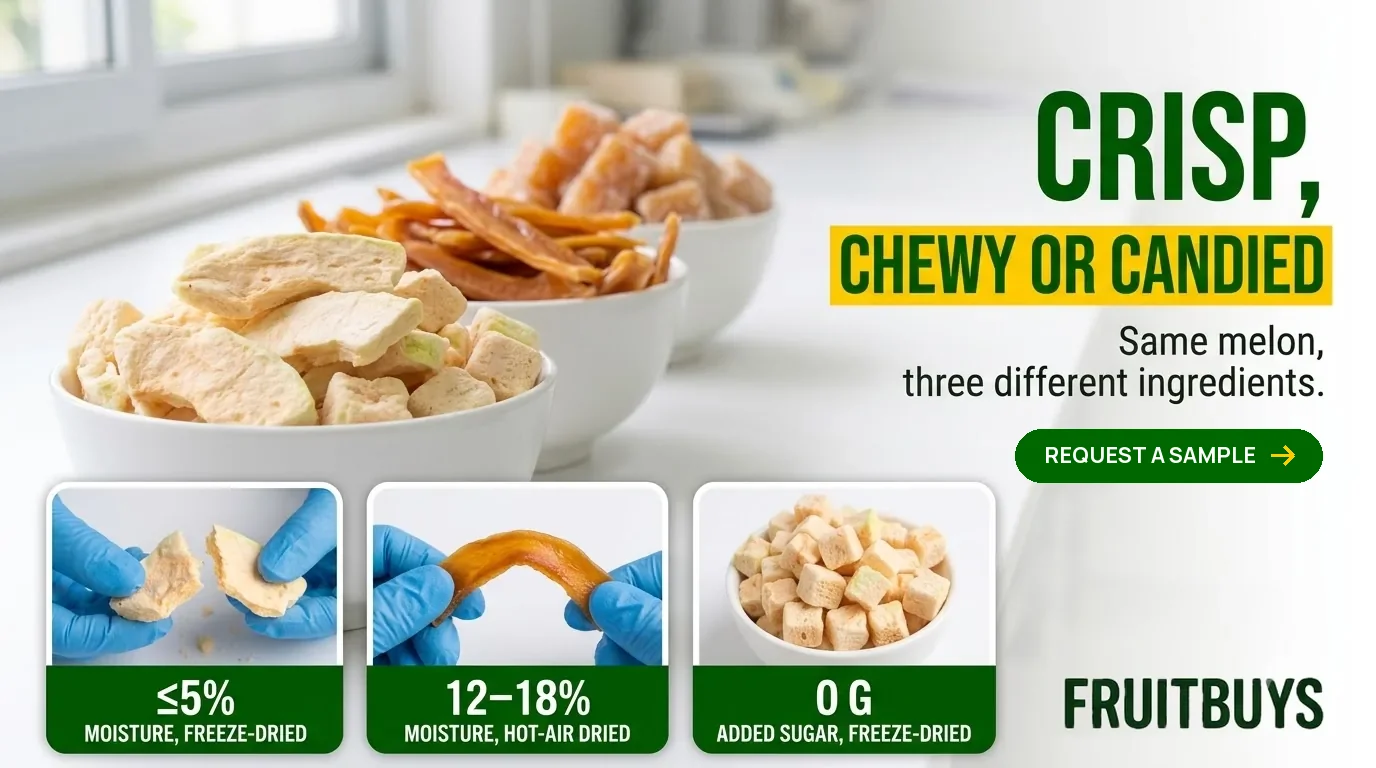
| Moisture | ≤5.0% (≤4.0% at release) | Typically 12–18%, which keeps it soft and chewy | Moderate; sugar holds the water |
| Water activity | ≤0.30 | Higher, in the soft-fruit range | Lowered mainly by the added sugar |
| Added sugar | 0 g | Usually none in plain fruit; check the label | Typically 30–50% of the finished weight, from syrup infusion |
| Texture | Crisp and porous; melts on the tongue; softens in 1–3 minutes in milk or yogurt | Chewy, dense, leathery | Soft, sticky or sugar-coated |
| Aroma and taste | Fresh, musky-floral melon | Cooked, caramel-like sweetness; less fresh melon | Mostly sweet; melon in the background |
| Colour | Natural light orange | Deeper orange to amber | Varies; colour is sometimes added |
| Weight versus fresh | About one-fifteenth of the whole fruit | Heavier per serving; more water left | Heaviest; sugar adds weight |
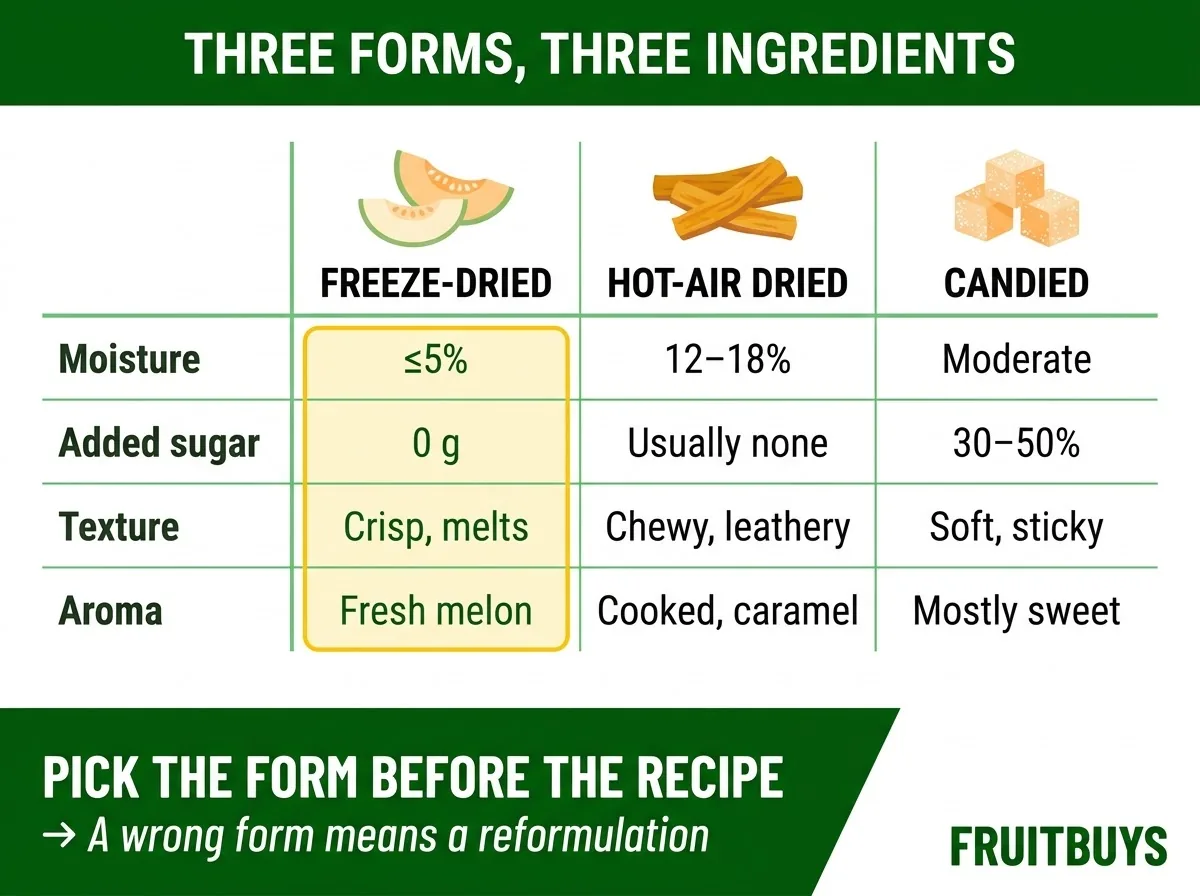
The table explains most product decisions on its own. In a dry mix, freeze-dried cantaloupe stays crisp because there is so little water left; a chewy dehydrated piece at 12–18% moisture carries enough water to soften cereal around it over the shelf life. In a “no added sugar” product, candied melon is out from the start.
Why does hot-air drying flatten cantaloupe aroma?
Because cantaloupe’s aroma is made of light, volatile compounds, and warm air carries them off with the water. A hot-air dryer runs for many hours with the fruit warm and wet; much of the musky, floral top note leaves with the steam. At the same time, the fruit’s sugars start to brown, which adds cooked, caramel notes. The result tastes sweet and pleasant, but it tastes of cooked melon.
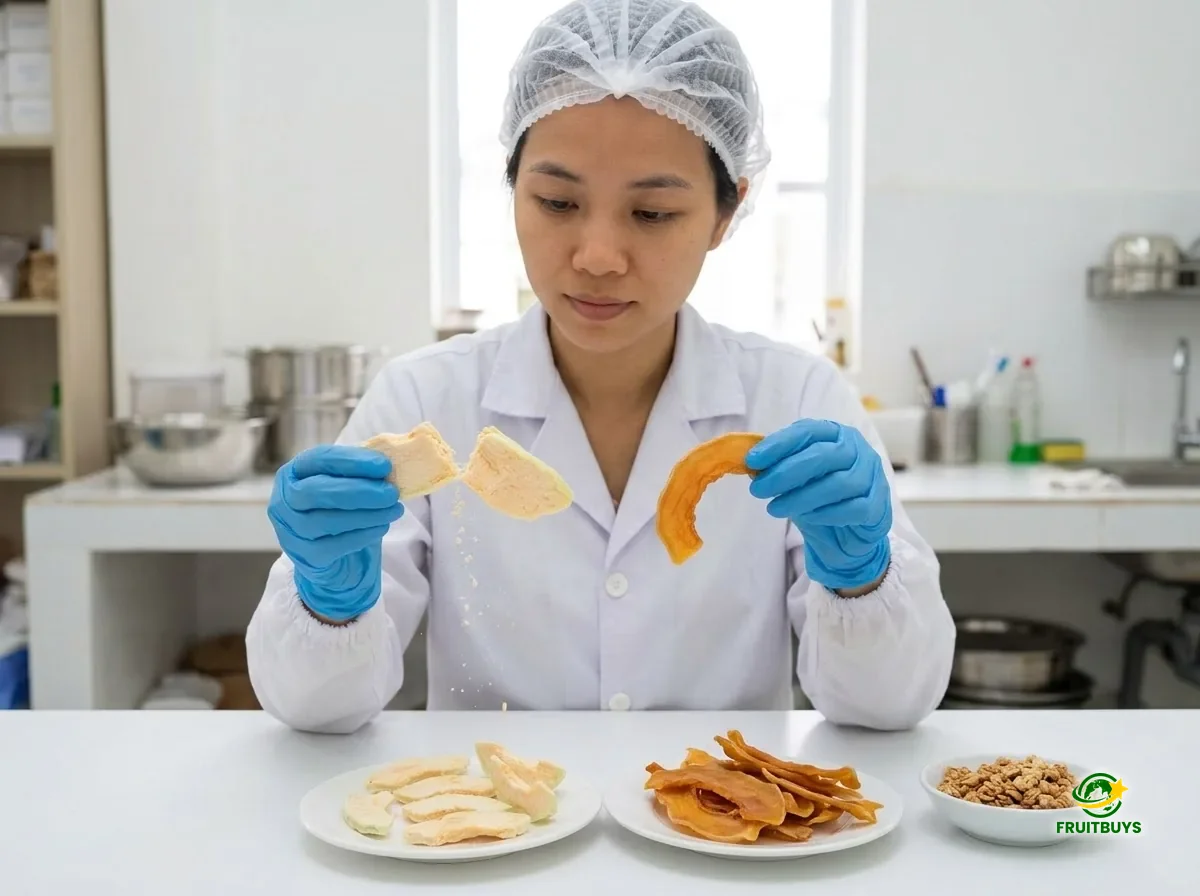
Freeze-drying keeps the fruit frozen while the water leaves as vapour, so the product never gets warm enough for those reactions to run, and more of the fresh aroma stays in the porous structure. The same logic applies in your plant: cantaloupe aroma fades above about 70 °C, so freeze-dried pieces and powder go in after baking or pasteurisation.
Which one is really “no sugar added”?
| Form | Can the label say “no added sugar”? |
|---|---|
| Freeze-dried, 100% fruit | Yes. The only ingredient is cantaloupe; the US panel shows 0 g added sugars, and an EU claim carries “contains naturally occurring sugars” |
| Dehydrated, plain | Yes, if nothing was added. Check the ingredient list for sugar, juice concentrate or syrup |
| Candied | No. Sugar is part of the process |
Cantaloupe is naturally sweet: about 70% of freeze-dried cantaloupe is the fruit’s own sugar. That sweetness lets a cereal, granola or snack brand cut added sugar elsewhere in the recipe while keeping a sweet bite.
How do they compare on nutrition?
Per 100 g, typical values:
| Fresh cantaloupe | Freeze-dried cantaloupe | |
|---|---|---|
| Energy | 34 kcal | 350 kcal |
| Sugars | 7.9 g | 70 g, 0 g added |
| Fibre | 0.9 g | 8.8–9 g |
| Potassium | 267 mg | 2,620 mg |
| Vitamin C | 37 mg | 200–350 mg |
Fresh values from USDA FoodData Central. Freeze-dried: typical values for 100% freeze-dried cantaloupe; natural variation by origin, season and ripeness applies. Lot nutrition panel available for label artwork.
Freeze-drying takes out the water and leaves the rest, so every nutrient is about ten times more concentrated by weight. A 10 g handful of freeze-dried cantaloupe carries the flesh of roughly 80–100 g of fresh melon. Heat-sensitive vitamin C survives freeze-drying better than long hot-air drying, because the fruit stays cold. For the full nutrition picture, see is cantaloupe good for you.
Which form fits which product?
| Your product | Freeze-dried cantaloupe as | Why |
|---|---|---|
| Breakfast cereal, granola, trail mix | Dice 5–10 mm or slices | Stays crisp in a dry pack; adds sweetness without added sugar |
| Chocolate bark, bars, white chocolate | Granules 2–5 mm or powder | Small, dry pieces that do not bleed moisture into chocolate |
| Retail snack pouches | Wedge slices | A crisp, melt-in-the-mouth snack with one ingredient |
| Yogurt cups, overnight oats, smoothie bowls | Dice 10 mm in a topping cup or sachet | Softens in 1–3 minutes into a juicy piece once mixed |
| Milk tea, smoothies, ice cream | Powder | Real melon colour and aroma; see cantaloupe powder |
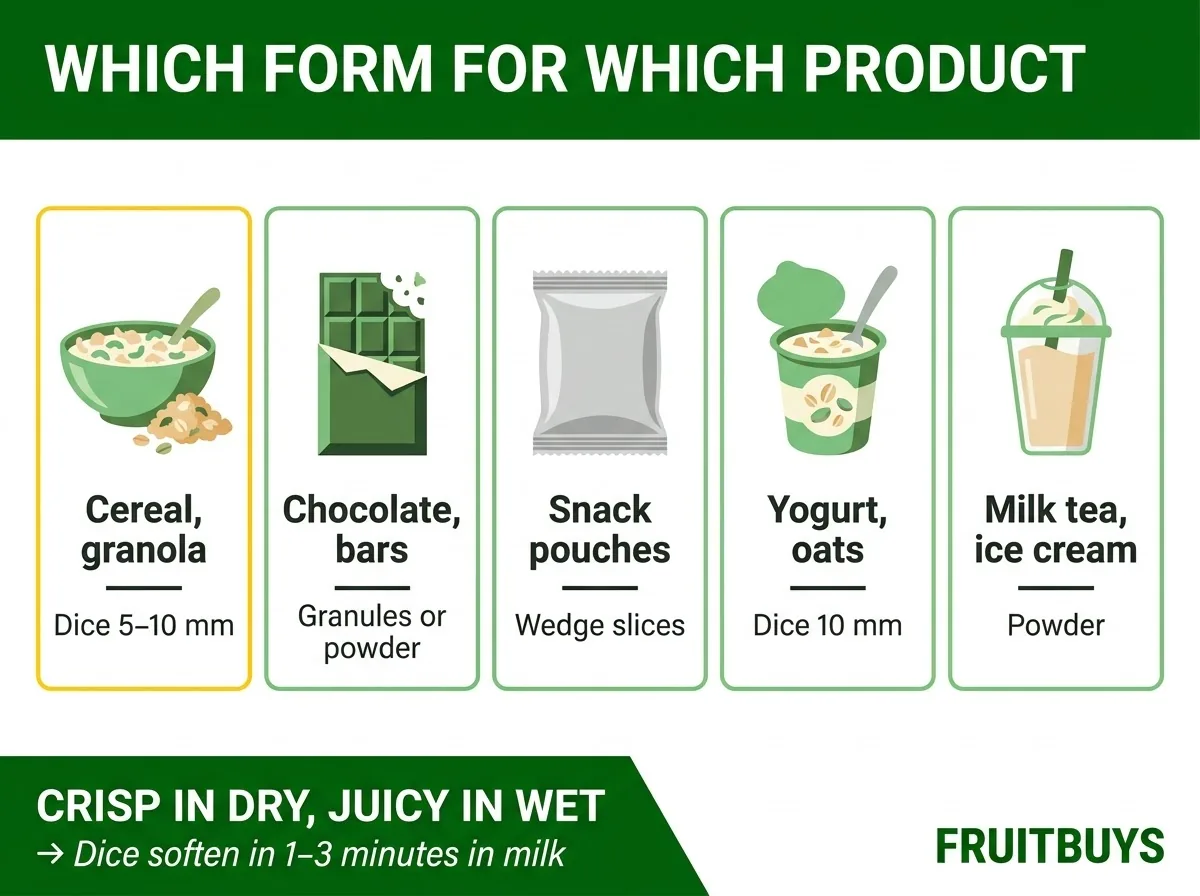
When a buyer tells me their line needs a softer bite, I look at where the fruit ends up. In yogurt, milk or overnight oats, freeze-dried dice turn soft and juicy within minutes, so the consumer gets a fresh-tasting piece of melon with no sugar syrup involved. In a dry snack, the crisp texture is the selling point. Freeze-dried cantaloupe will not give a chewy, leathery bite on its own, so a recipe built around that texture needs its liquid phase to do the softening.
Freeze-dried cantaloupe costs more per kilogram than hot-air dried melon, because it takes 13–17 kg of whole fruit and a 24–32-hour drying cycle to make one kilogram. Per serving the gap narrows: the piece weighs far less, and the conversion guide shows where that cost comes from.
FAQ
Is dehydrated cantaloupe healthy?
Plain dehydrated cantaloupe keeps the fruit’s fibre and minerals, but long hot-air drying costs more of the heat-sensitive vitamin C than freeze-drying does. Check the label for added sugar.
Why is freeze-dried cantaloupe so much lighter?
It keeps almost none of the water: at ≤5% moisture, it weighs about one-fifteenth of the whole fresh fruit it came from.
Can freeze-dried cantaloupe be rehydrated?
Yes. Pieces soften in 1–3 minutes in water, milk or yogurt, and powder disperses in cold liquids with stirring.
Is dried cantaloupe the same as freeze-dried cantaloupe?
No. “Dried cantaloupe” usually means hot-air dried or candied melon, which is chewy and sweeter. Freeze-dried cantaloupe is crisp, keeps the fresh melon aroma and contains no added sugar.
Request a sample
Tell us your product and how the fruit will be used, and FruitBuys sends freeze-dried cantaloupe in the cut that fits, so you can test it side by side with the form you use today.