
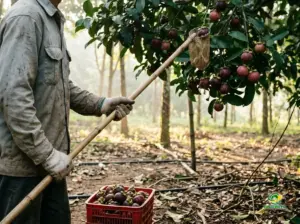
Where and when is Vietnam’s mangosteen harvested, and when should you book freeze-dried supply?
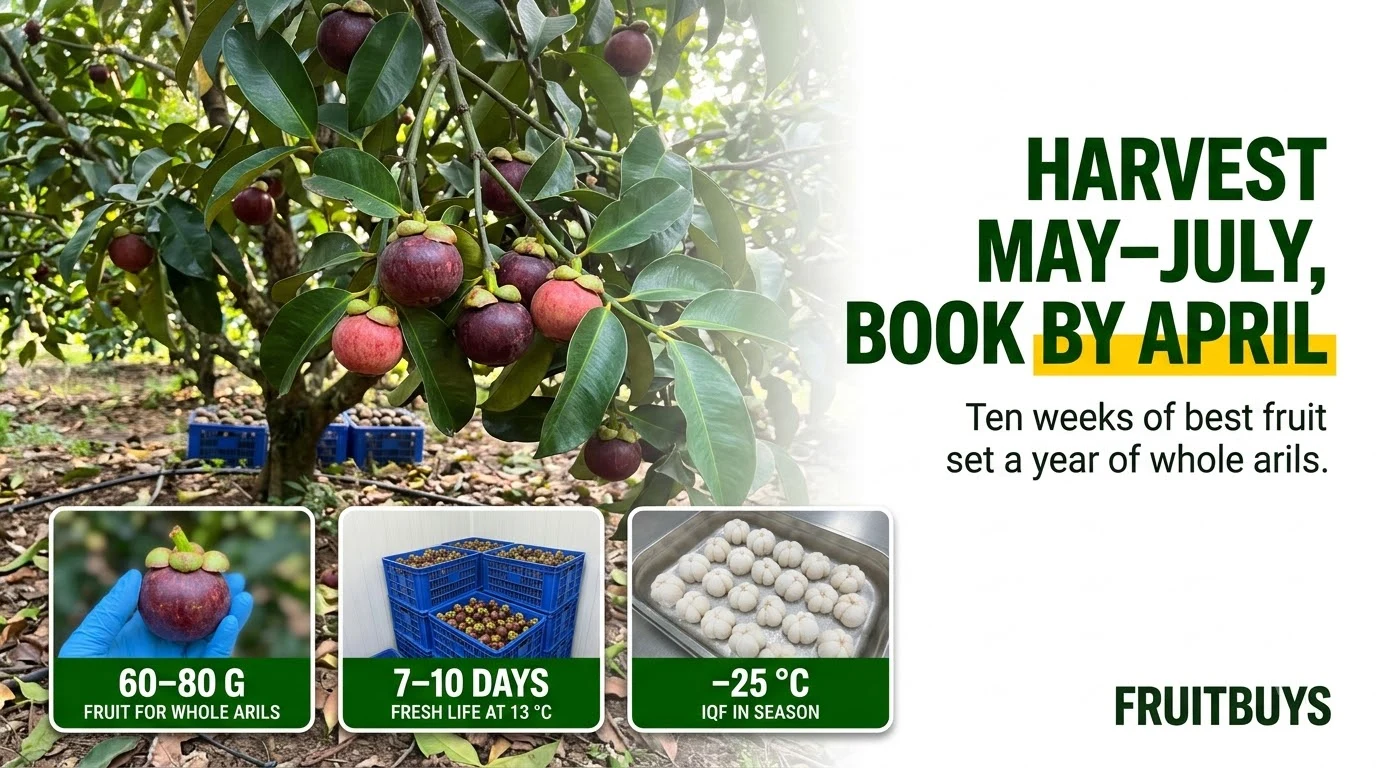
Vietnam’s mangosteen comes from the Southeast and the Mekong Delta, the main crop runs from May to August, and the best fruit for freeze-drying arrives in a window of about ten weeks, from May to mid-July. That short window shapes everything a buyer plans: which format you can get, how the arils look, and when your volume must be confirmed. For freeze-dried whole arils, the practical deadline is before April. The best arils of that window are frozen at −25 °C and freeze-dried to order, so containers ship all year; what April decides is how many whole arils exist for the next twelve months.
Where does Vietnam’s mangosteen grow?
In three regions of the south, each with its own character.
| Region | Provinces | What the fruit is known for |
|---|---|---|
| Southeast, the historic heartland | Lai Thieu (Binh Duong), now part of Ho Chi Minh City | Old orchards, some more than a century old; more than 1,000 ha; one of Vietnam’s best-known local specialties |
| Mekong Delta river islands | Cho Lach (Ben Tre), Vinh Long, Tra Vinh, with Can Tho, Hau Giang and Soc Trang | Orchards often intercropped with other fruit trees; thick, sweet, mild flesh |
| Southeast red-basalt uplands | Dong Nai, Ba Ria | Larger fruit with thinner rind; VietGAP orchards supplying export |
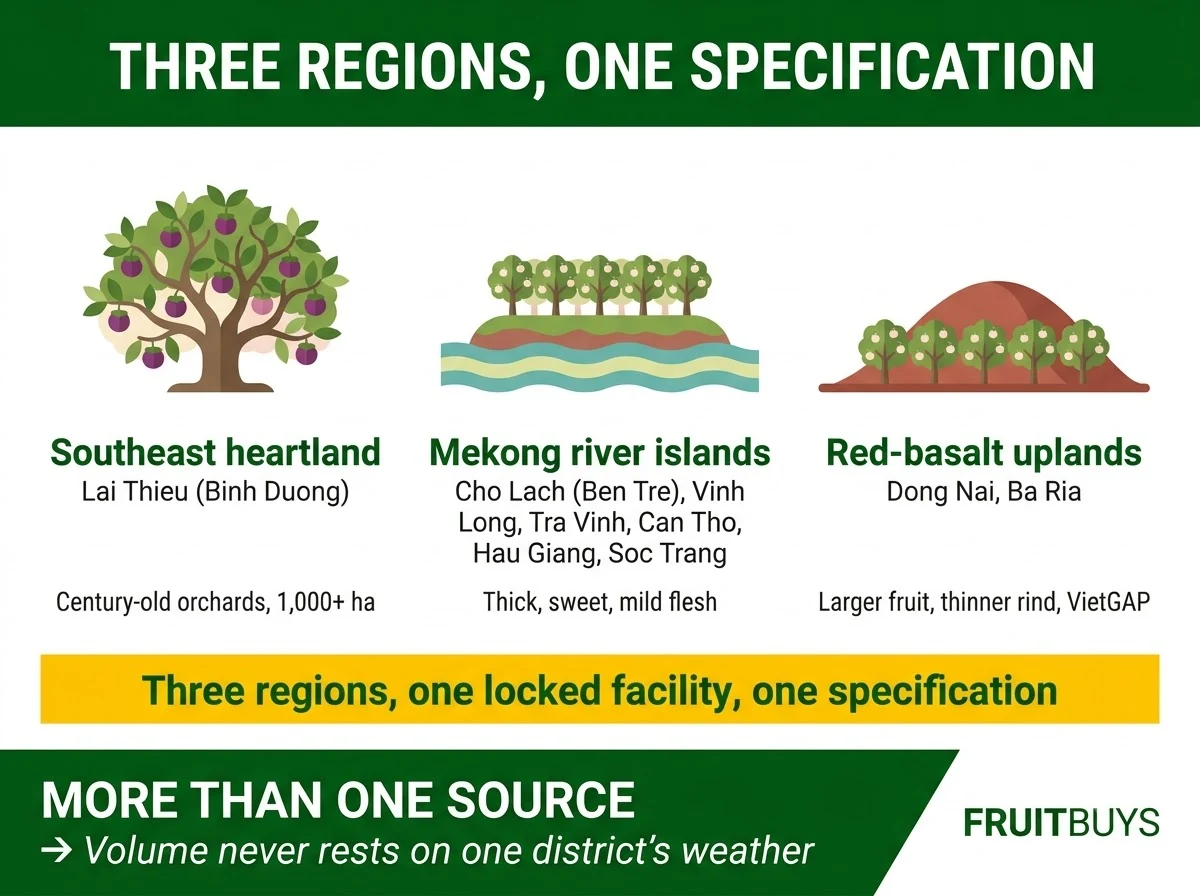
For a buyer, the spread is the point. Three regions with slightly different timing and soils give a freeze-drying programme more than one source of fruit inside a short season, so volume does not depend on a single district’s weather. FruitBuys coordinates fruit across these regions and runs it through one locked partner facility per contract, so the regional mix never changes the specification you approved.
When is the main harvest?
Mangosteen trees flower around the first month of the lunar calendar, set fruit, and ripen into the summer. Across the south, the main crop runs from May to August:
- Lai Thieu typically harvests from about May to July.
- Wider Binh Duong can run from June into September.
- The Mekong Delta enters full season from early June.
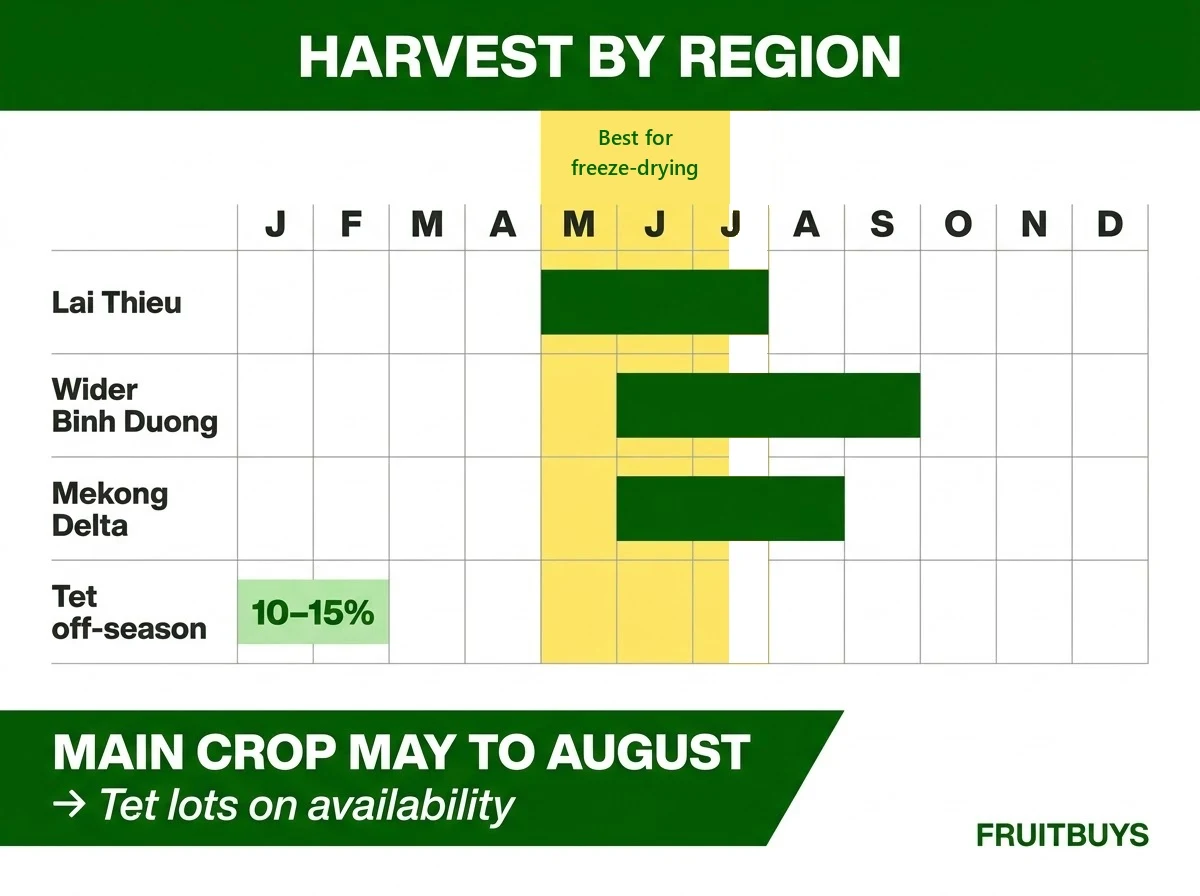
There is also a small off-season crop around Tet, the Lunar New Year, at about 10–15% of main-season volume and not steady from year to year. It cannot carry a year-round programme, but scarce fruit has its own use: for a gift box or a limited spring edition, a small Tet lot gives a brand something few shelves will have in winter. It is offered on availability and works best pre-booked.
How did the 2026 crop run?
Well. Growers in Lai Thieu reported a heavier and cleaner crop than the year before: the June rains arrived late, so less yellow latex seeped into the fruit and the rind coloured evenly. For a buyer that matters in two ways. Main-season arils frozen this year came from good fruit, and the season showed again how much quality depends on the weeks just before harvest, which is why FruitBuys draws fruit from several regions rather than one district.
Vietnam or Thailand: what does a second origin change?
Resilience, mostly. Thailand is the largest mangosteen exporter, and its 2026 output was forecast in March to fall by about 15%, to around 280,000 tonnes. A buyer sourcing freeze-dried mangosteen from one origin carries that origin’s weather and price swings in full. Adding Vietnam spreads the risk across different orchards, rainfall patterns and harvest timing. Freeze-dried arils and diced enter the EU at 0% from any origin, and for powder, Vietnamese origin with a Form EUR.1 removes the third-country duty under the EU–Vietnam trade agreement.
Why is May to mid-July the best window for freeze-drying?
Because that is when the fruit carries the most of what freeze-drying preserves. In the first half of the season, arils are large, firm and white, at the top of the 16–19 °Brix range. Freeze-drying keeps everything except the water, so sweeter, firmer fruit gives a sweeter, brighter, more complete aril in the bag.
Three things decide whether a fruit is right for the dryer:
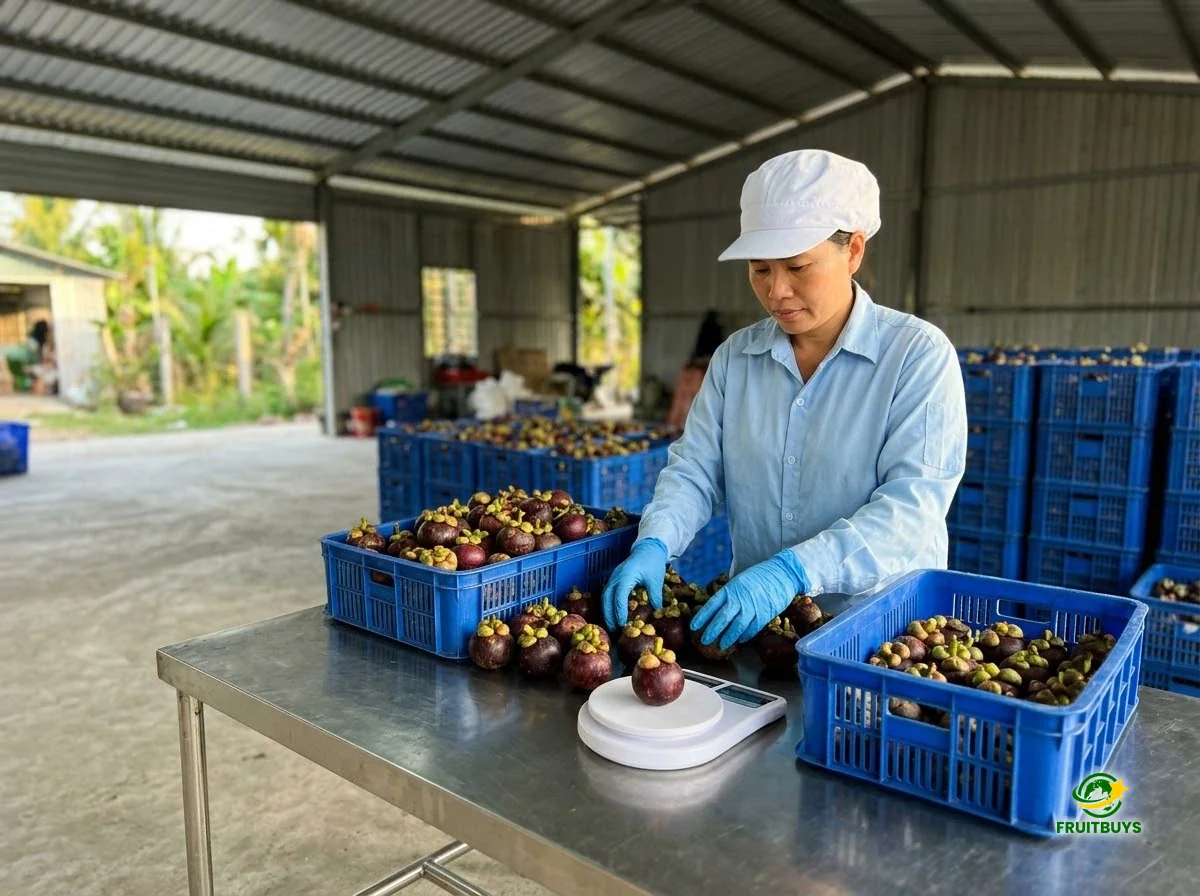
- Size. Fruit of about 60–80 g gives arils large enough to look like the fresh fruit in a window pouch.
- Picking time. Fruit is picked in the early morning, before the heat of the day, so it reaches the peeling table cool and firm.
- Speed. Fresh mangosteen holds for only 7–10 days at 13 °C. Every day between the tree and the freezer costs colour and texture, so fruit is peeled and frozen while it is fresh.
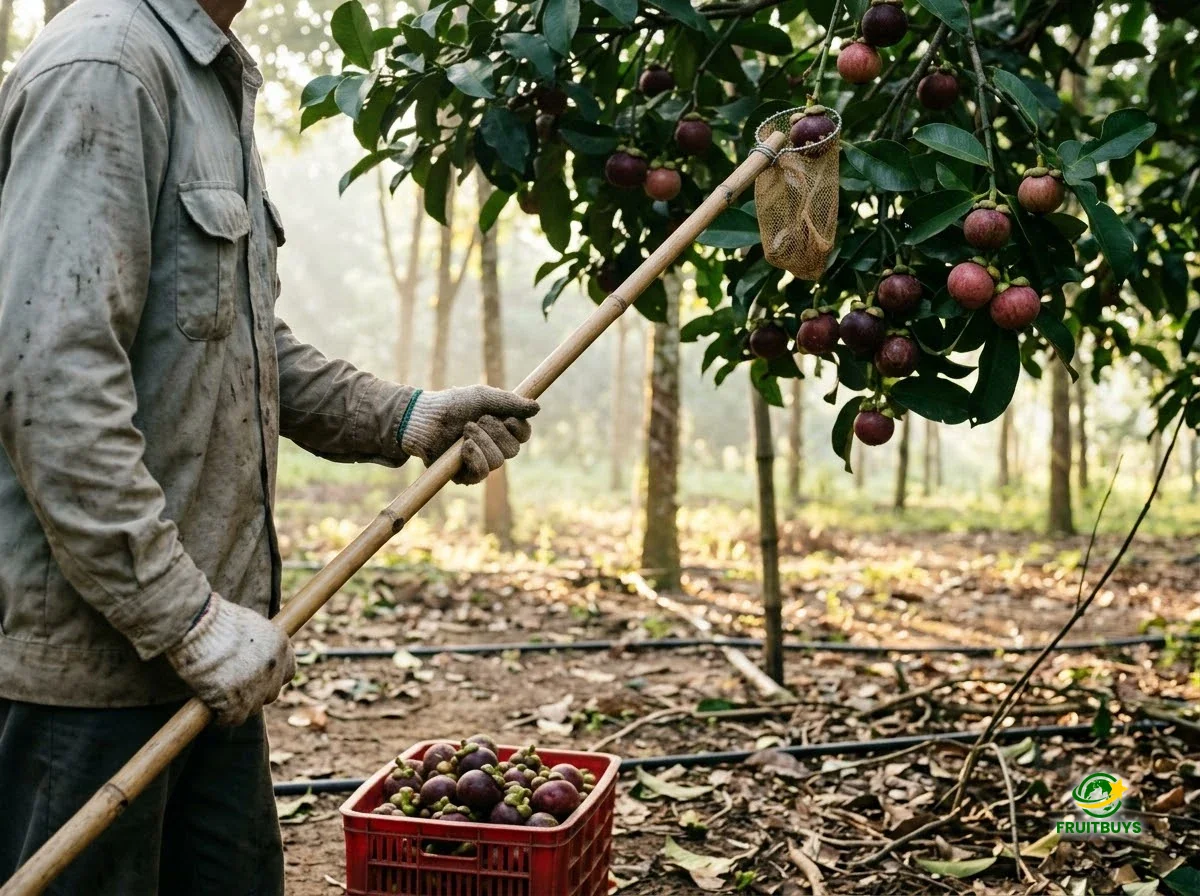
Later in the season, after weeks of rain, the trees take up water quickly. Fruit gets softer and less even, and in wet years some arils show the rainy-season disorders every Southern grower knows: translucent, glassy flesh and traces of yellow latex inside the segments. That is the main reason the first ten weeks are worth planning for. Late-season fruit still makes good freeze-dried mangosteen with the same flavour, so it is put to work in diced and powder, where shape and perfect whiteness matter less.
How does the season decide which format you can buy?
| Period | Fruit | Best format | Booking |
|---|---|---|---|
| May – mid-July | Main season, large and firm | Whole arils, tray-packed arils, diced | Confirm before April |
| Mid-July – September | Late season, softer, more variable | Diced, powder | Through the season |
| Around Tet | Small off-season crop | Top-up lots | On availability |
| Rest of the year | No fresh crop | All formats, freeze-dried to order from arils frozen in season | Ships any month |
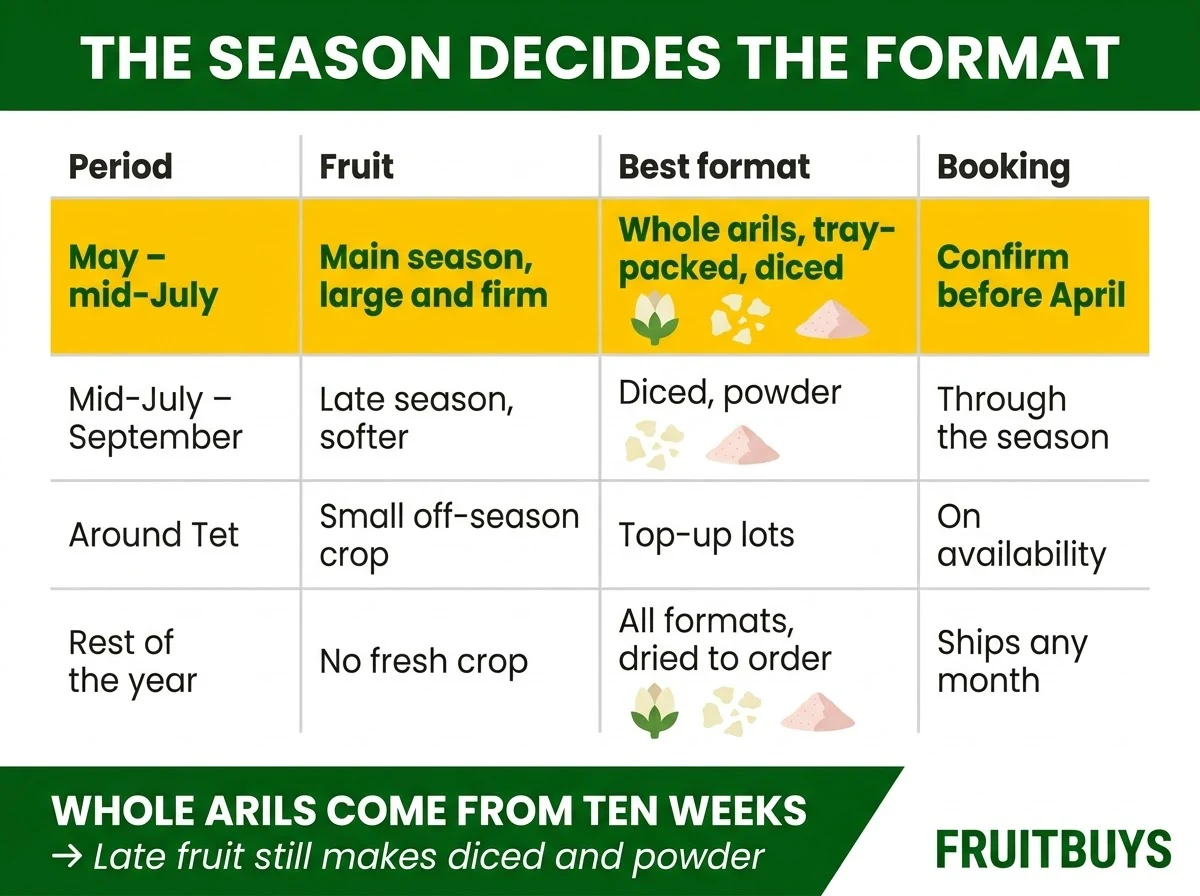
The table is the reason freeze-dried mangosteen rewards early planners. Whole arils are where the retail value sits, and they come from the first ten weeks of fruit. A brand that confirms volume before April gets main-season whole arils. A brand that comes later still gets supply, as diced or powder, which suits cereal, chocolate and beverages just as well. Format choice by application is covered in which freeze-dried mangosteen format fits your product.
How do you keep supply through the year from a ten-week crop?
By freezing the fruit, not the calendar. The best arils of May to mid-July are peeled and IQF-frozen at −25 °C within the fruit’s short life, then freeze-dried to order through the year. Your containers ship in the months you need them, each with a recent production date, and freeze-dried mangosteen then holds 12 months at ≤25 °C, RH ≤60%, or 18–24 months in cool storage at ≤18 °C, RH ≤50%, in your own warehouse.
That turns a short harvest into a stable supply line: one decision in spring secures main-season quality for the year, and your customers never see an off-season gap. Packing and storage are covered in how freeze-dried mangosteen should be packed and loaded.
Why confirm volume before April?
Because the fruit for May has to be secured before it ripens. Orchard volume for the main season is committed with cooperatives from around March, before the first fruit is picked. Volume confirmed before April is planned into that commitment, and into the drying schedule of the partner facility locked to your contract.
Capacity of up to 100 tonnes a year of finished freeze-dried product across multi-fruit lines is allocated by harvest window, and mangosteen volume is set by pre-season confirmation. Confirming early secures the fruit, the peelers and the freezer space in the busiest weeks of the year. It also beats the local market to the early fruit: green mangosteen, peeled for the salads Lai Thieu is known for, draws on the same orchards and the same skilled hands at the start of the season.
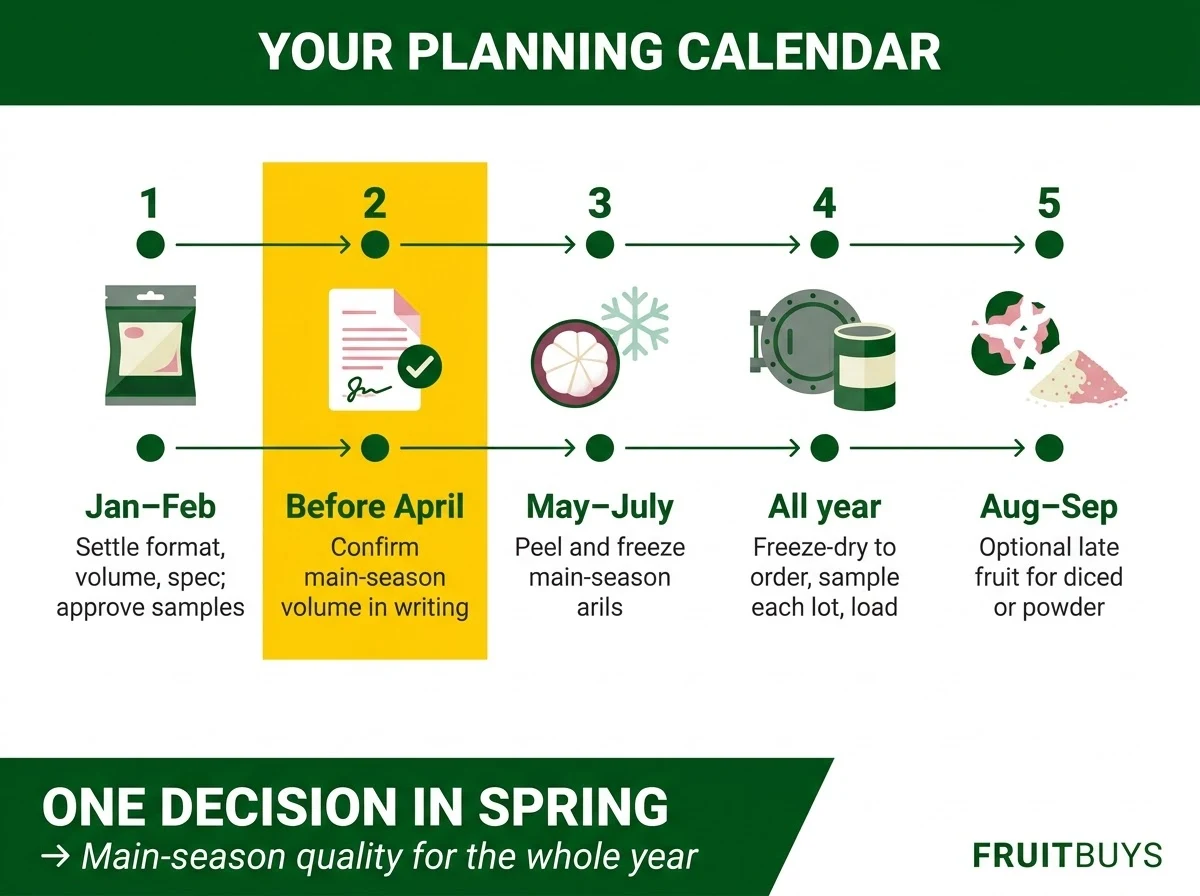
For your planning calendar:
- January–February: settle format, volume and specification; approve samples from stock.
- Before April: confirm main-season volume in writing.
- May–July: peeling and freezing of main-season arils.
- Through the year: freeze-drying to order, pre-shipment sample from each packed lot, container loading in your delivery months.
- August–September: optional late-season fruit for diced or powder.
When does Vietnam’s season not fit your plan?
When you decide after April that you need more whole arils than were frozen in the peak window. The trees fruit once a year, so whole-aril volume for the next twelve months is set in spring. The balance can still be supplied as diced or powder from main or late-season fruit, which suits cereal, chocolate and drinks just as well, and a small Tet crop can top up a gift or spring edition. For next year’s whole arils, put the April date in your planning calendar now.
Book your main-season volume
Tell us your format, annual volume and delivery months. FruitBuys returns a seasonal plan: what is packed when, how much to hold in cool storage, and the date by which volume needs confirming. Full product details are on the freeze-dried mangosteen page. The complete buyer checklist is in what to check before buying freeze-dried mangosteen in bulk.
FAQ
When is mangosteen season in Vietnam?
The main crop runs from May to August, with a small, irregular off-season crop around the Lunar New Year.
When is the best time to buy freeze-dried mangosteen?
Confirm volume before April. Main-season arils from May to mid-July are frozen and freeze-dried to order, so shipments run all year.
Where does Vietnam’s mangosteen grow?
In Lai Thieu (Binh Duong) in the Southeast, Cho Lach (Ben Tre) and the other Mekong Delta orchards of Vinh Long, Tra Vinh, Can Tho, Hau Giang and Soc Trang, and in Dong Nai and Ba Ria.
Can I get freeze-dried mangosteen outside the season?
Yes. Arils are IQF-frozen at −25 °C in season and freeze-dried to order, so every format ships in any month.
Is late-season mangosteen lower quality?
It has the same flavour but softer, less even arils, so it is used for diced and powder rather than whole arils.
How fast must fresh mangosteen be processed?
Within its fresh life of about 7–10 days at 13 °C; the sooner it is peeled and frozen, the better the colour and texture.



