What are the benefits of passion fruit powder?
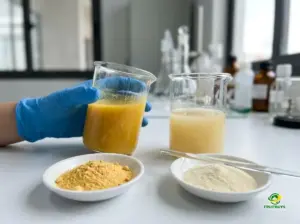
Open a bag of freeze-dried passion fruit powder and the smell arrives before the spoon does: sharp, tropical, unmistakably the fruit. That is the first benefit, and the rest follow from it. Freeze-dried passion fruit powder is the fruit’s pulp with the water taken out, so a few grams bring real flavour, a natural golden colour, natural acidity and fibre, with nothing added. For a home cook it means passion fruit all year without cutting a single fruit. For a drinks or snack brand it means a one-word ingredient line and a dose of 2–4% where a spray-dried powder needs three times as much.
How much of that you get depends on which powder you buy. The sections below show what to look for.
What does passion fruit powder add to a recipe?
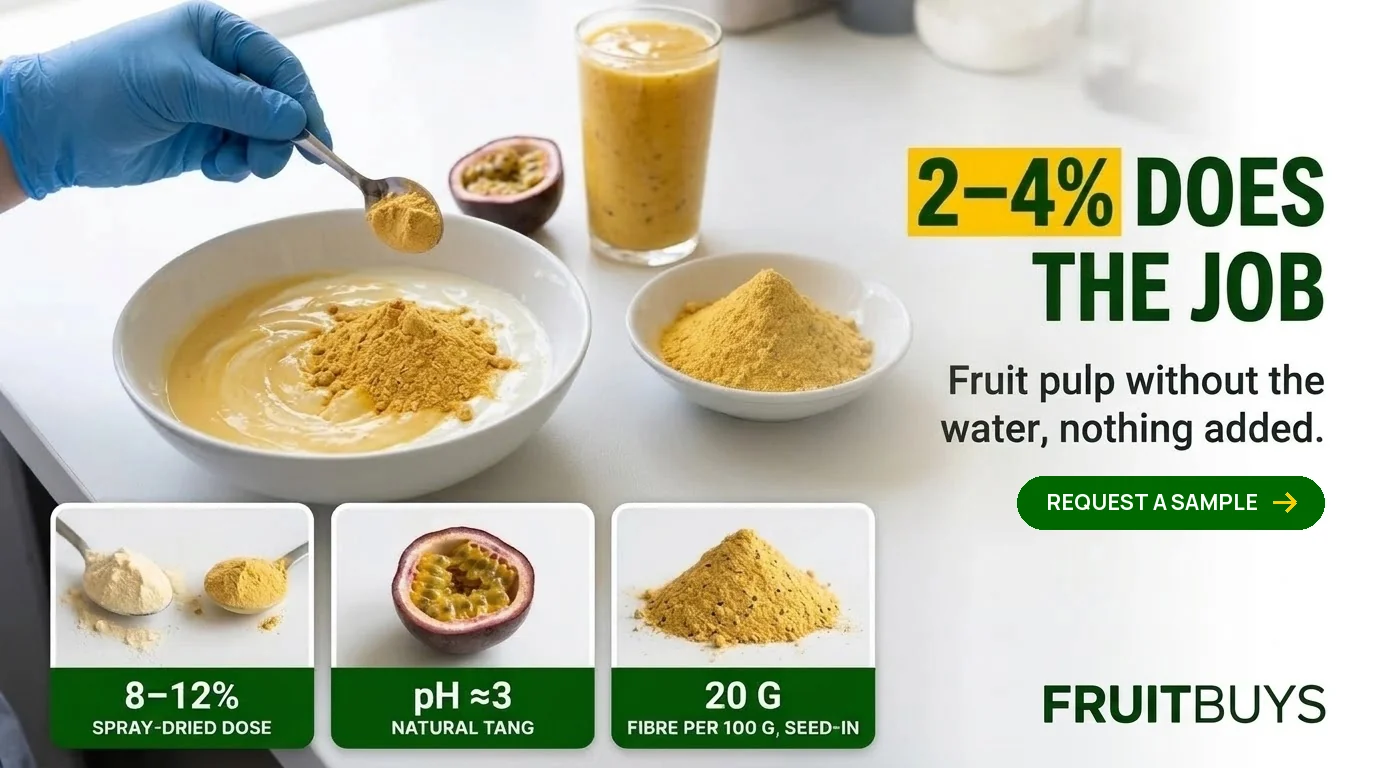
Four things that are hard to get from one ingredient anywhere else:
- Flavour that registers at low doses. Passion fruit is one of the most aromatic tropical fruits, and freeze-drying keeps that aroma. A little powder carries a whole smoothie or a batch of icing.
- Natural sourness. The pulp sits at about pH 3, so the powder brings its own tang. In many drinks you can cut back the added citric acid and keep the label shorter.
- A natural golden colour. The powder tints yogurt, frosting and drinks a warm yellow without a colouring on the label.
- Real fruit on the ingredient list. The pure version reads “passion fruit” and nothing else.
Is freeze-dried powder better than spray-dried?
For flavour and label, yes. The two are made in opposite ways.
| Freeze-dried passion fruit powder | Spray-dried passion fruit powder | |
|---|---|---|
| Made from | Pulp, frozen and dried under vacuum, then milled cold | Juice, sprayed into a hot air tower |
| Carrier | None in the pure version | Built on a maltodextrin carrier |
| Aroma | Fresh, close to the cut fruit | Much of it lost to heat |
| Typical dose | 2–4% | 8–12% |
| Ingredient line | “Passion fruit” | Passion fruit juice, maltodextrin |
| Cost | Higher per kilo | Lower per kilo |
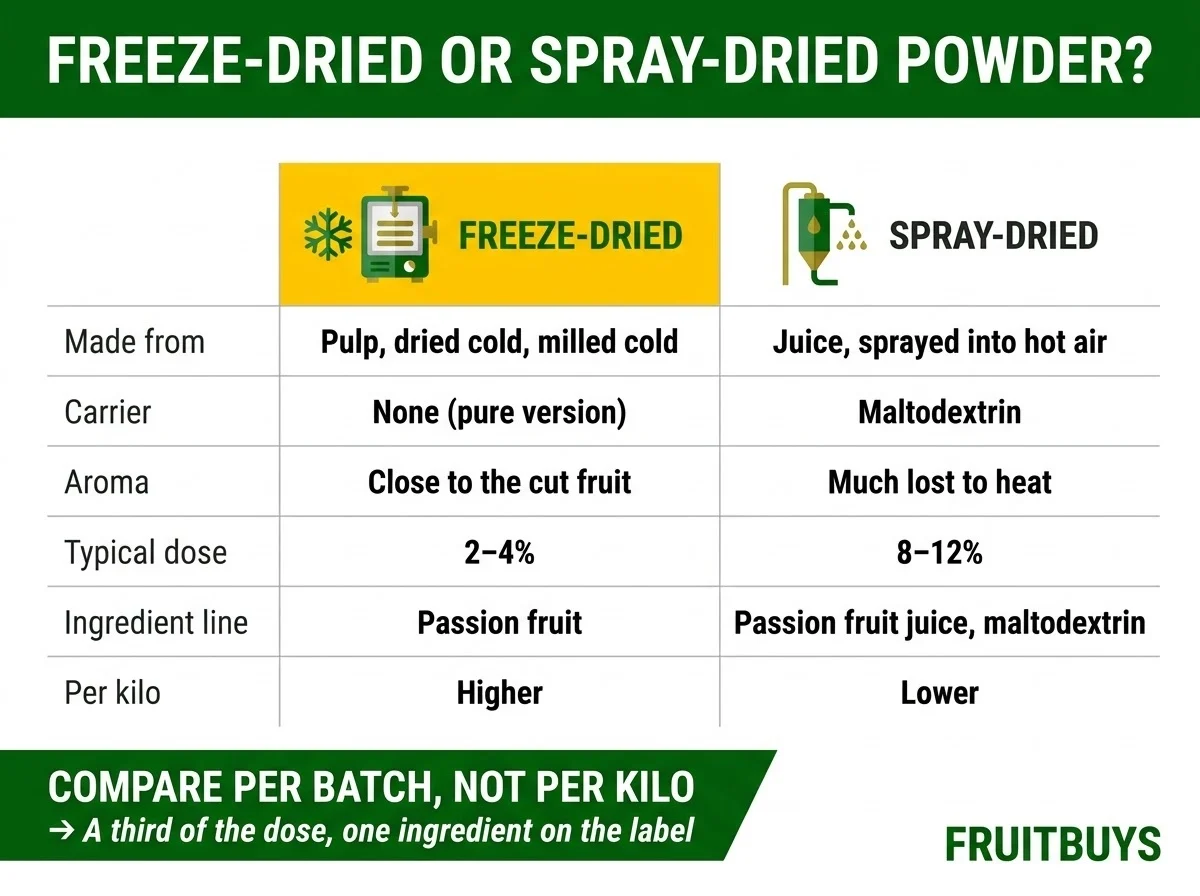
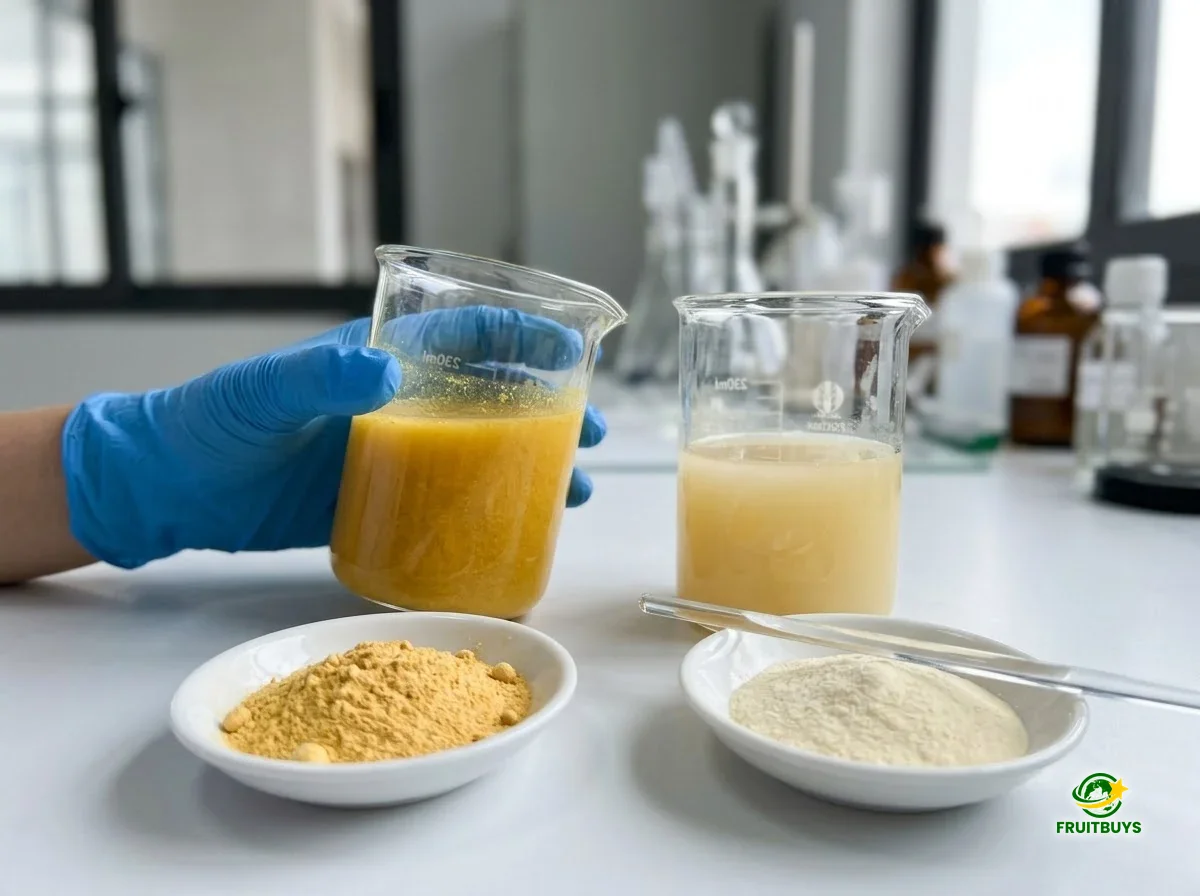
The dose is where the comparison turns. Spray-dried powder costs less per kilo, but it needs three to four times the weight to taste of passion fruit, and most of that weight is carrier. Measured per finished batch, freeze-dried powder usually costs the same or less, and the label carries one ingredient instead of two. Freeze-drying also handles heat-sensitive vitamins and colour more gently than a hot tower does.
What nutrition does passion fruit powder carry?
That depends on whether the seeds were milled in.
| Per 100 g | Seedless powder (standard) | Seed-in powder |
|---|---|---|
| Dietary fibre | 6–9 g | 20 g |
| Total sugars | 42–48 g (0 g added) | 36 g (0 g added) |
| Fat | 1–2 g | 8 g (0 g saturated) |
| Sodium | 0 mg | 0 mg |
Typical values for 100% freeze-dried passion fruit powder; natural variation by origin, season and ripeness applies.
Seedless powder has the even golden colour most drinks and creams need. Seed-in powder keeps the ground seed, which shows as fine dark specks and brings far more fibre, plus the seed oil and the natural polyphenols, such as piceatannol, found in passion fruit seeds. If fibre is the reason you are buying, choose seed-in.
Either way, the sugar is the fruit’s own, and a serving is small. A 5 g scoop in a smoothie adds about 2 g of natural sugar to the glass. The same fruit in whole, freeze-dried form is covered in is dried passion fruit good for you?
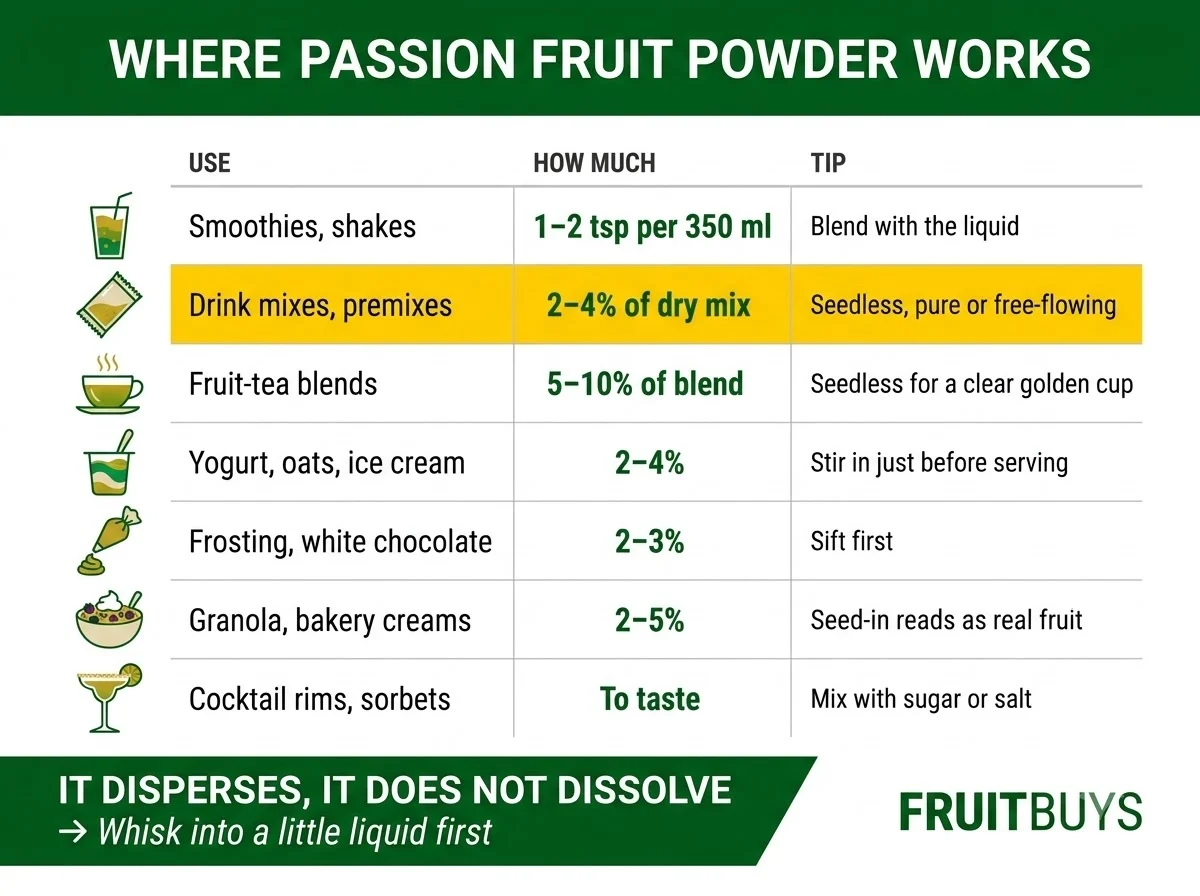
Where does passion fruit powder work best?
| Use | How much | Tip |
|---|---|---|
| Smoothies, shakes | 1–2 teaspoons per 350 ml glass | Blend with the liquid, not on top of ice |
| Drink mixes and premixes | 2–4% of the dry mix | Seedless, pure or free-flowing |
| Fruit-tea blends | 5–10% of the blend | Seedless gives a clear golden cup |
| Yogurt, overnight oats, ice cream | 2–4% | Stir in just before serving for the brightest aroma |
| Frosting, icing, white chocolate | 2–3% | Sift first; the colour stays bright without baking |
| Granola dusting, bakery creams | 2–5% | Seed-in reads as real fruit |
| Cocktail rims, sorbet bases | To taste | Mix with sugar or salt for rims |
Passion fruit pairs well with mango, coconut, pineapple, lime, vanilla and white chocolate. It is sour enough to balance sweet bases and fragrant enough to lead in mild ones.
One thing to expect: fruit powder disperses but does not dissolve like sugar, because it is whole pulp with its fibre. Whisk it into a little liquid first. A fine sediment settles if a drink stands. If your drink must be crystal clear, the honest answer is a different tool: infuse freeze-dried passion fruit cubes in the syrup and strain them out, and you get the flavour with a clean finish.
How do you keep passion fruit powder free-flowing?
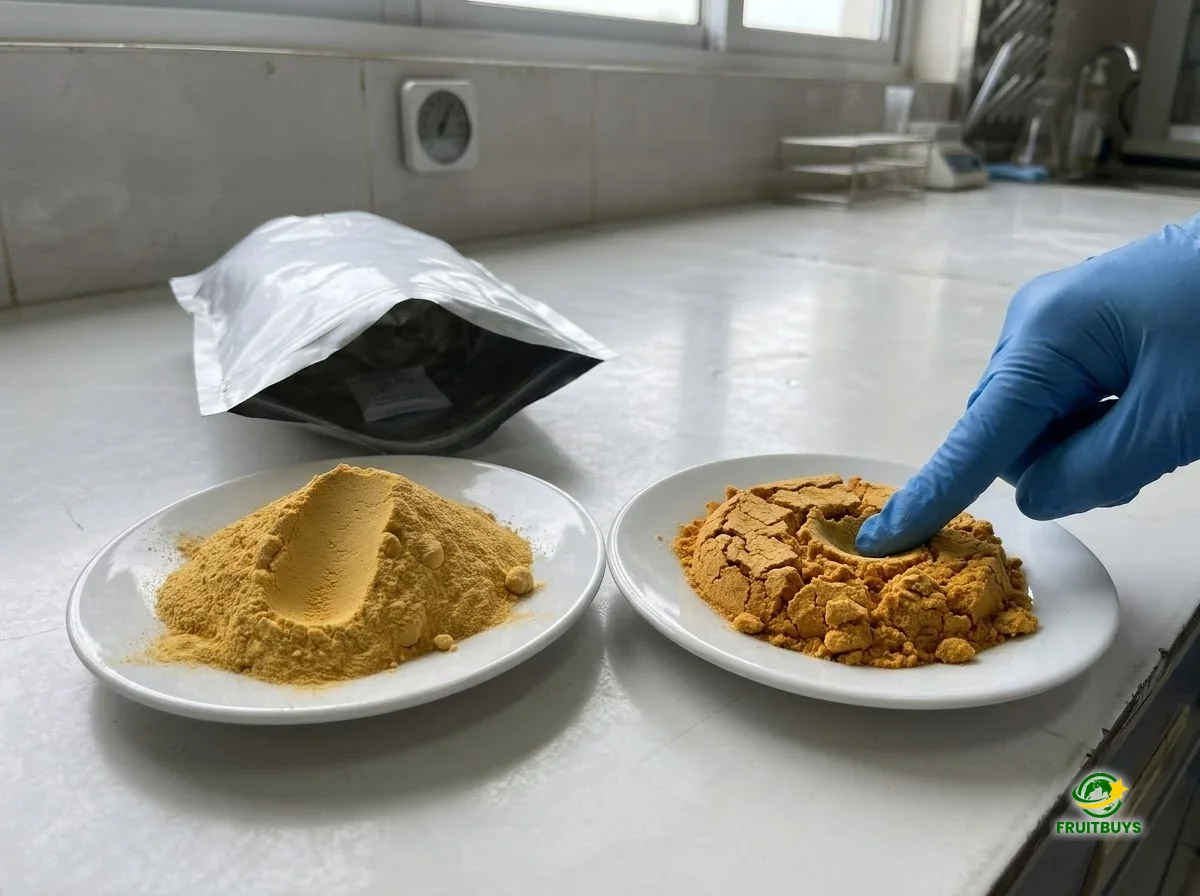
Keep it away from humid air. Passion fruit powder is rich in natural fruit sugars and acids, and both pull moisture from the room. Left open in a steamy kitchen or a humid factory, pure powder turns tacky within hours and can set into a block overnight.
- Reseal after every scoop, and keep the silica gel sachet in the bag.
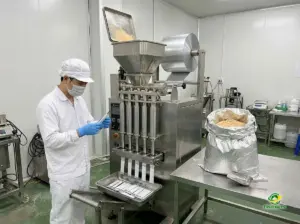
- Buy in a size you finish quickly. In a factory, 5 kg bags sized to one shift’s batch mean every bag is opened and used the same day.
- On automatic stick-pack or sachet lines, choose the free-flowing version with up to 1% silicon dioxide, which keeps the powder moving through the dosing auger.
- Store it cool and dry. Sealed, it keeps 18–24 months in the original bulk bag in cool storage at ≤18 °C and RH ≤50%, and 12 months once repacked into retail pouches at ≤25 °C and RH ≤60%.
Building a drink or snack around passion fruit powder?
The benefits above are what turn into a product: a short label, natural colour and acidity, and a dose low enough to keep cost per bottle or per bar under control. Three choices decide whether the powder performs on your line: seedless or seed-in, pure or free-flowing, and the mesh. They are set out step by step in what to specify before buying freeze-dried passion fruit powder.
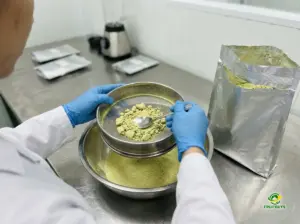
FruitBuys supplies freeze-dried passion fruit powder milled from Central Highlands fruit at qualified partner facilities: 60–80 mesh, moisture ≤5.0%, water activity ≤0.30, seedless as standard and seed-in on order, in 5 kg foil bags with a third-party COA on every container lot. Trials start at 50–100 kg. Specifications, packing and import details are on the freeze-dried passion fruit powder page. Where the shopper should also see the fruit, pair it with freeze-dried passion fruit cubes.
Test the powder in your recipe
Tell us your product, the version you have in mind and your target dose, and we will send a pre-shipment sample of freeze-dried passion fruit powder in sealed foil pouches, with the nutrition data your label team needs.
[email protected] · WhatsApp Export +84 919 739 589
FAQ
What is passion fruit powder used for?
Smoothies, drink mixes, fruit teas, yogurt, ice cream, frosting, white chocolate, bakery creams and cocktail rims. It adds tropical flavour, a golden colour and natural sourness.
Is passion fruit powder good for you?
Freeze-dried passion fruit powder with nothing added is simply the fruit without its water: natural sugars, fibre, potassium and no added sugar. Seed-in powder carries the most fibre, about 20 g per 100 g.
Is passion fruit powder high in sugar?
It carries the fruit’s own sugar, concentrated by drying: about 36 g per 100 g for seed-in powder and 42–48 g for seedless. A 5 g serving adds about 2 g to a drink.
How much passion fruit powder should I use?
1–2 teaspoons in a 350 ml smoothie at home. In manufacturing, 2–4% of a dry drink mix or yogurt base and 5–10% of a fruit-tea blend.
Does passion fruit powder dissolve in water?
It disperses fully but does not dissolve like sugar, because it contains the fruit’s fibre. Mix it into a little liquid first.
What is the difference between freeze-dried and spray-dried passion fruit powder?
Freeze-dried powder is pulp dried cold and milled, up to 100% fruit, used at 2–4%. Spray-dried powder is juice dried hot on a maltodextrin carrier and usually needs 8–12% to taste of passion fruit.