What is soursop good for? Nutrition per 100 g, fresh and freeze-dried
Reviewed 9 November 2026. General information, not medical advice.
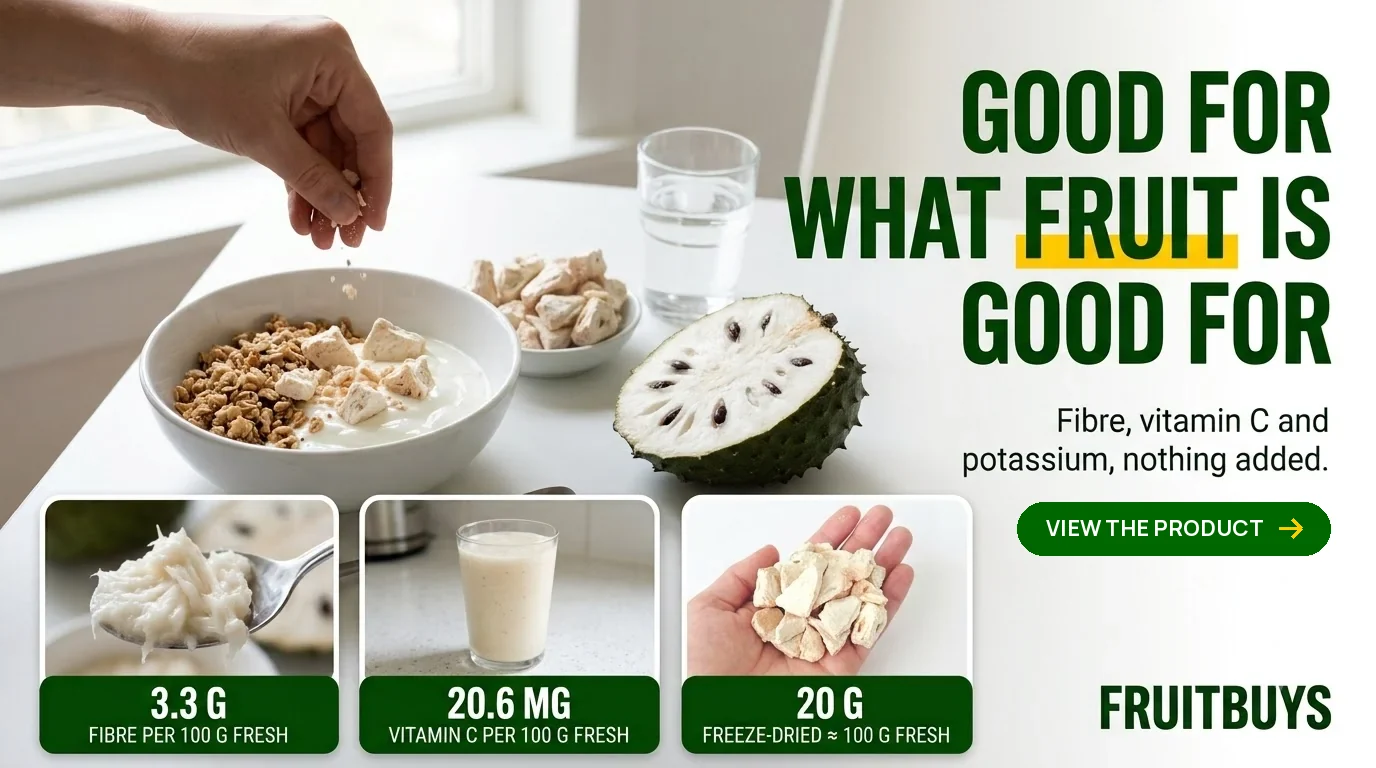
Soursop is good for what a good fruit is good for: it brings fibre, vitamin C and potassium with a sweet-sour tropical flavour and very little fat. A 100 g serving of fresh pulp gives about a quarter of an adult’s daily vitamin C. Freeze-dried, the same fruit loses its water and keeps the rest, so 20 g of crisp freeze-dried pulp carries roughly what 100 g of fresh pulp does. What soursop does not do is cure disease, whatever you may have read online.
What does soursop contain per 100 g?
| Per 100 g | Fresh pulp | Freeze-dried pulp | 20 g freeze-dried (about 100 g fresh) |
|---|---|---|---|
| Energy | 66 kcal | 343 kcal | 69 kcal |
| Water | about 81 g | 2–3 g | under 1 g |
| Dietary fibre | 3.3 g | 17.2 g | 3.4 g |
| Sugars (naturally occurring) | 13.5 g | 70.4 g | 14.1 g |
| Added sugars | 0 g | 0 g | 0 g |
| Potassium | 278 mg | 1,445 mg | 289 mg |
| Vitamin C | 20.6 mg | roughly 85–100 mg | 17–20 mg |
| Protein | 1.0 g | 5.2 g | 1.0 g |
| Fat | 0.3 g | 1.6 g | 0.3 g |
| Sodium | 14 mg | 73 mg | 15 mg |
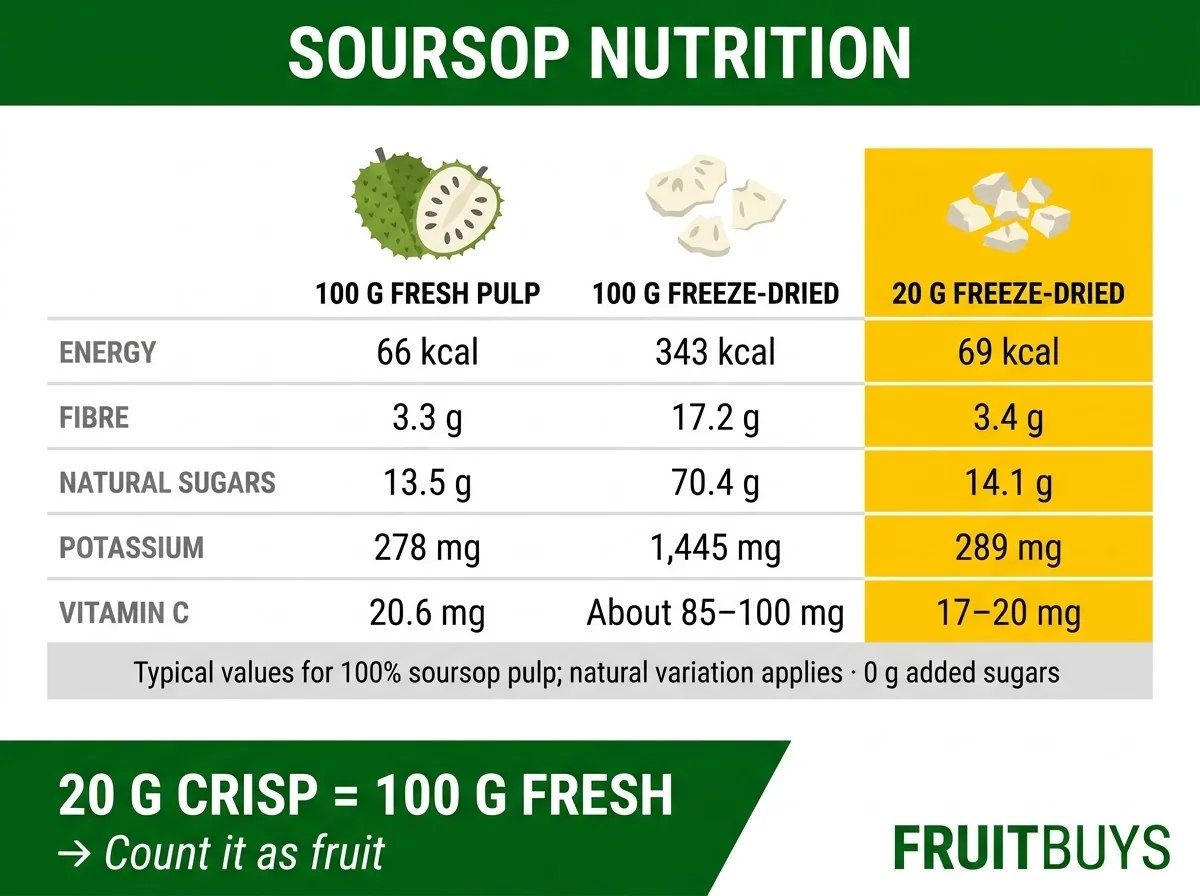
Typical values for 100% soursop pulp; natural variation by origin, season and ripeness applies. Lot nutrition panel available for label artwork.
The two right-hand columns show the point of freeze-drying. Nothing is added and almost nothing is taken away except water, so the freeze-dried figures are the fresh figures concentrated about five times. The last column puts them back on the same footing: a small handful of crisp pulp is nutritionally a bowl of fresh fruit.
What do these nutrients do?
| Nutrient | How much soursop gives | What it does |
|---|---|---|
| Vitamin C | Fresh: 20.6 mg per 100 g, about a quarter of the EU reference intake of 80 mg | Contributes to the normal function of the immune system and to the protection of cells from oxidative stress; increases iron absorption from plant foods eaten at the same meal |
| Potassium | Freeze-dried: 1,445 mg per 100 g, about 72% of the EU reference intake | Contributes to normal muscle function and to the normal functioning of the nervous system |
| Dietary fibre | Freeze-dried: 6.9 g per 40 g serving, about a quarter of the US daily value | Part of a balanced diet; whole-fruit fibre stays in the pulp and powder but is largely lost when juice is strained |
| Natural sugars | 13.5 g per 100 g fresh | Energy from the fruit’s own sugars, with no sugar added |
The vitamin C and potassium wording above is the language EU law authorises for those nutrients, and it applies to the nutrient wherever it comes from. Soursop is a good source of them in a fruit that tastes like dessert, which is most of its appeal.
Freeze-drying and vitamin C. Vitamin C breaks down with heat. Hot-air drying and drum drying lose much of it; freeze-drying removes the water at low temperature under vacuum, so far more of the fruit’s natural vitamin C survives. The level still varies from lot to lot with ripeness and storage, which is why a brand that wants a vitamin C number on its pack tests the actual lot.
A word on sugar. Soursop is a sweet fruit, and freeze-dried soursop is concentrated fruit. Twenty grams of freeze-dried pulp carries about 14 g of natural sugar, the same as the 100 g of fresh fruit it replaces. Count it as fruit, not as a free snack, and pair a portion of crisp pieces with water.
Does soursop cure cancer or help you lose weight?
No. You will find soursop and graviola sold online as a cancer cure, a diabetes treatment, a weight-loss aid or a detox. None of these claims is supported by clinical trials in people. Laboratory and animal studies on concentrated extracts exist, but they do not show that eating the fruit, drinking its juice or taking leaf supplements treats any disease. In the US, a product sold with a claim to treat or cure a disease is treated as an unapproved drug, and the FDA has acted against sellers of soursop and graviola products marketed that way. In the EU, no health claim is authorised for soursop as such.
Soursop is a nutritious fruit. That is a real benefit, and it does not need exaggerating. If you are being treated for any condition, never use soursop products in place of treatment. Who should be careful with soursop, including people on potassium-restricted diets and anyone thinking about leaf tea or capsules, is covered in what to know about soursop side effects.
What does soursop taste like?
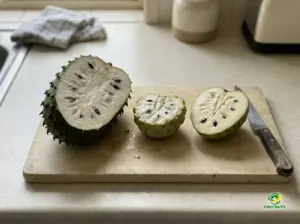
Sweet, tangy and creamy at once. Most people describe it as somewhere between pineapple and strawberry, with a banana-like creaminess and a citrus finish. The pulp is white, soft and juicy, with soft fibrous strands running through the segments and dozens of hard black seeds that are never eaten.
Freeze-drying keeps that flavour but changes the texture. The pieces turn crisp and light, then melt into a creamy bite in the mouth, and the natural segment shape and fibre strands stay visible. Ground into powder and blended with milk or water, it comes back as the creamy, cloudy drink people know as batido or sinh tố mãng cầu. How to make those drinks is in soursop tea, juice or fresh fruit: what are you actually drinking.
Is soursop the same as guanábana and graviola?
Yes. Soursop, guanábana, graviola, corossol and mãng cầu xiêm are all names for the same fruit, Annona muricata. The names vary by language and region: guanábana across Spanish-speaking Latin America, graviola in Brazil, corossol in the French Caribbean, mãng cầu xiêm in Vietnam.
Soursop is often confused with its relatives in the same genus:
| Fruit | Botanical name | How to tell it apart |
|---|---|---|
| Soursop, guanábana | Annona muricata | Large, oval, dark green skin with soft spines; white, tangy, juicy pulp |
| Sweetsop, sugar apple | Annona squamosa | Small, round, knobbly green segments; very sweet, grainy pulp, no tang |
| Cherimoya | Annona cherimola | Smooth or scaled skin; sweet, custard-like pulp; grown in cooler highlands |
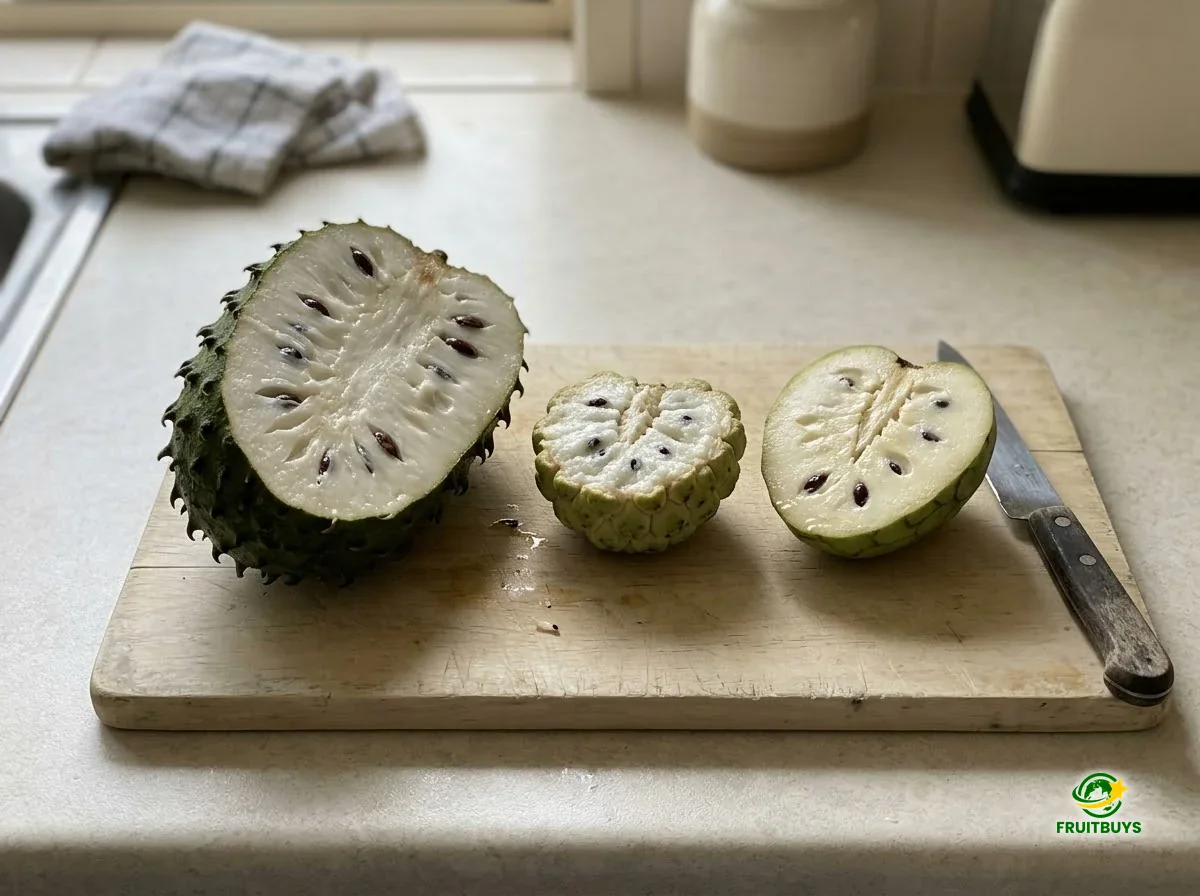
“Graviola” needs a note of its own. Online, the name is often used for leaf products such as teas, capsules and leaf powder. Those are not fruit, and they are a separate decision from eating soursop. FruitBuys supplies the fruit pulp only.
Dried, soft-dried or freeze-dried soursop: what is the difference?
| Freeze-dried | Soft-dried | |
|---|---|---|
| How it is made | Frozen, then dried under vacuum at low temperature | Dried with warm air to a chewy texture |
| Texture | Crisp and light; melts in the mouth | Chewy, like a fruit leather |
| Ingredients | 100% soursop, nothing added | Often sweetened or seasoned; check the label |
| Water left | 2–3% | Considerably more, which keeps it soft |
| Colour | White to light cream | Darker, from heat and sugar |
| Best for | Snacking, smoothies, cereal, baking, drink powder | A sweet chewy snack |
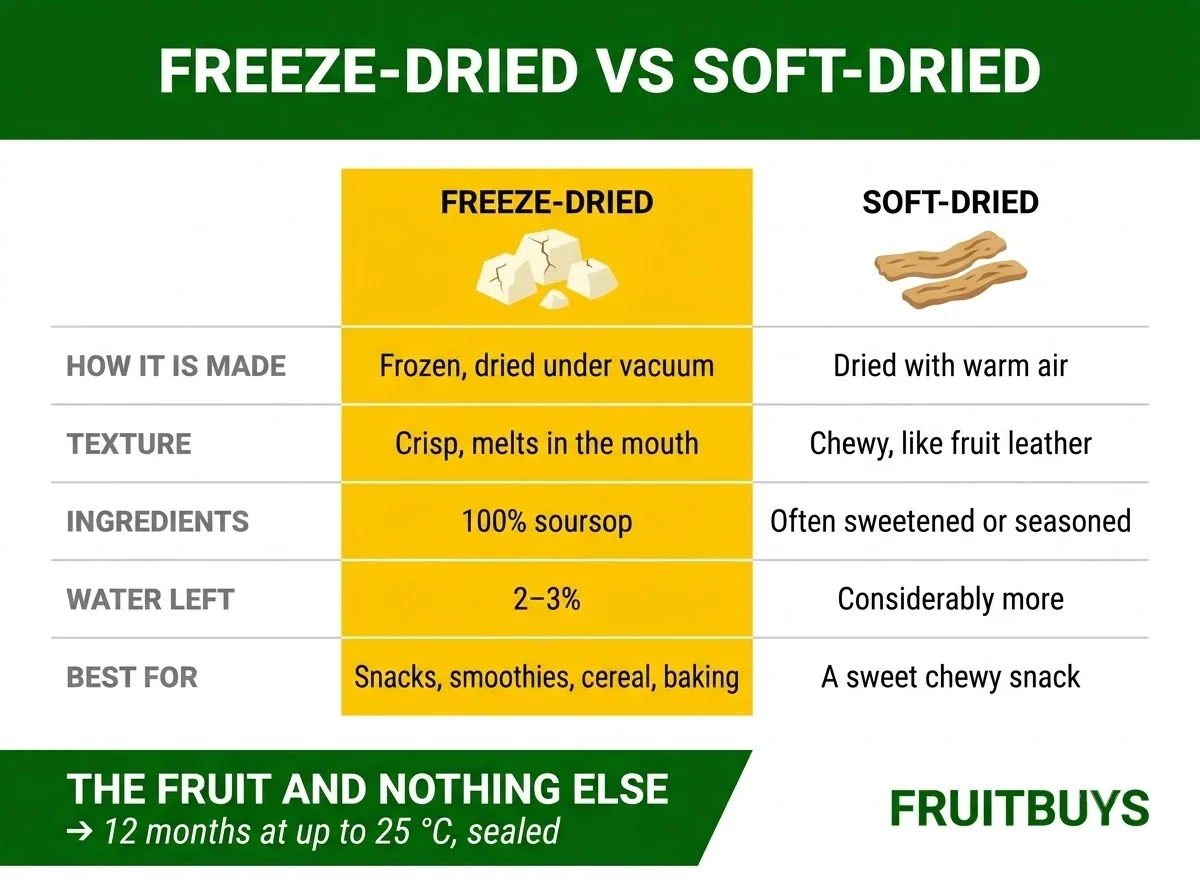
Both have their place. Soft-dried soursop is a familiar sweet snack in Vietnam, sold plain as dried soursop or with a salty-spicy coating as chili soursop. Freeze-dried soursop is the version for anyone who wants the fruit and nothing else: no frying, no added sugar, a crisp texture, and a shelf life of 12 months at up to 25 °C in its sealed pouch. It also travels easily, which matters for a fruit that is hard to find fresh outside the tropics.
How can you eat more soursop?
Fresh soursop is seasonal and fragile, so most people outside the tropics meet it frozen, canned or dried. Freeze-dried soursop makes it an everyday fruit:
- As a snack: a small handful of crisp pieces, about 20 g, is a serving of fruit.
- In breakfast: crumble over yogurt, granola or overnight oats.
- In drinks: 5–10 g of powder blended into a smoothie or batido.
- In desserts: 3–8% of powder whisked into ice cream or frozen yogurt.
- As pulp: rehydrate 1 part freeze-dried pulp with 5–6 parts water and use it like fresh.
For brands and stockists, the full specification of the pieces and their uses is on the freeze-dried soursop product page, and the label claims the nutrition supports, market by market, are in what you can print on a freeze-dried soursop label.
Stocking soursop or building a fruit snack?
Tell us the product you have in mind and the market you sell into. We send freeze-dried soursop pieces, crumble or powder in sealed foil pouches, with the specification and typical nutrition values, within 3–5 working days.
FAQ
What is soursop good for?
As a food, soursop gives fibre, vitamin C and potassium with very little fat and no added sugar. Vitamin C contributes to the normal function of the immune system, and potassium to normal muscle function.
How much vitamin C is in soursop?
About 20.6 mg per 100 g of fresh pulp. Freeze-dried pulp typically carries roughly 85–100 mg per 100 g, because the water is removed and low-temperature drying keeps most of the vitamin C.
Does soursop cure cancer?
No. There is no clinical evidence that soursop or graviola treats cancer in people. Never use it in place of medical treatment.
Is freeze-dried soursop as healthy as fresh?
It is the same fruit with the water removed and nothing added. Twenty grams of freeze-dried pulp carries about what 100 g of fresh pulp does, including the natural sugars, so portion it like fresh fruit.
Is soursop high in sugar?
It is a sweet fruit, with about 13.5 g of natural sugar per 100 g fresh and no added sugar. Freeze-dried soursop concentrates that sugar along with everything else.
Are soursop and graviola the same thing?
Same plant, Annona muricata. But “graviola” products online are often leaf teas or capsules, not the fruit.
What is the difference between soursop and sugar apple?
Sugar apple, or sweetsop, is a smaller relative with very sweet, grainy pulp. Soursop is larger, with tangier, juicier pulp.