Is dried passion fruit good for you?
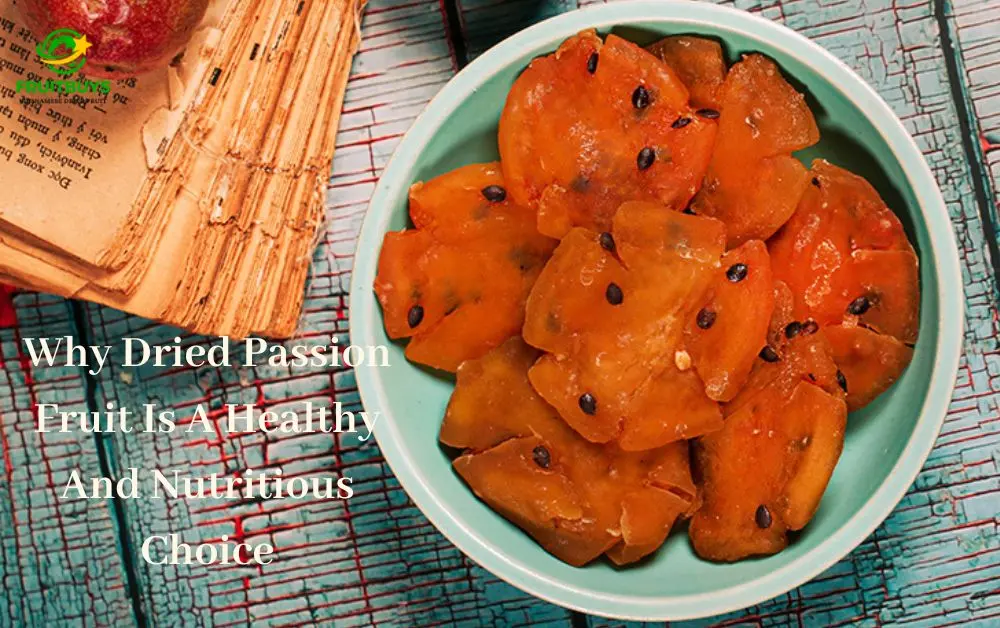
Bite into a freeze-dried passion fruit cube and it goes two ways at once: a sharp, bright sourness, then the crack of the black seeds. That crunch is where most of the good news sits. Freeze-dried passion fruit with nothing added carries 20 g of fibre and 36 g of natural sugar per 100 g, with 0 g of added sugar. That makes it one of the most fibre-rich fruit snacks you can buy. The catch is the word “dried”: sugar-infused soft-dried passion fruit is a different product, and even the unsweetened kind is concentrated, so the portion matters more than with fresh fruit.
What is in 100 g of freeze-dried passion fruit?
| Nutrient | Per 100 g | In a 15 g handful |
|---|---|---|
| Energy | 440 kcal | 66 kcal |
| Dietary fibre | 20 g | 3 g |
| Total sugars | 36 g (0 g added) | 5.4 g |
| Protein | 8 g | 1.2 g |
| Fat | 8 g (0 g saturated) | 1.2 g |
| Potassium | 1,000 mg | 150 mg |
| Iron | 2 mg | 0.3 mg |
| Sodium | 0 mg | 0 mg |
Typical values for 100% freeze-dried passion fruit; natural variation by origin, season and ripeness applies.
Three numbers do most of the work:
- Fibre, 20 g. Most of it comes from the seeds. Most adults eat less fibre than dietary guidelines recommend, and a small handful closes part of that gap without a supplement.
- Sugar, 36 g, all from the fruit. Passion fruit is a sour fruit, so it carries less sugar than sweet tropical fruits dried the same way.
- Fat, 8 g, from seed oil. None of it is saturated, and none of it comes from frying.
Is dried passion fruit as healthy as fresh?
It depends on how it was dried. There are three products on the shelf under the same name, and they behave very differently.
| Fresh pulp | Soft-dried (sugar-infused) | Freeze-dried, 100% fruit | |
|---|---|---|---|
| Added sugar | None | Usually yes, from syrup | None |
| Texture | Juicy, seeds crunchy | Chewy, sticky | Light, crisp, seeds crunchy |
| Keeps | Days in the fridge | Months | 12 months sealed at ≤25 °C, RH ≤60% |
| Flavour | Full, fragrant | Sweet, muted | Sharp and fragrant |
| How much equals one fruit | About 40–50 g of pulp | Varies with the syrup | About 7–9 g |
Freeze-drying freezes the pulp and removes the water under vacuum at low temperature, so the aroma, the colour and the heat-sensitive vitamins hold up better than in hot-air drying. Nothing is taken out except water. That is why the cubes taste like the fruit, and also why every gram is concentrated: it takes 5–6 kg of seed-in pulp to make 1 kg of freeze-dried passion fruit.
Soft-dried passion fruit is usually infused with sugar syrup before drying to keep it chewy. If the ingredient list shows sugar, glucose syrup or fruit juice concentrate, you are eating a sweet, not dried fruit. Read the label for added sugars: on a 100% fruit product the line reads zero.
Are passion fruit seeds good for you, and are they crunchy?
Yes on both counts. Fresh passion fruit seeds are hard and slippery, which is why many people spit them out. After freeze-drying they turn light and hollow, so they crack between your teeth like a toasted seed rather than a pip.
The seeds are the nutritional heart of the fruit. They carry most of the fibre and the seed oil, and they contain natural polyphenols such as piceatannol, a compound researchers have been studying with growing interest. You do not need to grind or soak them. Eaten in a freeze-dried cube, they come with the pulp in every bite.
Seedless freeze-dried passion fruit exists, but taking the seeds out removes most of the fibre and fat and concentrates the sugar. For snacking, keep the seeds in. The difference is set out in seed-in or seedless freeze-dried passion fruit.
Can dried passion fruit fit a weight-conscious snack?
Yes, as a measured portion. No food burns fat or causes weight loss on its own, and freeze-dried passion fruit is energy-dense at 440 kcal per 100 g. What it does well is make a small portion count.
- Fibre and protein together. A 15 g handful brings 3 g of fibre and just over 1 g of protein for 66 kcal, which keeps it more filling than a sweet of the same weight.
- Less sugar than sweet fruits. In FruitBuys laboratory panels, freeze-dried passion fruit carries 36 g of natural sugar per 100 g, against 59 g in freeze-dried mango and 70 g in freeze-dried mangosteen. That is about 40% less than mango, and you can taste it: passion fruit eats bright and tangy rather than candy-sweet.
- Strong flavour per gram. A few cubes on yogurt or oats give a lot of taste, so you need less.
It is not a low-sugar food, though. 36 g per 100 g is still fruit sugar, concentrated by drying. Treat a small bowl as a full fruit portion, not a light nibble.
How much is a sensible handful?
About 15 g, roughly a small handful or a heaped tablespoon of cubes. That is the pulp of about two fresh passion fruits, for 66 kcal, 3 g of fibre and 5.4 g of natural sugar.
Easy ways to use it:
- Over Greek yogurt or overnight oats, added just before eating so the cubes stay crisp.
- Crushed over a fruit salad or a pavlova for the sour note.
- Dropped into a glass of sparkling water, where the cubes soften and release their flavour in a few minutes.
- Straight from the bag, as a sour alternative to sweets.
Keep the bag sealed between handfuls. Passion fruit pulls moisture from the air quickly, and a bag left open in a humid kitchen turns the cubes soft within a day.
Who should be careful with dried passion fruit?
- Anyone new to high-fibre foods. A large bag eaten in one go can cause bloating. Start with a handful and drink water with it.
- People told to limit potassium. At 1,000 mg per 100 g, a 15 g portion carries about 150 mg. Count it if your doctor has set a potassium limit.
- Sugar watchers buying soft-dried versions. Check for added sugar. The healthy profile above applies to 100% fruit only.
- Sensitive teeth or a sensitive stomach. The fruit is acidic. Eating it with yogurt or oats softens the hit.
If you have a medical condition that affects your diet, ask your doctor or dietitian how dried fruit fits your plan.
Building a snack or drink brand around passion fruit?
The same numbers that make passion fruit a good snack make it a strong ingredient. 20 g of fibre per 100 g meets the EU “high fibre” condition of 6 g per 100 g, and 8 g per 40 g serving meets the US “high fiber” threshold, so a single-ingredient fruit can carry a front-of-pack fibre claim without added inulin. The sour, fragrant taste lifts a granola, a chocolate bar or a drink at 2–5% of the recipe, and the black seeds show shoppers it is real fruit. The claim conditions for each market are in freeze-dried passion fruit nutrition per 100 g.
FruitBuys supplies freeze-dried passion fruit cubes from Vietnam’s Central Highlands, 100% fruit with seeds, moulded in 10, 15 and 20 mm sizes, and freeze-dried passion fruit powder for drinks and dry mixes. Every container lot ships with a third-party COA. Specifications are on the freeze-dried passion fruit cubes page and the freeze-dried passion fruit powder page, and the full sourcing checklist is in what to check before buying freeze-dried passion fruit in bulk.
Taste it before you build the recipe
Tell us your product, target market and pack size, and we will send a pre-shipment sample of freeze-dried passion fruit cubes in sealed foil pouches, with the nutrition data your label team needs.
[email protected] · WhatsApp Export +84 919 739 589
FAQ
Is passion fruit healthy?
Yes. Passion fruit is rich in fibre, mostly from its seeds, and brings potassium and a strong flavour for little sugar compared with sweet tropical fruits. Freeze-dried with nothing added, it keeps that profile in a shelf-stable form.
Is freeze-dried passion fruit good for you?
When it is 100% fruit, yes: 20 g of fibre and 36 g of natural sugar per 100 g, with no added sugar. It is concentrated, so eat it by the handful rather than by the bag.
Can you eat the seeds in dried passion fruit?
Yes. Freeze-drying makes them light and crunchy, and they carry most of the fibre.
Is passion fruit good for your liver?
No single fruit treats or protects the liver. Passion fruit can be part of a varied diet that supports overall health, bringing fibre and potassium with no fat from frying. If you have a liver condition, ask your doctor which foods suit you.
Does dried passion fruit have a lot of sugar?
Freeze-dried passion fruit has about 36 g of natural sugar per 100 g, less than most sweet dried fruits. Sugar-infused soft-dried passion fruit has more, because syrup is added.
Is dried passion fruit good for weight loss?
No food causes weight loss on its own. Freeze-dried passion fruit is filling for its size thanks to fibre and protein and has no added sugar or fat, so a measured 15 g portion fits a calorie-aware diet.