What are the side effects of cashew nuts, and how much is sensible to eat?
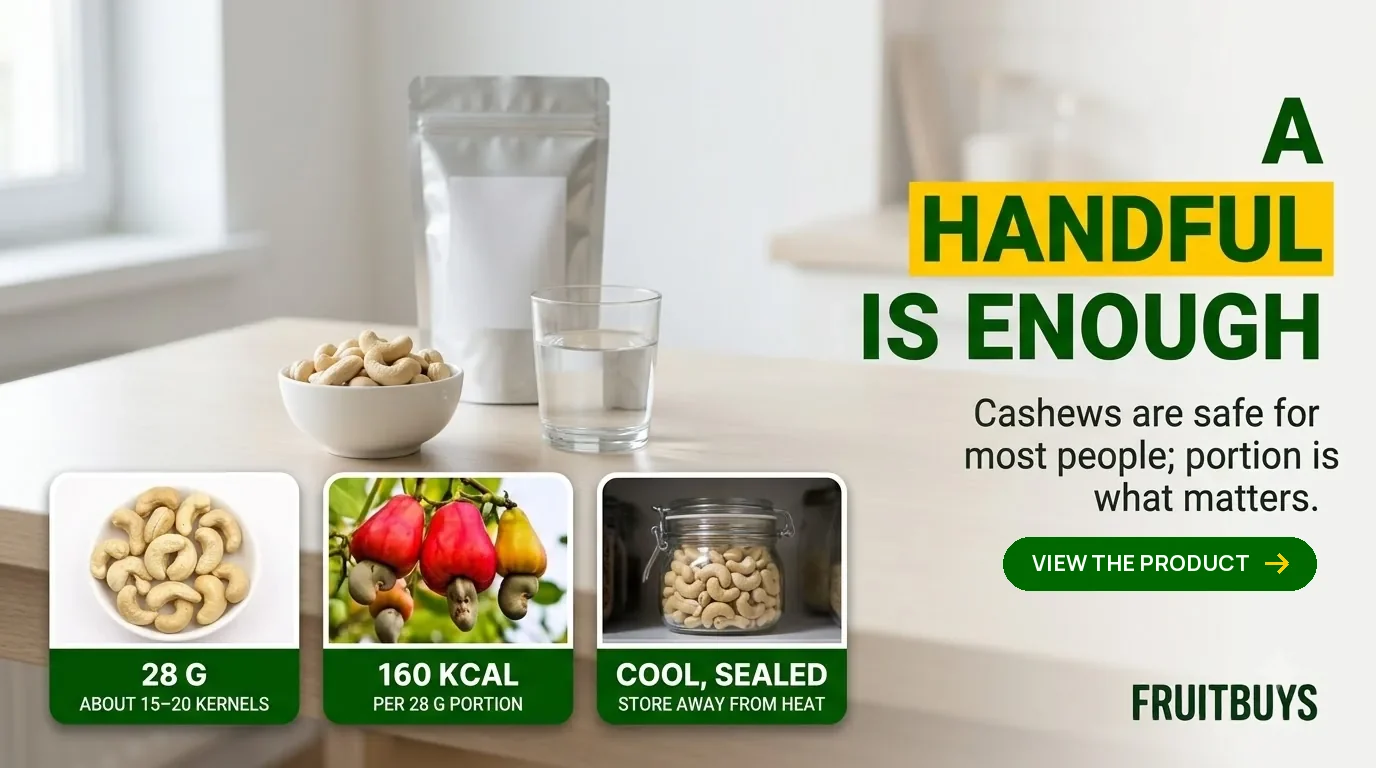
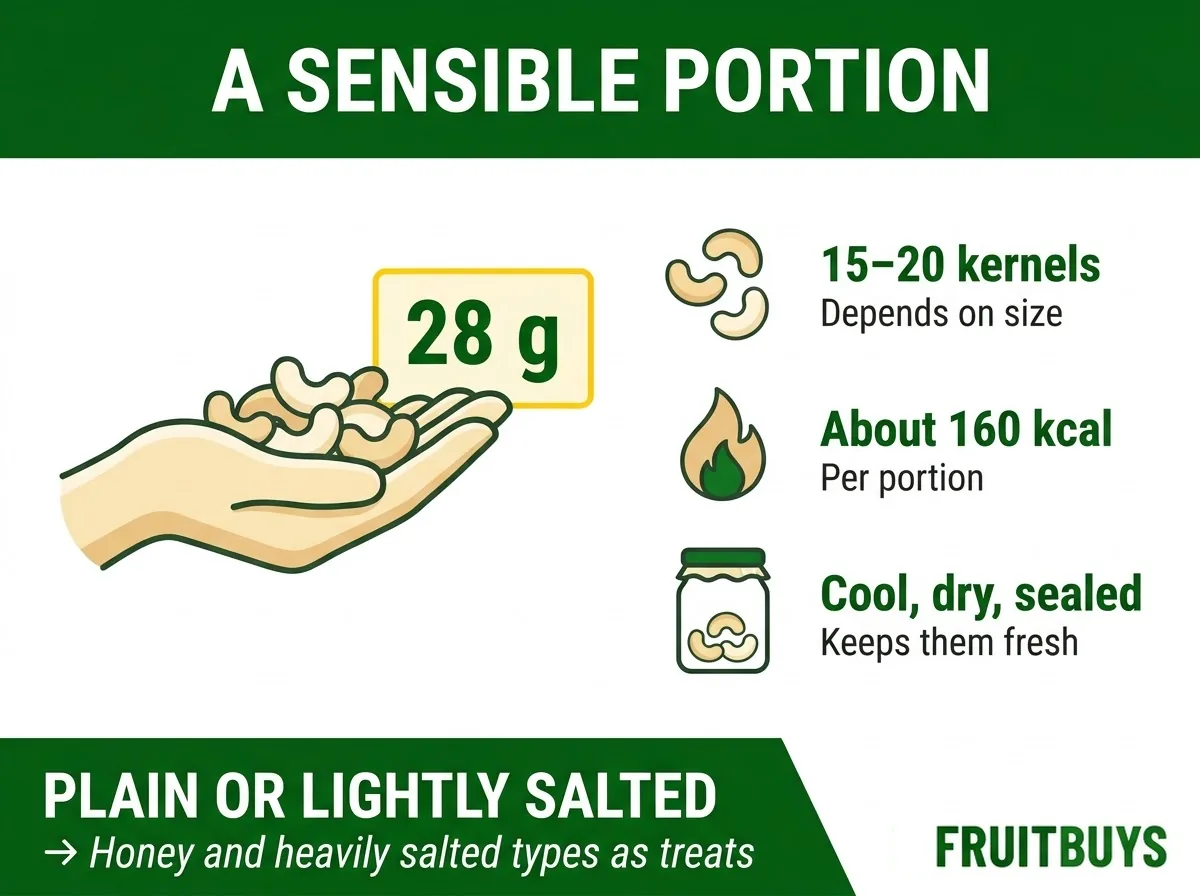
For most people, cashews are a safe, nutritious food. The side effects that matter are allergy, which can be serious for people allergic to tree nuts, and the ordinary effects of eating too much of an energy-dense food: bloating or a heavy stomach and extra calories. A sensible portion is about 28 g, roughly 15–20 whole kernels depending on size. People with a tree-nut allergy should avoid cashews altogether.
Cashews are also one of the most pleasant nuts to eat: mild, creamy and slightly sweet, with a soft crunch when roasted and a light, crisp snap when freeze-dried. The sections below explain each possible side effect in plain terms, who should be careful, and how cashews from Vietnam, the source of most cashew kernels sold in Europe, are checked before they leave the country. This page gives general information and is not a substitute for advice from your doctor.
What are the side effects of eating cashew nuts?
| Possible effect | Who it affects | What to do |
|---|---|---|
| Allergic reaction | People with a tree-nut allergy | Avoid cashews and foods that may contain them; follow your allergist’s advice |
| Bloating, a heavy stomach or loose stools | Anyone eating a large amount at once | Keep to a handful and drink water |
| Extra calories | Anyone eating large portions regularly | Measure a 28 g portion instead of eating from the bag |
| High salt intake | People eating salted cashews often | Choose unsalted or lightly salted cashews |
| Skin irritation from the shell | People handling raw cashews still in their shells | Buy shelled kernels; leave shelling to processors |
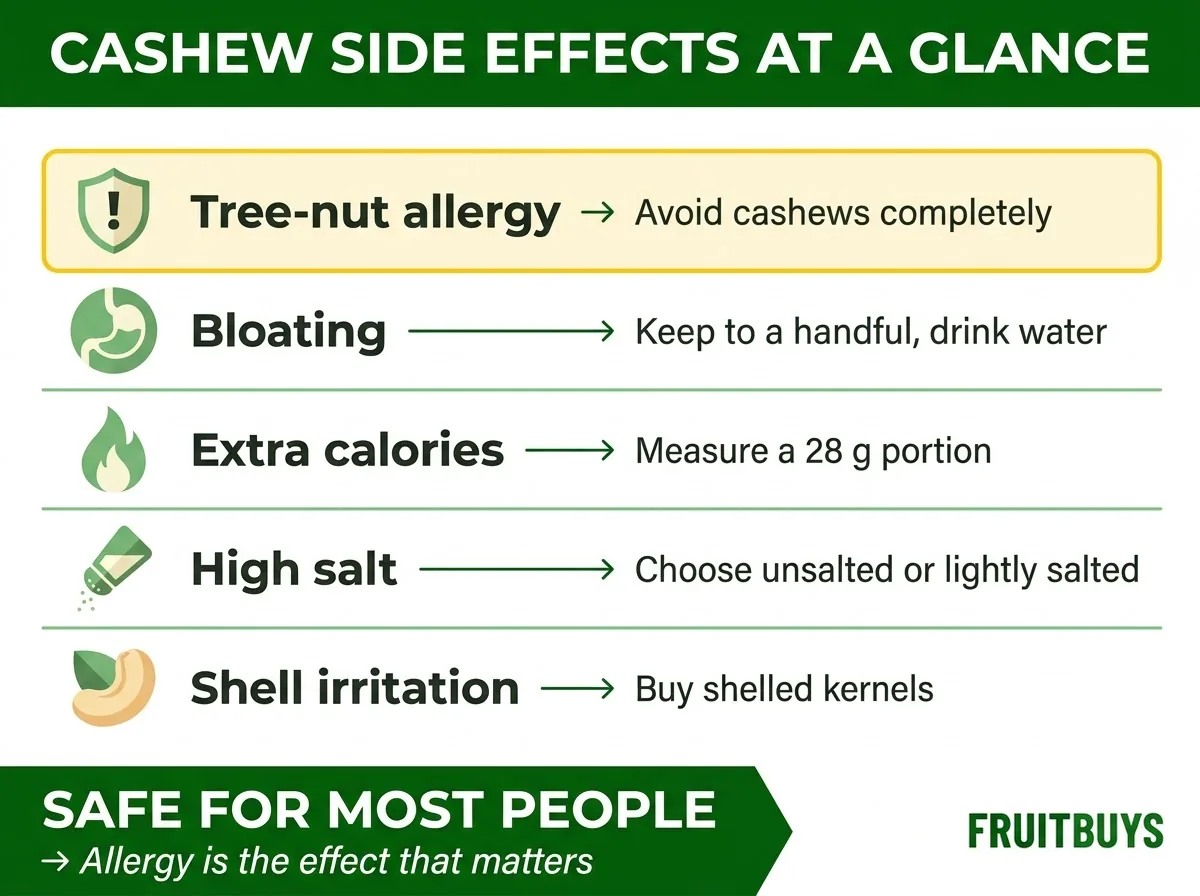
None of these is unusual for a nut. They come from eating too much, from an existing allergy, or from the shell, which is never part of the kernel you buy.
Can cashew nuts cause allergic reactions?
Yes. Cashew is a tree nut, and tree nuts are among the major food allergens that must be declared on food labels in the US and the EU. For a person with a cashew allergy, even a small amount can trigger a reaction, from itching, hives or swelling of the lips and face to breathing difficulty and, in severe cases, anaphylaxis, which needs emergency treatment.
People allergic to cashews are often also sensitive to pistachios, which belong to the same plant family. If you have reacted to one, ask an allergist about the other before trying it.
No processing makes a cashew allergen-free. If you have a tree-nut allergy, the safe choice is to avoid cashews and to read labels for “contains cashew” or “may contain tree nuts”. If you do not have an allergy, cashews do not cause one by being eaten in normal amounts.
How do cashews affect digestion?
Cashews are rich in fat and protein and contain some fibre, so they leave the stomach more slowly than fruit or bread. That is part of why a handful feels satisfying. Eaten in a large amount at once, the same qualities can cause bloating, a heavy feeling or, for some people, loose stools.
Do cashews cause constipation? Not usually. Cashews hold about 3 g of fibre per 100 g, less than many other nuts, so a 28 g handful adds about 1 g of fibre. That is too little to cause constipation on its own; what matters more is your overall diet and how much water you drink.
How long do cashews take to digest? There is no single figure: it depends on how many you eat, what you eat them with, and your own digestion. Because fat and protein slow the stomach down, a portion of cashews eaten with a meal is digested over several hours as part of that meal. Chewing well and keeping to a handful makes them easier on the stomach.
Do cashews make you gain weight?
Only if they push your total calories above what you use. Raw cashews carry about 553 kcal per 100 g (USDA), so a 28 g handful is about 155–160 kcal. That is a reasonable snack; the risk is eating from a large bag without noticing how much has gone.
Portion is the whole answer. Weigh 28 g once to see what it looks like, or buy small packs. Freeze-dried cashews read slightly higher per 100 g, about 570 kcal, because they hold less water; per 28 g handful the difference is small.
Do cashews affect blood sugar?
Cashews contain little sugar, about 6 g per 100 g, and most of their energy comes from fat and protein. Published glycaemic index values for cashews, from the University of Sydney GI database, sit at about 22–25, which is in the low range. A plain, unsalted handful is therefore a modest food for blood sugar compared with sweet snacks.
What changes the picture is what comes with them: honey-roasted or sugar-coated cashews add sugar, and eating cashews alongside large amounts of refined carbohydrate changes how a meal affects you. If you are managing diabetes, follow the advice of your doctor or dietitian on portions and snacks.
How can you eat cashews safely?
- Keep to a portion: about 28 g, roughly 15–20 whole kernels depending on size.
- Choose plain or lightly salted for everyday snacking; keep honey-roasted and heavily salted types as occasional treats.
- Buy shelled kernels. The shell, not the kernel, holds the irritant oil.
- Store them cool, dry and sealed. Cashews are rich in fat, and heat, light and air make them stale over time. An airtight container in a cool cupboard works; the fridge or freezer keeps them longer.
- Throw away cashews that smell sharp, paint-like or bitter. That smell means the fat has gone rancid.
- Introduce them to young children only as advised for nuts generally: never as whole nuts for small children, because of the choking risk.
Are raw cashews safe to eat?
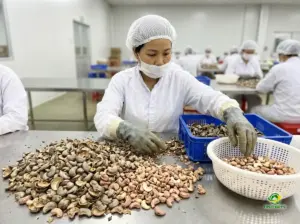
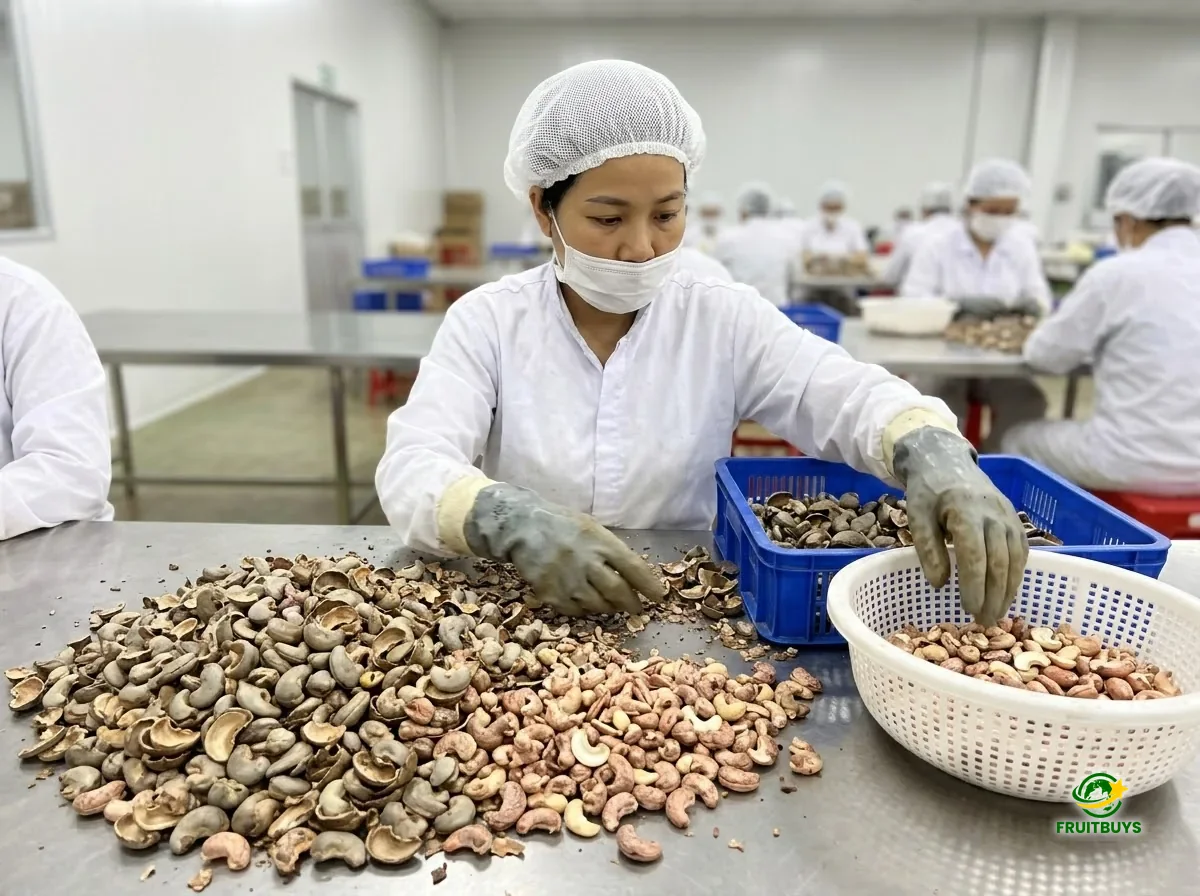
The “raw cashews” sold in shops are safe to eat. The cashew shell contains a caustic oil that can irritate the skin, related to the irritant in poison ivy. Commercial cashew processing removes the shell and the thin skin underneath before the kernel is packed, so the kernels you buy, labelled raw, roasted or freeze-dried, are already free of the shell. The precaution applies only to handling cashews still in their shells, which is not something most people ever do.
What nutrients do cashews provide?
Per 100 g, raw cashews provide about 553 kcal, 18 g of protein, 44 g of fat, 30 g of carbohydrate and 3.3 g of fibre, plus about 292 mg of magnesium (USDA). Most of the fat is unsaturated, mainly oleic acid, the same monounsaturated fat that olive oil is known for. In the EU, foods high in unsaturated fat may state that replacing saturated fats in the diet with unsaturated fats contributes to the maintenance of normal blood cholesterol levels; it is the swap in the overall diet that matters.
Cashews are also a source of copper, phosphorus, zinc and iron, and they are naturally gluten-free and vegan.
Who should avoid or limit cashews?
- People with a tree-nut allergy, or a known allergy to cashew or pistachio: avoid.
- People advised to limit calories or fat: keep to a measured portion.
- People advised to limit salt: choose unsalted cashews.
- People managing diabetes: choose plain cashews and follow your care team’s advice on portions.
- Young children: no whole nuts, because of the choking risk.
If you are unsure, ask your doctor or a registered dietitian.
Are cashews from Vietnam safe to eat?
Yes. Vietnam is the world’s largest exporter of cashew kernels and supplies about two thirds of the cashew kernels imported into the EU, whose aflatoxin limits for ready-to-eat nuts are five times tighter than the US action level. Vietnamese cashews sold in Europe and the US go through the same import checks as any other origin, and cashew kernels from Vietnam are not on the EU list of products under increased border checks.
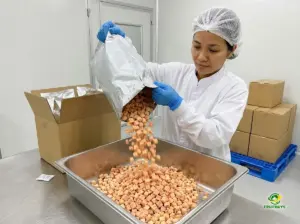
For our freeze-dried cashews, every container lot is tested by an independent ISO/IEC 17025 accredited laboratory before it is loaded, for moisture, water activity, oxidation, total plate count, yeasts and moulds, E. coli and Salmonella. Lots bound for the EU also carry results for aflatoxins, the toxins produced by moulds that nut regulations target, against EU limits of 2.0 µg/kg aflatoxin B1 and 4.0 µg/kg total for ready-to-eat nuts. Every lot passes a metal detector before packing. Where our cashews are grown, and how they are traced from region to lot, is set out in Vietnam cashew sourcing; the full test list is in the freeze-dried cashew specification.
For snack brands and food manufacturers
FruitBuys, an established Vietnamese B2B exporter specialising in freeze-dried fruits, supplies cashews to brands and manufacturers rather than to consumers. Our freeze-dried cashew nuts are Vietnam-grown kernels, moisture-conditioned and freeze-dried with no oil, salt or roasting, for snack packs, mixes and bars. Email [email protected] or message WhatsApp Export +84 919 739 589.
FAQ
What happens if you eat too many cashews?
Most often, bloating or a heavy stomach, and more calories than you intended. Keep to about 28 g, roughly a handful, and drink water.
Can cashews cause an allergic reaction?
Yes, in people allergic to tree nuts, and reactions can be severe. People allergic to cashews are often also sensitive to pistachios. If you have a tree-nut allergy, avoid cashews.
How should cashews be stored?
In an airtight container, somewhere cool, dry and dark. The fridge or freezer keeps them fresh for longer. Throw them away if they smell sharp or bitter.
Are raw cashews safe to eat?
Yes. The cashews sold as “raw” have already had the shell, which holds an irritant oil, removed during processing.
How many cashews should you eat a day?
A typical portion is about 28 g, roughly 15–20 whole kernels depending on size.
Do cashews raise blood sugar?
Plain cashews contain little sugar, and published glycaemic index values for cashews are low, about 22–25. Sweetened coatings change that. If you manage diabetes, follow your care team’s advice.
What nutrients are in cashews?
Per 100 g of raw cashews: about 553 kcal, 18 g protein, 44 g mostly unsaturated fat, 3.3 g fibre and 292 mg magnesium, plus copper, phosphorus, zinc and iron.
Can cashews help with weight loss?
No food causes weight loss on its own. Cashews are energy-dense, so they fit a weight-conscious diet as a measured portion rather than an open bag.
Are cashews good for the heart?
Most of the fat in cashews is unsaturated. Replacing saturated fats in the diet with unsaturated fats contributes to the maintenance of normal blood cholesterol levels, so cashews can be part of that swap within a balanced diet.
Are cashews from Vietnam safe?
Yes. Vietnam supplies most of the cashew kernels imported into the EU, which checks nuts against strict contaminant limits, and our freeze-dried lots carry third-party test results before they ship.