
Which Mango Variety and Ripeness Make the Best Freeze-Dried Mango?
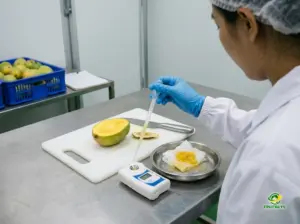
For most freeze-dried programmes the answer is Keo, picked ripe at 14–16 °Brix. Its firm flesh cuts clean cubes and slices that hold their edges through a 20–24 hour freeze-drying cycle, and at the farm gate it usually trades 25–40% below Cát Chu in the main season. Choose Cát Chu when aroma and colour lead your pack, and Hòa Lộc only for limited gift runs. Ripeness matters as much as variety: under-ripe fruit dries pale and sour, over-ripe fruit collapses and sticks. FruitBuys names the cultivar in your contract and checks Brix at intake, so every lot tastes like the sample you approved.
How do Keo, Cát Chu and Hòa Lộc compare?
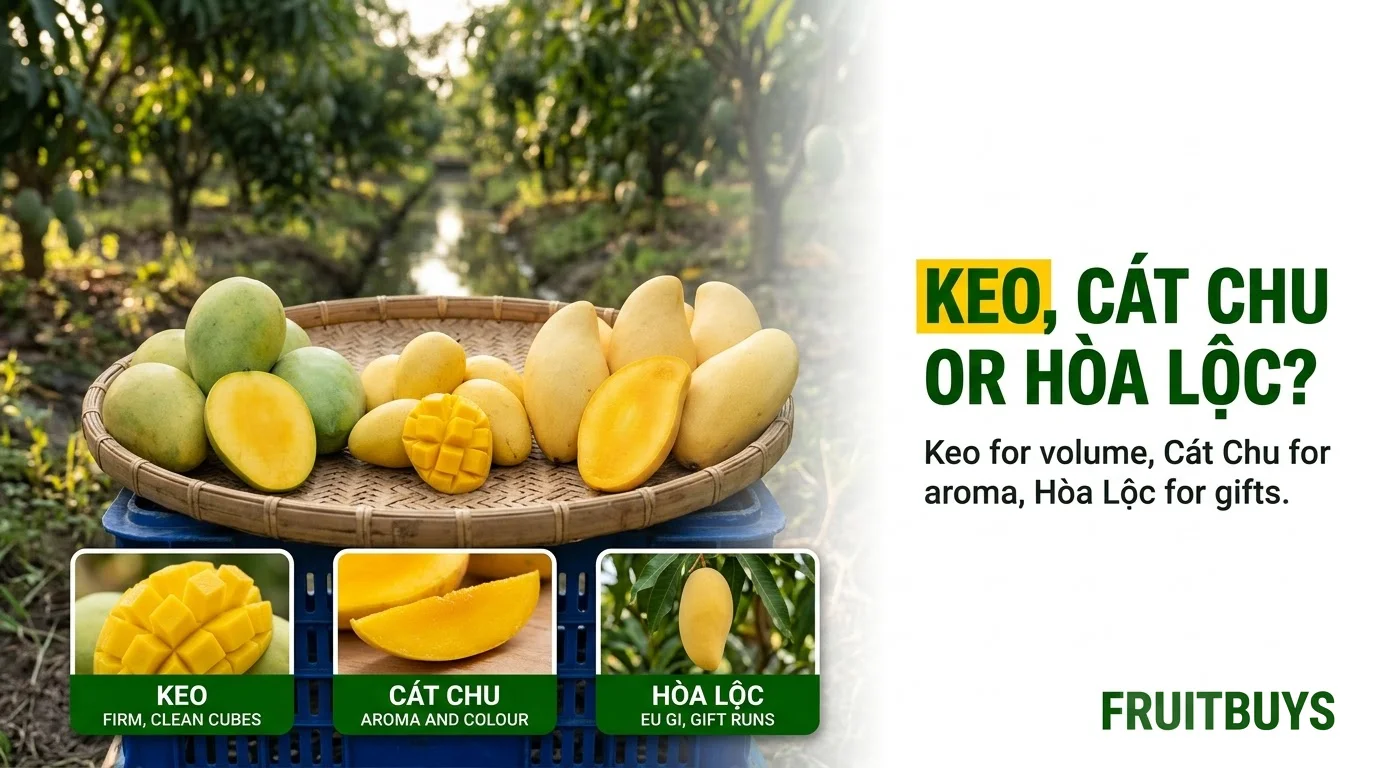
Keo for volume and clean cuts, Cát Chu for aroma, Hòa Lộc for gifting.
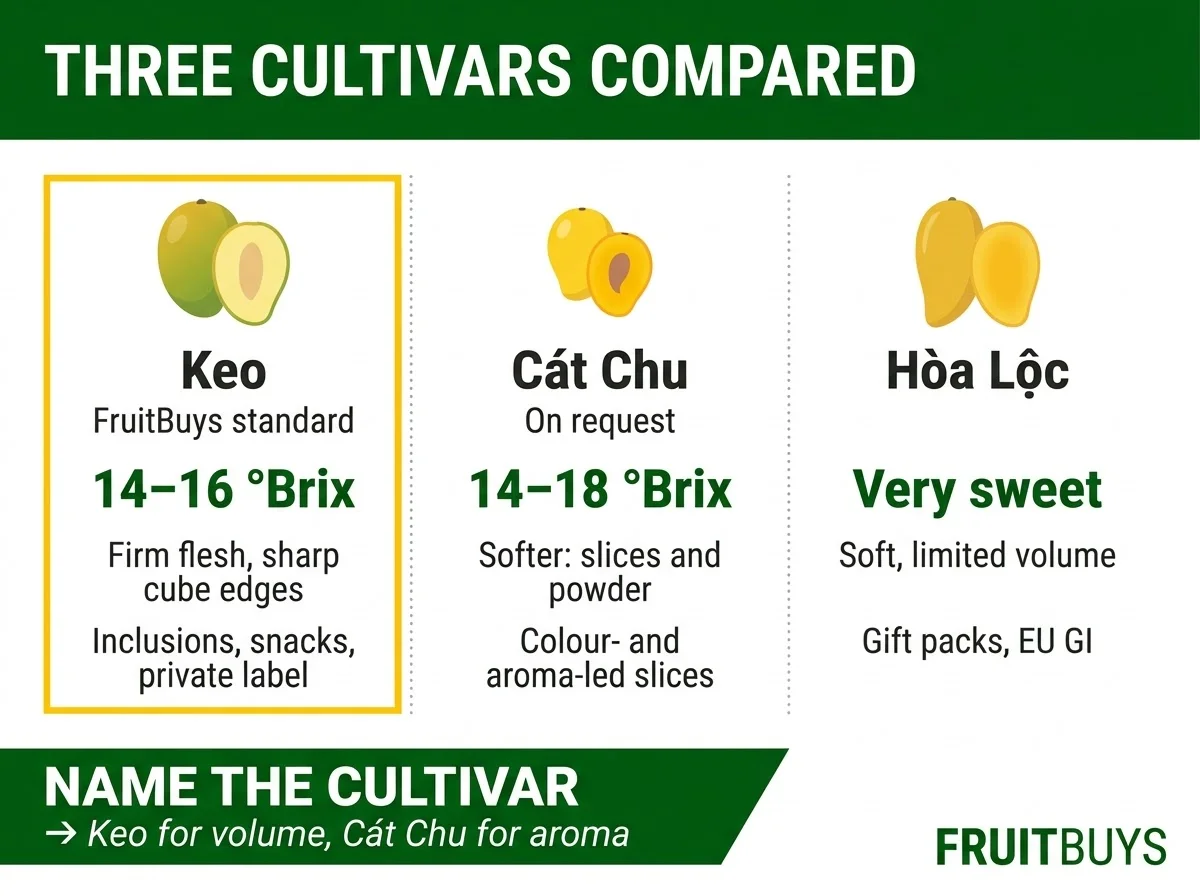
| Cultivar | Ripe °Brix | Whole fruit per kg freeze-dried | Cut behaviour | Best commercial use |
|---|---|---|---|---|
| Keo (FruitBuys standard) | 14–16 | 10.5–12 kg, planning anchor 11.6 | Firm flesh, sharp cube edges | Cereal and granola inclusions, snack bags, high-volume private label |
| Cát Chu (on request) | 14–18 | about 9.7 kg | Softer; best as slices and powder | Retail snack slices led by colour and aroma |
| Hòa Lộc | Very sweet | Limited volume | Soft, luxurious | Gift packs; protected EU geographical indication |
Open a carton of Keo cubes and the edges are still sharp; open a pouch of Cát Chu slices and the room smells of ripe mango. That is the practical difference in one sentence.
Keo is the workhorse. Its denser flesh survives cutting into small dice, survives the mixer in a cereal plant, and gives a clean sweet-tart flavour that sits well against dairy and chocolate. It is the FruitBuys standard because it gives the most consistent product at the most predictable cost.
Cát Chu is the aroma cultivar, grown mainly around Cao Lãnh in Đồng Tháp, a province with more than 14,800 ha of mango. It brings a deeper orange-yellow colour and a strong floral nose. The trade-off is handling: its softer flesh breaks more when diced small, so it suits slices and powder best, and once ripe it has to go into the freezer within about 24–48 hours.
Hòa Lộc is Vietnam’s luxury table mango from Tiền Giang, protected in the EU as a geographical indication under the EU–Vietnam agreement. Domestic fresh demand puts its farm-gate price at roughly two to three times Keo’s, so it suits high-end runs contracted months ahead rather than container programmes.
What does each cultivar cost per finished kilogram?
Fruit cost per kg of freeze-dried mango = farm-gate price × kg of whole fruit needed.
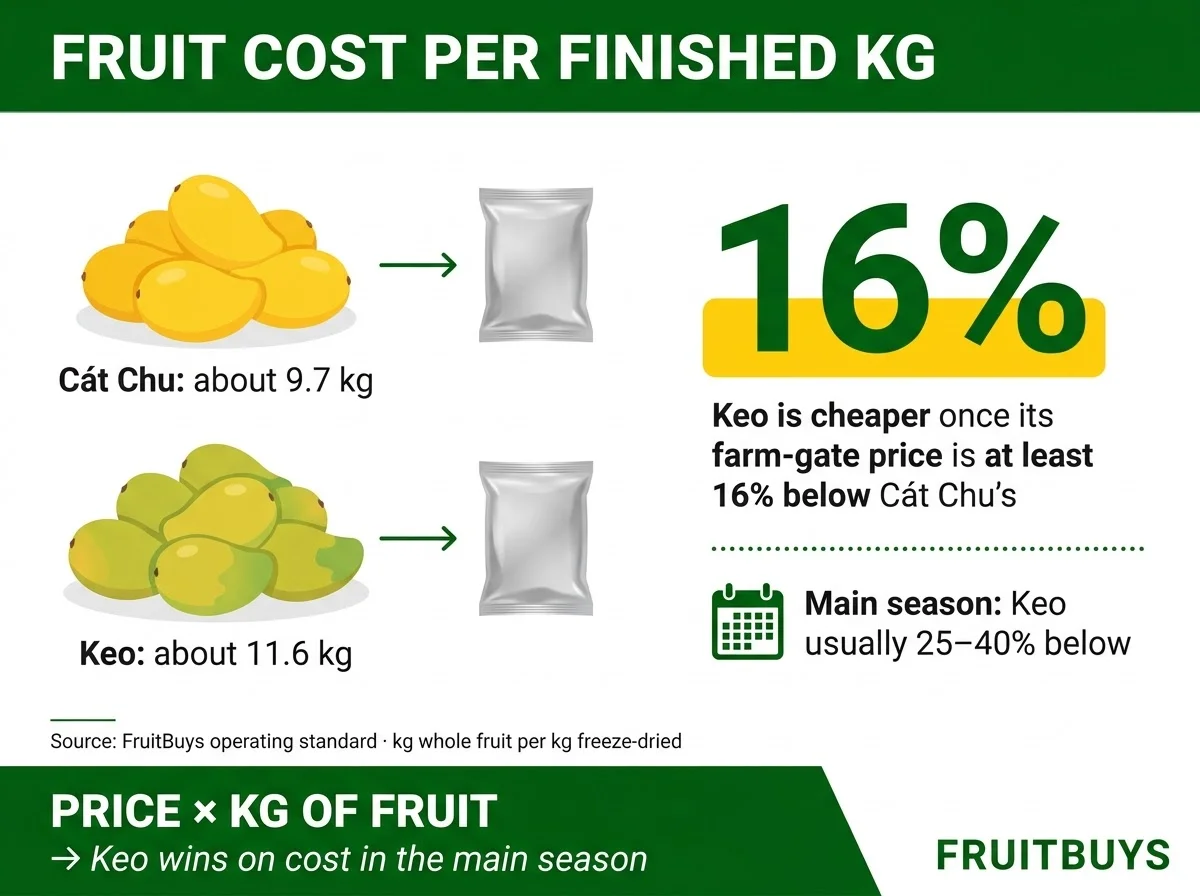
Cát Chu needs less fruit per finished kilogram, about 9.7 kg against Keo’s 10.5–12 kg, because of its thinner skin and smaller seed. On paper Keo becomes the cheaper raw material once its price is at least about 16% below Cát Chu’s (9.7 ÷ 11.6 ≈ 0.84). In the main season it usually trades 25–40% below, so Keo wins on cost with room to spare. Keo’s ratio moves with the weather through the season, which is why FruitBuys plans on 11.6 kg and quotes on whole fruit rather than peeled flesh. The full cost build-up is in why freeze-dried mango costs what it does.
Cát Chu’s case is sensory, not financial. Pay for it when aroma and colour are what your customer buys.
Why does ripeness at intake matter so much?
Because freeze-drying keeps everything the fruit has, including its faults. Drying removes water and nothing else, so the flavour, colour and texture of the finished piece are set the moment the fruit is cut.
- Under-ripe fruit dries pale, tart and hard, with a starchy finish.
- Ripe fruit at target Brix dries golden, sweet-tart and crisp, with clean edges.
- Over-ripe fruit dries sticky and collapsed: soft flesh loses structure in the freezer, pieces shrink and fines rise.
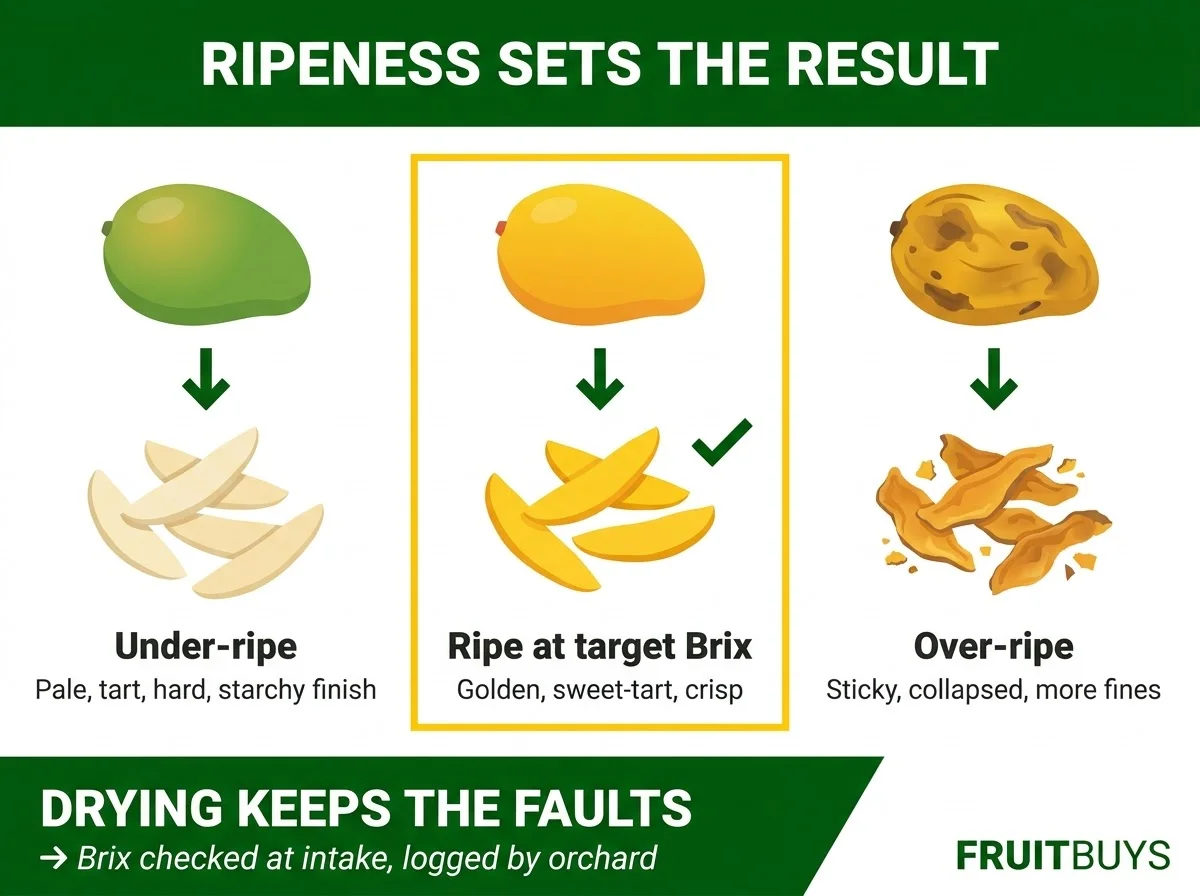
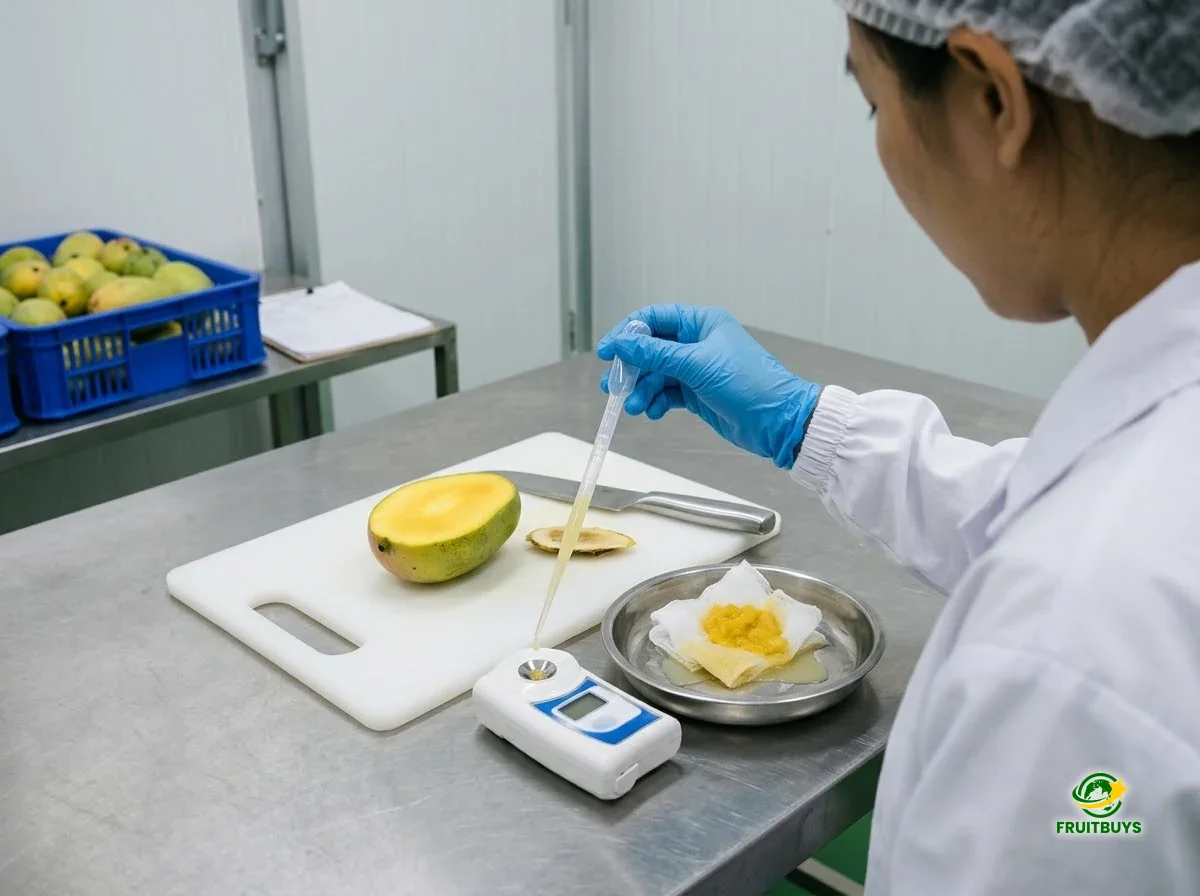
FruitBuys checks Brix at intake against the cultivar range and logs it with the orchard source, so a lot can be traced to its fruit. Off-season fruit from September to November grows through the rainy months: expect a wider Brix spread and a taste about 10–15% sharper than main-season fruit. That is a natural trait, not a defect. Agree a sensory tolerance with FruitBuys, or fill off-season shipments from main-season stock.
How does Vietnamese mango compare with Alphonso, Kesar and other origins?
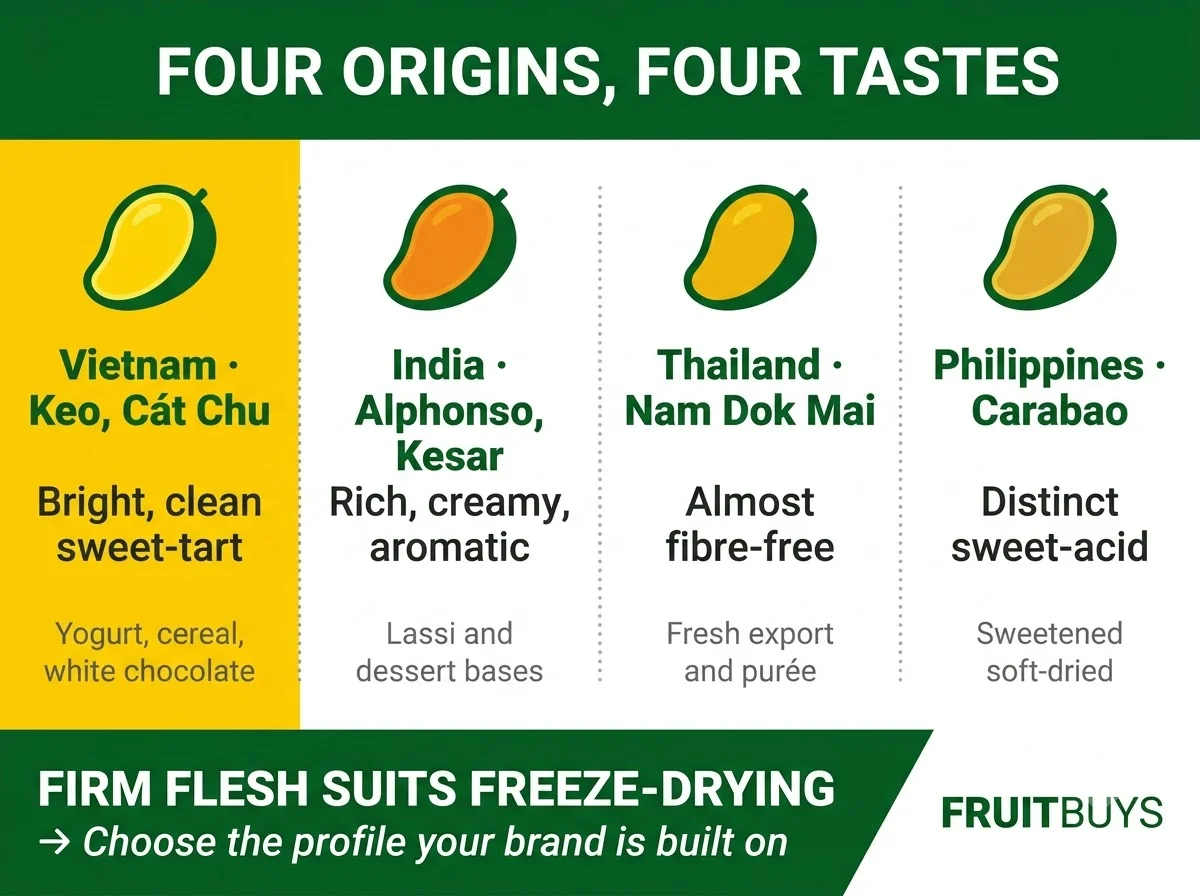
Each origin has a signature taste; choose the one your brand is built on.
- Keo and Cát Chu (Vietnam): bright, clean sweet-tart mango with a fresh finish. Strong in yogurt, cereal, white chocolate and snack packs where a little acidity cuts richness.
- Alphonso and Kesar (India): rich, deep-orange, intensely aromatic, with a creamy, almost saffron-like character long associated with lassi and dessert bases. India is the largest mango producer, at about 25 million tonnes a year, with fragmented smallholder supply, so a per-lot residue panel is worth budgeting.
- Nam Dok Mai (Thailand): deep yellow, almost fibre-free flesh, widely used for fresh export, purée and sweetened products.
- Carabao (Philippines): a distinctive sweet-acid profile with strong brand equity, processed mainly as sweetened soft-dried mango.
The split follows processing economics. Soft, juicy cultivars suit syrup infusion and hot-air drying. Freeze-drying with nothing added favours firmer flesh that keeps its shape, which is where Keo stands out. If your brand story is Alphonso or Carabao, source that fruit from its home origin. If the brief is a fresh mango note, a clean “mango” label and container-scale supply across most of the year, Vietnam is the efficient choice.
Can Vietnam supply freeze-dried mango all year?
Yes, with two harvests and planned stock; the orchards do not fruit every month, so put the plan in writing. The Mekong Delta main harvest runs March to July, with the sweetest fruit and lowest cost. An off-season crop follows from September to November.
- Lock base volume before March. Once signed, a FruitBuys contract is not reopened for a raw-material surcharge mid-season.
- Use stock to bridge the gaps. Sealed in foil, freeze-dried mango keeps 12 months at ≤25 °C, RH ≤60% and 18–24 months in cool storage at ≤18 °C, RH ≤50%, so main-season production covers Q4 and Q1 demand.
- Get a monthly allocation schedule stating volume, cultivar, and whether each shipment is fresh production or stock.
What should you write into the contract?
- Cultivar named, with no unannounced substitution between Keo and Cát Chu
- Intake Brix range for the named cultivar
- Allocation plan by month, fresh production or stock
- Release values: moisture 3–5% and water activity ≤0.30 on the same sample, as in the moisture and QA guide
- Approved sample as the colour, cut and taste reference, as in the RFQ and sample approval checklist
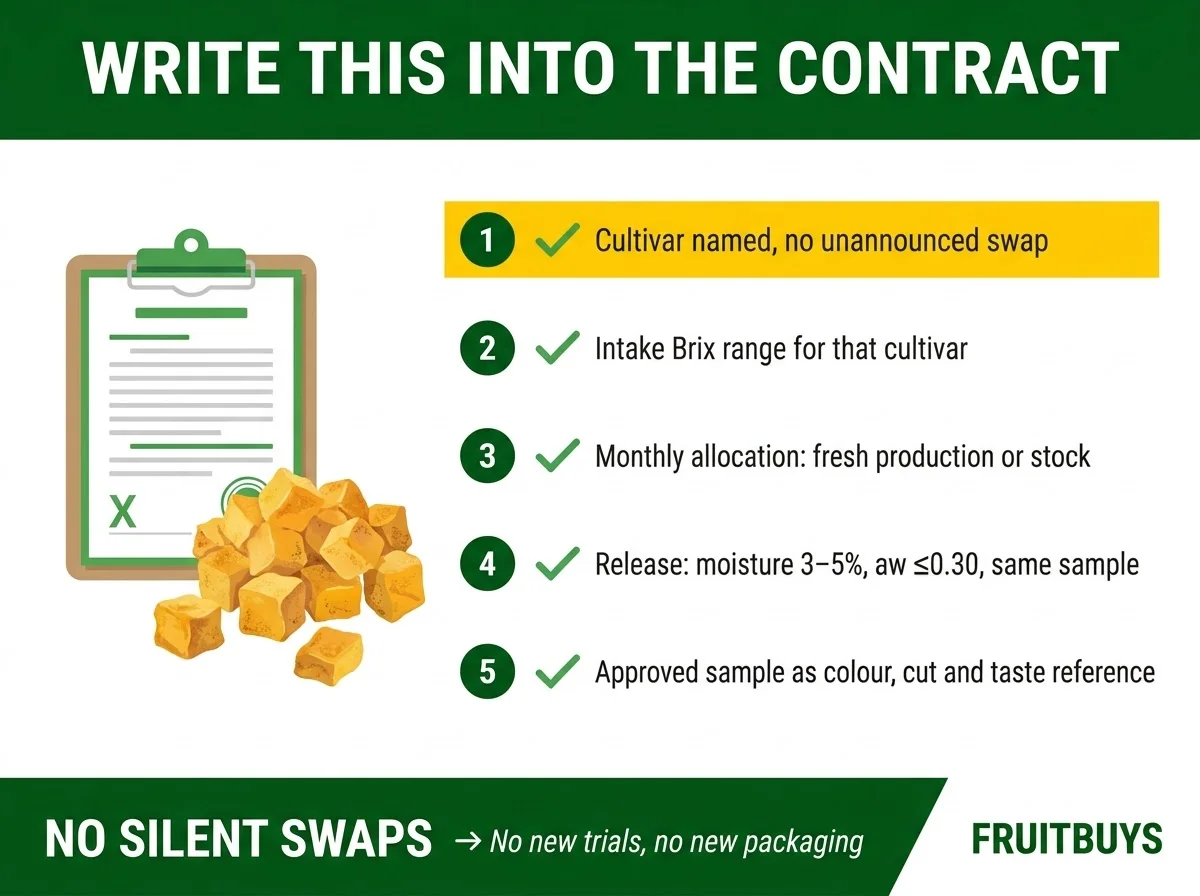
A processor that swaps Cát Chu for Keo without notice changes your colour, sweetness and aroma, and you pay for new trials and possibly new packaging. A named-cultivar contract prevents that. How the fruit then moves through the freezer and dryer is in how freeze-dried mango is made.
When is another variety or format the better choice?
When your product is chewy, baked or filled, the variety matters less than the format: soft-dried mango keeps its bite where freeze-dried pieces soften. FruitBuys supplies a low-sugar soft-dried line at about 5% added sugar on request, compared in freeze-dried or soft-dried mango. When the mango disappears into a drink or cream, freeze-dried mango powder from Keo or Cát Chu carries the flavour without the cut-shape question at all.
Taste Keo and Cát Chu side by side
Send FruitBuys your cut format, annual volume and destination market. We send Keo and Cát Chu samples in 3–5 working days with a seasonal allocation plan, so your team can choose the cultivar on taste and cost together. Specifications are on the freeze-dried mango product page; the wider programme is in the freeze-dried mango supplier guide.
[email protected] · WhatsApp Export +84 919 739 589
FAQ
What is the best mango variety for freeze-drying?
Keo for most programmes: firm flesh, clean cuts and the most predictable cost. Cát Chu when aroma and colour lead the pack.
What Brix should mango have before freeze-drying?
Keo at 14–16 °Brix, Cát Chu at 14–18 °Brix, checked at intake.
Is Vietnamese mango as good as Alphonso?
They taste different. Alphonso is richer and creamier; Vietnamese Keo and Cát Chu are brighter and more sweet-tart. Choose the profile your product needs.
Is Hòa Lộc mango a protected geographical indication in the EU?
Yes. It is among the Vietnamese GIs protected under the EU–Vietnam agreement.
When should I contract annual volume?
Before the main harvest starts in March, so main-season fruit and drying capacity are booked for your programme.



