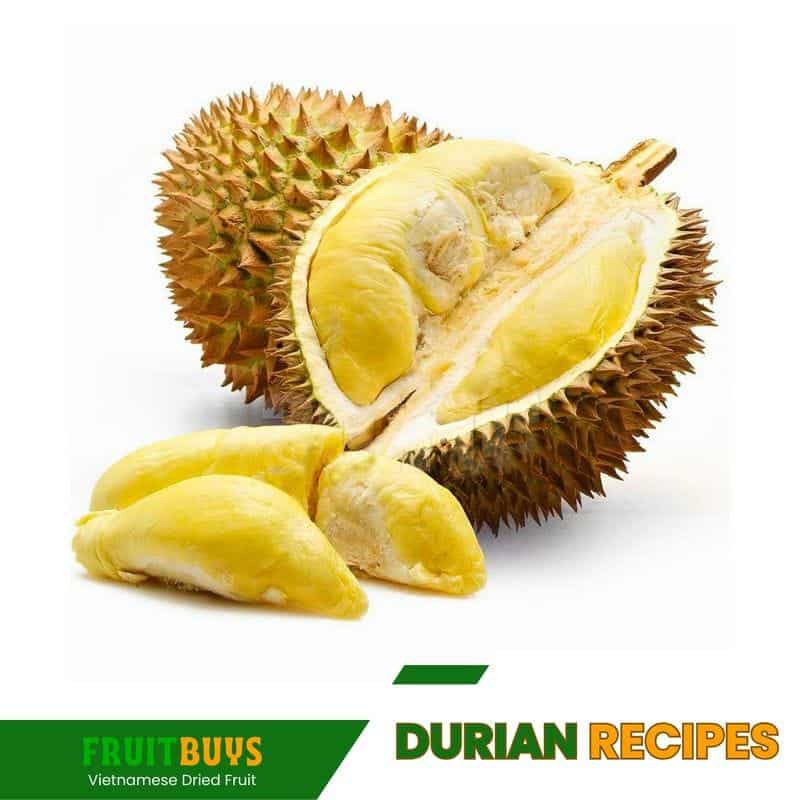

Freeze-Dried Durian Applications for Food and Snack Buyers
Freeze-dried durian works only when the buyer matches the format to the application. A retail snack pouch needs visible pieces and controlled breakage. A bakery or beverage project may need powder with mesh, carrier status and clumping review. A chocolate inclusion needs Aw compatibility and particle control. The application decides the specification, not the other way around. Buyers who approve one good sample for every use case create avoidable failures in texture, aroma, labeling, packaging and bulk release.
This guide is for importers, distributors, R&D teams, food manufacturers and private label buyers who need freeze-dried durian for snacks, chocolate, bakery, cereal, dairy, desserts or formulation work. FruitBuys supplies the finished product through one controlled route: selected format, locked specification, application sample, lot evidence, packaging alignment and documentation review.
Application Determines the Required Product Format
Freeze-dried durian applications depend on format, particle size, moisture, Aw, sensory strength and packaging.
Cubes, bites, slices and powder do not perform the same way in snacks, chocolate, bakery, dairy or beverage systems.
Buyers should define the application before approving the sample.
Freeze-drying removes water from frozen food material through sublimation under low-pressure conditions, and process variables influence structure, porosity, color and texture. The food freeze-drying review by Nowak and Jakubczyk explains that raw-material characteristics and process parameters shape final physical properties, so buyers should not treat every freeze-dried fruit format as interchangeable. (MDPI)
For freeze-dried durian, the application brief should define:
| Application Field | Buyer Decision |
|---|---|
| Intended use | Snack, inclusion, topping, powder, premix or ingredient |
| Format | Cubes, bites, slices, broken pieces, granules or powder |
| Size or mesh | Visual, mouthfeel and process behavior |
| Moisture target | Current working target: 3–5% |
| Aw target | Current working target: <0.30 |
| Sensory target | Aroma strength, taste, color and texture |
| Packaging | Retail pouch, bulk bag, ingredient pack or OEM pack |
| Documentation | COA, ingredient statement, label data and lot file |
Start with freeze-dried durian cubes, bites, slices and powder. Then connect the technical proof to freeze-dried durian moisture and Aw and freeze-dried durian COA and laboratory testing.
Retail Snack Applications
Retail snack buyers usually need bites, slices or cubes. The product must look clear in the pouch, deliver a crisp bite and hold shape through packing, carton handling and shelf storage. This application puts pressure on visual grade and broken-piece control.

Retail snack approval should define:
- Cultivar or approved cultivar range
- Format: bites, slices or cubes
- Size tolerance
- Color range
- Aroma and taste target
- Broken-piece allowance
- Fines allowance
- Moisture and Aw targets
- Packaging structure
- Seal and carton protection
- Retained sample
- Lot COA
Retail snack buyers should not approve “natural shape” without measurable grade limits. Natural shape can still produce inconsistent pouches if bulk grading remains loose. FruitBuys can support snack development by aligning sample-to-bulk consistency for freeze-dried durian with OEM pouch requirements under freeze-dried durian private label delivery.
Chocolate and Confectionery Applications
Chocolate and confectionery buyers need particle control. Large durian pieces can break during mixing or create uneven bite distribution. Small cubes, controlled broken pieces or granules often fit better than large slices.
The buyer should test:
| Control Point | Why It Matters |
|---|---|
| Particle size | Controls distribution inside chocolate or confectionery |
| Aw | Reduces moisture migration risk into the system |
| Aroma strength | Controls flavor balance |
| Broken-piece level | Supports consistent inclusion rate |
| Fat-related sensory stability | Durian contains natural fat and strong aroma |
| Packaging | Protects pieces before application |
Water activity does not equal total moisture. FDA defines Aw by vapor-pressure relationship under identical conditions, and that distinction matters when pairing freeze-dried durian with moisture-sensitive applications. (U.S. Food and Drug Administration)
For chocolate and confectionery, link application testing to freeze-dried durian moisture and Aw, then confirm lot evidence through durian laboratory testing requirements.
Bakery Applications
Bakery buyers may use freeze-dried durian powder, granules or broken pieces. The right format depends on whether the product must appear as a visible topping, integrate into filling, support flavor in dough, or blend into a dry premix.

Bakery topping
Use broken pieces, granules or small cubes. Control size, color, breakage and moisture pickup.
Filling or cream flavor
Use powder or fine granules. Control mesh, carrier status, flavor strength and clumping.
Dry premix
Use powder. Control mesh, bulk density, ingredient statement, nutrition basis and microbiology. The buyer must ask whether the powder contains only durian or includes a carrier or anti-caking component. That answer changes the ingredient statement and nutrition data.
Do not infer “100% durian” from aroma or color. For powder and label control, use freeze-dried durian powder specifications and freeze-dried durian Nutrition Facts development.
Ice Cream and Dairy Applications
Ice cream and dairy applications create two different routes: flavor delivery and inclusion delivery. Powder supports flavor integration. Small pieces or granules support visible inclusion, but they may soften after contact with moisture.
R&D teams should test:
- Powder dispersion
- Aroma release
- Particle size
- Texture after hydration
- Color change
- Sensory balance
- Aw compatibility
- Ingredient statement
- Microbiology panel
- Storage behavior after opening
Low-moisture products still require contamination prevention and sanitation discipline. FDA’s draft guidance on low-moisture ready-to-eat foods focuses on sanitation programs and corrective actions because dry foods can still create food-contact surface and pathogen-control concerns. (U.S. Food and Drug Administration)
FruitBuys should not approve dairy or ice cream applications from a dry-sample tasting alone. The buyer needs an R&D trial using the buyer’s actual system, then a release file that ties the chosen format to the final application.
Cereal and Granola Applications
Cereal and granola buyers need visible pieces that survive blending, packing and distribution. Bites, small cubes or controlled broken pieces may work, but the buyer must define size and breakage after handling.

Key checks:
| Requirement | Control |
|---|---|
| Visible inclusion | Piece size and color |
| Bite texture | Moisture, Aw and pack protection |
| Mixing survival | Breakage test |
| Moisture migration | Aw review and application trial |
| Aroma balance | Sensory comparison |
| Retail consistency | Retained sample and grade split |
The buyer should not select slices for cereal use unless the application wants visible fragments and accepts breakage risk. Slices usually carry higher handling risk than smaller pieces. For mechanical handling and packing risk, use freeze-dried durian packaging and shelf-life controls and freeze-dried durian carton and container planning.
Beverage and Premix Applications
Durian powder for beverage or premix applications needs a formulation brief, not only a product sample.
Mesh, bulk density, dispersion, clumping, carrier status and ingredient declaration control whether the powder fits the system.
Buyers should confirm powder behavior before approving bulk production.
Beverage and premix buyers often ask for powder first, but “powder” can mean several things. It can mean crushed pure freeze-dried fruit, sieved powder, powder blended with carrier, or a formulated ingredient system. Each version changes flow behavior, nutrition, labeling and application performance.
The buyer should define:
- Pure durian powder or formulated powder
- Mesh size
- Sieve distribution
- Bulk density
- Clumping behavior
- Aroma target
- Carrier declaration
- Anti-caking declaration where relevant
- Moisture and Aw
- Microbiology panel
- Nutrition basis
- Packaging format
- Opening and resealing protocol
For powder, the internal route is freeze-dried durian powder specifications → freeze-dried durian Nutrition Facts development → freeze-dried durian documentation readiness.
Dessert, Foodservice and Topping Applications
Foodservice and dessert buyers may use slices, cubes, broken pieces or powder depending on presentation and handling. A dessert topping needs visual grade. A filling system needs controlled particle size. A sauce or cream concept needs powder behavior and flavor release.

This category creates a common trap: the chef or R&D team approves a beautiful sample, then operations need a different format for repeatable use. FruitBuys should force the decision into a specification before the buyer moves forward.
A dessert brief should define:
| Use Case | Format Direction | Required Proof |
|---|---|---|
| Visible topping | Slices or cubes | Size, color, breakage, packaging |
| Layered dessert | Bites or broken pieces | Moisture, Aw, particle control |
| Cream or filling | Powder | Mesh, carrier status, nutrition basis |
| Decoration | Slices or cubes | Visual grade and carton protection |
| Foodservice refill | Bulk pieces or powder | Inner bag, reseal protocol, lot code |
Use sample-to-bulk consistency for freeze-dried durian before foodservice approval. Foodservice errors multiply quickly because staff open, reseal and reuse packs under real working conditions.
Cultivar Selection by Application
Cultivar choice should follow the application. Ri6 may support a Vietnamese cultivar identity when the buyer wants a distinct origin-linked product. Monthong/DONA may fit buyers who want a familiar Southeast Asian durian profile. Neither name proves the finished product will work.
The application trial should compare:
- Aroma strength
- Color
- Texture
- Drying behavior
- Broken-piece rate
- Powder flavor strength
- Moisture and Aw
- Bulk repeatability
- Packaging fit
Cultivar choice needs evidence. Use Ri6 vs Monthong freeze-dried durian before locking the final product for R&D or private label work.
Application Trial and Bulk Approval
An application trial should produce a decision file. It should not end with “buyer likes sample.”

The trial file should include:
Application brief
→ format sample
→ sensory review
→ particle or size record
→ moisture and Aw targets
→ packaging condition
→ application test notes
→ COA requirement
→ retained sample
→ bulk approval criteria
Codex General Principles of Food Hygiene identifies hygiene measures and food safety controls across the food chain and includes HACCP principles in the modern text. That framework supports structured control, but it does not replace product-specific application trials or lot evidence (FAOHome). FruitBuys should connect application trials to approved sample and bulk release. A sample can satisfy R&D but still fail bulk release if the measurable criteria remain missing.
Application Mapping
| Buyer Type | Application | Required Format | Proof Needed | FruitBuys Delivery |
|---|---|---|---|---|
| Importer | Retail snack pouch | Bites, slices or cubes | Moisture, Aw, broken-piece limit, COA, pack file | Quality Control and Documentation |
| Distributor | Tropical freeze-dried range | Bites, cubes or mixed pieces | Format tolerance, visual grade, lot file | Export-ready product release |
| R&D developer | Chocolate or confectionery | Small cubes, granules or broken pieces | Particle size, Aw, sensory trial | Application-aligned sample route |
| Bakery manufacturer | Filling, topping or premix | Powder, granules or broken pieces | Mesh, carrier status, microbiology, nutrition basis | Specification and lab-file alignment |
| Dairy or ice cream developer | Flavor or inclusion | Powder or small pieces | Dispersion, hydration, Aw and microbiology review | Application trial and release evidence |
| Cereal brand | Granola or cereal inclusion | Bites, cubes or broken pieces | Breakage, moisture migration and retained sample | Sample-to-bulk control |
| Private label buyer | Branded snack pouch | Bites or cubes | Pouch spec, label data, COA, retained sample | OEM/Private Label Delivery |
| Ingredient buyer | Manufacturing input | Powder or granules | Mesh, bulk density, carrier declaration, COA | Documentation and lot release package |

Highest-Risk Error: Using One Sample for Every Application
The highest-risk error is approving one freeze-dried durian sample and forcing it into multiple applications.
Each application needs its own format, particle size, moisture/Aw review, packaging condition and release criteria.
Buyers should approve the product only for the application that the sample actually tested.
A snack sample does not prove bakery performance. A powder sample does not prove consumer pouch performance. A beautiful slice does not prove cereal inclusion stability. A broken-piece ingredient does not prove private label shelf presentation.
The buyer should hold approval when:
- Application is not defined
- Format is vague
- Powder carrier status is missing
- Particle size is not measured
- Moisture and Aw are not confirmed
- Packaging differs from the tested sample
- Microbiology panel is missing where required
- Label data does not match the formula
- Retained sample is not available
- Bulk comparison rule is missing
If the buyer skips these checks, the issue does not vanish. It moves to R&D delay, QA hold, label correction, texture failure, broken-product disputes or rejected private label pack approval. Use freeze-dried durian buyer checklist as the final gate before sample approval or bulk release.

Why FruitBuys Delivers This
FruitBuys supplies freeze-dried durian as one export-ready product under an Integrated Product Supply Model. Application control sits inside that model because buyers do not need generic durian pieces. They need the right finished product for the intended channel, food system and document file.
FruitBuys applies Quality Control by aligning format, particle size, moisture, Aw, sensory criteria, broken-piece limit and retained sample comparison. FruitBuys applies Raw Material Sourcing Governance by matching cultivar, maturity direction and flesh suitability to the intended application. FruitBuys applies Documentation by connecting the specification, COA, ingredient statement, nutrition basis and certificate scope to the actual product.
For private label buyers, FruitBuys applies OEM/Private Label Delivery by aligning product format, pouch configuration, label inputs, lot coding and release review. For trial buyers, FruitBuys applies MOQ Flexibility/Market Trial Support where operationally feasible so the buyer can test one application before scaling. The application is not an afterthought. It is the buyer’s approval map.
Buyer Checklist
Before approving freeze-dried durian for a food or snack application, request:
- Intended application
- Target consumer or manufacturing use
- Cultivar or approved cultivar range
- Format: cubes, bites, slices, broken pieces, granules or powder
- Size tolerance or mesh
- Carrier declaration for powder
- Bulk density where needed
- Moisture target and result
- Aw target and result
- Microbiology panel
- Sensory criteria
- Application trial result
- Packaging format
- Seal and storage condition
- Retained sample
- COA and lab report
- Ingredient statement
- Nutrition basis where label work requires it
- Sample-to-bulk comparison rule
No application brief, no reliable product approval.
Summary
Freeze-dried durian applications depend on format, particle size, moisture, Aw, sensory strength, packaging and documentation. Bites, slices and cubes fit retail snacks and visible inclusions; broken pieces and granules can fit chocolate, bakery, cereal and dessert applications, powder fits bakery, beverage, dairy and premix systems when mesh, carrier status, clumping and nutrition basis are controlled.
FruitBuys manages application fit through Quality Control, Raw Material Sourcing Governance, OEM/Private Label Delivery, Documentation and controlled sample-to-bulk release.
FAQ
What are the main applications for freeze-dried durian?
Main applications include retail snack pouches, chocolate inclusions, bakery toppings, bakery fillings, ice cream, dairy systems, cereal, granola, desserts, beverage powder and premixes.
Which format works best for retail snacks?
Bites, slices and cubes work best when the buyer controls size, broken pieces, moisture, Aw, packaging and retained sample comparison.
When should buyers use freeze-dried durian powder?
Use powder for bakery, beverage, dessert, dairy or premix applications. Confirm mesh, carrier status, clumping behavior, microbiology and nutrition basis before approval.
Can broken pieces be used in food manufacturing?
Yes, when the buyer’s application accepts them. Broken pieces need size control, moisture/Aw review, microbiology evidence and an ingredient-grade specification.
Does one sample work for all applications?
No. Each application needs its own format, trial, packaging condition and release criteria. A snack sample cannot prove powder or bakery performance.
What should private label buyers check?
Private label buyers should check format, pouch structure, label data, lot code, COA, retained sample and sample-to-bulk criteria before artwork approval.
Which article should follow this one?
Read freeze-dried durian private label delivery next for branded pouch development, or freeze-dried durian buyer checklist for final approval.
Conclusion
Submit the R&D application brief after confirming format, particle size, aroma target, moisture/Aw criteria, packaging condition and required lot-release evidence.
References
- Dorota Nowak and Ewa Jakubczyk. “The Freeze-Drying of Foods: The Characteristic of the Process Course and the Effect of Its Parameters on the Physical Properties of Food Materials.” Foods, 2020. (MDPI)
- U.S. Food and Drug Administration. “Water Activity (aw) in Foods.” Inspection Technical Guide. (U.S. Food and Drug Administration)
- U.S. Food and Drug Administration. “Draft Guidance for Industry: Establishing Sanitation Programs for Low-Moisture Ready-to-Eat Human Foods and Taking Corrective Actions Following a Pathogen Contamination Event.” January 2025. (U.S. Food and Drug Administration)
- Codex Alimentarius, FAO/WHO. “General Principles of Food Hygiene (CXC 1-1969).” 2023 publication listing, 2022 revised text. (FAOHome)