
Which longan works in a tea or bubble-tea menu: dried, freeze-dried or powder?
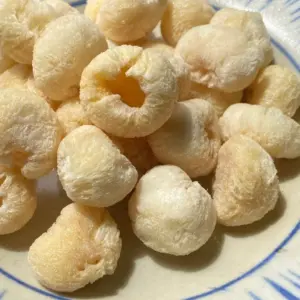
It depends on what the customer sees in the cup. Traditional dried longan suits a pot of red date tea simmered for half an hour, where the fruit is meant to turn dark and soft. Freeze-dried whole balls suit loose tea blends, gift tins and cups where the fruit is visible: they soften in 60–90 seconds in hot water and release the aroma of fresh-peeled longan. Freeze-dried longan powder suits milk tea bases and ready-to-drink lines, where the flavour should disappear into the drink. Most beverage brands end up using two of the three.
Why is longan tea worth a place on a Western menu?
Because it brings a story, a flavour and a sugar argument at once. Longan with red dates (jujube) and goji has been steeped in Chinese, Vietnamese and Taiwanese homes for generations as a warm, caffeine-free evening cup, sweetened by the fruit itself. That ritual now fits three shelves that are growing in Europe, North America and the Gulf:
- Caffeine-free evening and botanical blends, sold next to chamomile and rooibos.
- Bubble-tea and milk-tea menus, where a floral, honeyed fruit stands out from mango and strawberry.
- Lower-sugar drinks, where the natural sweetness of longan replaces part of the syrup.
Keep the copy on taste, tradition and ingredients. Longan’s appeal is the cup itself; health claims beyond the approved nutrition claims do not belong on the pack.
Which format fits which drink?
| Your product | Format | Dose to start from | What the customer gets |
|---|---|---|---|
| Longan red date tea, simmered or slow-brewed | Traditional dried longan, or freeze-dried whole balls for a lighter cup | 3–4 freeze-dried balls per 250 ml cup with 2–3 red date slices and a few goji berries | Deep, sweet, caramel-floral cup |
| Loose-leaf tea blend, gift tin | Freeze-dried whole balls or halves | 2–3 balls per cup | Visible ivory fruit that opens up in the pot |
| Pyramid tea bag | Freeze-dried pieces, sized to the bag | Pieces in the blend with the tea or herbs | Floral note without a bulky bag |
| Milk tea, bubble tea | Powder in the base, whole balls as garnish | Powder at 3–5% of the base | Longan flavour throughout, a crisp ball on top |
| Fruit tea and iced tea bases | Powder (80–100 mesh) | 3–5% of the base | Disperses fast; no pieces to settle |
| RTD bottles | Powder | Set in your pilot | Cloudy, natural fruit body |
Doses are starting points for a pilot; your tea base, sweetness target and cup size decide the final recipe. The powder grades, mesh and dosing are covered in what to specify before buying freeze-dried longan powder in bulk.
How does freeze-dried longan behave in a cup?
Freeze-dried longan is crisp because its water is gone, so in a hot drink it rehydrates fast, and that is the point.
- 0–30 seconds: the hollow ball floats and the water around it starts to turn faintly cloudy.
- 60–90 seconds: the ball softens and releases a honey-floral aroma into the cup.
- After steeping: a soft, sweet piece of fruit to eat at the end, which is part of the ritual.
As a garnish on milk tea or a frozen drink, a whole ball stays crisp for 3–5 minutes on a cold, wet surface, long enough to serve and photograph. For a crisp topping that lasts longer, sprinkle it on just before handing the cup over.
What you will not taste is sulfur. Traditional dried longan has long been sulfur-fumigated to hold colour, and a fumigated lot can leave a sharp, sulfurous note in a delicate tea. FruitBuys longan is unsulfured, with a sulfite result below 10 mg/kg on every lot COA, so the tea tastes of fruit and the box has nothing to declare.
What does a kilogram cost you per cup?
Work it out per serving, not per kilogram. One kilogram of freeze-dried longan holds about 600–800 whole balls.
| Serving | Balls per cup | Cups per kg | What it means for you |
|---|---|---|---|
| Loose-leaf blend or gift tin | 2–3 | about 200–400 | The fruit cost per cup is a few balls, not a scoop |
| Red date tea, fuller cup | 3–4 | about 150–260 | Generous, visible fruit at a modest cost per serving |
| Milk-tea garnish | 1–2 | about 300–800 | One ball on top carries the menu name |
Cost per cup = price per kg ÷ cups per kg. Put your own price in, and compare it with the syrup or flavouring it replaces. Because one kilogram carries the fruit of 8–9.5 kg of fresh longan, a few balls give the cup the flavour of a handful of fresh fruit.
How do you keep longan crisp in a tea blend?
Longan’s natural sugar draws moisture from humid air, and a blend is only as dry as its wettest ingredient. Three rules keep a longan tea blend crisp on the shelf:
- Match the dryness of the other ingredients. Dried red dates and goji usually hold more moisture than freeze-dried longan; over weeks they can pass it on. Keep longan in a separate inner sachet, or dry the other botanicals to a low water activity before blending.
- Pack in barrier film. Foil or high-barrier laminate pouches with a desiccant sachet; a paper tin liner alone lets humidity in.
- Blend in a dry room. Open one bulk bag per blending batch, in a room below 40% RH, and use the whole bag.
In the original foil bag, freeze-dried longan keeps 12 months at ≤25 °C and RH ≤60%, and 18–24 months in cool storage at ≤18 °C and RH ≤50%. Bag sizes and carton options are in how freeze-dried longan should be packed and loaded.
Which tea is traditional dried longan still better for?
For a dessert soup or a medicinal-style brew simmered for an hour, traditional dried longan is the right ingredient: it is meant to cook down dark and soft, and its smoky caramel suits that pot. If that is your whole menu, buy traditional. Where the fruit should look like fruit, the cup should taste fresh, and the label should say “unsulfured”, freeze-dried longan is the stronger choice; how the two compare on sugar, colour and shelf life is in what is dried longan, and when does freeze-dried sell better.
FruitBuys can send whole balls, halves, pieces and powder in one sample shipment, so your team can brew the red date tea, blend the loose tea and test the milk-tea base in the same week. Full details are on the freeze-dried longan product page and the freeze-dried longan powder product page. The checks and RFQ lines for a first order are in what to specify for a firm freeze-dried longan quote.
FAQ
How do you make longan red date tea for a commercial menu?
A starting point per 250 ml cup: 3–4 freeze-dried longan balls, 2–3 red date slices and a few goji berries, steeped in hot water. Freeze-dried balls soften in 60–90 seconds; traditional dried longan needs longer simmering.
What is dried longan tea?
A tea of dried longan steeped or simmered in hot water, often with red dates (jujube), goji or chrysanthemum: a naturally sweet, caffeine-free cup traditional in Chinese and Vietnamese homes.
Can I use freeze-dried longan in bubble tea?
Yes. Use powder at 3–5% of the base for flavour and one or two whole balls on top as a crisp garnish that holds for 3–5 minutes.
Is longan tea caffeine-free?
Longan itself contains no caffeine. A blend is caffeine-free if the other ingredients are, such as red dates, goji and chrysanthemum.
How many cups does a kilogram of freeze-dried longan make?
About 200–400 cups at 2–3 balls per cup, since a kilogram holds about 600–800 whole balls.
Does freeze-dried longan contain sulfites?
No. It is unsulfured, with a sulfite result below 10 mg/kg on every lot COA.
Which format should a tea-bag brand use?
Freeze-dried pieces sized to the bag for pyramid bags; whole balls or halves for loose-leaf blends and gift tins.



