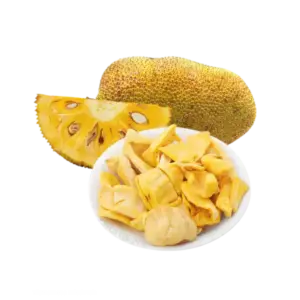

Freeze Dried Jackfruit
Buying freeze-dried jackfruit for food manufacturing, ingredients, retail, import or private label is not one decision. It is a chain of decisions about product identity, raw material, process evidence, lot release, application fit, packaging, shelf life, nutrition, market access, customs and commercial handoff.
A supplier page can help you discover a product. It cannot, by itself, establish that the exact SKU is correctly specified, safely released, suitable for your application, correctly labeled, import-ready or repeatable across future lots.

The efficient approach is to identify the next decision that can block approval, assign it to the correct owner and request evidence at the same basis. Use this guide as a route map, then open the specialist article for the full method and verification logic.
The qualification sequence in one view
| Stage | Buyer question | Evidence direction | Next owner |
|---|---|---|---|
| 1. Product definition | What exact form and use are being considered? | SKU, form, formulation, intended use and market | Specification/R&D |
| 2. Raw material | Which source, cultivar and maturity assumptions matter? | Origin, cultivar, maturity, pulp basis and incoming controls | Raw-material/procurement |
| 3. Process | What process records should QA review? | Receiving, preparation, freezing, drying, unloading, sanitation and hazard controls | Process/QA |
| 4. Release evidence | What proves the lot and supplier system? | COA, methods, lot traceability and certificate scope | QA/supplier quality |
| 5. Application fit | Which format should be tested? | Form, application, sample conditions and trial acceptance | R&D/customer |
| 6. Technology choice | Is freeze drying the right process family? | Matched comparison by product objective and evidence | R&D/procurement |
| 7. Program readiness | Can the approved concept move to RFQ and bulk? | Specification, golden sample, artwork, first-bulk comparison and change control | OEM/brand/procurement |
| 8. Yield basis | What denominator and evidence support conversion planning? | Prepared-pulp or whole-fruit basis, dry-matter calculation and pilot record | Operations/procurement |
| 9. Shelf life | What study supports a duration and storage route? | SKU-package-storage protocol, endpoints and stability records | QA/packaging/R&D |
| 10. U.S. access | What must the importer and supplier verify? | FDA/FSVP/facility/label/shipment records by exact SKU | Importer/regulatory |
| 11. EU access | What must be reviewed for the Member State route? | Food information, hygiene, MRL, contaminants, microbiological and operator evidence | Importer/regulatory |
| 12. UAE access | What must be confirmed for UAE/Dubai? | Registration, labeling, release, hygiene and local-authority route | Importer/regulatory |
| 13. Customs | What classification evidence is needed? | Product-description file, destination tariff system and authority review | Customs broker/importer |
| 14. Nutrition | What can support label values? | Finished-SKU analysis or validated calculation, method and artwork approval | QA/regulatory/brand |
| 15. Packaging | What proves carton loading and protection? | Density method, usable volume, pack-out, integrity and handling trial | Packaging/logistics |
| 16. Specification | What makes the SKU measurable and releasable? | Field, unit, basis, method, sample, tolerance and disposition | QA/buyer |
| 17. Hub route | Which decision should happen next? | Role-to-owner route and linked evidence sequence | Buyer/project lead |

This sequence does not mean every project has the same risk or duration. It means that each decision should have a defined owner, evidence basis and handoff rather than being hidden inside a general supplier claim.
Start with the product and the buyer’s use case
Before requesting a quote or sample, define what you need to approve. “Freeze-dried jackfruit” may refer to pieces, slices, chunks, dice, crumble or powder. The intended use may be a ready-to-eat snack, topping, inclusion, ingredient or powder. Those choices affect specification fields, application testing, packaging, labeling, customs review and the evidence required for release.
Use the freeze-dried jackfruit specification and release criteria to define the exact SKU fields. Use the freeze-dried jackfruit formats and application-qualification guide when R&D must choose a form for a controlled trial.
Do not approve a broad category when your business needs an exact form, formulation, package, market and lot basis.
Choose the route by buyer role
Different functions need different evidence. Procurement may need a comparable specification and RFQ file. QA may need methods, sampling, COA and lot traceability. R&D may need an application sample and format-specific trial. Regulatory may need market and label review. Logistics may need pack-out and transport evidence. The brand owner may need artwork and change control.
| Buyer role | First route | Decision to make |
|---|---|---|
| Procurement | product specification and release criteria | Can the SKU be written as a measurable requirement rather than a descriptive claim? |
| QA/supplier quality | COA, testing and traceability guide | Does the lot and supplier evidence support qualification and release? |
| R&D/food manufacturer | formats and application-qualification guide | Which form should be tested against the intended application? |
| Process/QA | process and food-safety control guide | What process and sanitation evidence should be requested? |
| Packaging/logistics | packaging, bulk density and carton-validation guide | What physical trial proves pack-out and handling performance? |
| Regulatory/importer | U.S. import-readiness guide, EU compliance-readiness guide or UAE import and product-registration guide | Which destination-specific documents and authority reviews apply? |
| Customs broker/importer | HS and customs-classification guide | Which exact product facts must support classification review? |
| Brand/private label | OEM and private-label buyer guide | Are specification, sample, artwork and first-bulk gates linked? |

The role route prevents one generic brochure or one certificate from being used as evidence for decisions it does not cover.
Qualify raw material before trusting conversion assumptions
Raw-material source, cultivar, maturity and edible-pulp fraction can influence the basis used in yield planning. The Vietnam jackfruit origin, cultivar, maturity and pulp-recovery guide explains how to keep study findings, internal targets and commercial pilot evidence separate.
Do not average genotype-specific study values into a universal Vietnam recovery claim. Do not treat a theoretical conversion calculation as a purchase ratio, commercial yield or supplier guarantee. The raw-material route must connect to the conversion owner before operations or procurement use the numbers.
Review process and food-safety evidence separately from product marketing
Freeze drying removes water. It does not automatically prove sterilization, validated pathogen lethality or a sterile production environment. The freeze-dried jackfruit process and food-safety control guide identifies the process checkpoints and records a buyer should review.
A process description, equipment photograph or supplier statement is not the same as a validated lot result. QA should request the relevant hazard analysis, sanitation records, process controls, environmental or finished-product testing where applicable, and traceable disposition records. The applicable controls depend on the product, operation, jurisdiction and buyer requirement.
Use COA and traceability evidence to qualify a lot
A COA is useful only when the buyer can identify the product, lot, method, units, basis, sample and issuing laboratory or responsible data owner. A certificate may describe a management system or scope; it does not automatically prove the condition of every lot or every destination-market requirement.
Use the freeze-dried jackfruit COA, testing and traceability guide to separate lot evidence, supplier-system evidence and certificate scope. For U.S. importers, FDA describes traceability and food-import obligations that must be evaluated according to the covered product and responsible parties.[1] For EU operators, traceability and food-safety responsibilities also remain tied to the applicable food business and product route.[2]
Test the application before selecting the format
A format is not approved because it appears in a catalog. Pieces, slices, chunks, dice, crumble and powder can behave differently in handling, mixing, coating, rehydration, appearance and packaging.
Use the freeze-dried jackfruit formats and application-qualification guide to define the trial conditions and acceptance questions. Keep any application conclusion conditional on the tested product, formulation, process, sample and customer use.
If the buyer is comparing drying technologies, use the freeze-drying versus air-drying versus vacuum-frying application-selection guide. That comparison route explains process-family trade-offs; it does not establish universal superiority, fixed performance or a FruitBuys capability claim.
Move from sample to RFQ and first bulk through controlled gates
An approved sample is not automatically an approved bulk program. The OEM and private-label buyer guide connects the buyer brief, specification, formulation, sample, artwork, first-bulk comparison and change-control steps.
At minimum, the program file should link:
| Gate | What must be aligned |
|---|---|
| Buyer brief | Application, market, form, formulation, package and customer acceptance criteria |
| Specification | Fields, units, basis, methods, sample plan, tolerance and disposition |
| Sample | Sample identity, intended use, trial result and approval owner |
| Artwork | Label basis, claims, market route, revision and brand approval |
| First bulk | Lot identity, comparison against the approved sample and deviation treatment |
| Repeat order | Change triggers, reapproval responsibility and evidence retention |
Do not infer MOQ, capacity, lead time, availability, repeatability or customer success from the existence of an OEM workflow. Those are separate operational claims requiring current evidence.
Keep theoretical yield separate from commercial yield
The fresh-to-freeze-dried jackfruit conversion and yield guide explains how to keep prepared-pulp and whole-fruit denominators separate. A dry-matter calculation can illustrate a scenario under defined assumptions. It does not prove commercial yield, process loss, saleable output or a fixed fresh-fruit purchase ratio.
Before using a yield number in planning, ask:
- Is the denominator prepared pulp or whole fruit?
- Is the moisture basis defined?
- Is the genotype/source identified?
- Are trim, seed, peel, breakage and fines included or excluded?
- Is the figure theoretical, pilot-based or lot-based?
- Does the record cover incoming material through saleable output on the same lot?
Validate packaging, pack-out and shelf life as physical and time-based decisions
The packaging, bulk density and carton-validation guide explains why carton geometry does not determine net weight. A physical trial must account for product form, density method, liner/bag geometry, usable volume, headspace, sealing, breakage, compression and handling.
The shelf-life and storage-validation guide then connects the actual package and storage route to a stability protocol. Do not publish a fixed duration or mandatory package construction without evidence tied to the exact SKU, package, storage condition, methods, endpoints and study design.
Food-contact packaging also requires destination-specific review. FDA maintains information on food-contact substances and conditions of use.[3] For the EU market, the Commission states that food-contact materials must meet the applicable framework, GMP and specific or national requirements.[4]

Build nutrition and label evidence from the finished SKU
The nutrition evidence and label-readiness guide explains how to distinguish raw/reference data, supplier panels, validated calculations and finished-SKU analysis.
Do not average supplier labels into a FruitBuys panel. Do not convert a raw-fruit value into a finished-product declaration. Do not publish a universal “97% nutrient retention” claim. For U.S. labels, FDA guidance places responsibility for the validity of declared nutrient values on the manufacturer and discusses product characterization, sampling, laboratory analysis and statistical interpretation.[5] For EU labels, Regulation (EU) No 1169/2011 provides the food-information and nutrition-declaration framework, subject to exact SKU and exemption review.[6]

Nutrition analysis alone does not approve full artwork. Formulation, evidence, jurisdiction, claims, rounding, language and brand approval must be connected in one revision-controlled workflow.
Prepare each destination market separately
Market access is not one global certificate. The importer, food business operator, manufacturer, regulatory owner and customs broker may hold different responsibilities.
| Destination | Specialist route | What the Hub does not conclude |
|---|---|---|
| United States | U.S. import-readiness guide | It does not establish FDA approval, FSVP completion, facility status, label compliance or shipment clearance. |
| European Union | EU compliance-readiness guide | It does not establish blanket EU compliance, exact MRL/contaminant results, Member-State clearance or legal classification. |
| UAE/Dubai | UAE import and product-registration guide | It does not establish UAE/GCC registration, Dubai release, Halal certification or approval for every emirate. |
| Customs | HS and customs-classification guide | It does not assign a universal HS code, duty rate, tariff treatment or customs outcome. |
For each destination, review the current authority, exact product form, formulation, package, label, importer role, origin, shipment date and applicable evidence. A route that is correct for one SKU or jurisdiction may not transfer unchanged to another.
What a buyer should retain in the qualification file

A defensible buyer file should connect the following records:
| File section | Minimum decision record |
|---|---|
| Product identity | SKU, form, formulation, intended use and market |
| Raw material | Source, cultivar/maturity basis and incoming criteria where relevant |
| Specification | Field, unit, basis, method, sample, tolerance and disposition |
| Process | Relevant process, sanitation and hazard-control evidence |
| Lot release | COA, analytical results, inspections, lot code and release decision |
| Packaging | Inner package, barrier evidence, pack-out and handling validation |
| Stability | Storage condition, endpoints, package and study record |
| Nutrition/label | Evidence basis, label format, claims, artwork revision and approval |
| Market access | Importer/regulatory review and destination-specific documents |
| Customs | Product-description file, classification review and date/jurisdiction record |
| OEM/RFQ | Buyer brief, sample approval, first-bulk comparison and change control |
| Repeat order | Change triggers, reapproval requirements and retained evidence |
This structure helps procurement, QA, R&D, regulatory, logistics and brand teams work from the same SKU identity without forcing one article or one certificate to answer every question.
Explore the product route
For the product-level route, explore the freeze-dried jackfruit B2B product and qualification page. From there, choose the specialist decision that matches your current risk: specification, raw material, process, COA, format, packaging, shelf life, nutrition, market access, customs or OEM/private label.
Conclusion
A responsible freeze-dried jackfruit purchase is built through linked decisions, not a single supplier statement. Define the exact product, choose the correct specialist owner, request evidence on the same basis and keep targets, studies, lot results, legal requirements and supplier claims separate.
Use the specialist routes in this guide to decide what must be resolved next. Then connect the approved record to the SKU, shipment, artwork or repeat-order file. That sequence improves buyer utility, reduces avoidable qualification gaps and prevents unsupported claims from becoming commercial assumptions.
References
- U.S. Food and Drug Administration: “Importing Human Foods: Prior Notice, facility registration, import responsibilities and FDA non-preapproval scope” (https://www.fda.gov/industry/importing-fda-regulated-products/importing-human-foods )
- EUR-Lex: “Regulation (EC) No 178/2002 laying down the general principles and requirements of food law, establishing traceability and responsibilities in the food chain” (https://eur-lex.europa.eu/eli/reg/2002/178/oj/eng )
- U.S. Food and Drug Administration: “Packaging & Food Contact Substances (FCS): food-contact-substance inventories, notifications and conditions of use” (https://www.fda.gov/food/food-ingredients-packaging/packaging-food-contact-substances-fcs )
- European Commission: “Food Contact Materials: packaging scope, Regulation (EC) No 1935/2004, GMP and specific/national legislation” (https://food.ec.europa.eu/food-safety/chemical-safety/food-contact-materials_en )
- U.S. Food and Drug Administration: “Guidance for Industry: Guide for Developing and Using Data Bases for Nutrition Labeling: product characterization, sampling, laboratory analysis and manufacturer responsibility” (https://www.fda.gov/regulatory-information/search-fda-guidance-documents/guidance-industry-guide-developing-and-using-data-bases-nutrition-labeling )
- EUR-Lex: “Regulation (EU) No 1169/2011 on the provision of food information to consumers: mandatory food information and nutrition declaration framework” (https://eur-lex.europa.eu/eli/reg/2011/1169/oj/eng )