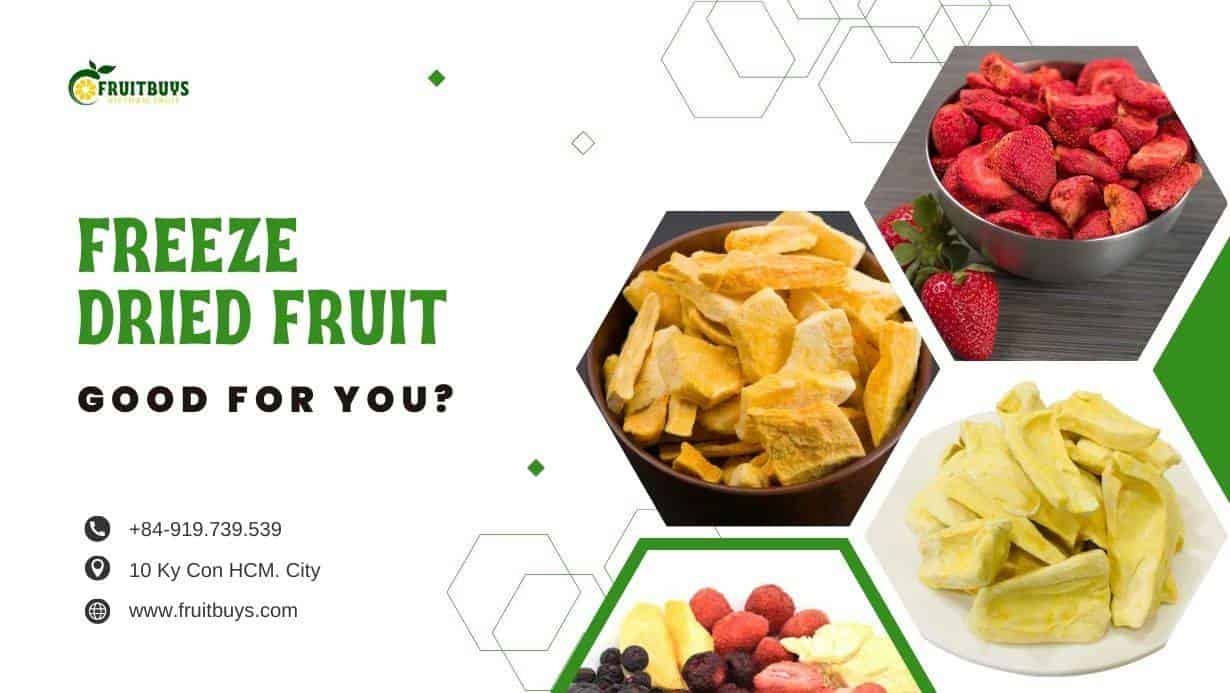

U.S. Import Readiness for Freeze-Dried Jackfruit
U.S. import readiness for freeze-dried jackfruit is a responsibility and evidence exercise, not a single certificate or FDA approval step. The importer, foreign supplier, food facility, customs filer, QA team and brand owner may each control different parts of the entry file. The exact requirements depend on the product form, formulation, facility activities, importer structure, shipment and applicable exemptions.

FDA states that food offered for import must meet applicable safety, sanitary-production and truthful-labeling requirements. FDA also states that it does not certify, license or otherwise approve individual food importers, products, labels or shipments before importation.[1] A practical readiness file should therefore prove the relevant requirements through accurate records rather than rely on an “FDA approved” description.
This guide is an operational checklist, not legal advice. The importer remains responsible for confirming the current rule, exemption, filing and product classification that apply to its own transaction.
Start by defining the exact U.S. SKU
A U.S. import review should begin with one defined SKU. Freeze-dried jackfruit pieces, slices, chunks, dice and powder may differ in formulation, labeling, intended use, sampling, packaging and customs treatment. A retail-ready package and a bulk ingredient shipment may also distribute responsibilities differently.
| SKU field | What to define before review |
|---|---|
| Product identity | Freeze-dried jackfruit and the exact botanical/product description |
| Form | Pieces, slices, chunks, dice, powder or another defined form |
| Formulation | Ingredient list, processing inputs, carriers, oil, sugar, acid or other additions |
| Intended use | Retail snack, ingredient, topping, inclusion, foodservice or further processing |
| Sales configuration | Finished retail pack, bulk pack, private label or industrial ingredient |
| Foreign supplier | Legal entity that manufactures/processes or otherwise supplies the food |
| Facility activity | Manufacturing, processing, packing, receiving or holding activity relevant to the SKU |
| U.S. importer | U.S. owner/consignee or other applicable importer structure |
| Destination records | Label, entry, shipping, COA, traceability and supporting documents |
| Customs description | Product description and classification route requiring confirmation |
The freeze-dried jackfruit B2B buyer qualification guide provides the wider product route. The U.S. page should then narrow that route to the specific SKU and importer arrangement.
Understand which actor owns which requirement
A common failure occurs when one actor assumes that another actor’s document completes the entire import file. FDA’s import framework separates entry information, facility registration, food safety, labeling and importer verification responsibilities.[1] FSVP adds an explicit risk-based verification role for covered U.S. importers.[2]
| Actor | Main responsibility to clarify | What the actor should not assume |
|---|---|---|
| U.S. importer | Importer identity, FSVP assessment where covered, entry data and required verification records | A supplier COA alone completes FSVP or entry readiness. |
| Foreign supplier/facility | Product, process, food-safety, traceability and facility records within its scope | A trading or brand name proves the manufacturing facility’s status. |
| Customs filer/broker | Accurate entry transmission, product description, importer and applicable codes | Customs filing replaces product, safety or label review. |
| QA/Supplier Quality | Product specification, COA, testing, lot traceability and release evidence | A certificate replaces lot evidence or hazard analysis. |
| Regulatory/Import team | U.S. applicability, Prior Notice, registration, labeling and importer obligations | A general “FDA compliant” phrase proves the exact SKU is ready. |
| Brand/Private Label | Market-facing identity, claims, artwork and formulation consistency | Brand approval overrides a missing legal or technical requirement. |

Written responsibility allocation reduces repeated requests and prevents a document from being used outside its scope.
Step 1 — Confirm Prior Notice and shipment-entry readiness
FDA requires notification before food is offered for import into the United States unless an exemption applies. FDA explains that Prior Notice allows it to target inspections or examinations more effectively and assess whether a shipment may present a public-health threat or serious risk.[1]
Before shipment, the importer or responsible filing team should confirm:
- Whether the shipment requires Prior Notice
- who submits it and who retains the confirmation or reference
- Whether the product description matches the exact SKU
- Whether the declared manufacturer, importer and consignee are correct
- Whether entry information is consistent across commercial and regulatory records
- Whether any applicable exemption or special route has been documented
Prior Notice is a shipment step. It does not prove that the product, facility, supplier or label has passed every other applicable review.
Step 2 — Confirm facility-registration applicability
FDA states that most facilities that manufacture, process, pack, receive or hold food must register with FDA every two years, subject to exceptions.[1] The relevant question is not whether a supplier uses the word “factory” or “exporter.” The buyer must identify the facility activity and confirm whether registration applies to that activity and entity.
The buyer should request or verify, through the appropriate party and confidentiality route:
| Facility question | Evidence or review route |
|---|---|
| Which legal entity handles the food? | Legal entity name and supplier/facility records |
| Which physical site performs the activity? | Site identity and activity description |
| What activity occurs there? | Manufacture, process, pack, receive or hold description |
| Does the activity require FDA registration? | Applicability review against current FDA rules and exceptions |
| Is the registration information current? | Confirmation through the responsible facility/importer channel; FDA registration data is not generally public |
| Does the declared manufacturer match entry records? | Cross-check commercial documents, entry data and facility records |
Facility registration is not an FDA product certification and should not be described as one. FDA also notes that registration information is confidential and is not publicly available for general lookup.[1]
Step 3 — Determine whether FSVP applies to the importer
The FSVP rule requires covered importers to perform risk-based foreign-supplier verification. FDA describes FSVP activities that can include hazard determination, food and supplier-risk evaluation, supplier approval, verification activities and corrective actions.[2]

The importer should determine:
- Whether it is the U.S. owner or consignee, or another role covered by the rule
- Which food and foreign supplier the FSVP covers
- Whether an exemption or modified requirement applies
- Who performs the hazard analysis or reviews the relevant analysis
- Which supplier-verification activity is appropriate to the risk
- How records are maintained and made available
- How supplier performance and new information trigger reevaluation
FDA identifies possible verification activities such as on-site audits, sampling and testing and review of supplier food-safety records, selected according to risk and supplier characteristics.[2] The buyer should not assume that one activity is mandatory for every freeze-dried jackfruit transaction or that one supplier document completes the FSVP.
The freeze-dried jackfruit COA, testing and traceability guide provides the lot and supplier-system evidence route that the importer may need to review.
Step 4 — Review the foreign facility’s food-safety evidence
FDA’s preventive-controls rule generally applies to covered domestic and foreign food facilities, subject to exemptions and activity-specific conditions. FDA describes a food safety plan that includes hazard analysis and written preventive controls where hazards require control. It also identifies process, allergen and sanitation controls, monitoring, corrective actions, verification and recordkeeping as parts of the system.[3]
For a freeze-dried jackfruit SKU, the importer or QA team should request evidence appropriate to the hazard analysis and product context:
- Product and raw-material specifications
- Process description and relevant batch records
- Sanitation program and post-drying handling controls
- Hazard analysis and preventive-control summary where applicable
- Environmental or product-testing rationale where applicable
- Deviation, corrective-action and affected-lot disposition records
- Lot-linked COA and test methods
- Traceability from incoming material to finished lot and shipment
- Current certificates or audit documents with legal entity, site, activity and product scope
This list is an evidence request, not a universal legal panel. The required records depend on the facility, product, hazard analysis, importer and transaction.
Step 5 — Validate the U.S. label and formulation basis
FDA states that food offered for import must have informative and truthful labeling in English, as applicable, and that most prepared foods are subject to food-labeling requirements.[1] The label review should use the exact formulation and sales configuration, not a supplier’s generic label or a draft created for another market.
The importer, regulatory reviewer and brand owner should confirm:
| Label area | Review question |
|---|---|
| Product name | Does the name accurately describe the product and form? |
| Ingredient statement | Does it match the verified formulation and processing inputs? |
| Allergen declaration | Does the formulation and facility review identify applicable allergen issues? |
| Net quantity | Is the statement consistent with the sales unit and package? |
| Nutrition Facts | Is the panel based on appropriate product-specific evidence or an accepted calculation route? |
| Manufacturer/importer information | Are the responsible entities and contact details correct for the configuration? |
| Claims | Is each claim supported and permitted for the exact product and label? |
| Storage statement | Is it supported by the package and stability evidence? |
| Language and artwork | Does the final artwork match the reviewed product and market requirements? |

FDA guidance on nutrition-labeling databases places responsibility for the validity of declared nutrient values on the manufacturer and discusses product characterization, sampling, laboratory analysis and statistical interpretation.[4] The freeze-dried jackfruit nutrition evidence and label-readiness guide handles that separate decision.
Do not average supplier labels into a finished-product Nutrition Facts panel without a valid product-specific basis. Do not use “FDA approved” as a substitute for label review.
Step 6 — Confirm entry data and Affirmations of Compliance where applicable
FDA explains that entry reviewers use information such as the declared manufacturer, importer or consignee, product description and applicable Affirmations of Compliance to verify requirements. FDA also notes that correct and accurate entry data can reduce avoidable manual review, while inaccurate or incomplete information may delay review.[1]
The entry file should therefore be checked for consistency across:
- Commercial invoice
- Packing list
- Bill of lading or airway bill
- Product description and form
- Declared manufacturer and facility information
- Importer or consignee information
- Country of origin and shipment details
- Prior Notice information where required
- Applicable A of C codes or other entry information where required
- COA, lot code and traceability references
A broker can transmit entry information, but the importer and responsible product team must ensure that the underlying data is accurate. The filing should not introduce a different product identity, manufacturer or importer from the qualification file.
Step 7 — Build a lot-linked release and traceability file
U.S. import readiness continues after the entry is transmitted. QA and procurement should be able to connect the shipped lot to the records that support release, investigation and corrective action.
A lot file should connect, as applicable:
| Record stage | Minimum linkage to preserve |
|---|---|
| Raw material | Source, incoming lot and acceptance record |
| Processing | Process batch, product form and relevant deviation record |
| Finished product | Finished lot, packing date and product specification |
| Testing | Sample identity, method, result, unit and acceptance basis |
| Certificate | Legal entity, site, activity, product scope and current date/status |
| Shipping | Invoice, packing list, shipment reference and importer/consignee |
| Release | QA disposition, deviations and corrective actions where relevant |
FDA’s traceability framework explains the value of linking a traceability lot code to key data elements and the source location where the code was assigned.[5] The exact rule coverage should be checked for the product and entity, but the record-linkage principle remains useful for importer and QA control.
Step 8 — Review customs classification separately
The product form, formulation, ingredient status, packaging and intended use may affect the customs classification review. This article does not assign an HS code or tariff treatment. The importer or customs specialist should classify the exact SKU using the relevant customs process and supporting description.
The freeze-dried jackfruit HS and customs-classification guide owns that separate decision. A classification assumption should not be embedded in a general FDA or FSVP statement.
U.S. import-readiness document matrix
The following matrix helps the buyer assign evidence to the responsible owner.
| Readiness workstream | Primary owner | Evidence to collect | Conditional scope |
|---|---|---|---|
| Product identity and form | Product/QA | Specification, formulation and product description | Exact SKU and form |
| Prior Notice | Importer/filing team | Submission and shipment references | Unless an exemption applies |
| Facility registration | Foreign facility/importer review | Facility identity, activity and applicability confirmation | Exceptions and activity scope apply |
| FSVP | Covered U.S. importer | Hazard/risk evaluation, supplier approval, verification and corrective-action records | Exemptions and modified requirements may apply |
| Preventive controls | Foreign facility/QA | Hazard analysis, preventive controls, sanitation, monitoring and verification records | Covered facility and hazard scope apply |
| Labeling | Importer/regulatory/brand | Final artwork, formulation basis and label review | Exact product and sales configuration |
| Nutrition | Manufacturer/brand/regulatory | Product-specific composition, sampling and analytical basis | Full 21 CFR Part 101 review required |
| Lot evidence | QA/supplier quality | COA, methods, results, release and traceability | Parameter and sample scope apply |
| Entry data | Importer/broker | Commercial and regulatory filing records | Shipment-specific |
| Customs classification | Importer/customs specialist | Exact product description and classification analysis | Form and intended use dependent |

Common U.S. import errors
| Error | Risk | Better control |
|---|---|---|
| Using “FDA approved” in a product or supplier presentation | Creates a false approval inference. | Describe the applicable requirement and evidence instead. |
| Treating a facility registration number as a certificate of product compliance | Registration does not replace product, safety or label review. | Verify facility activity, product records and importer responsibilities separately. |
| Assuming the exporter is the FSVP importer | FSVP role depends on the U.S. owner/consignee and applicable rule. | Identify the covered importer and document the role. |
| Using a generic COA for a different form or lot | Testing scope may not match the imported SKU. | Link the COA to the exact lot, form, method and acceptance basis. |
| Copying a supplier label into U.S. artwork | Formulation, nutrition, claims or importer information may differ. | Review final U.S. artwork against the verified product. |
| Treating Prior Notice as full import clearance | Prior Notice is one shipment requirement. | Complete the wider facility, safety, label, entry and importer review. |
| Mixing FDA review with customs classification | Regulatory and customs decisions use different authorities and evidence. | Route HS classification to the customs owner. |
| Ignoring changes after qualification | A new formulation, package, facility or supplier may invalidate the prior file. | Apply change control and reassess the affected branch. |
Buyer checklist before importing freeze-dried jackfruit into the United States

Before the first shipment, the importer and product team should confirm:
- The exact SKU, form, formulation and intended use
- The U.S. importer, foreign supplier, manufacturer and consignee roles
- Prior Notice applicability and submission responsibility
- Facility-registration applicability for each relevant activity and site
- FSVP applicability, exemptions and verification activities
- The foreign facility’s hazard analysis, preventive controls and sanitation evidence
- The product specification, COA, methods, results and lot release basis
- The final U.S. label and product-specific nutrition evidence
- Entry data, manufacturer/importer identity and applicable A of C information
- Lot traceability from raw material through shipment
- Customs classification review for the exact product form and use
- Change-control triggers for formulation, source, process, facility, package, label or importer
- Named owners for every open verification item
If an item is not applicable, document the reason and the responsible reviewer. If it is applicable but unsupported, define the evidence request before shipment rather than using a generic compliance statement.
Related product route
The OEM and private-label freeze-dried jackfruit buyer guide explains how to keep the product brief, sample approval, QA evidence and U.S. market route connected in a private-label project. The freeze-dried jackfruit B2B buyer qualification guide provides the full product route and links the U.S. decision to process, COA, packaging, nutrition, customs and OEM owners.
Conclusion
U.S. import readiness for freeze-dried jackfruit is achieved through accurate scope and linked evidence. Prior Notice, facility registration, FSVP, preventive controls, labeling, nutrition, entry data, traceability and customs classification are related but separate workstreams. No single COA, certificate, registration or supplier statement completes them all.
The defensible process is to define the SKU, assign each actor, verify the applicable requirement, retain the supporting record and reassess changes before shipment. That approach reduces avoidable document conflict without turning a conditional regulatory framework into a blanket clearance claim.
References
- U.S. Food and Drug Administration: “Importing Human Foods: Prior Notice, facility registration, import verification, food labeling, Affirmations of Compliance and FDA non-preapproval boundary” (https://www.fda.gov/industry/importing-fda-regulated-products/importing-human-foods )
- U.S. Food and Drug Administration: “FSMA Final Rule on Foreign Supplier Verification Programs for Importers of Food for Humans and Animals: importer responsibilities, hazard evaluation, supplier verification, records and corrective actions” (https://www.fda.gov/food/food-safety-modernization-act-fsma/fsma-final-rule-foreign-supplier-verification-programs-fsvp-importers-food-humans-and-animals )
- U.S. Food and Drug Administration: “FSMA Final Rule for Preventive Controls for Human Food: CGMPs, hazard analysis, preventive controls, sanitation, monitoring, verification and records” (https://www.fda.gov/food/food-safety-modernization-act-fsma/fsma-final-rule-preventive-controls-human-food )
- U.S. Food and Drug Administration: “Guidance for Industry: Guide for Developing and Using Data Bases for Nutrition Labeling: product characterization, sampling, laboratory analysis, manufacturer responsibility and statistical interpretation” (https://www.fda.gov/regulatory-information/search-fda-guidance-documents/guidance-industry-guide-developing-and-using-data-bases-nutrition-labeling )
- U.S. Food and Drug Administration: “Traceability Lot Code: traceability lot codes, source linkage, key data elements and record connections” (https://www.fda.gov/food/food-safety-modernization-act-fsma/traceability-lot-code )