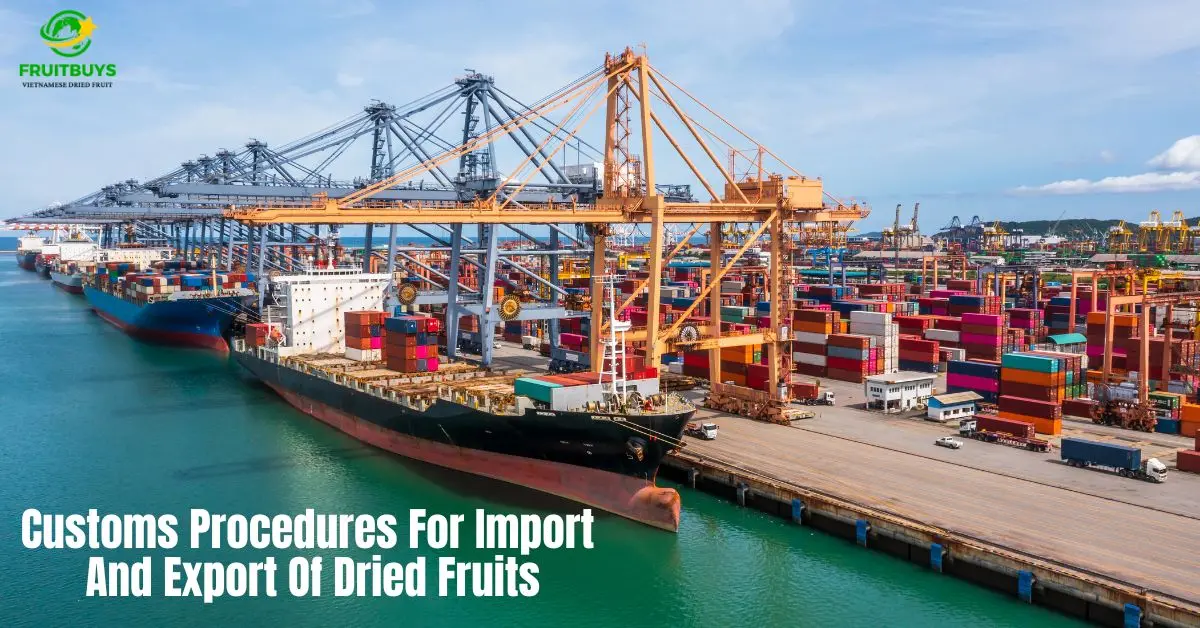

Dried Mango Shelf Life & Cold Chain: What Importers Must Know

A US-based natural food distributor booked a dry container of dried mango no added sugar from a Southeast Asian supplier. The product tested clean at origin. The COA was in order. Twenty-two days later, when the container was opened at the Los Angeles port warehouse, the product showed visible mold growth on approximately 30% of units and advanced Maillard browning across the remainder. The entire container was rejected. Total loss: over $22,000 in product, $4,500 in customs and logistics fees, and the retail buyer relationship that had taken eight months to build.
The supplier had not mentioned cold chain. The importer had not asked. Neither of them understood that dried mango shelf life and storage requirements for a no-added-sugar format are fundamentally different from every other dried fruit category this buyer had previously sourced.
This article gives you what that distributor did not have before they placed the order: the science behind the cold chain requirement, the operational specifications at every stage from factory to shelf, the real cost impact on your landed price, and the shelf life data your retail packaging needs to state accurately.
Why Dried Mango No Added Sugar Requires Cold Chain
This is the question most sourcing guides never answer. They state the requirement without explaining it. Understanding the mechanism is what separates a buyer who manages cold chain correctly from one who delegates it and discovers the problem at the destination port.
The answer comes down to one parameter: water activity (aw).
Water activity measures the availability of free water molecules in a food product not total moisture, but unbound moisture that microorganisms and chemical reactions can access. It runs on a scale from 0 (completely dry) to 1 (pure water). The aw threshold below which most molds and pathogenic bacteria cannot grow is 0.60.
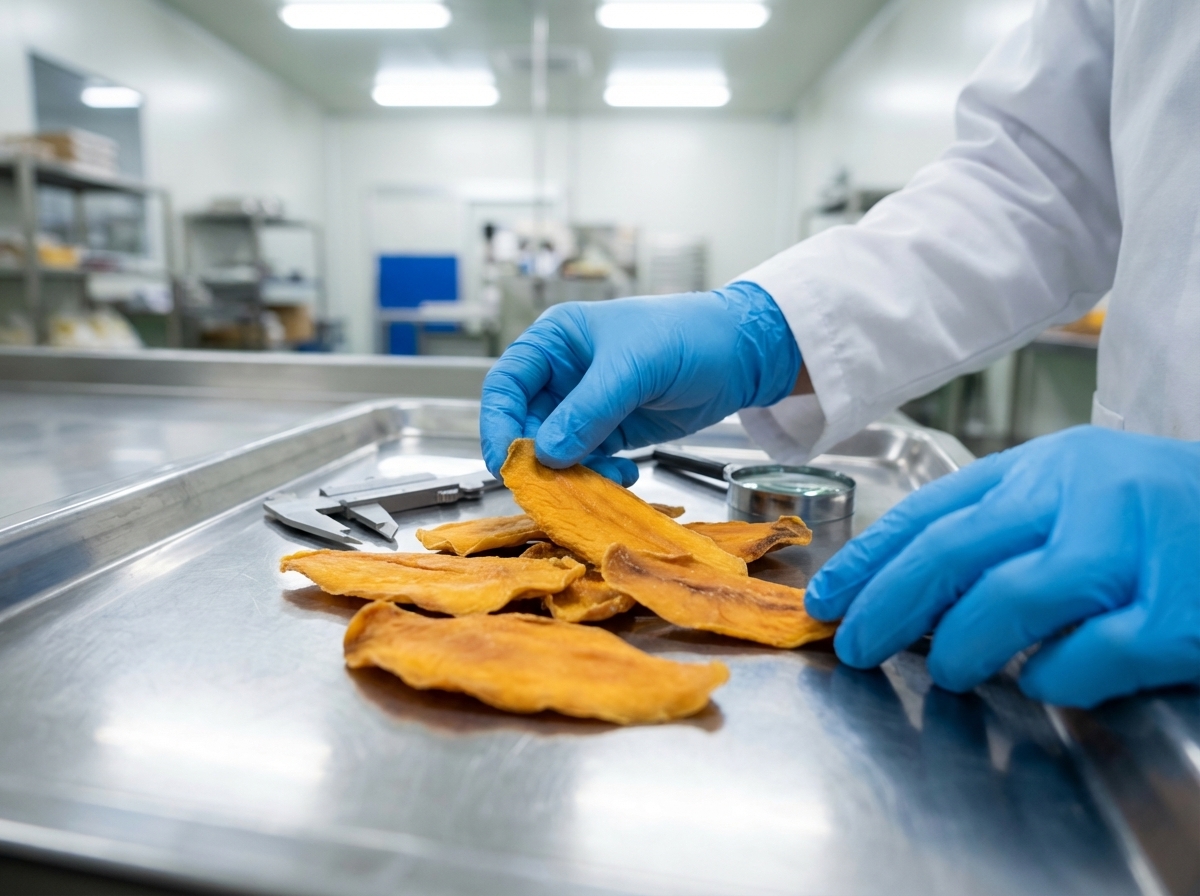
Dried mango no added sugar, produced by hot air drying to a moisture content of 15–18%, has a water activity of 0.55–0.60. That places it at the lower boundary of microbial safety safe in controlled conditions, but vulnerable to temperature and humidity variation during transit and storage.
Here is the critical variable that most buyers miss. In sweetened dried mango, added sugar performs a secondary function beyond flavor: it acts as a humectant, binding free water molecules and lowering aw to approximately 0.50–0.55. That extra margin of safety 0.05 to 0.10 aw units below the microbial threshold is what allows sweetened dried mango to be shipped in dry containers at ambient temperature without significant degradation risk.
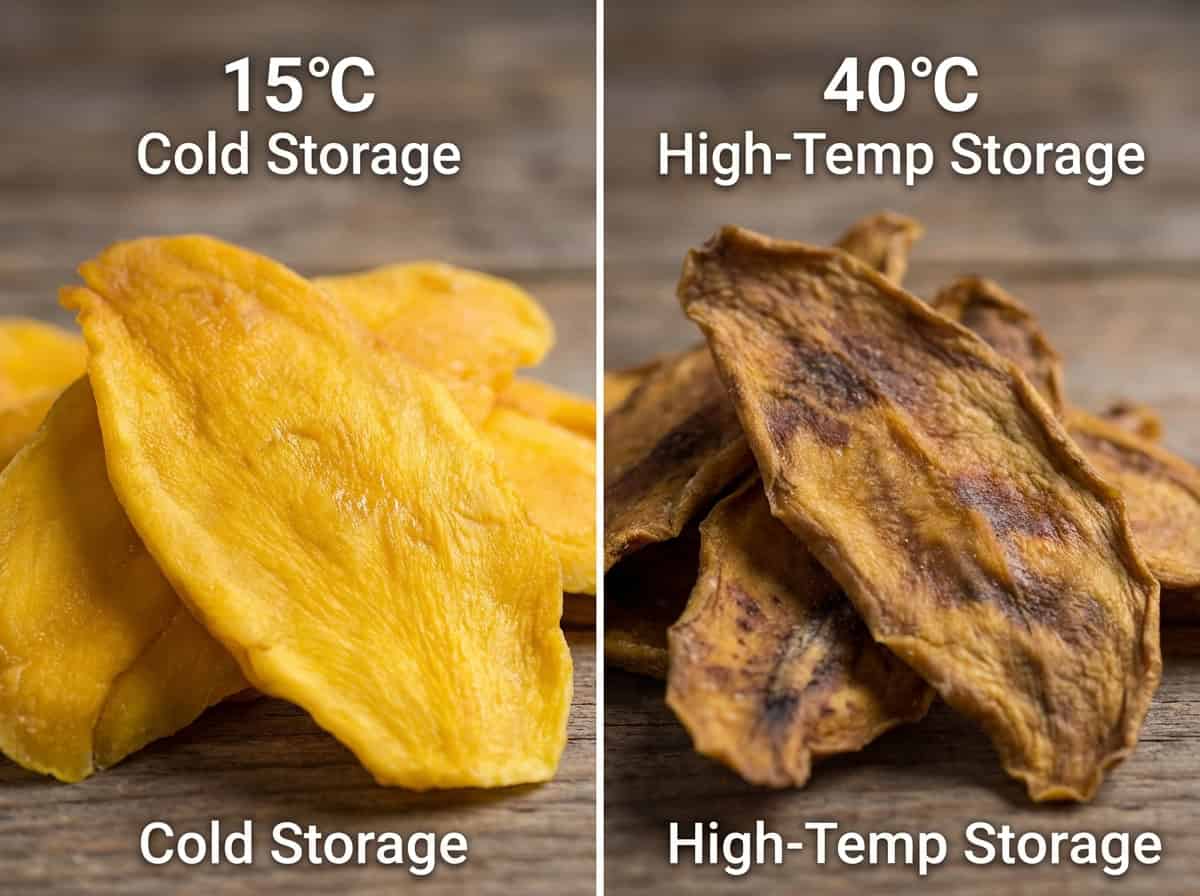
Remove the added sugar and that safety buffer disappears. The no-sugar product sits at aw 0.55–0.60 with no humectant present to hold that value stable if conditions change. Inside a dry container crossing equatorial shipping lanes in April or August, internal temperatures can exceed 45°C on warm days. At that temperature, two things happen simultaneously. First, if any moisture enters the packaging through an imperfect seal, aw can rise above 0.60, entering the mold growth zone. Second, the Maillard browning reaction a chemical reaction between natural sugars and amino acids in the fruit accelerates sharply above 25°C, darkening the product and degrading visual quality even when microbial safety is maintained.
A reefer container set at 15°C eliminates both risks. It holds aw stable, keeps Maillard browning minimal, and delivers product at origin quality to the destination port. That is the entire case for cold chain in three sentences. Any supplier who does not explain this before you order is either uninformed about their own product or indifferent to what arrives at your warehouse.
Shelf Life: What the Numbers Mean and What They Do Not
Sealed, at 10–20°C: 6–9 months from production date.
That is the shelf life of dried mango no added sugar under correct storage conditions. It is not 12 months. It is not 18 months. Any supplier claiming shelf life above 9 months for a genuine no-sugar, no-preservative soft-dried mango product is either adding something they are not disclosing or has not validated their shelf life claims with accelerated stability testing.
The 6–9 month window reflects the interaction of three variables:
Moisture stability. At 15–18% moisture and aw ≤0.60, the product is microbiologically stable under cold storage. As storage time increases, even well-packaged product slowly equilibrates toward ambient humidity through micro-permeation of the packaging film. Aluminum foil laminate barrier film slows this process significantly it is the correct packaging material for this product, not a premium option. Standard polyethylene film is insufficient barrier for long transit and extended shelf life.
Vitamin C degradation. Ascorbic acid in dried mango degrades over time even in cold storage. The degradation rate is temperature-dependent cold storage slows it, ambient storage accelerates it. For buyers making a “Excellent source of Vitamin C” label claim (47% DV at production), a shelf life study is required to confirm the claim holds through the stated best-by date. FRUITBUYS VIETNAM provides Vitamin C data per batch COA at production, buyers targeting a long shelf life claim should commission independent shelf life testing.
Maillard browning. Even at cold storage temperatures, low-level Maillard reaction continues over time. A product stored for 8 months at 15°C will show marginally darker color than fresh production. This is cosmetic, not a safety issue but it matters for premium retail positioning where visual standards are strict. Selling through within 6 months of production date maintains optimal visual quality.
The practical shelf life allocation for importers:
| Stage | Typical Duration | Remaining Shelf Life |
|---|---|---|
| Production + export documentation | 5–7 days | ~6–9 months |
| Ocean freight (reefer, US West Coast) | 18–22 days | ~5.5–8.5 months |
| Ocean freight (reefer, EU/UAE) | 18–35 days | ~5–8 months |
| Customs clearance + delivery | 5–10 days | ~4.5–7.5 months |
| Importer warehouse storage | Variable | Diminishing |
| Retailer warehouse + shelf | 30–60 days typical | Must clear before best-by |
The implication: A buyer who receives a container with 6 months shelf life remaining at the port has approximately 4.5 months after customs clearance to move product through retail before best-by. That is sufficient for a well-organized distribution operation. It is not sufficient for slow-moving specialty retail or warehouse overstocking. Plan your order quantities against realistic sell-through velocity, not optimistic forecasts.
Cold Chain Operations: Stage by Stage
At the Factory (Vietnam)
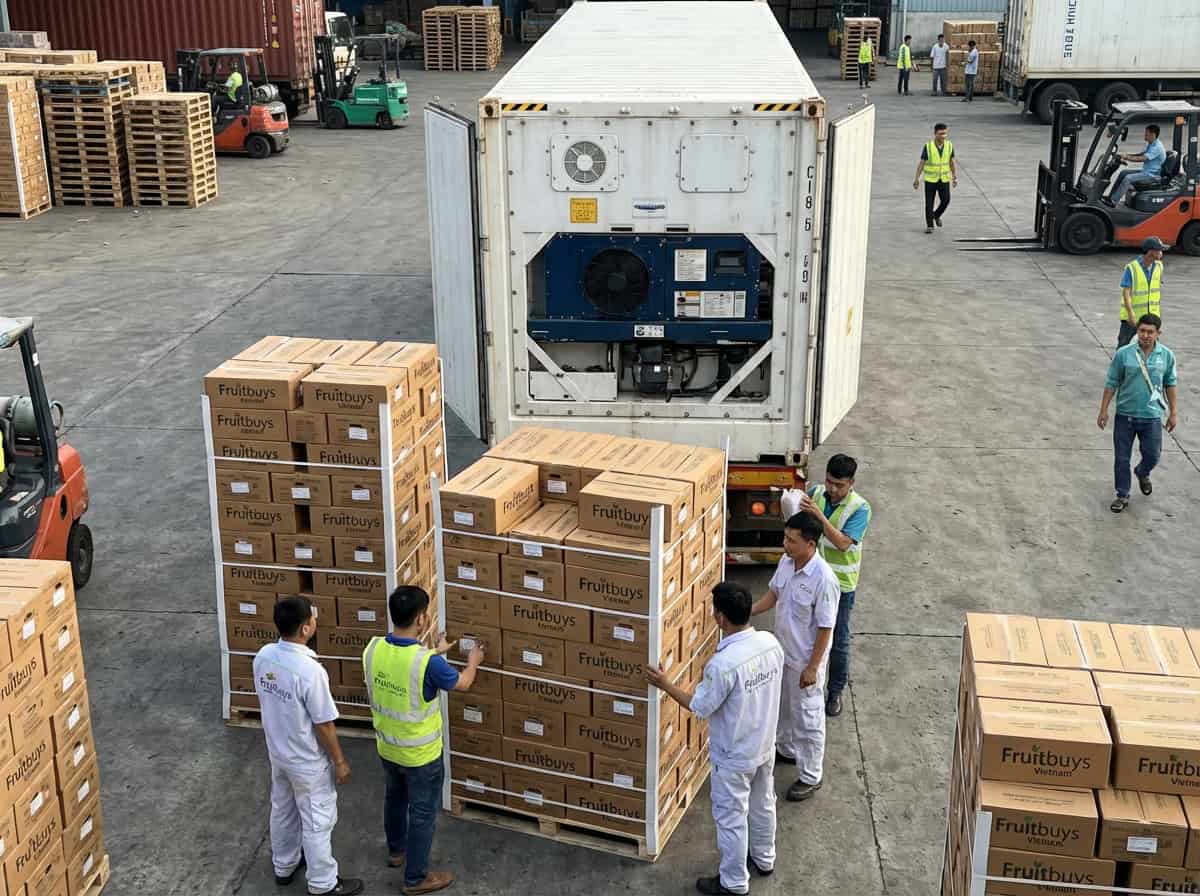
Correct cold chain starts at the production facility, not at the port. After drying, grading, and nitrogen-flush packaging, finished product must move to cold storage at 10–20°C before export documentation is completed and the container is loaded.
FRUITBUYS VIETNAM stores finished product at correct temperature before loading. This is standard not an optional premium service. Ask your supplier directly: “At what temperature is finished product stored between production completion and container loading?” If the answer is “ambient” or “room temperature,” your shelf life clock starts depreciating before the container door closes.
Container Loading and Reefer Specifications
Reefer container temperature setting: 15°C. Not 10°C (unnecessarily cold, increases energy cost and condensation risk when opened), not 20°C (too close to the upper storage threshold for a long transit). 15°C is the verified optimal setting for dried mango no added sugar in ocean freight transit.
Container loading: Reefer containers have smaller usable interior dimensions than dry containers due to insulation wall thickness. Plan your cargo quantities accordingly.
| Container | Approx. Interior | Cartons (20kg net) | Net Weight |
|---|---|---|---|
| Reefer 20ft | ~540 × 225 × 225 cm | ~400–440 cartons | ~8.0–8.8 MT |
| Reefer 40ft | ~1,140 × 225 × 215 cm | ~880–950 cartons | ~17.6–19.0 MT |
| Dry 20ft (reference) | ~589 × 234 × 239 cm | ~510–545 cartons | ~10.2–10.9 MT |
| Dry 40ft (reference) | ~1,200 × 234 × 239 cm | ~1,120 cartons | ~22.4 MT |
Do not turn off the reefer unit at any point during transit. This instruction sounds obvious. It is not always followed by shipping lines on cost-reduction protocols for partially filled containers. Include explicit written instructions in your booking with the freight forwarder: “Reefer unit must remain operational throughout transit. No power interruption permitted.”
Genset requirement: If your reefer container transits through a port without live reefer plugs available for waiting periods, a diesel genset must be attached to maintain temperature. Build this into your freight booking. Cost: approximately $100–$300 per genset day depending on port and season.
Port Handling at Destination
The highest-risk moment in the cold chain is not transit. It is the port. A container that arrives at temperature can degrade significantly if it sits on a hot port tarmac in July for 48 hours waiting for customs clearance while the reefer unit runs on battery backup.
Pre-clear your customs documentation before the vessel arrives. Have your customs broker file entry in advance. Arrange direct delivery from port to cold storage warehouse within 24 hours of container availability. Every hour above 25°C after the reefer plug is disconnected at the port accelerates quality degradation.
For US importers: FSVP compliance documentation (Foreign Supplier Verification Program) must be complete before the shipment arrives. Missing FSVP documentation is one of the most common causes of customs hold for food imports at US ports. A 3-day hold on a reefer that has been unplugged is not recoverable.
Warehouse Storage at Destination
Requirements for your receiving warehouse:
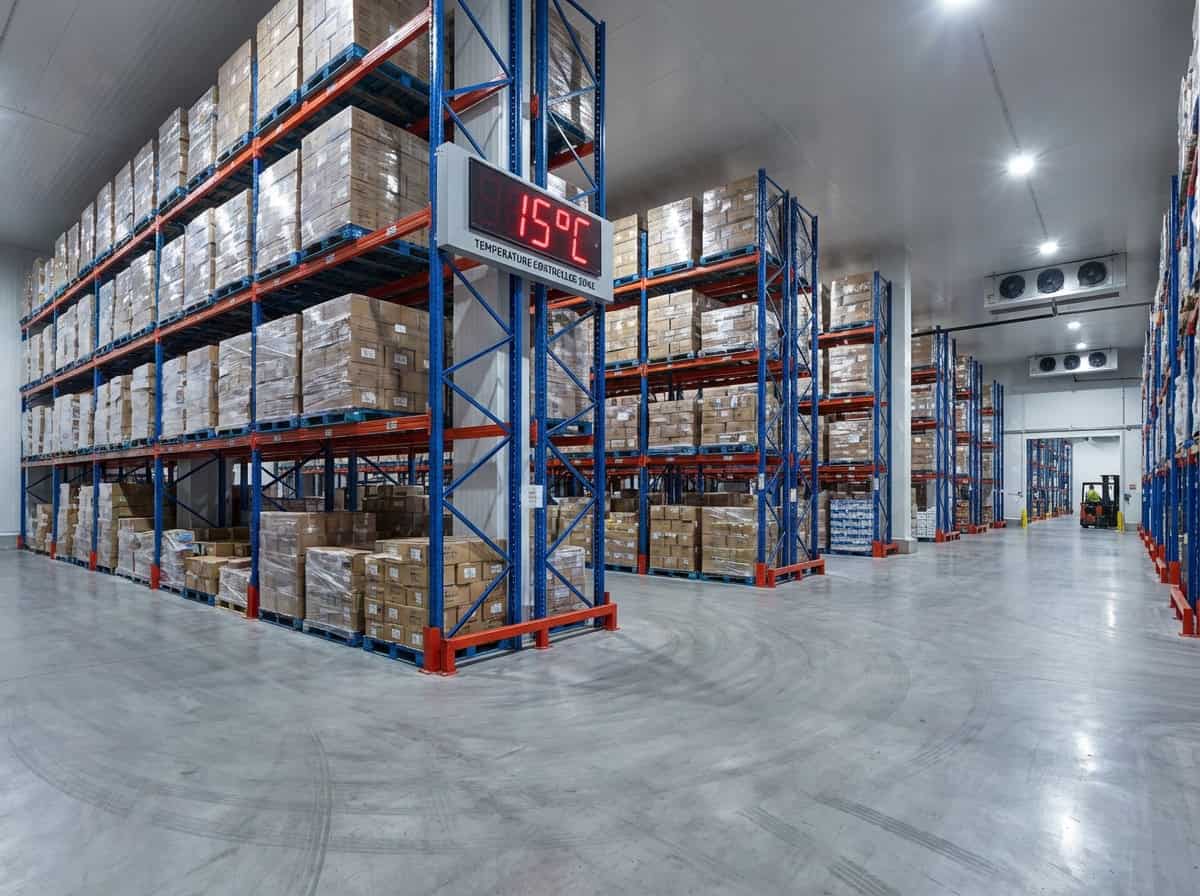
- Temperature: 10–20°C (optimal: 15°C)
- Relative humidity: ≤65% RH
- Light: Away from direct sunlight or UV exposure accelerates Maillard browning even through opaque packaging over time
- Racking: Standard pallet racking, no floor stacking beyond two carton layers weight compression can damage the aluminum foil barrier in bottom cartons
- Rotation: FIFO (First In, First Out) strictly enforced dried mango is a dated product, not an indefinite shelf stock
- Temperature monitoring: Log temperature continuously in the cold storage zone this documentation protects you in any product quality dispute
If your current warehouse operates at ambient temperature without refrigeration capability, you have a logistics infrastructure problem that exists independently of your supplier relationship. Either upgrade to cold storage or engage a 3PL cold storage operator before you place your first container order.
Retail Distribution and Last Mile
For retail shelf placement: Dried mango no added sugar is correctly positioned in the refrigerated or chilled section not ambient snack aisle. Retailers unfamiliar with the product category will default to ambient placement. Correct this before your first shipment reaches the retail buyer’s distribution center. Include written storage instructions in your product sell sheet and on your retail packaging.
For e-commerce and DTC fulfillment: Ship with an insulated liner and ice packs for transit under 3 days. For transit above 3 days, use dry ice in a styrofoam-lined box. Communicate storage instructions prominently on the outer carton and in the order confirmation email. A customer who receives warm product through shipping negligence blames your brand, not the courier.
For Amazon FBA: Confirm with Amazon FBA that your product is enrolled in the correct fulfillment program. Standard FBA warehouse conditions (ambient temperature, uncontrolled humidity) are not appropriate for this product. If Amazon FBA cold storage is not available in your market, direct fulfillment from your own cold storage is the correct model.
The Cold Chain Cost Model
Cold chain is not free. It belongs in your landed cost calculation before you compare supplier quotes. A dry container quote and a reefer container quote are not comparable numbers they represent different products arriving in different conditions.
| Cost Element | Dry Container (Reference) | Reefer Container (No-Sugar Dried Mango) |
|---|---|---|
| Container hire | Baseline | +30–50% above dry rate |
| Reefer surcharge + genset | $0 | ~$800–$1,500 per container |
| Cargo capacity (20ft) | ~10.2–10.9 MT | ~8.0–8.8 MT |
| Cost per MT shipped | Lower | Higher (less cargo per box + surcharge) |
| Cold storage at destination | Optional | Mandatory |
| Risk of product loss in transit | Low (for preserved/sweetened products) | Near-zero at correct temperature |
| Risk of product loss without cold chain | N/A | High mold, browning, aw breach |
How to model it correctly: Add the reefer surcharge ($800–$1,500) to your freight cost. Recalculate cost per kilogram against the lower reefer cargo capacity (8.0–8.8 MT vs 10.2–10.9 MT for dry 20ft). Add cold storage cost at destination. The result is your true landed cost per kilogram for this product category.
Compare that number against the product’s retail margin not against the FOB price of a sweetened alternative that can ship dry. The margin on a verified no-added-sugar, clean label product in the health food channel absorbs cold chain cost. A product that retails for $6.99–$8.99 per 100g with a 65–79% gross margin has room for $1.50–$2.00 of additional landed cost per kilogram before the margin thesis breaks.
Cold chain is not an obstacle to sourcing this product. It is a cost of the category one that filters out buyers who are not serious about the premium health food channel, and one that FRUITBUYS VIETNAM builds into every quotation from the first conversation.
What FRUITBUYS VIETNAM Handles vs. What You Handle
Clarity on responsibility prevents the most common cold chain failures. Here is the exact division.
| Stage | FRUITBUYS VIETNAM Handles | Importer Handles |
|---|---|---|
| Post-production storage | Cold storage at 10–20°C before loading ✅ | — |
| Container booking | Reefer container specification in proforma invoice ✅ | Freight forwarder booking and reefer plug confirmation |
| Temperature documentation | Temperature setting instruction in shipping documents ✅ | Confirm with freight forwarder genset coverage |
| Export documentation | C/O, Phyto, COA, HACCP, ISO 22000, Packing List, B/L ✅ | FSVP compliance (US), import entry filing |
| Cold chain instructions | Written storage and handling guide per shipment ✅ | Distribution to warehouse team, retail buyer brief |
| COA per batch | Third-party lab (SGS / Bureau Veritas / Eurofins) ✅ | Optional independent verification at destination |
| Shelf life guidance | Confirmed 6–9 months at 10–20°C ✅ | Independent shelf life study for claims beyond 6 months |
Frequently Asked Questions
Does dried mango need to be refrigerated?
Dried mango no added sugar requires cold storage at 10–20°C. Without added sugar and without preservatives, the product’s water activity (0.55–0.60) sits at the boundary of microbial safety. Cold storage prevents aw fluctuation, inhibits mold, and slows Maillard browning. Sweetened dried mango with added sugar can tolerate ambient storage because added sugar lowers aw below 0.55. No-sugar formats do not have this buffer.
How long does dried mango last?
Sealed and stored at 10–20°C, dried mango no added sugar lasts 6–9 months from the production date. After opening, store at 2–8°C in a sealed bag and consume within 14 days. Shelf life degrades faster at temperatures above 20°C plan import volumes against realistic sell-through velocity, not maximum stated shelf life.
Can dried mango be shipped in a dry container?
No-sugar dried mango cannot be safely shipped in a dry container for ocean freight. Dry containers reach internal temperatures above 40°C on equatorial routes, which breaks aw stability and accelerates Maillard browning. Reefer container at 15°C is mandatory. Sweetened dried mango with added sugar (aw 0.50–0.55) can typically be shipped dry the products have different logistics requirements.
What temperature should a dried mango reefer container be set at?
Set reefer containers at 15°C for dried mango no added sugar. This setting maintains product aw stability, inhibits microbial activity, and minimizes Maillard browning throughout transit. Setting too low (below 10°C) risks condensation damage when the container is opened. Setting at 20°C is too close to the upper storage threshold for long transits.
How much more does reefer shipping cost than dry container?
Reefer containers typically cost 30–50% more than dry containers on equivalent routes. Add $800–$1,500 per container for reefer surcharge and genset costs. Also factor in reduced cargo capacity a reefer 20ft carries approximately 8.0–8.8 MT versus 10.2–10.9 MT for a dry 20ft. Include all three components in your landed cost model.
What is water activity and why does it matter for shelf life?
Water activity (aw) measures unbound free moisture available to microorganisms not total moisture content. At aw above 0.60, mold and bacteria can grow. Dried mango no added sugar has aw of 0.55–0.60 just below the safety threshold. Cold storage keeps aw stable, temperature fluctuation above 25°C can allow aw to rise through moisture migration and packaging permeation. Controlling aw is the foundation of shelf life management for this product.
How should dried mango no added sugar be stored in a warehouse?
Store at 10–20°C, ≤65% relative humidity, away from direct light, on standard pallet racking with FIFO rotation. Do not stack cartons more than two layers high on the floor compression can compromise the aluminum foil barrier. Monitor and log temperature continuously. Any breach above 20°C for extended periods should be documented and product re-evaluated before distribution.
Know the Requirements Before the Container Loads
Cold chain is not a complication. It is an operational requirement that every serious buyer in the clean label, no-sugar dried fruit category manages as standard practice.
The buyers who lose product and margin are the ones who discover reefer requirements after booking a dry container at a lower freight rate. The buyers who build profitable distribution operations in this category are the ones who model cold chain cost correctly from the first quote, brief their logistics teams accurately, and work with a supplier who puts reefer specifications in writing on every proforma invoice not as fine print discovered after something goes wrong.
FRUITBUYS VIETNAM states cold chain requirements in every quotation. We provide written storage and handling instructions with every shipment. We specify reefer containers as a non-negotiable line item on every proforma invoice. And we ship samples with full COA, technical spec sheet, and cold chain documentation within 3–5 business days so you can evaluate the product before any container discussion begins.
Contact us today. Cold chain guidance is included from the first conversation.
Contact FRUITBUYS VIETNAM:
- WhatsApp: +84-909.499.619
- Email: hotro@fruitbuys.vn
- Website: https://fruitbuys.com
- Office: 10/2 Ky Con, Cau Kieu Ward, Ho Chi Minh City
- Warehouse: 182 An Phu Dong 09, An Phu Dong Ward, District 12, Ho Chi Minh City