Is Dried Mango Healthy? Science-Based Benefits

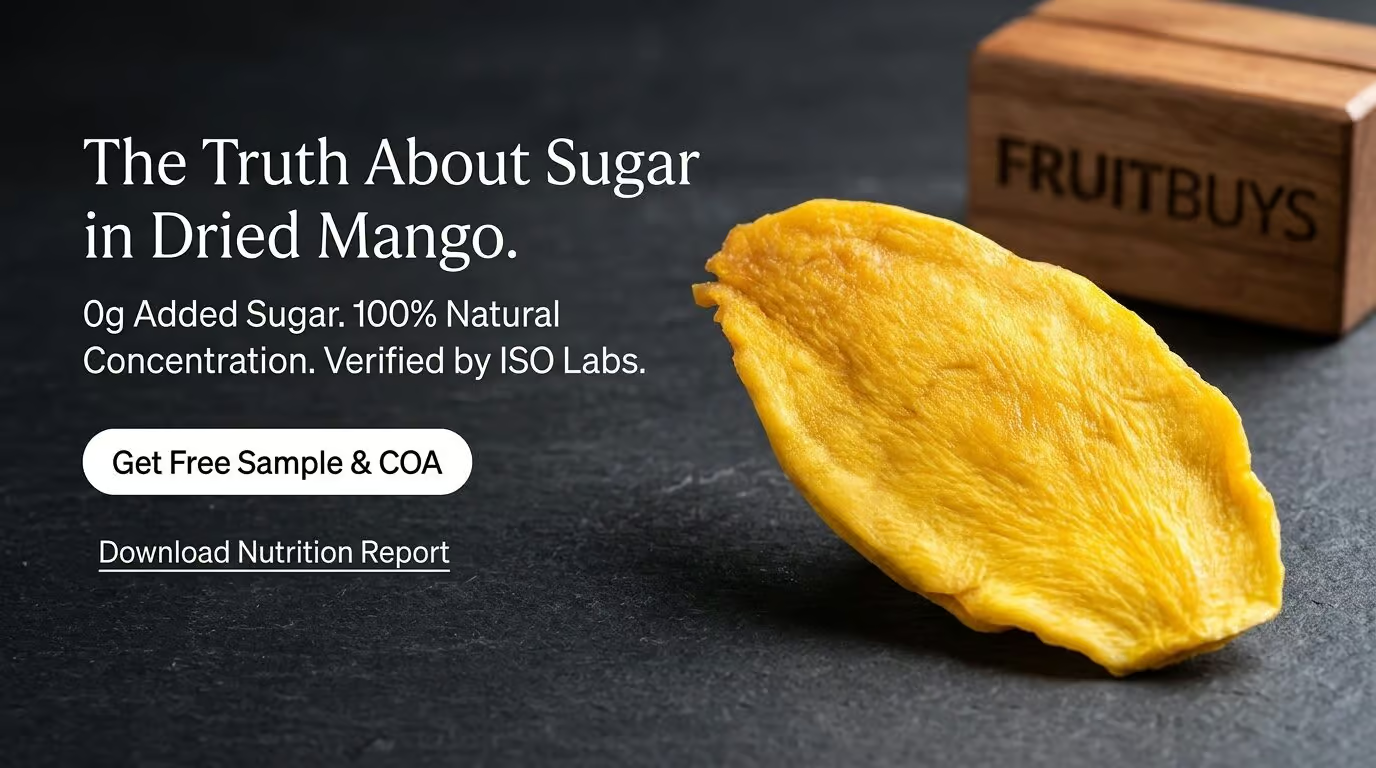
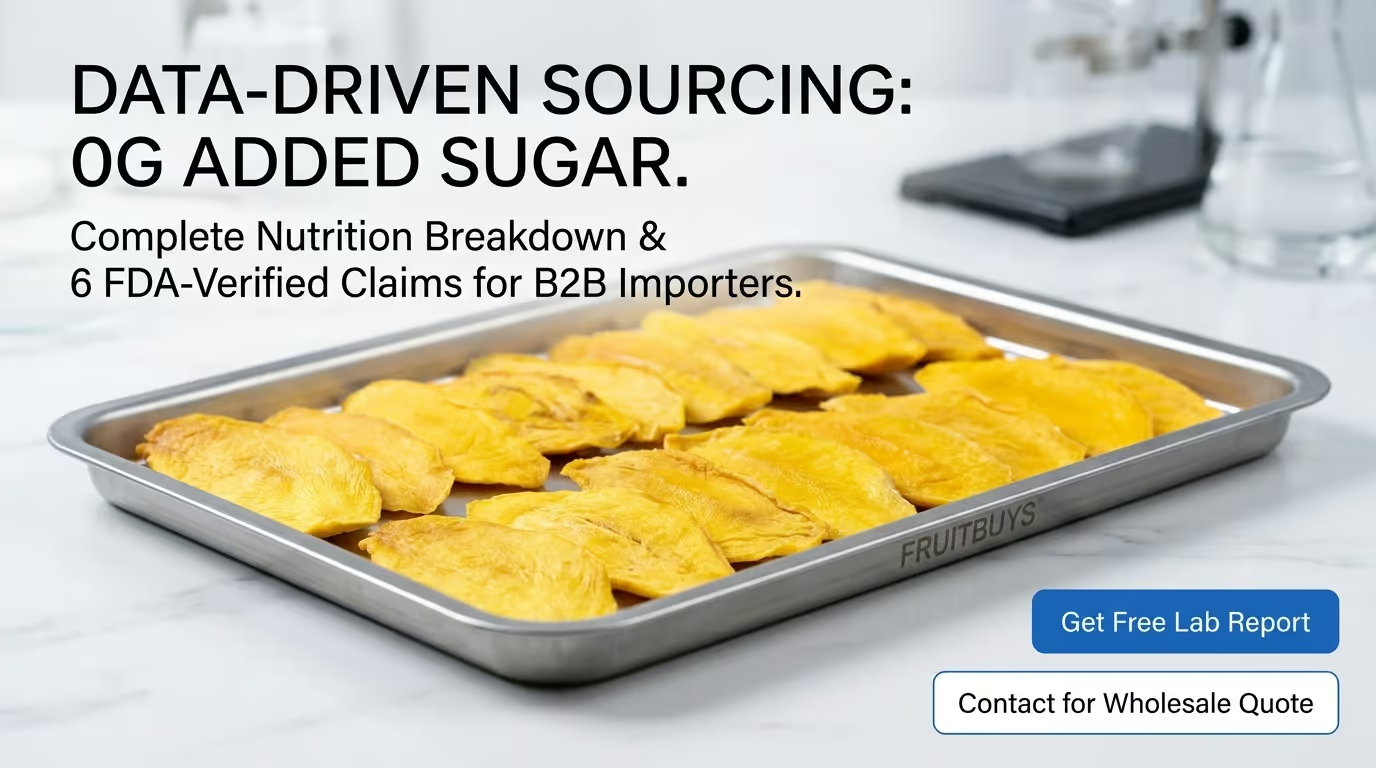
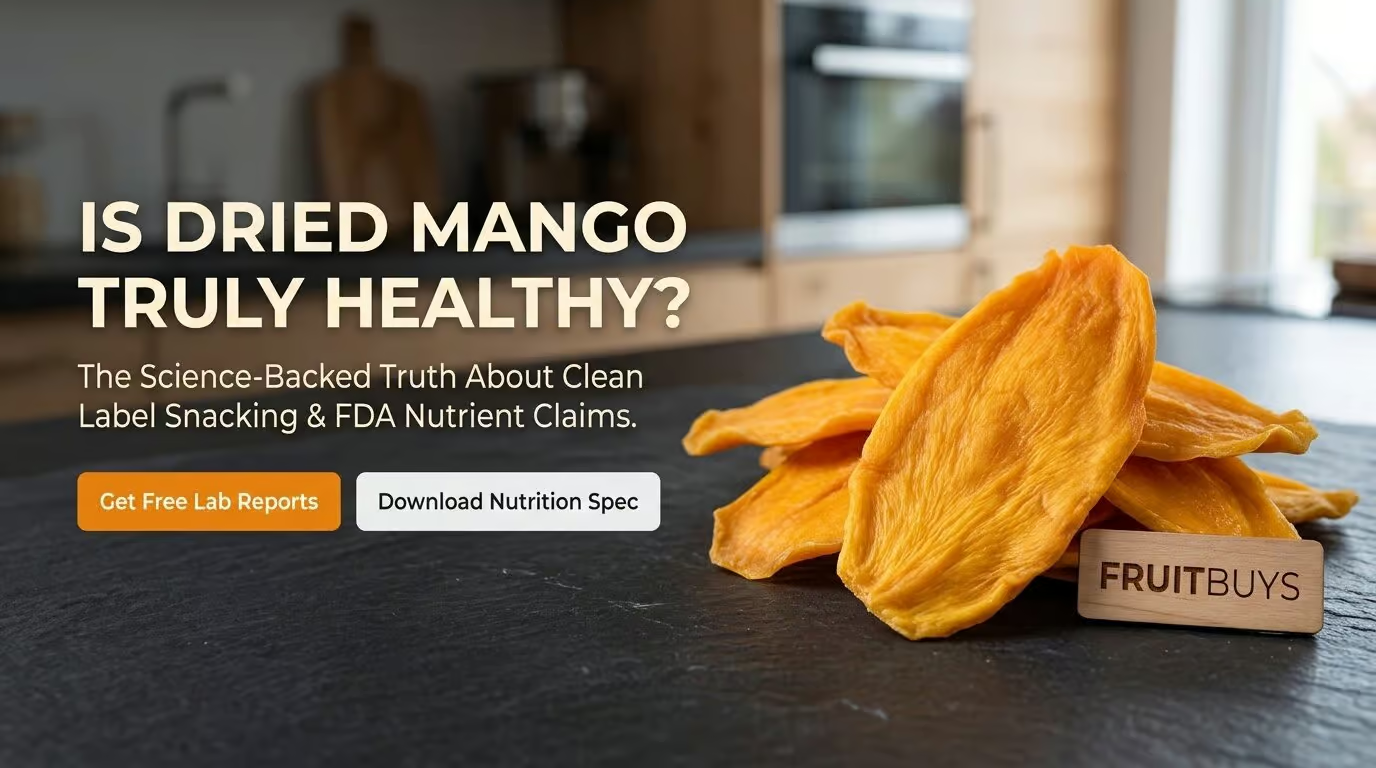
Yes dried mango no added sugar is a nutritionally dense, clean label product with six valid FDA nutrient content claims, 0g added sugars, 0g sulfites, and a single-ingredient declaration that reads: 100% Mango (Mangifera indica). Whether it is “healthy” for any individual is a dietary question this article does not answer. What this article does answer is the question that matters for retail buyers, distributors, and brand managers: does the nutritional profile of dried mango no added sugar justify the health positioning your channel demands? The data says yes with one condition that this article explains in full.
What the Nutrition Science Shows
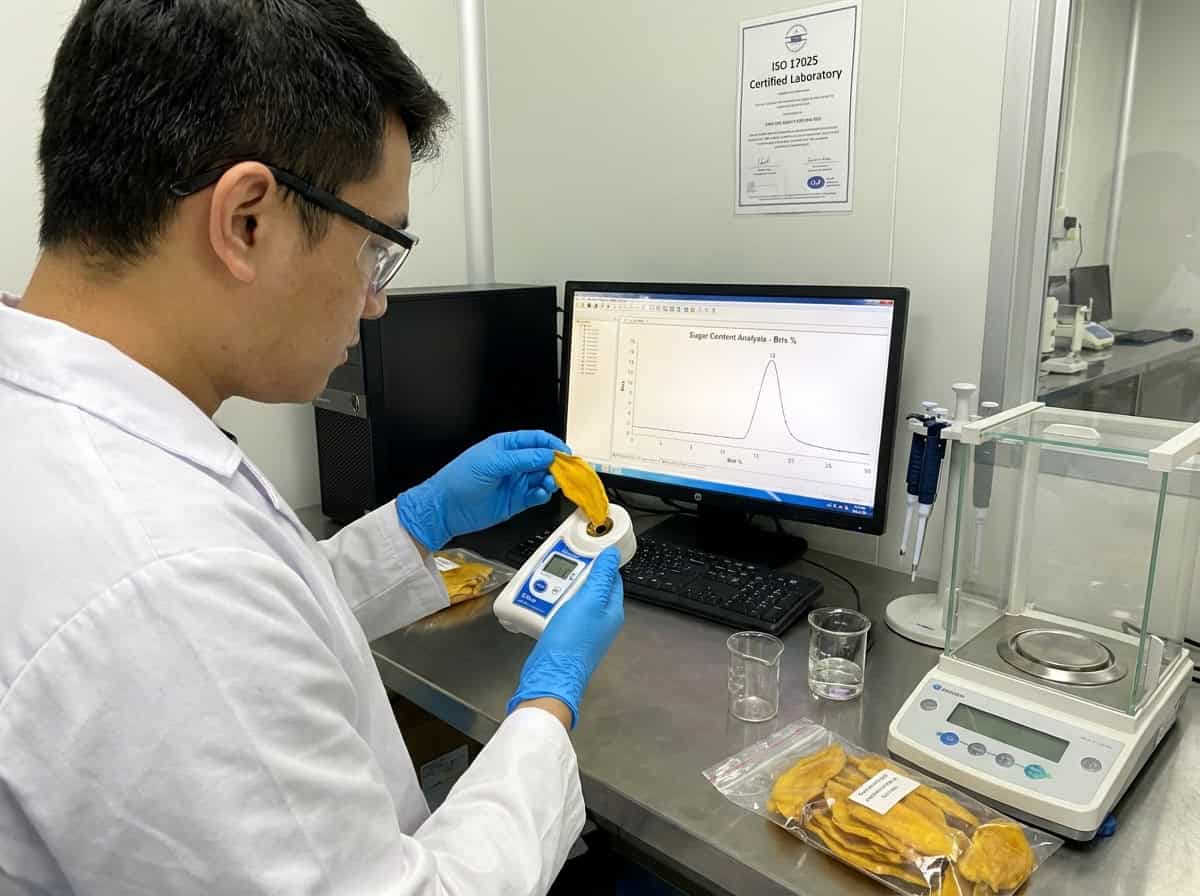
Dried mango no added sugar delivers meaningful micronutrient contributions across six categories simultaneously an unusual profile for a single whole-food ingredient. All values below are based on USDA FoodData Central data for unsweetened dried mango adjusted for 15–18% moisture content, confirmed per COA from ISO 17025-accredited labs per production batch.
Vitamin C 47% Daily Value per 100g. At 40–45mg per 100g, dried mango no added sugar qualifies as an “Excellent source of Vitamin C” under FDA 21 CFR 101.54. Vitamin C is the most recognized nutrient in the US and EU health snack market. Its role in immune function, collagen synthesis, and antioxidant defense is documented across decades of peer-reviewed literature. The retention of Vitamin C through controlled hot air drying at 60–80°C is approximately 40–60% of fresh mango levels a retention rate that results from precise temperature management during the AD process. Higher drying temperatures destroy ascorbic acid faster. A supplier who cannot provide a Vitamin C value per COA does not know their own drying parameters.
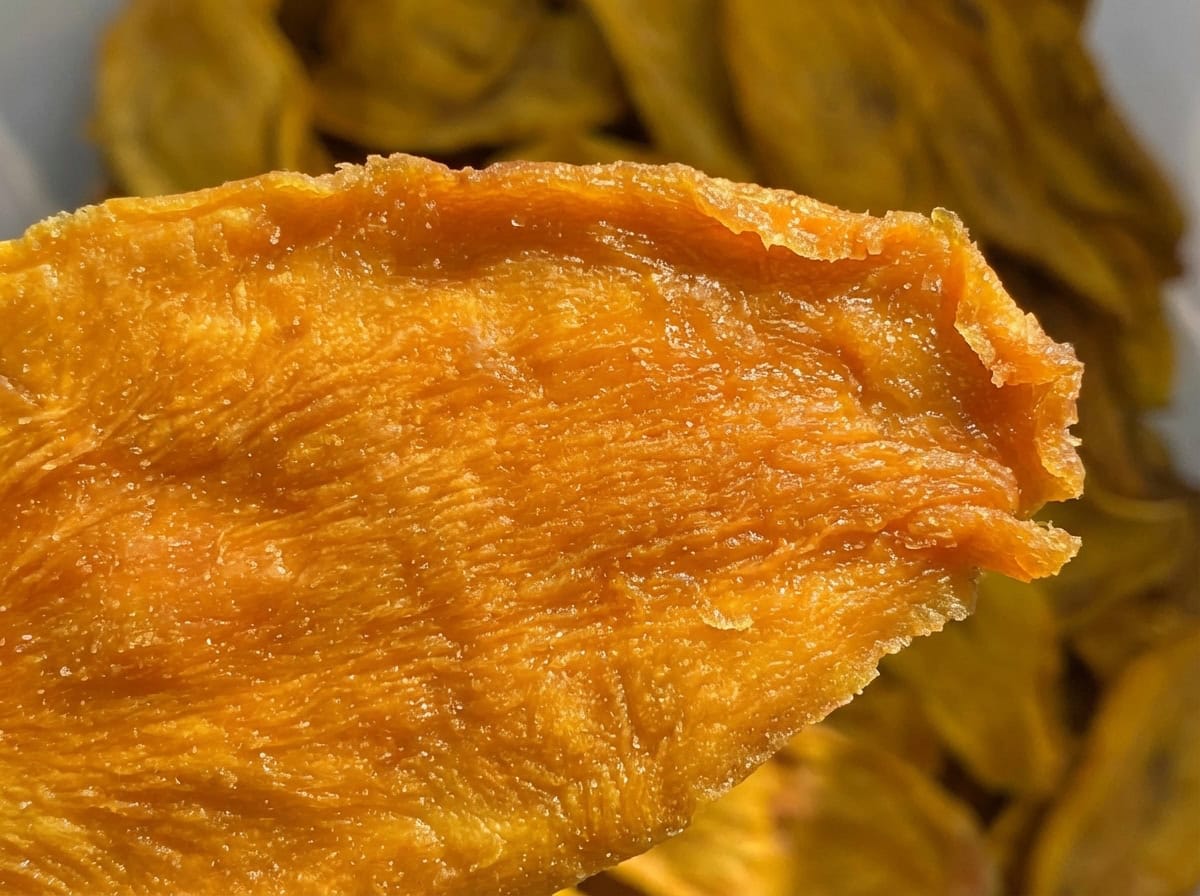
Vitamin E 27% Daily Value per 100g. Qualifying as an “Excellent source of Vitamin E,” dried mango delivers 4.0mg of this fat-soluble antioxidant per 100g. What makes this nutritionally unusual: most high-Vitamin E foods are also high in fat nuts, seeds, and vegetable oils. Dried mango provides meaningful Vitamin E at only 0.8–1.2g total fat per 100g. For brand managers building a product story around antioxidant content without high-fat positioning, this is a claim that no direct competitor in the dried fruit aisle is currently using at scale.
Copper 31% Daily Value per 100g. At 0.28mg per 100g, dried mango qualifies as an “Excellent source of Copper.” Copper supports iron metabolism, connective tissue formation, immune function, and nervous system health. It is present in very few mainstream snack products at this concentration level. In functional food channels and sports nutrition, copper is an emerging claim the market has not yet saturated this positioning, which means first movers in clean label dried fruit have a differentiation window.
Vitamin B6 19% Daily Value per 100g. A “Good source of Vitamin B6” at 0.33mg per 100g. B6 is essential for neurotransmitter synthesis, protein metabolism, and red blood cell formation. Its presence in dried mango at a claimable level reflects the concentration of this water-soluble vitamin during the drying process.
Folate 17% Daily Value per 100g. A “Good source of Folate” at 68 mcg per 100g. Folate is critical for DNA synthesis and cell division, and its relevance to prenatal nutrition is well-established in consumer awareness. For buyers positioning in the women’s health or family nutrition segment within the natural food channel, the folate contribution of this product is a credible secondary claim.
The Sugar Question: Why “Healthy” Depends on How It Was Made
This is where the health positioning answer splits into two completely different products. Dried mango with added sugar produced using osmotic dehydration with sugar syrup before drying contains 15–25g of exogenous added sugar per 100g. That added sugar increases glycemic load, eliminates the “No Added Sugars” FDA label claim, and disqualifies the product from clean label, diabetic-conscious, and refined-sugar-free retail channels. It is also, in a significant proportion of the Southeast Asian dried fruit trade, undisclosed products labeled “no added sugar” that contain osmotic sugar are a documented compliance problem, not a hypothetical risk.
Dried mango without added sugar produced by hot air drying without any pre-treatment contains 66–70g of total sugars per 100g, all naturally occurring from the fruit. Those sugars are glucose, fructose, and sucrose concentrated by moisture removal. The product carries a valid “No Added Sugars: 0g” FDA declaration and is scientifically distinct from a product with exogenous added sugar.
The practical conclusion: whether dried mango is healthy for your brand depends on whether the product you are sourcing is genuinely no-added-sugar and whether your supplier can prove it with a batch-specific COA. A product with an honest label, verifiable documentation, and one ingredient is the only product that belongs in the health food channel without compliance risk. For the complete breakdown of natural versus added sugar in dried mango, see: How Much Sugar in Dried Mango? Added vs. Natural Sugar Explained.
Antioxidants and Phytonutrients: The Non-Label Story
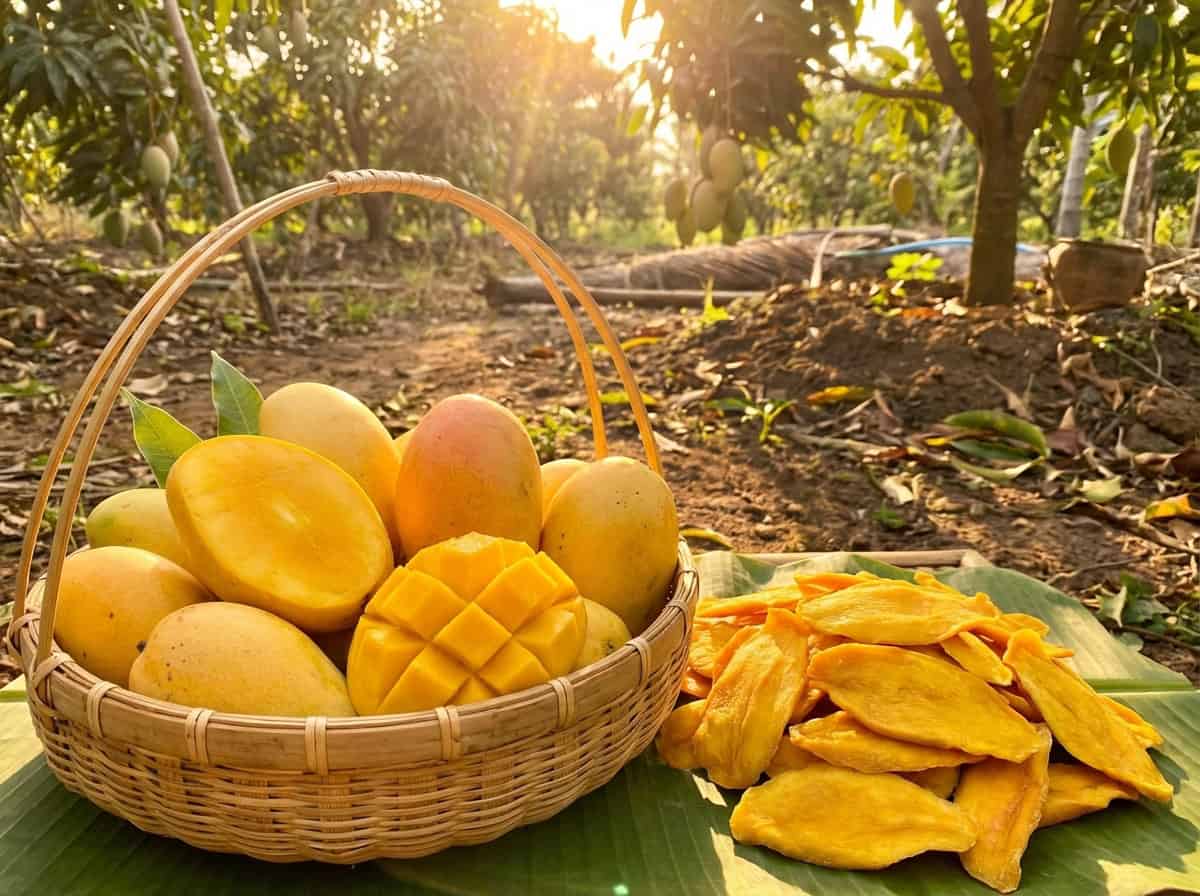
Beyond the six FDA-claimable nutrients, dried mango contains a bioactive compound profile that supports health food positioning at the brand storytelling level even though these compounds do not appear on the Nutrition Facts panel.
Mangiferin is a C-glucosylxanthone polyphenol unique to mango and a small number of other plant species. It is present in the fruit flesh, peel, and seed kernel, with peer-reviewed literature documenting anti-inflammatory, antioxidant, and metabolic health associations. It is not a nutrient claim under current FDA or EFSA rules but it is a documented compound that nutrition-forward brands and functional food marketers cite accurately when describing mango’s bioactive profile.
Beta-carotene the precursor to Vitamin A produces the deep amber-orange color visible in high-quality dried mango from the Cát Chu and Hoà Lộc varieties. At 65–70 mcg RAE per 100g (7% DV), the Vitamin A contribution itself does not qualify for a “good source” claim but beta-carotene content is visually communicable. A deep amber color in the finished product is the consumer-facing signal of carotenoid density that retail buyers in the premium natural segment understand and value.
Quercetin and gallic acid are flavonoid and phenolic acid antioxidants with broad documentation in cardiovascular and anti-inflammatory research contexts. Their presence in mango aligns with the broader tropical fruit polyphenol profile. Like mangiferin, these compounds cannot be featured as FDA nutrient content claims but they are accurate inclusions in brand content, origin stories, and B2B product sell sheets targeting sophisticated buyers in the functional food segment.
No Sulfites. No Preservatives. No Compromises.
Many conventional dried fruits on the market including dried mango from competing origins use sulfur dioxide (SO₂) as a preservative. It retards browning, extends ambient shelf life, and makes logistics simpler. It also disqualifies the product from sulfite-sensitive consumer segments, triggers mandatory allergen labeling under FDA and EU regulations at concentrations above 10 ppm, and is a known trigger for asthma in sensitive individuals.
Dried mango no added sugar from FRUITBUYS VIETNAM contains SO₂ at below 10 ppm not detected under the Monier-Williams method. It contains no sorbic acid, no benzoate, no chemical preservatives of any kind. The ingredient statement confirms this: 100% Mango (Mangifera indica).
For buyers targeting the sulfite-free snacking segment which overlaps significantly with the clean label, allergen-conscious, and asthma-sensitive consumer base this is a positioning entry point that carries genuine clinical significance, not just a marketing label. The SO₂ result appears on the COA per batch, providing the verifiable documentation your retail buyers will request.
For the complete breakdown of why SO₂-free status matters for brand equity and retail channel access, see: Dried Mango Without Sulfites: Why SO₂-Free Matters for Your Brand.
Health Positioning by Retail Channel
Not every health claim lands equally in every channel. The table below maps dried mango no added sugar’s documented nutrient profile to the retail segments where each claim carries the strongest commercial weight.
| Retail Channel | Primary Health Positioning | Key Supporting Claims | Compliance Document Required |
|---|---|---|---|
| Natural / Health Food | No Added Sugars, one ingredient, whole fruit | Excellent source of Vitamin C; No preservatives | COA (Added Sugars: 0g); HACCP |
| Clean Label / Specialty | One ingredient, no additives, no SO₂ | All six FDA claims; SO₂ not detected | COA; ISO 22000; full ingredient transparency |
| Sports Nutrition | Natural energy, copper for metabolism | Excellent source of Copper, Vitamin E, Vitamin B6 | COA with full micronutrient panel |
| Prenatal / Women’s Health | Folate, Vitamin C, no additives | Good source of Folate (17% DV); No Added Sugars | COA; FDA-compliant Nutrition Facts label |
| Diabetic-Conscious | Zero added sugars, naturally occurring fruit sugars only | No Added Sugars: 0g clearly on panel | COA confirming Added Sugars: 0g per batch |
| Premium Gift / HORECA | Origin story, natural sweetness, varietal depth | Hoà Lộc or Cát Chu variety positioning; 0g Added Sugars | COA; Certificate of Origin; product spec sheet |
The key insight in this table: each channel accesses the same product with the same nutritional profile. What changes is which subset of claims you lead with in the marketing layer. A sports nutrition brand leads with copper and B6. A prenatal nutrition brand leads with folate. A clean label brand leads with one ingredient. The product delivers all of them simultaneously which is unusual, and commercially valuable.

Dried Mango for Weight Management Positioning
58% of US consumers are actively reducing sugar intake. A meaningful proportion of them are doing so in the context of weight management, not just clean eating. Dried mango no added sugar positions in this segment with accuracy when the communication is precise.
A 30g snack serving of dried mango no added sugar contains approximately 95–96 kcal, 0g added sugars, 47% of the Daily Value for Vitamin C per 100g, and 2.0–2.4g of dietary fiber that supports satiety. It is not a low-calorie product by weight the caloric density is high because moisture has been removed. What it is: a portion-controlled, whole-food, nutrient-dense snack alternative to refined sugar confectionery that replaces nutritionally empty calories with micronutrient-delivering ones.
For brand managers building messaging for the weight-management channel, the positioning is not “low calorie.” It is “nutrient-dense portion control with zero added sugar and a transparent ingredient list.” That is a defensible, accurate, and commercially differentiated position in a snack aisle full of products that cannot make the same claim.
Why “Healthy” Starts at the Supplier, Not the Label
A “No Added Sugars” claim on a package is marketing language until it is backed by a batch-specific COA from an ISO 17025-accredited laboratory confirming Added Sugars: 0g. Without that document, the claim is an assertion. With it, the claim is a verified fact.
This distinction matters for three reasons that go beyond consumer communication:
FDA enforcement. US importers carry FSVP (Foreign Supplier Verification Program) responsibility for the accuracy of product labels. A falsely claimed “No Added Sugars” declaration is a FDA compliance failure that exposes the importer of record, not just the overseas supplier.
Retail buyer audits. Supermarket chain procurement teams and major health food distributors conduct ingredient verification as part of their annual supplier audit cycle. A supplier who cannot produce a batch-matched COA from a named accredited lab fails the audit not because the product is definitively wrong, but because the documentation is not there to prove it is right.
Consumer trust, once broken, does not recover. A single viral social media post from a consumer who tested a “no added sugar” product and found added sugar has ended retail distribution agreements. The cost of a $150 third-party lab test per batch is not overhead. It is brand insurance.
FRUITBUYS VIETNAM provides batch-matched COA from SGS Vietnam, Bureau Veritas Vietnam, or Eurofins Vietnam all ISO 17025 accredited as standard on every shipment, not on request. The health claim your label carries is only as strong as the documentation behind it. We make sure that documentation is there before your container loads.
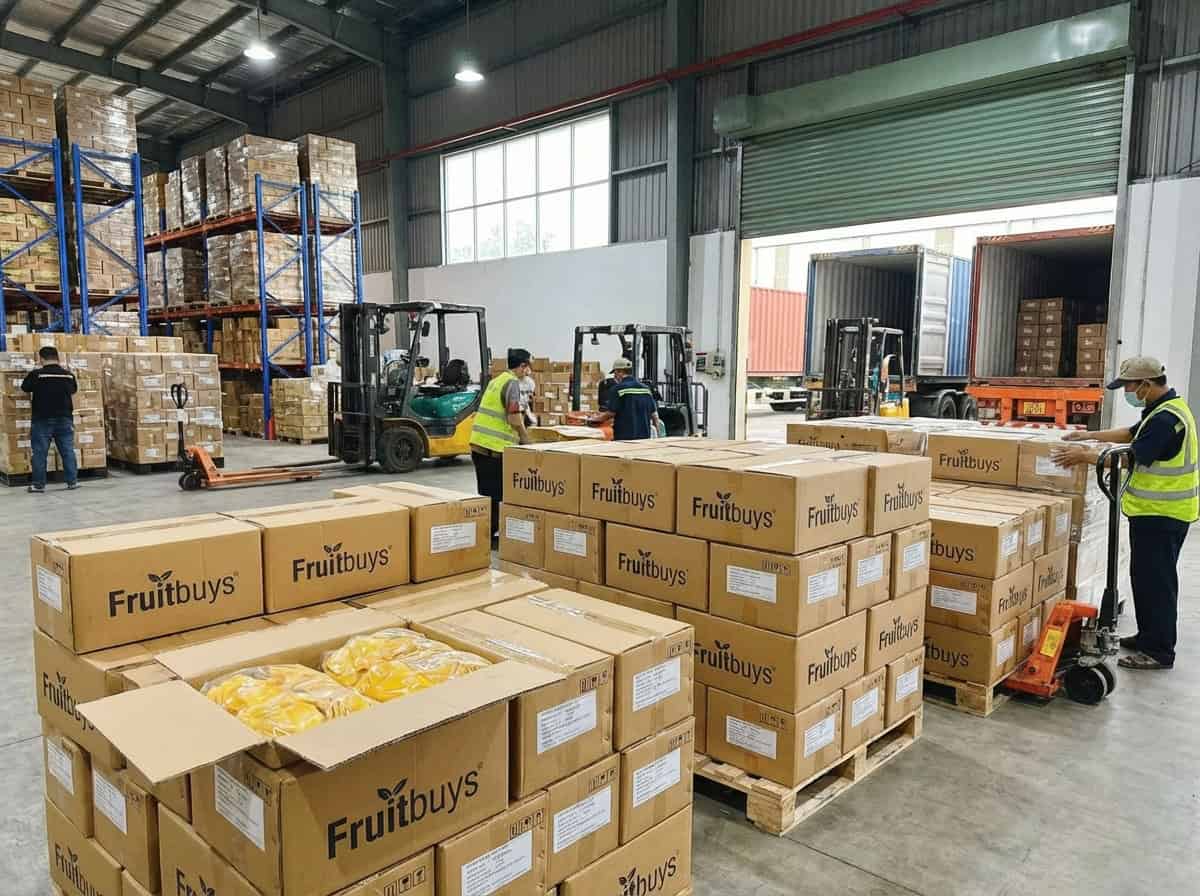
Request free samples with full COA confirming all six FDA nutrient claims. Contact FRUITBUYS VIETNAM at fruitbuys.com/contact
Frequently Asked Questions
Is dried mango healthy?
Dried mango no added sugar is a nutritionally dense whole fruit product with 0g added sugars, 0g sulfites, and no preservatives. Per 100g it provides 47% DV for Vitamin C, 31% DV for Copper, 27% DV for Vitamin E, 19% DV for Vitamin B6, and 17% DV for Folate all qualifying for FDA nutrient content claims. Whether it fits a specific individual’s dietary needs is a personal health decision. For retail and brand buyers, the nutritional profile is verified and commercially defensible.
Is dried mango good for weight loss?
Dried mango is calorie-dense 314–320 kcal per 100g because moisture removal concentrates calories. A 30g snack serving contains approximately 95–96 kcal, 0g added sugars, and measurable fiber (2.0–2.4g per 100g). It positions accurately as a nutrient-dense, portion-controlled snack with no added sugars, not as a low-calorie product. For brands targeting the weight management channel, the “zero added sugars plus six FDA claims” combination is the positioning angle, not the calorie count.
Is dried mango good for diabetics?
Dried mango contains 0g added sugars and 66–70g of naturally occurring fruit sugars per 100g. Whether it is appropriate for individual diabetic dietary management requires medical guidance this article does not provide clinical dietary advice. For retail labeling: the product accurately declares “Added Sugars: 0g” and “Total Sugars: 66–70g,” giving diabetic-conscious consumers the full data to make their own decision. Buyers marketing to this segment should use accurate, specific language and avoid unsupported therapeutic claims.
Does drying mango destroy its nutrients?
Some degradation occurs. Vitamin C retains approximately 40–60% of fresh mango levels through controlled hot air drying at 60–80°C. However, most nutrients concentrate during drying because water is removed while fruit solids remain. Vitamin A, Vitamin E, Copper, B6, Folate, and potassium are all present at higher levels per 100g in dried mango than in fresh mango by weight. The net result is a product with a stronger micronutrient profile per gram than the fresh fruit it came from.
Is dried mango high in antioxidants?
Yes. Dried mango contains Vitamin C (47% DV), Vitamin E (27% DV), and beta-carotene all dietary antioxidants with established roles in cellular protection. It also contains mangiferin, quercetin, and gallic acid polyphenolic compounds documented in peer-reviewed research on mango bioactivity. These phytonutrients do not appear on the Nutrition Facts panel but are accurate inclusions in brand storytelling and product educational content.
Is dried mango sulfite-free?
Dried mango no added sugar from FRUITBUYS VIETNAM contains SO₂ at below 10 ppm not detected under the Monier-Williams test method. This qualifies as sulfite-free under FDA standards and makes the product appropriate for sulfite-sensitive consumers, asthma-conscious buyers, and clean label channels that prohibit preservatives. The SO₂ result appears on the COA per production batch.
The Health Claim Is Only as Good as the Supplier Behind It
Every nutrient cited in this article exists in verified dried mango no added sugar from FRUITBUYS VIETNAM. The six FDA claims are documented. The SO₂-free status is tested per batch. The one-ingredient declaration is accurate because the production process uses no osmotic pre-treatment, no sugar syrup, no preservatives, and no chemical blanching agents.
Your competitors are sourcing dried mango right now. Some of them are sourcing products with undisclosed added sugars that carry “No Added Sugars” labels. When their retail buyers run independent tests and the sophisticated ones do that supply chain breaks in a way that takes months to rebuild.
You have one decision to make. Contact FRUITBUYS VIETNAM today. Request free samples with the full COA, technical spec sheet, and cold chain handling guide. Samples ship in 3–5 business days. The documentation that makes every health claim on your label defensible ships with them.
Contact FRUITBUYS VIETNAM:
- WhatsApp: +84-909.499.619
- Email: hotro@fruitbuys.vn
- Website: https://fruitbuys.com
- Office: 10/2 Ky Con, Cau Kieu Ward, Ho Chi Minh City
- Warehouse: 182 An Phu Dong 09, An Phu Dong Ward, District 12, Ho Chi Minh City