Dried Mango Nutrition Facts: Complete Breakdown Per 100g

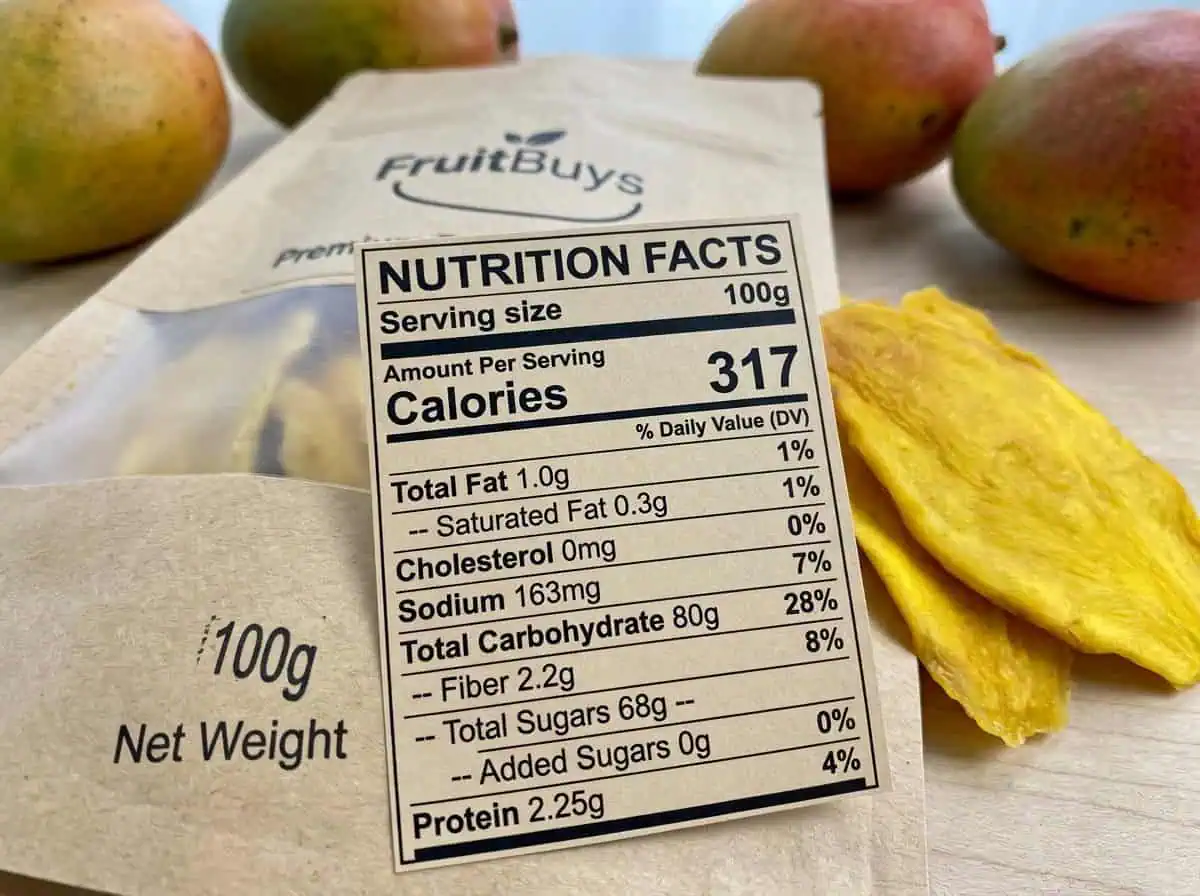
One hundred grams of dried mango no added sugar contains 314–320 calories, 0g of added sugars, 47% of the Daily Value for Vitamin C, and six valid FDA nutrient content claims. If you are evaluating dried mango nutrition facts to make a purchasing decision, a product ranging decision, or a private label pitch, that sentence is the starting point. This article gives you the complete breakdown.
All values below are based on USDA FoodData Central data for unsweetened dried mango, adjusted for 15–18% moisture content. Confirmed values are provided per Certificate of Analysis with every shipment from FRUITBUYS VIETNAM. Actual batch values will vary slightly by variety, harvest season, and production lot which is why COA documentation per shipment is non-negotiable for any buyer operating in a regulated market.
Complete Nutrition Facts Table: Dried Mango No Added Sugar
Per 100g Serving
| Nutrient | Amount Per 100g | % Daily Value* |
|---|---|---|
| Energy | 314–320 kcal | 16% |
| Total Fat | 0.8–1.2g | 1% |
| — Saturated Fat | 0.3g | 1% |
| — Trans Fat | 0g | 0% |
| Cholesterol | 0 mg | 0% |
| Sodium | 160–165 mg | 7% |
| Total Carbohydrate | 78–82g | 28% |
| — Dietary Fiber | 2.0–2.4g | 8% |
| — Total Sugars | 66–70g | — |
| — Added Sugars | 0g | 0% |
| Protein | 2.0–2.5g | 4% |
| Vitamin C | 40–45 mg | 47% DV |
| Vitamin E | 4.0 mg | 27% DV |
| Copper | 0.28 mg | 31% DV |
| Vitamin B6 | 0.33 mg | 19% DV |
| Folate | 68 mcg | 17% DV |
| Vitamin K | 13–14 mcg | 12% DV |
| Vitamin A (RAE) | 65–70 mcg | 7% DV |
| Potassium | 270–280 mg | 6% DV |
| Magnesium | 20 mg | 5% DV |
| Iron | 0.2–0.3 mg | 2% DV |
| Calcium | 0–5 mg | 0% |
| Vitamin D | 0 mcg | 0% |
*% Daily Values based on a 2,000 calorie diet. FDA 2020–2025 reference values.
Ingredient statement (no added sugar, no preservatives): 100% Mango (Mangifera indica)
Allergen note: Produced in a facility that also processes tree nuts (cashews).
Calories in Dried Mango: What the Number Means
Dried mango no added sugar contains 314–320 kcal per 100g. That figure is high relative to fresh mango (approximately 60 kcal per 100g) but the comparison is misleading without context.
Drying removes approximately 75–80% of the moisture from fresh mango. What remains is a nutritionally concentrated form of the same fruit. A 30g retail serving of dried mango the typical single-serve snack portion contains approximately 95–96 kcal. That is comparable to a standard fruit snack serving and significantly lower than a 30g serving of most conventional snack bar formats, potato chips, or chocolate-covered alternatives competing for the same shelf position.
The practical implication for retail buyers and brand managers: “high calorie per 100g” is not the right frame for this product in the health food channel. The right frame is “nutrient-dense whole fruit snack with 95 kcal per portion, no added sugars, and meaningful micronutrient contributions.” Those are two completely different retail conversations.
The Sugar Question: Natural vs. Added
Total sugars in dried mango no added sugar run 66–70g per 100g. That number stops many buyers who have not yet understood the distinction between naturally occurring fruit sugars and exogenous added sugars.
The sugars in this product glucose, fructose, and sucrose are identical to the sugars present in fresh ripe mango. They were not added during processing. They were concentrated by the removal of water. A fresh mango containing 13–14g of sugar per 100g fresh weight produces a dried product containing roughly 66–70g of sugar per 100g dried weight a concentration factor of approximately 5x, reflecting the moisture removed during hot air drying.
This distinction has direct legal significance. Under FDA 21 CFR 101.60, a product carries an “Added Sugars: 0g” declaration when no sugar has been introduced during processing regardless of how high naturally occurring sugars are. A COA from an ISO 17025-accredited lab confirming 0g added sugars is the document that makes this claim auditable, not just marketing language.
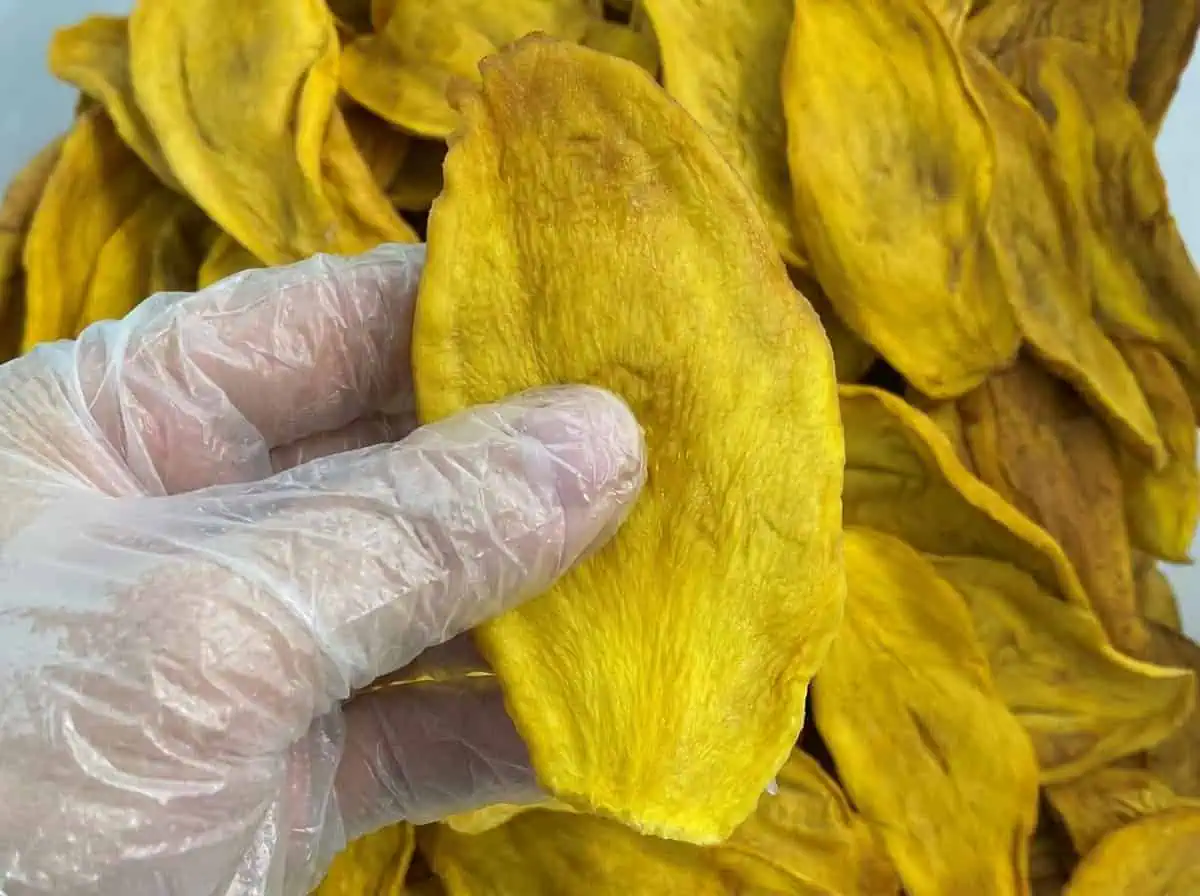
For buyers selling into the clean label, diabetic-conscious, or wellness channel: this product’s sugar profile is not a liability when communicated accurately. It is a positioning asset. The label tells the complete truth high in natural fruit sugars, zero added sugars, one ingredient.
For a deeper breakdown of the natural versus added sugar distinction and what it means for label claims and consumer positioning, see: How Much Sugar in Dried Mango? Added vs Natural Sugar Explained.
Vitamin C: The Standout Claim
At 40–45mg per 100g representing 47% of the Daily Value dried mango no added sugar qualifies as an “Excellent source of Vitamin C” under FDA 21 CFR 101.54 (threshold: >20% DV).
This is the single most commercially valuable claim this product carries. Vitamin C is one of the most recognized nutrients in the US and EU consumer market. A product that leads with “Excellent source of Vitamin C” on its front panel, in the natural snack category, with one ingredient and no added sugar, has a retail story that connects across multiple consumer motivations simultaneously: immunity, clean eating, and snacking without compromise.
The vitamin C in dried mango is retained at 40–60% of fresh mango levels through controlled hot air drying at 60–80°C. Higher drying temperatures or longer drying times degrade ascorbic acid more aggressively which is one of the reasons temperature control during the AD process is not a production detail but a nutritional outcome decision.
Copper, Vitamin E, and Folate: The Undervalued Micronutrients
Three nutrients in dried mango no added sugar carry “Excellent” or “Good source” claims that most buyers and brand managers have never built a product story around because they have never had a product with this nutritional profile to work with.
Copper (31% DV / 0.28mg per 100g): Qualifies as “Excellent source of Copper.” Copper supports iron metabolism, immune function, and collagen synthesis. It is present in very few mainstream snack products at this level. In the functional food and sports nutrition channel, copper is an emerging claim that differentiates premium natural ingredients from synthetic supplement stacks.
Vitamin E (27% DV / 4.0mg per 100g): Qualifies as “Excellent source of Vitamin E.” A fat-soluble antioxidant with established roles in immune support and cellular protection. Dried mango’s naturally low fat content (0.8–1.2g per 100g) combined with meaningful Vitamin E makes it an unusually clean source of this nutrient most high Vitamin E foods are also high-fat (nuts, seeds, oils).
Vitamin B6 (19% DV) and Folate (17% DV): Both qualify as “Good source” claims. B6 supports neurotransmitter synthesis and protein metabolism. Folate essential for DNA synthesis and particularly relevant for prenatal nutrition positioning is present at 68mcg per 100g.
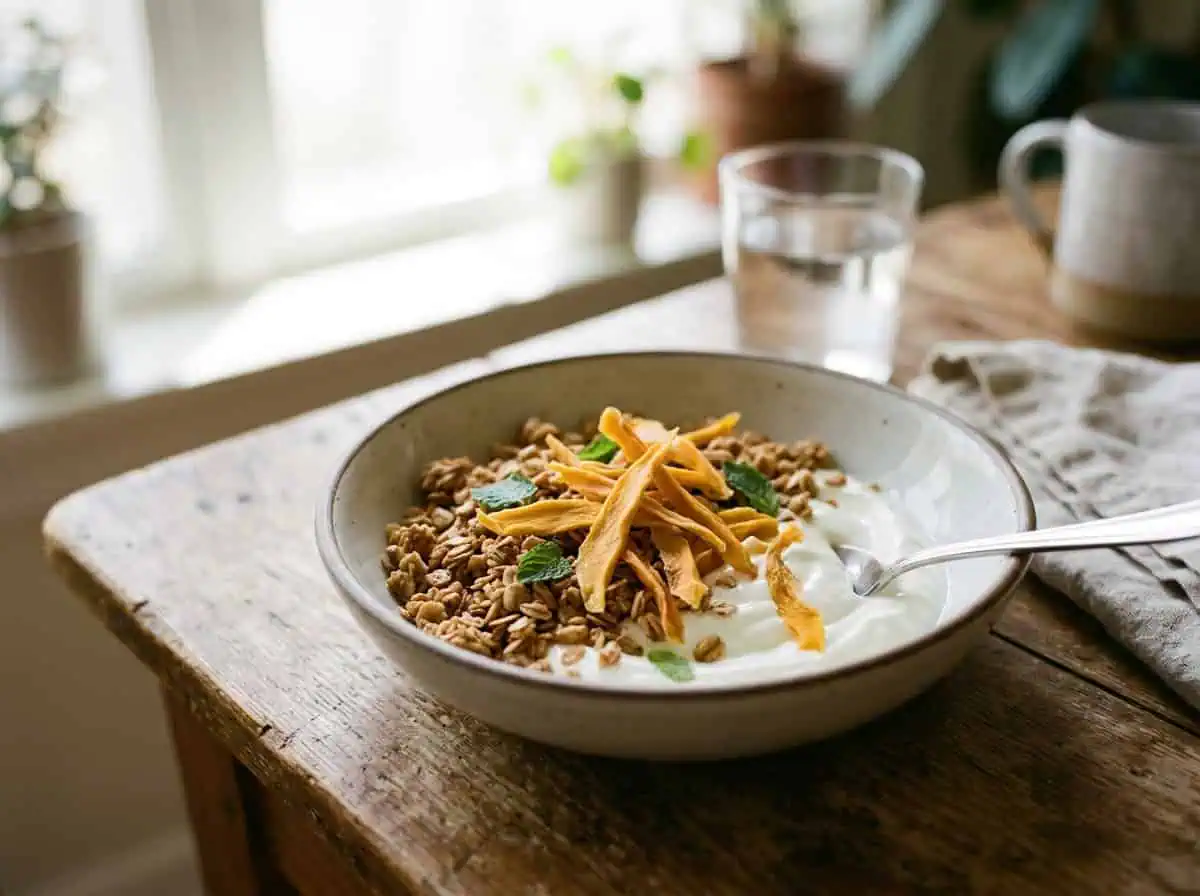
For brand managers building a retail pitch deck: these three claims represent shelf differentiation that no commodity dried mango brand in your competitive set is currently using. They exist in the product already. They just require a supplier with the COA documentation to substantiate them.
Antioxidants and Phytonutrients
Beyond the macronutrients and the FDA-claimable vitamins, dried mango carries a bioactive compound profile that is scientifically documented and increasingly relevant to functional food positioning.
Mangiferin: A C-glucosylxanthone polyphenol unique to mango and a few other plants, with studied anti-inflammatory and antioxidant properties in peer-reviewed literature. Not a claimable nutrient under current FDA rules, but increasingly cited in food science media and by nutrition-forward brands as a reason to source mango over other dried fruits.
Beta-carotene (Vitamin A precursor): At 65–70 mcg RAE per 100g (7% DV), dried mango contributes meaningful provitamin A. The deep orange color of properly dried Cát Chu or Hoà Lộc variety mango is a direct visual indicator of beta-carotene density a point worth noting on premium retail packaging that targets consumers who read beyond the Nutrition Facts panel.
Quercetin and gallic acid: Flavonoid and phenolic acid antioxidants associated with cardiovascular support and anti-inflammatory activity in research settings. Present in mango at levels consistent with tropical fruit antioxidant profiles.
None of these phytonutrients appear on the Nutrition Facts panel. All of them belong in the brand story, the website copy, and the retail buyer pitch.
Dried Mango vs. Fresh Mango: Nutrient Comparison
The most common misconception about dried fruit is that drying destroys nutritional value. The reality is more specific: some nutrients degrade during drying, most concentrate.
| Nutrient | Fresh Mango (per 100g) | Dried Mango No Sugar (per 100g) | Change |
|---|---|---|---|
| Energy | ~60 kcal | 314–320 kcal | +430% (concentration) |
| Total Sugars | ~13–14g | 66–70g | +400% (concentration) |
| Added Sugars | 0g | 0g | No change |
| Vitamin C | ~36mg (40% DV) | 40–45mg (47% DV) | Retained ~40–60% of fresh level |
| Vitamin A (RAE) | ~38 mcg | 65–70 mcg | Concentrated |
| Dietary Fiber | ~1.6g | 2.0–2.4g | Concentrated |
| Potassium | ~168mg | 270–280mg | Concentrated |
| Fat | ~0.4g | 0.8–1.2g | Concentrated |
The key insight in this table: the nutrients that matter for health claims Vitamin C, Vitamin A, fiber, potassium either concentrate with the fruit solids or are partially retained through controlled drying. What increases disproportionately is caloric density, because water is the primary component removed.
For retail buyers in the natural snack channel, the message is straightforward: dried mango no added sugar is fresh mango in a shelf-stable, portable format, with a concentrated nutrient profile. That is an accurate claim. It is also a compelling one.

What These Numbers Mean for Your Product Line
Six valid FDA nutrient content claims. One ingredient. No added sugars. No sulfites. No preservatives. Zero cholesterol. Meaningful contributions of Vitamin C, Vitamin E, Copper, B6, and Folate.
If you are a distributor ranging this product into a health food chain, that is your buyer pitch compressed into one sentence. If you are an Amazon seller building a private label brand, those claims are your product listing copy. If you are a food manufacturer formulating a granola bar or trail mix, the nutrient profile of your ingredient contributes to your finished product’s label claims.
The catch is this: none of those claims are available to you unless your supplier provides a COA from an ISO 17025-accredited laboratory confirming the values per batch. Estimated nutrition data from USDA tables gets your label designed. Batch-specific COA data gets your label defended when a retailer or regulatory authority asks for documentation. FRUITBUYS VIETNAM provides both USDA-based estimates for your initial design work, and third-party lab COA per production batch for your compliance files.
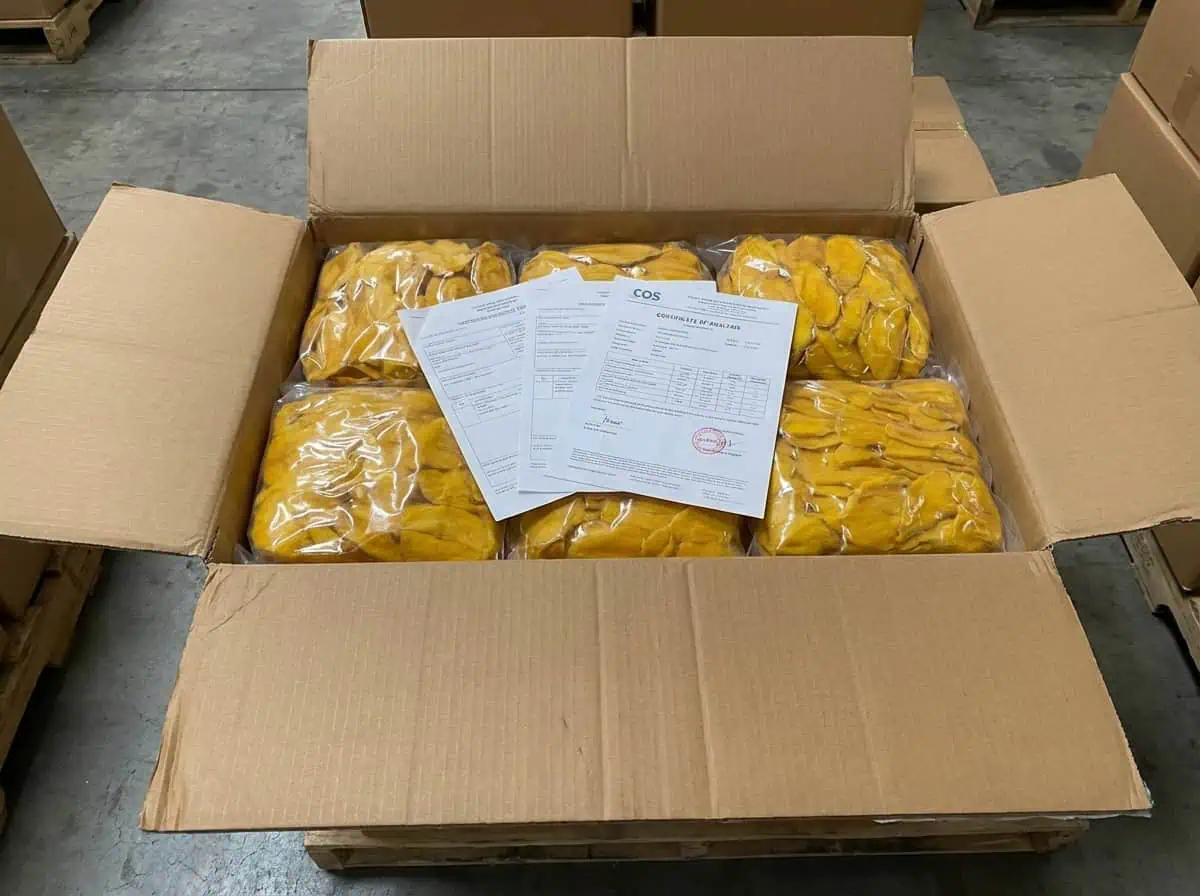
Request the full technical specification sheet and free samples with COA. Contact FRUITBUYS VIETNAM at fruitbuys.com/contact
Valid FDA Label Claims Summary
| Claim | Requirement | Dried Mango No Sugar Value | Valid? |
|---|---|---|---|
| No Added Sugars | 21 CFR 101.60 — 0g added sugars | 0g | ✅ Valid |
| Excellent source of Vitamin C | >20% DV per serving | 47% DV | ✅ Valid |
| Excellent source of Vitamin E | >20% DV per serving | 27% DV | ✅ Valid |
| Excellent source of Copper | >20% DV per serving | 31% DV | ✅ Valid |
| Good source of Vitamin B6 | 10–19% DV per serving | 19% DV | ✅ Valid |
| Good source of Folate | 10–19% DV per serving | 17% DV | ✅ Valid |
| Fat-free | <0.5g fat per serving | ~0.24–0.36g per 30g serving | ✅ Valid (per serving) |
| Cholesterol-free | <2mg per serving | 0mg | ✅ Valid |
Claims valid for US market per FDA 21 CFR 101. EU nutrient claims validated separately under Regulation (EC) No 1924/2006. Confirm per-serving values based on your declared serving size before printing final label.
Frequently Asked Questions
How many calories are in dried mango?
Dried mango no added sugar contains 314–320 kcal per 100g. A standard 30g snack serving contains approximately 95–96 kcal. Fresh mango contains approximately 60 kcal per 100g the difference is concentration, not added ingredients. All calories in no-added-sugar dried mango come from naturally occurring carbohydrates, protein, and trace fat from the fruit itself.
How much sugar is in dried mango?
Dried mango no added sugar contains 66–70g of total sugars per 100g and 0g of added sugars. All sugars are naturally occurring from the fruit glucose, fructose, and sucrose concentrated during the drying process. A 30g serving contains approximately 20–21g of natural sugar. For full context on the natural versus added sugar distinction, see: How Much Sugar in Dried Mango? Added vs Natural Sugar Explained.
Is dried mango a good source of vitamins?
Yes. Dried mango no added sugar provides 47% of the Daily Value for Vitamin C, 27% DV for Vitamin E, 31% DV for Copper, 19% DV for Vitamin B6, and 17% DV for Folate per 100g all qualifying for FDA “Excellent source” or “Good source” label claims. It also contributes Vitamin A (beta-carotene), Vitamin K, potassium, and magnesium.
Does drying mango destroy its nutrients?
Some degradation occurs Vitamin C is heat-sensitive and retains approximately 40–60% of fresh mango levels through controlled hot air drying. However, most nutrients concentrate during drying because water is removed while fruit solids remain. Vitamin A, fiber, potassium, and most minerals are present at higher levels per 100g in dried mango than in fresh mango by weight.
Is dried mango high in fiber?
Dried mango no added sugar contains 2.0–2.4g of dietary fiber per 100g, representing 8% of the Daily Value. While not qualifying as a “good source” claim under FDA thresholds (10% DV threshold), fiber content is meaningful and can be highlighted in product copy as a benefit of whole-fruit snacking.
What antioxidants are in dried mango?
Dried mango contains beta-carotene (provitamin A), Vitamin C, Vitamin E, and a range of polyphenols including mangiferin, quercetin, and gallic acid. These phytonutrients are not listed on the Nutrition Facts panel but are scientifically documented in mango research and are relevant for functional food positioning and brand storytelling.
The Data Is on Your Label. The Product Is in Vietnam.
Every nutrient in the table above is present in verified dried mango no added sugar from FRUITBUYS VIETNAM. The COA from our ISO 17025-accredited lab partners confirms it per production batch. The FDA claim validity has been mapped. The USDA data backs the estimates.
Contact FRUITBUYS VIETNAM for free samples with full COA and technical specification sheet. Samples ship within 3–5 business days. You receive the data alongside the product so your label design, your retail pitch, and your compliance file move forward together from day one.
Contact FRUITBUYS VIETNAM:
- WhatsApp: +84-909.499.619
- Email: hotro@fruitbuys.vn
- Website: https://fruitbuys.com
- Office: 10/2 Ky Con, Cau Kieu Ward, Ho Chi Minh City
- Warehouse: 182 An Phu Dong 09, An Phu Dong Ward, District 12, Ho Chi Minh City