Dried Mango Without Sulfites: Why SO₂-Free Matters for Your Brand

A specialty food buyer in the Netherlands placed a first order of dried mango from a Vietnamese supplier. The spec sheet said “natural, no preservatives.” The product arrived, cleared customs, and went to their retail partner for ranging review. The retailer’s QC team ran a standard allergen panel. SO₂ came back at 340ppm. Under EU Regulation 1333/2008, that result requires a mandatory “contains sulphites” declaration on the label. The product was not labeled with it. The retailer refused the ranging. The buyer absorbed the retest cost, the reformulation delay, and six months of lost market entry time.
The supplier had not lied. They had simply used SO₂ as a standard browning inhibitor an industry practice so common in Southeast Asian dried fruit production that many suppliers do not even list it as a processing aid. “Natural, no preservatives” meant no sugar, no artificial colors. It did not mean sulfite-free. Nobody had asked the specific question. Nobody had specified it in the purchase order. And nobody had requested SO₂ on the COA.
Dried mango without sulfites is a specific product specification not a default. This guide explains what SO₂ does, why it is widely used, what the regulatory thresholds mean for your markets, and how to verify SO₂-free status before your container loads rather than after it arrives.
What SO₂ Does in Dried Mango Production
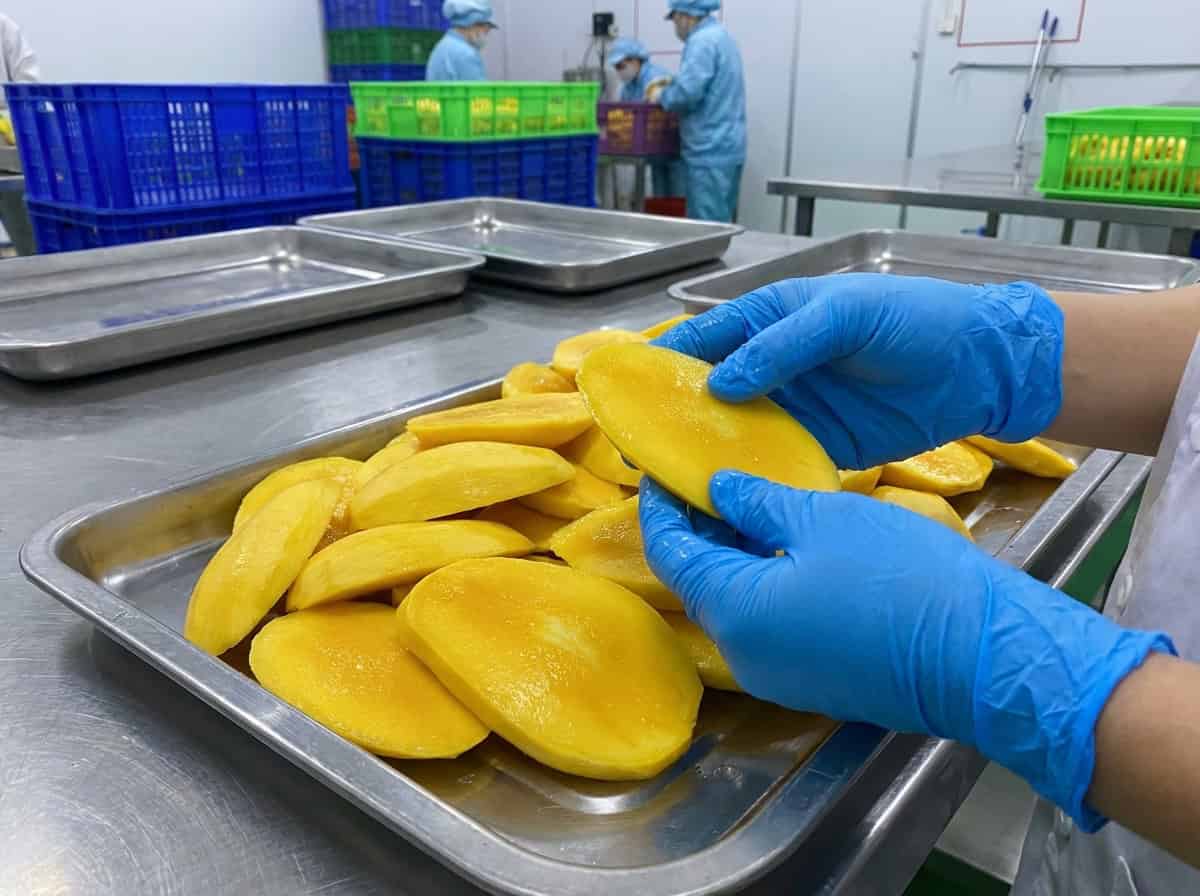
Sulfur dioxide (SO₂) and its related compounds sodium metabisulfite and potassium metabisulfite perform three functions in conventional dried fruit processing. Understanding all three explains why the industry defaults to SO₂ and why eliminating it requires a different approach to quality control.
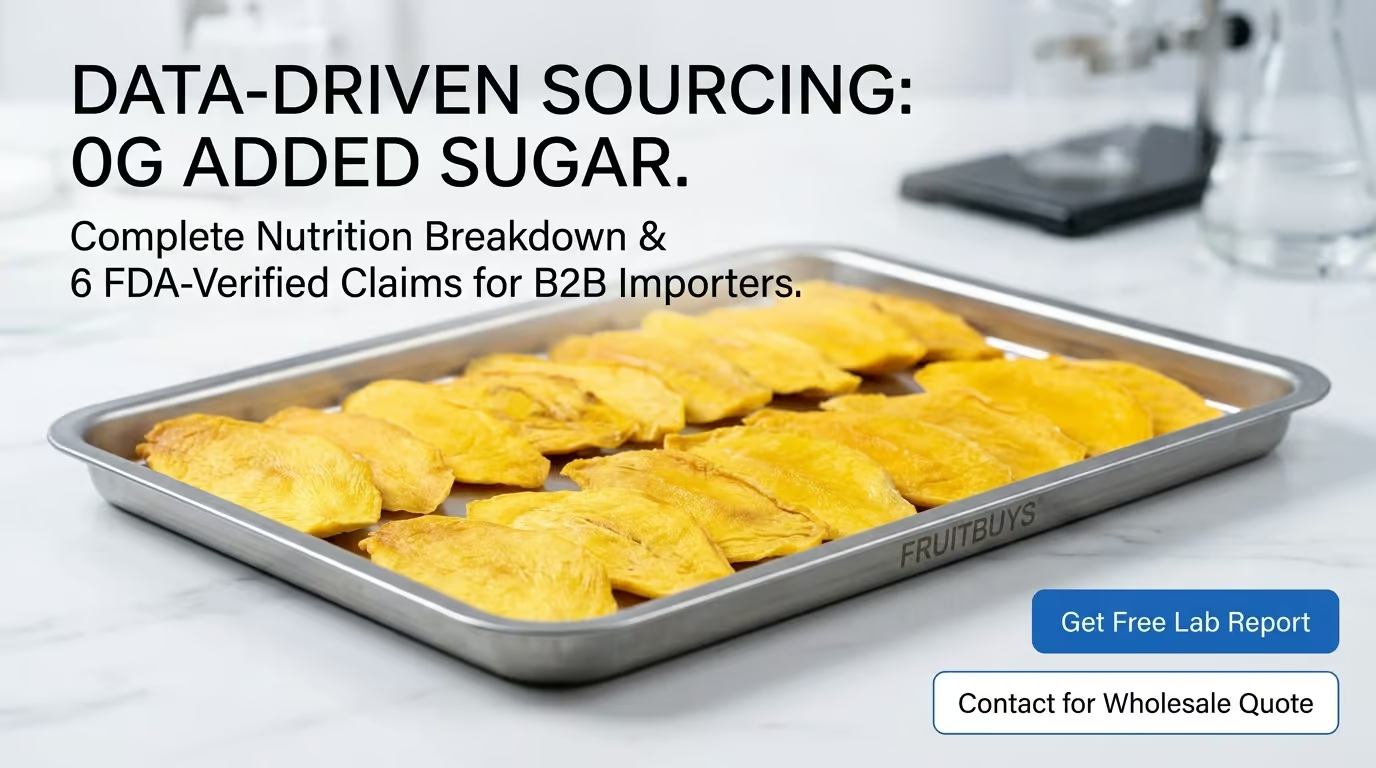
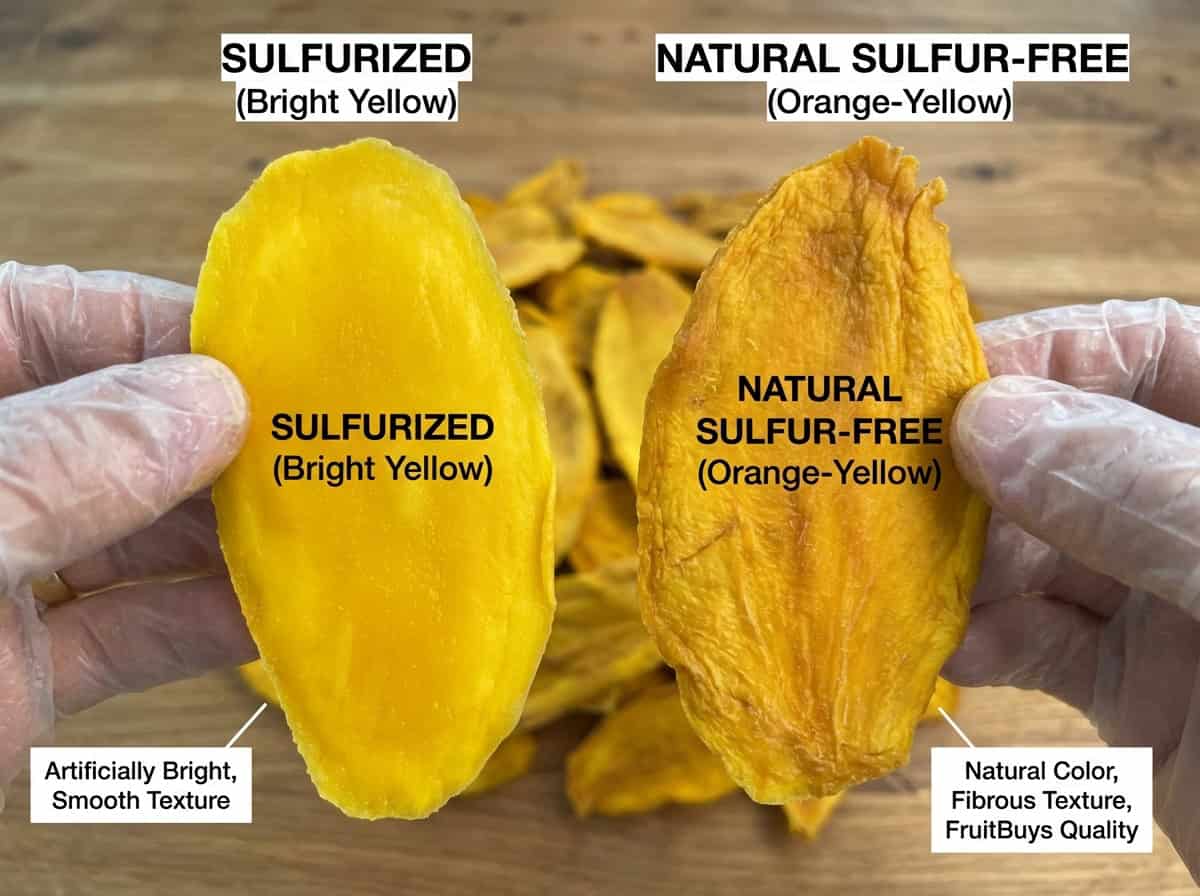
Function 1 Browning inhibition: When mango flesh is cut and exposed to air, enzymatic oxidation triggers rapid surface browning. SO₂ inhibits the polyphenol oxidase enzyme responsible for this reaction. Without it, freshly sliced mango browns within minutes of cutting. In a large-scale processing operation, SO₂ dipping or fumigation is the fastest way to suppress browning across high volumes of sliced fruit. The visible result: sulfite-treated dried mango typically shows a bright, almost artificial yellow color. Natural dried mango without SO₂ shows a deeper amber-to-orange color that reflects the fruit’s actual beta-carotene and carotenoid content.
Function 2 Maillard browning retardation: During and after drying, the Maillard reaction a chemical reaction between natural sugars and amino acids causes progressive darkening of the product over its shelf life. SO₂ slows this reaction, extending the period during which the product maintains visual brightness. Without SO₂, temperature-controlled drying at 60–80°C combined with cold storage at 10–20°C achieves the same visual stability through process management rather than chemical intervention.
Function 3 Antimicrobial activity: At concentrations above 200ppm, SO₂ provides additional microbial inhibition against molds and bacteria. This function overlaps with water activity management a product with aw ≤0.60 achieves microbial safety through moisture control alone. Producers who rely on SO₂ for antimicrobial safety instead of aw control are substituting a chemical intervention for a process discipline they do not have. The result is a product that tests clean on microbiology and high on SO₂ a trade-off that passes a basic food safety check but fails a clean label audit.
The point: SO₂ is not a shortcut taken by negligent suppliers. It is the industry standard for conventional dried fruit. Buyers who want SO₂-free must specify it, verify it, and source from a supplier whose process control is rigorous enough to deliver the same quality outcomes without chemical assistance.
The Regulatory Thresholds You Must Know
SO₂ regulations differ by market and by product category. The numbers below determine whether your product requires an allergen declaration, whether it qualifies for clean label channels, and whether it can be sold in specific retail formats without reformulation.
United States – FDA
Under FDA 21 CFR 101.100, foods containing SO₂ at 10ppm or more must declare “sulfites” in the ingredient list or as an allergen footnote. Below 10ppm, no declaration is required and the product may be positioned as sulfite-free in marketing communications.
FDA classifies sulfites as a known allergen for sulfite-sensitive individuals. While sulfites are not included in the FDA “Big 9” major allergens (milk, eggs, fish, shellfish, tree nuts, peanuts, wheat, soybeans, sesame), they carry a distinct regulatory requirement under 21 CFR 101.100(a)(4) that applies specifically to processed foods with detectable levels above 10ppm.
For US clean label buyers: any dried mango product above 10ppm SO₂ must disclose sulfites. Any product at or below 10ppm carries no declaration requirement and supports a “no added sulfites” or “sulfite-free” marketing claim.
European Union -/ Regulation 1333/2008 and 1169/2011
The EU permits SO₂ (E220) in dried fruit at maximum levels of 500–2,000ppm depending on the specific product category and processing method significantly higher maximum levels than FDA. However, EU Regulation 1169/2011 (Food Information to Consumers) requires declaration of “sulphites” as an allergen on any food product where SO₂ or sulphite compounds are present at more than 10mg/kg (10ppm).
This means a conventional dried mango with 300ppm SO₂ is legally produced under EU standards but it must carry “Contains: Sulphites” in the allergen declaration. That declaration disqualifies the product from organic certification, clean label designation, and any retail channel that prohibits allergen-containing snacks in their “free-from” or natural categories.
For EU clean label buyers: the 10ppm threshold that triggers the sulphites declaration is your working boundary. Products at or below 10ppm carry no declaration requirement. Products above it are legally sold in conventional channels but are excluded from clean label, free-from, and organic retail.
UAE and GCC
The UAE and GCC follow Codex Alimentarius standards for SO₂ in dried fruits, with maximum levels aligned broadly with international Codex limits. The halal certification requirement for UAE market entry adds an additional compliance layer halal-certified facilities must document all processing aids including any sulfite compounds. A product positioned as halal and clean label must carry verifiable SO₂ documentation. FRUITBUYS VIETNAM provides Halal certification on request for UAE-destined shipments.
The 10ppm Rule Across All Three Markets
| Market | Legal Maximum SO₂ (Dried Fruit) | Declaration Threshold | “Sulfite-Free” Claim Threshold | FRUITBUYS SO₂ Result |
|---|---|---|---|---|
| US (FDA) | No specific maximum for dried fruit | ≥10ppm: must declare | <10ppm: no declaration required | <10ppm (Not Detected) |
| EU (Reg. 1333/2008) | 500–2,000ppm | >10mg/kg: “Contains Sulphites” required | ≤10mg/kg: no declaration | <10ppm (Not Detected) |
| UAE / GCC | Codex-aligned maximum | Codex/halal standards apply | Verify with UAE broker | <10ppm (Not Detected) |
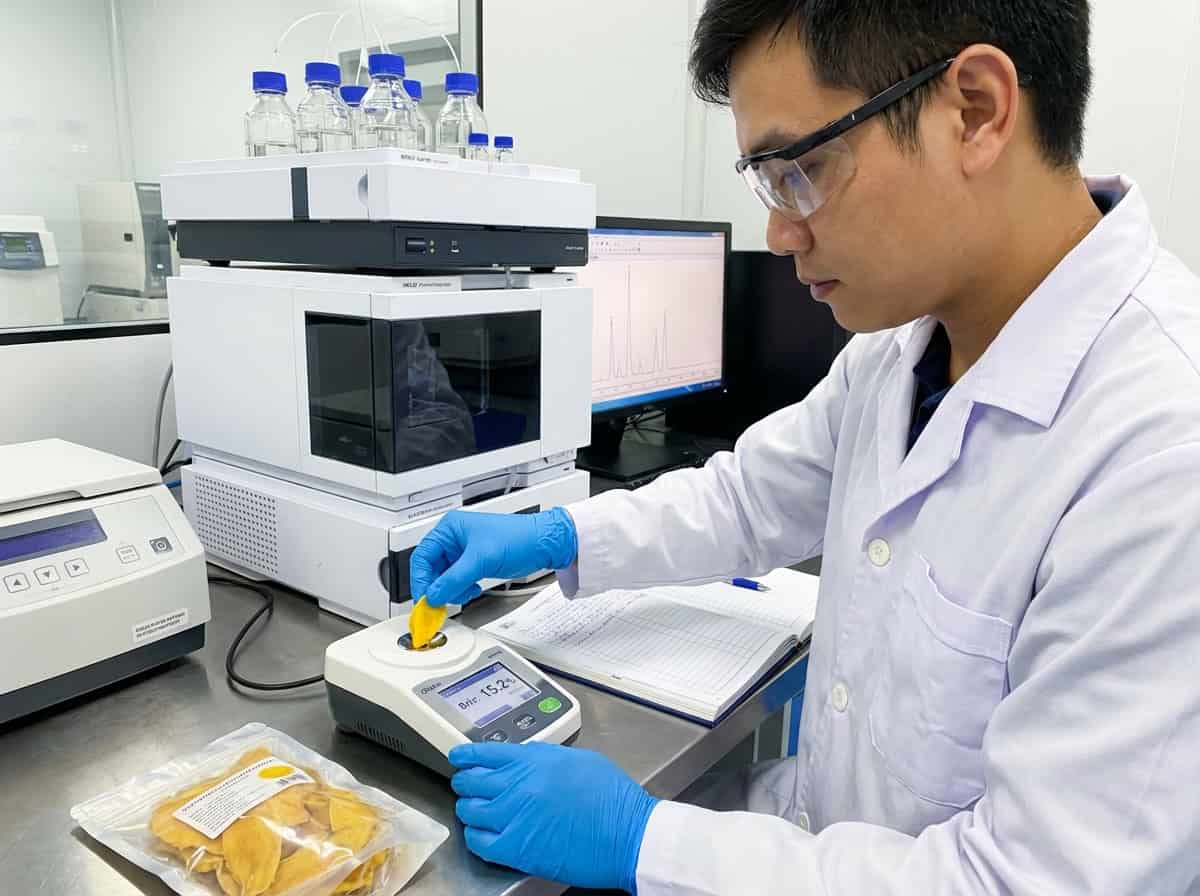
FRUITBUYS VIETNAM dried mango no added sugar tests below 10ppm not detected under the Optimized Monier-Williams method per production batch. The result appears as a specific line item on the COA from our ISO 17025-accredited lab partners. It is not a general “no preservatives” statement on a spec sheet it is a quantified analytical result with a named test method and a named lab.
What SO₂-Free Status Means for Your Retail Channel
The commercial implications of SO₂ levels above 10ppm are not limited to allergen labeling. They determine which retail channels your product can enter and which ones it cannot.
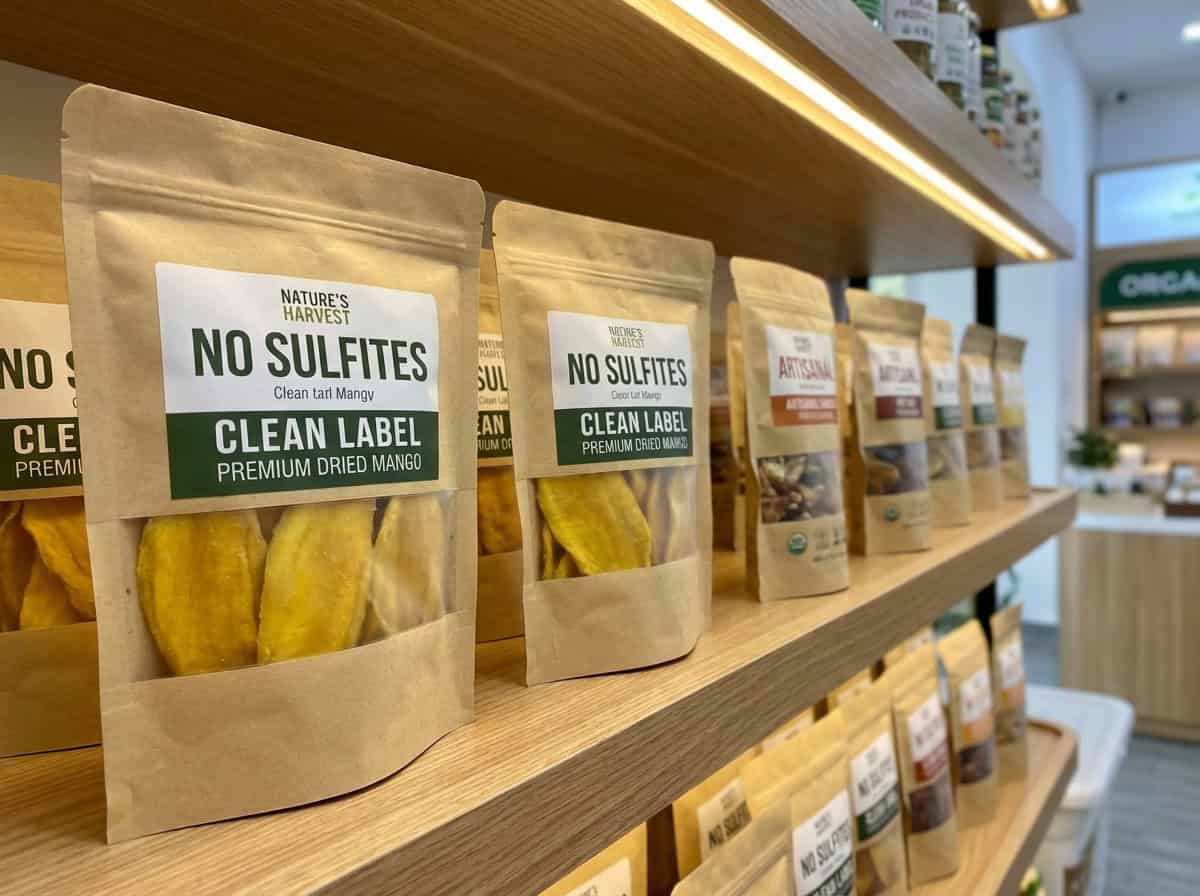
Natural and organic food retail: Category buyers at Whole Foods Market, Natural Grocers, Hema (Netherlands), Naturalia (France), and equivalent natural food chains actively screen for sulfite declarations in their supplier onboarding process. A “Contains Sulphites” allergen declaration typically disqualifies a product from their clean label or free-from category designation, regardless of how the product is positioned in marketing copy. SO₂-free status with verifiable COA documentation is a pre-qualification criterion, not a preference.
Certified organic: EU Organic Regulation 2018/848 and USDA NOP both prohibit the use of sulfites as processing aids in certified organic food products. A product using SO₂ cannot carry an organic certification, regardless of whether the raw mango was grown organically. Buyers pursuing organic certification for their private label brand must source from a supplier with an SO₂-free production process not just an organic raw material.
Allergy-conscious and free-from specialty: The “free-from” category free from gluten, dairy, nuts, and increasingly from sulphites is one of the fastest-growing segments in natural food retail in both the US and EU. A dried mango product with SO₂ not detected sits cleanly in this segment. A product with 300ppm SO₂ and a “Contains Sulphites” declaration does not regardless of how it is positioned in brand copy.
HORECA and premium food service: Hotels, airline catering operations, and premium food service accounts serving guests with known sulfite sensitivity or asthma must verify SO₂ status in their ingredient procurement. A HORECA buyer who discovers SO₂ in a product after a guest reaction faces a liability and reputational risk that ends the supplier relationship immediately. Proactive SO₂ documentation before onboarding is the baseline for premium food service supply.
Why Natural Color Is the Visual Proof
There is a visible signal that trained buyers use before any lab result arrives: the color of the dried mango.
Sulfite-treated dried mango: Artificially bright yellow, unnaturally uniform across pieces. The SO₂ suppresses both enzymatic browning and the Maillard reaction so effectively that the product retains a vivid yellow color that does not reflect the fruit’s natural carotenoid pigmentation.
Sulfite-free dried mango (correctly produced): Natural amber to deep orange, with color variation between pieces reflecting the fruit’s natural beta-carotene density, ripeness level at harvest, and moisture content. The Cát Chu and Hoà Lộc varieties with 18–22°Bx natural Brix and high carotenoid content produce a deep amber product that communicates quality visually in a way that artificially brightened yellow product cannot.
This color difference is not a cosmetic issue. It is the consumer-facing evidence of a clean production process. A buyer selling into the premium natural snack channel, where consumers read ingredient labels and inspect product color through clear packaging, is selling two things simultaneously: the product and the visible proof that the product is what the label says it is.
The natural amber color of SO₂-free dried mango from FRUITBUYS VIETNAM is not a browning defect. It is the accurate color of a ripe tropical fruit dried without chemical treatment. Communicate it as such in your retail packaging and brand copy.
How to Verify SO₂-Free Status Before Your Container Loads
A supplier who says “no preservatives” on a spec sheet but cannot provide a quantified SO₂ result from an accredited lab is not delivering a verifiable claim they are delivering a statement. Here is the four-step verification protocol:
- Request SO₂ as a specific line item on the COA. The test method must be named: Optimized Monier-Williams (AOAC 990.28) or equivalent. A general “no preservatives” statement with no analytical result is not sufficient for FDA compliance, EU allergen labeling, or retail buyer audits.
- Confirm the COA is from an ISO 17025-accredited laboratory. SGS, Bureau Veritas, Eurofins, or QUATEST 3 are the standard accredited partners in Vietnam. An unaccredited internal factory lab result has no standing in any regulatory or retail audit context.
- Match the COA batch number to the production shipment. The same batch-matching protocol that applies to added sugars applies to SO₂ a COA from a different batch than the one that shipped is not documentation. It is a sample.
- Verify the test result is below 10ppm, not just “not detected” without a quantification limit. “Not detected” is only a clean result if the method detection limit (MDL) is stated and is below 10ppm. An MDL of 50ppm with “not detected” means SO₂ could be present at 40ppm without triggering the result that does not satisfy the FDA or EU declaration threshold.
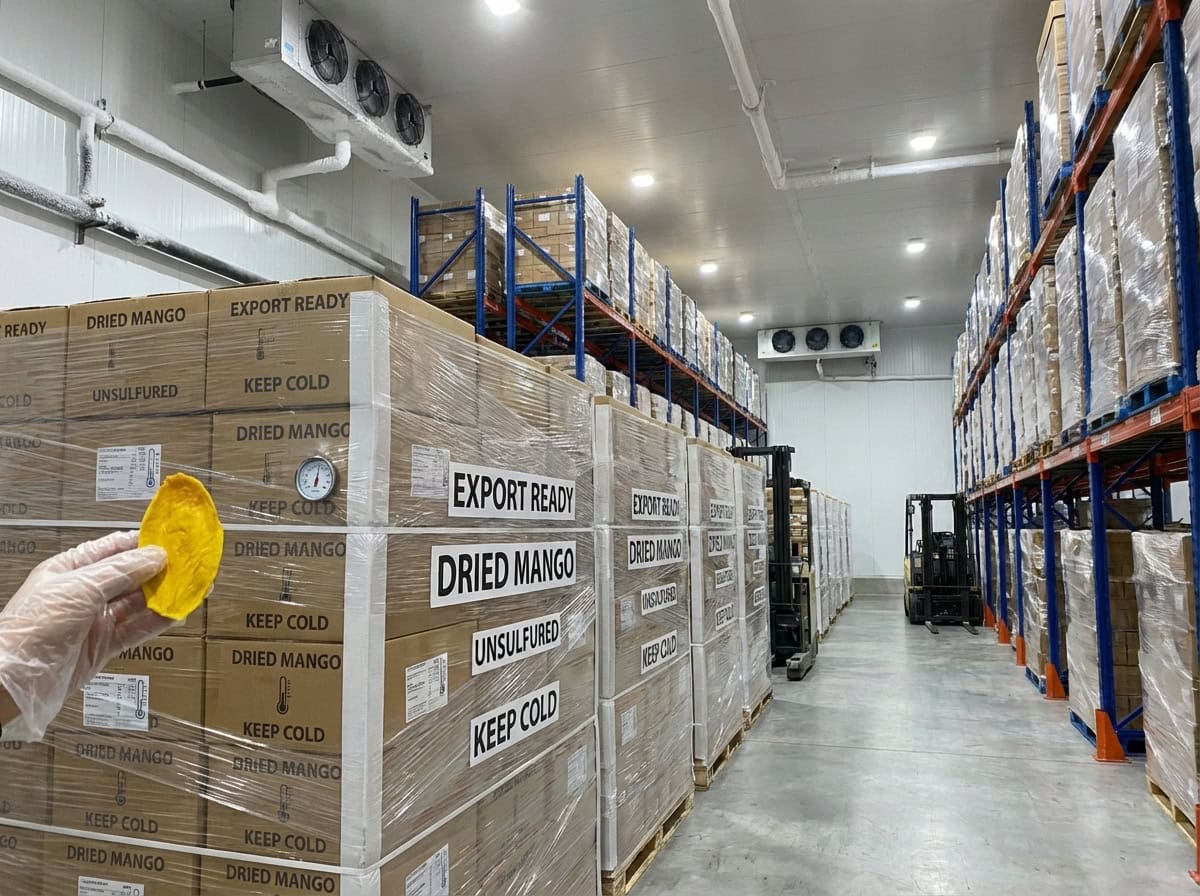
FRUITBUYS VIETNAM provides all four elements as standard per shipment: named test method (Optimized Monier-Williams), accredited lab (SGS/Bureau Veritas/Eurofins), batch-matched COA, and a quantified result below 10ppm.
SO₂-Free in the Context of the Full Clean Label Position
SO₂-free status does not stand alone as a brand claim. It is one of four pillars that together define a complete clean label dried mango position:
| Clean Label Pillar | FRUITBUYS Specification | Verifying Document |
|---|---|---|
| No Added Sugars | Added Sugars: 0g | COA (HPLC sugar analysis, ISO 17025 lab) |
| No Sulfites | SO₂ <10ppm (Not Detected) | COA (Optimized Monier-Williams, ISO 17025 lab) |
| No Preservatives | No sorbic acid, no benzoate, no chemical treatment | COA (full preservative screen) |
| One Ingredient | 100% Mango (Mangifera indica) | Ingredient declaration; production process statement |
Each pillar is individually verifiable. Each supports a distinct retail channel claim. Together, they constitute a product positioning that can legitimately enter the most demanding clean label, organic-adjacent, free-from, and natural food channels in the US, EU, and UAE without reformulation, without qualification, and without asterisks.
For the health benefits enabled by this clean profile, see: Is Dried Mango Healthy? Science-Based Benefits for Clean Label Buyers. For the full nutritional breakdown that backs these claims, see: Dried Mango Nutrition Facts: Complete Breakdown Per 100g.
Frequently Asked Questions
Does dried mango contain sulfites?
Conventional dried mango commonly contains SO₂ used as a browning inhibitor and mold retardant during processing. Levels typically range from 200–2,000ppm in sulfite-treated products. Dried mango no added sugar from FRUITBUYS VIETNAM contains SO₂ below 10ppm (not detected) under the Optimized Monier-Williams method, qualifying as sulfite-free under FDA 21 CFR 101.100 and below the EU declaration threshold under Regulation 1169/2011.
What is the FDA threshold for sulfite declaration?
Under FDA 21 CFR 101.100(a)(4), any food containing SO₂ at 10ppm or more must declare sulfites in the ingredient list or allergen statement. Below 10ppm, no declaration is required. Products at or below this threshold may be marketed as sulfite-free or “no added sulfites” in the US market. FRUITBUYS VIETNAM dried mango no added sugar tests below 10ppm per batch.
Why is SO₂ used in dried fruit production?
SO₂ performs three functions: it inhibits enzymatic browning immediately after cutting, retards the Maillard reaction during and after drying (extending visual brightness), and provides additional antimicrobial activity at higher concentrations. It is the lowest-cost solution for color and shelf life management in conventional dried fruit processing. Eliminating it requires process discipline controlled drying temperature, water activity management, cold chain storage in place of chemical intervention.
Is sulfite-free dried mango harder to produce?
Yes. Producing SO₂-free dried mango with consistent visual quality requires precise drying temperature control (60–80°C), active moisture and water activity management (aw ≤0.60), nitrogen-flush packaging to minimize oxidation, and cold chain storage at 10–20°C. Each of these steps adds process complexity that SO₂ treatment bypasses. Suppliers who can consistently deliver SO₂-free dried mango at export specification are operating at a higher process discipline level than conventional producers.
Does SO₂-free dried mango look different?
Yes. Without SO₂, dried mango shows its natural amber-to-orange color from beta-carotene and carotenoid pigmentation rather than the artificially bright yellow of sulfite-treated product. Color variation between pieces is normal and reflects natural variation in ripeness and carotenoid density. For premium retail positioning, this natural color is a visual authentication signal it communicates to label-reading consumers that the product matches its ingredient declaration.
Which retail channels require SO₂-free certification?
Natural and organic food retailers (Whole Foods, Natural Grocers, organic chains in EU), certified organic product lines (EU Reg. 2018/848, USDA NOP), free-from specialty snack categories, HORECA premium food service accounts serving allergy-sensitive guests, and any retail channel operating a “no sulphites” or “allergen-free” designation. Verifiable SO₂-free status via COA from an ISO 17025 lab is the documentation standard for onboarding in these channels.
The Claim Is Only as Clean as the Documentation Behind It
SO₂-free is a verified specification, not a packaging decision. A label that says “no preservatives” without a COA showing SO₂ below 10ppm from a named accredited lab is a marketing statement, not a compliance document.
Your retail buyers know the difference. Your QC auditors know the difference. And the allergy-sensitive consumers in your target market the ones who read the allergen declaration before every purchase know the difference when they see it.
FRUITBUYS VIETNAM provides SO₂ results below 10ppm per production batch, from ISO 17025-accredited labs, with the test method named on the COA. That documentation ships with every sample and every container order not as an upgrade, not on special request, and not as a one-time certification that covers all future batches.
Contact FRUITBUYS VIETNAM today. Request free samples with full COA including SO₂ results, added sugar results, and the complete micronutrient panel. Samples ship in 3–5 business days.
Contact FRUITBUYS VIETNAM:
- WhatsApp: +84-909.499.619
- Email: hotro@fruitbuys.vn
- Website: https://fruitbuys.com
- Office: 10/2 Ky Con, Cau Kieu Ward, Ho Chi Minh City
- Warehouse: 182 An Phu Dong 09, An Phu Dong Ward, District 12, Ho Chi Minh City