Does papaya powder contain papain, and what can you claim on the label?
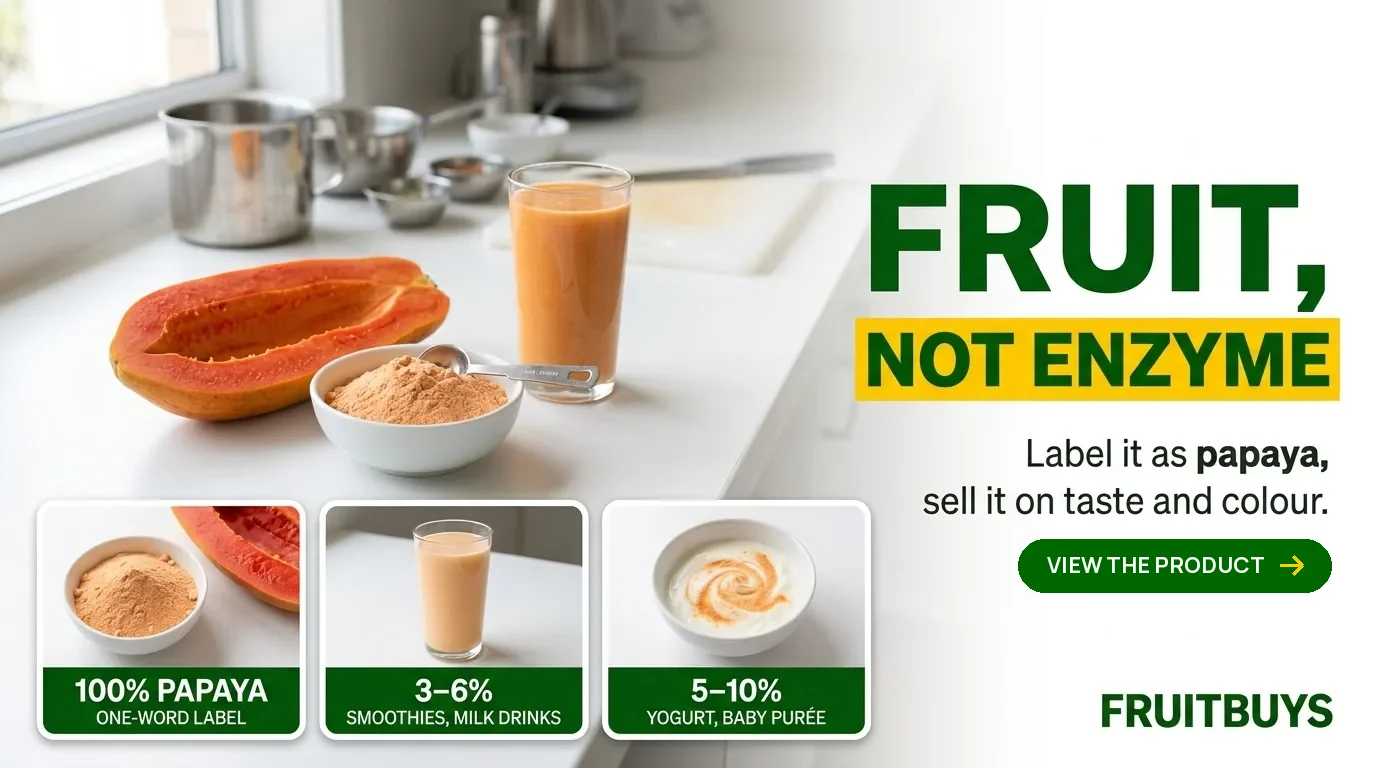
Very little, if it is made from ripe fruit. Papain is concentrated in the milky latex of green, unripe papaya, and the amount falls as the fruit ripens. Freeze-dried papaya powder made from ripe red flesh is a flavour, colour and fibre ingredient: it makes a smoothie taste of papaya and turn orange, but it will not tenderise meat or work as a digestive enzyme. Put it on your label as fruit, keep enzyme and digestion claims off, and the ingredient does exactly what it promises.
Where does papain come from?
From the latex of green papaya. Growers score the skin of unripe fruit still on the tree, collect the white latex that runs out, and dry it into crude papain. That latex is rich in protein-splitting enzymes, papain among them, which is why it is used to tenderise meat, to clarify beer and in digestive-enzyme supplements. As the fruit ripens on the tree, the latex dries up and the flesh softens and sweetens.
| Papain | Ripe freeze-dried papaya powder | |
|---|---|---|
| Made from | Dried latex of green, unripe papaya | Ripe red flesh, peeled, deseeded, freeze-dried, milled |
| What it is | An enzyme preparation | A fruit ingredient |
| Sold on | Enzyme activity units | Flavour, colour, fibre, fruit content |
| Taste and colour | Bland, off-white | Sweet ripe papaya, orange-red |
| Typical uses | Meat tenderising, brewing, enzyme supplements | Drinks, smoothie mixes, baby food, bakery, dairy, coatings |
| On the label | “Papain” or “enzyme” | “Papaya” |
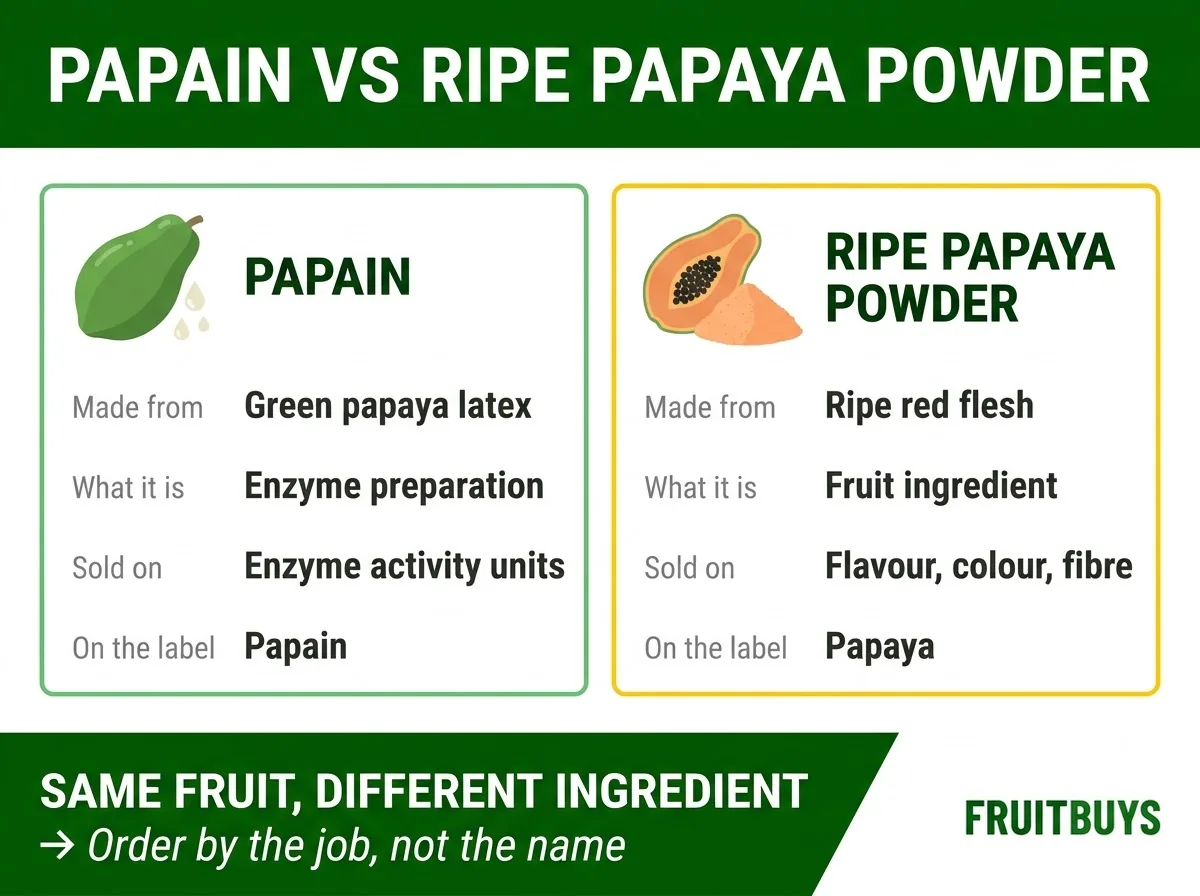
The two share a fruit and a name, and almost nothing else. A buyer who orders one expecting the other gets the wrong ingredient.
What does ripe freeze-dried papaya powder do well?
It brings real papaya into a product at a low dose and with a one-word label. At 3–6% it turns a smoothie or milk drink orange and gives it ripe-fruit flavour; at 5–10% it colours and sweetens a baby purée or yogurt; at 3–5% of flour weight it colours a muffin or cookie. Each 10 g carries the fruit of about 75–90 g of fresh papaya, with typical values of 14 g fibre and 1,460 mg potassium per 100 g of powder and naturally occurring vitamin C at a typical 300–450 mg per 100 g.
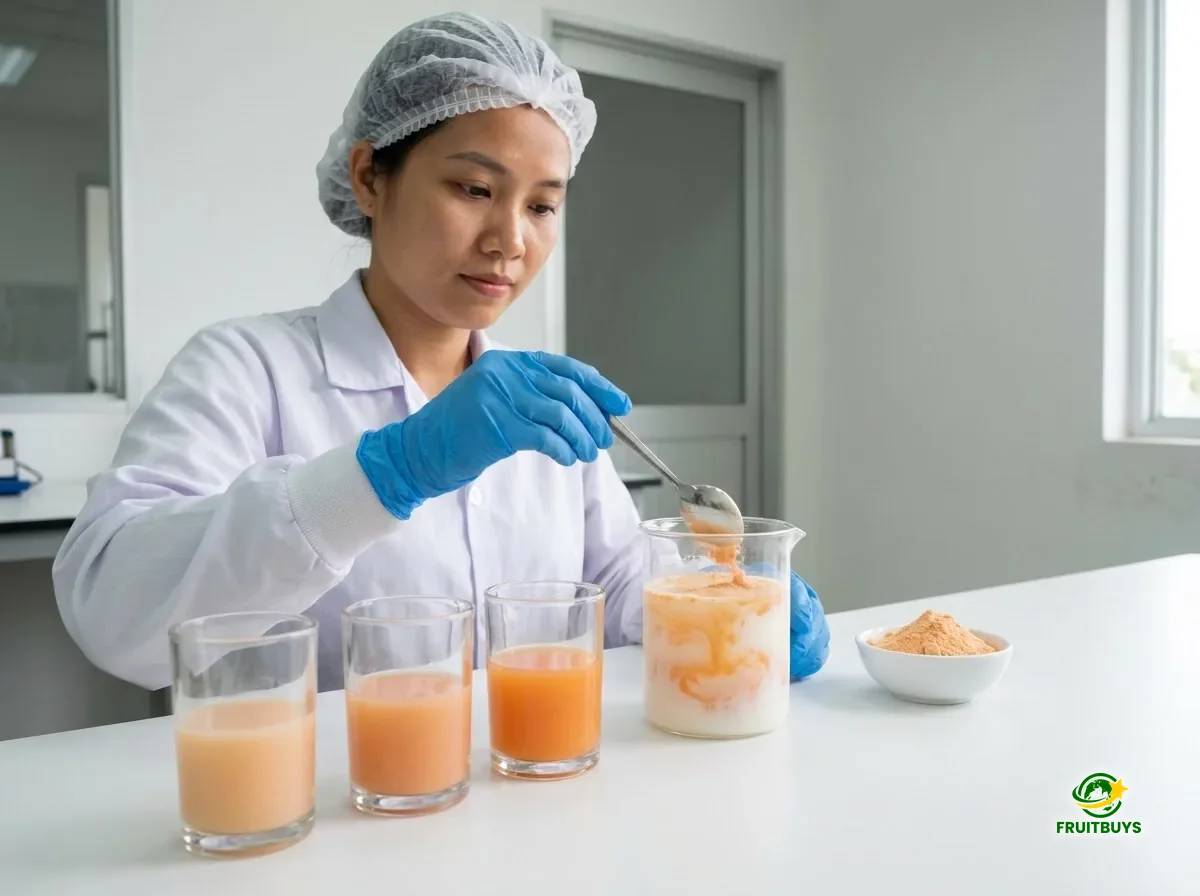
That is the job to give it in your formula. Starting doses for every application, and what to write in the powder specification, are in how much papaya powder you should use.
Does freeze-drying destroy enzymes?
No. Freeze-drying removes water by sublimation under vacuum and never heats the fruit, so it does not inactivate enzymes the way hot-air drying or a spray dryer’s 160–200 °C inlet air can. That is the same reason freeze-dried papaya keeps more of its colour, aroma and vitamin C than heat-dried papaya.
What decides the papain in a powder is the fruit it starts from, not the drying method. Ripe flesh carries little papain, so a freeze-dried powder of ripe papaya carries little too. Freezing works the same way: it slows enzymes down without killing them, and they become active again as the fruit thaws.
Which digestion and tenderiser claims should stay off your label?
Claims about digestion or tenderising describe what an enzyme does, and a ripe-fruit powder cannot back them up.
- United States: a food can carry a structure/function statement only if it is truthful and substantiated. “Aids protein digestion” or “natural meat tenderiser” on a ripe papaya powder has no enzyme activity behind it, and any claim to treat or prevent a digestive condition turns the food into an unapproved drug.
- European Union: a health claim needs to be authorised before it appears on a pack, and there is no authorised claim for papaya powder supporting digestion.
- UAE: no therapeutic claims on food labels.
The claims that do fit a 100% freeze-dried papaya powder are food claims, backed by the ingredient and its typical values:
| Claim | Basis |
|---|---|
| “100% papaya” / single-ingredient label | Nothing added in the standard powder |
| “No added sugar” | No sugar added; the pack also states that it contains naturally occurring sugars where the market requires it |
| “High fibre” (EU) | 14 g per 100 g of powder; confirm on the finished product at your dose |
| “Natural colour from fruit” | Orange-red from the fruit’s beta-carotene and lycopene |
| Vitamin C figure | On-pack figure from a lot nutrition panel on your commercial lot |
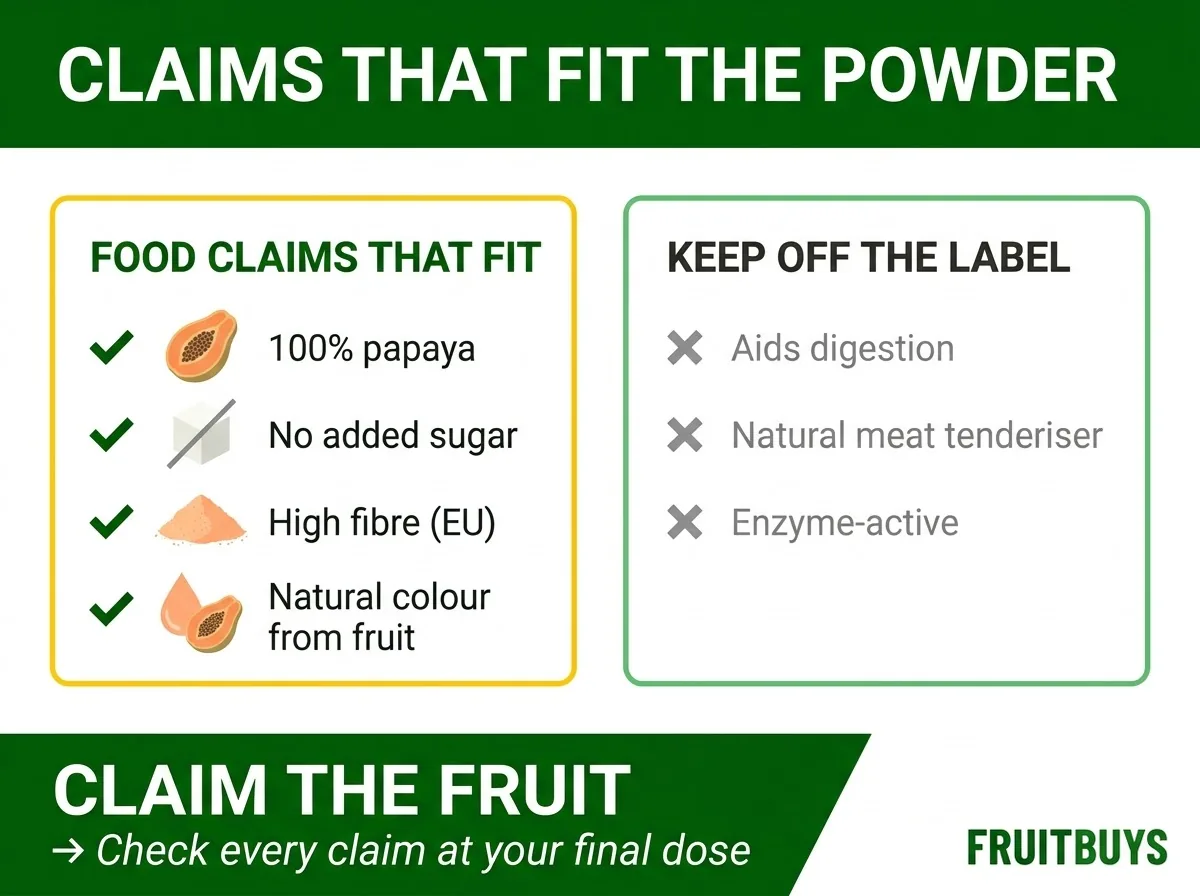
Claims apply to your finished product, not to the ingredient alone, so run them through your label review at your final dose. A nutrition panel in FDA or EU format can be arranged on your commercial lot.
Use it as fruit, and position the product as fruit. A tropical marinade, sauce or glaze gains papaya colour and flavour from the powder; it will not soften the meat, so describe the product by its taste. A smoothie or bowl gains a ripe-papaya taste and a fibre line on the panel; it should not promise easier digestion.
What should you check when a papaya powder is sold with “enzymes”?
Ask for the evidence that matches the claim. If a supplier markets a fruit powder as enzyme-active, the COA should show enzyme activity in stated units, tested on the lot; a fruit powder without that line is a fruit powder. Ask the same of every supplier, including us: FruitBuys sells freeze-dried papaya powder as fruit and puts moisture, water activity and microbiology on the lot COA, with no enzyme claim. The full specification, including the free-flowing version and the low-micro grade, is on the freeze-dried papaya powder page.
Request a sample to test in your recipe
Tell us your product and target claims, and we send the powder in two sealed foil pouches, one for your bench test and one kept sealed for your lab, with the specification and COA template.
FAQ
Does dried papaya contain papain?
Very little when it is made from ripe fruit. Papain is concentrated in the latex of green papaya and falls as the fruit ripens.
Does freezing papaya kill the enzymes?
No. Freezing slows enzymes down without destroying them; they become active again as the fruit thaws. Freeze-drying does not heat the fruit either.
Can papaya powder tenderise meat?
Not a ripe-fruit powder. Meat tenderisers use papain from green papaya latex. Ripe papaya powder adds colour and flavour to a marinade or sauce.
Is papaya powder good for digestion?
It supplies fibre, about 14 g per 100 g of powder. Digestion or enzyme claims do not fit a ripe-fruit powder; label it on its fruit content, fibre and no added sugar.
What is the difference between papaya enzyme tablets and papaya powder?
Enzyme tablets are built around papain from green papaya latex. Papaya powder is the dried, milled ripe fruit, used as a food ingredient.
Does freeze-dried papaya powder keep the nutrients of fresh papaya?
It keeps far more of the colour, aroma and vitamin C than heat-dried papaya, because the fruit is never heated; typical vitamin C is 300–450 mg per 100 g of powder.